Pearlosophy Founder Sentenced to 10 Years Over Pyramid Scheme Case
Pearlosophy founder Sun Yuting was sentenced to 10 years in prison for organizing a multi-level pyramid scheme that drew $30.8 million in asset freezes.

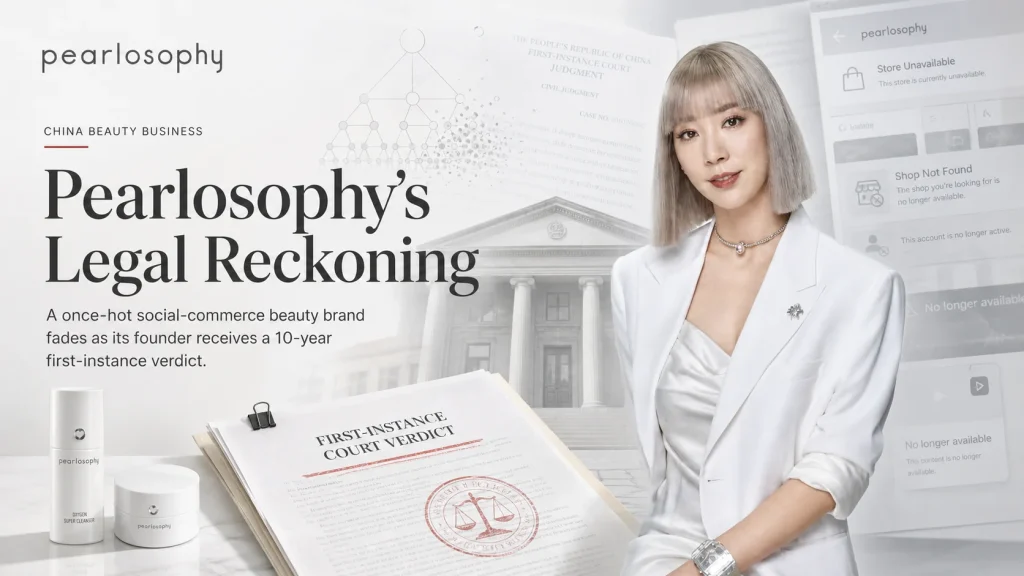
Pearlosophy, a Chinese skincare brand that once gained rapid traction through social commerce and multi-level distributor networks, has met its legal reckoning.
On July 14, 2026, the People's Court of Suqian District in Jiangsu Province delivered a first-instance criminal verdict against Pearlosophy founder Sun Yuting and company president Su Lujiang for organizing and leading multi-level pyramid scheme activities. Sun was sentenced to 10 years in prison and fined 10 million RMB ($1.4 million). Su, who pleaded guilty and accepted punishment, received a reduced sentence of three years and ten months as an accomplice, alongside a 600,000 RMB ($84,000) fine.
The trial lasted eight months following the initial court hearing on November 10, 2025. Sources close to the defense indicate that Sun plans to appeal the decision.
Sun Yuting Sentenced to 10 Years
The verdict was initially reported by legal publication Tingshenshi on WeChat—China's dominant social platform—and later verified directly with China Cosmetics. Additional industry accounts confirmed the court ruling.
RMB 219 Million Frozen in MLM Investigation
Founded in 2016, Pearlosophy positioned itself as an accessible luxury skincare brand targeting Asian consumers with claims of natural, safe, and effective formulations. Sun brought years of product development experience from established beauty players, including Skinvitals, which initially helped the brand build retail and channel credibility.
However, Pearlosophy's growth strategy sparked continuous regulatory compliance concerns. By 2020, domestic media flagged the brand's five-tier distribution structure—comprising VIP Members, Sales Managers, Directors, General Managers, and Board Directors. To enter each level, distributors were required to purchase upfront inventory, recruit lower-tier sellers, and earn profits based on price differentials across tiers.
Under Article 7 of China's Regulations on the Prohibition of Pyramid Selling, compensation structures based on recruitment volume or hierarchical sales margins are strictly prohibited. In late 2021, market regulators in Dongming County, Shandong Province launched a formal investigation into the brand.
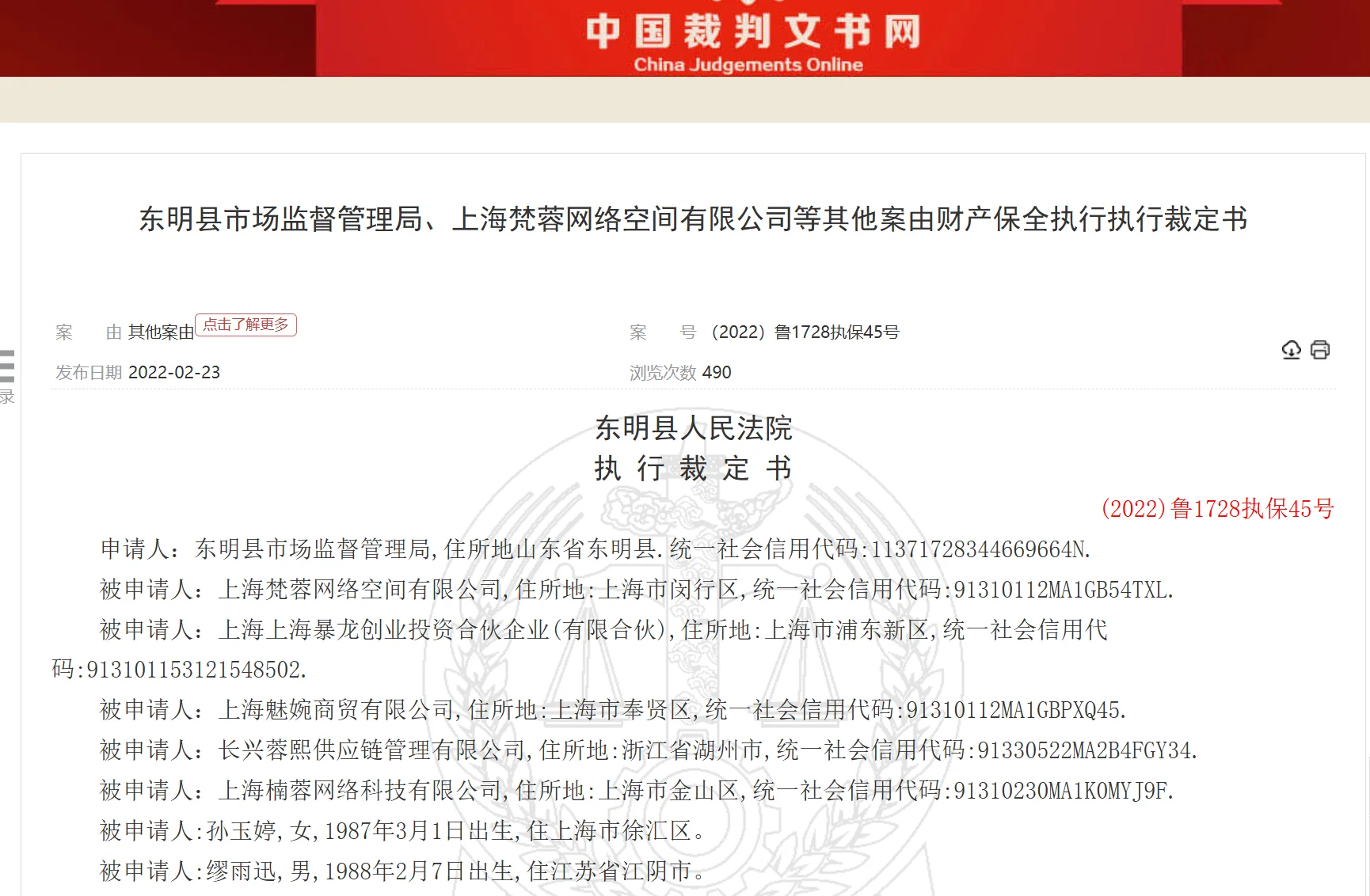
According to a court ruling published on China Judgements Online in February 2022, the Dongming County People's Court ordered the freezing of 219 million RMB ($30.8 million) in bank deposits across five corporate entities and three individuals, including Sun. In May 2022, local market supervisors fined brand affiliate Changxing Rongxi Supply Chain Management 2 million RMB ($280,000) for organizing pyramid sales operations.
Dismantled Brand, Ongoing Legal Disputes
Pearlosophy's commercial footprint has largely disappeared. Official flagships on major Chinese e-commerce platforms Tmall, JD.com, and Douyin—TikTok's Chinese sister app—have been closed or removed from search listings. Its brand presence on Xiaohongshu, a popular lifestyle and shopping platform, and Weibo, China's X-like microblogging service, has remained dormant since July 2023.
Data from regulatory databases shows that out of 117 registered product filings under Pearlosophy—spanning serums, masks, and cosmetics—the vast majority have been canceled or revoked. Only a few SKUs, including its Repairing Hydration Essence and Gardenia Hydrating Soothing Spray, submitted standard annual compliance reports in early 2026.
Multiple affiliated operating entities have dissolved or been listed for operational anomalies. Shanghai Fanrong Biotechnology faces 22 pending judicial cases involving lease and supplier contract disputes. In April 2026, the Minhang District People's Court in Shanghai named the entity an execution debtor for 2.45 million RMB ($344,000), subsequently issuing a high-consumption restriction order against the company and its legal representative.
Pearlosophy's collapse highlights a broader tightening of legal enforcement against non-compliant sales networks in China's domestic beauty sector, echoing wider financial distress across direct-sales operators as seen when the debt of Chinese skincare brand Hanhoo's parent was put up for auction.
Conversation
0 Comments