Legacy Chinese Skincare Brand Shanghai Meilan Collapses Into Bankruptcy
Shanghai Meilan, a decades-old Chinese vanishing cream maker, has folded after failing to pay court costs, highlighting the risks of strategic stagnation.

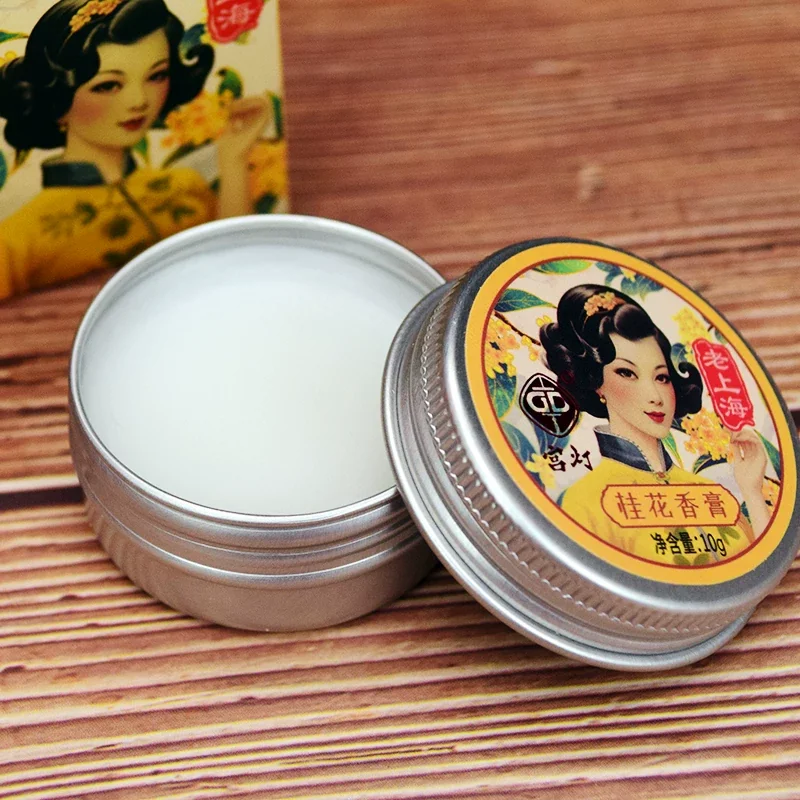
Selling traditional vanishing cream for decades, legacy skincare manufacturer Shanghai Meilan Cosmetics Co., Ltd. has reached an end where it cannot even afford its own insolvency proceedings.
On August 4, discussions around the company’s insolvency topped trending topics on Weibo, China's X-like microblogging platform, following a ruling by the Pudong New Area People's Court in Shanghai.
According to court filings, Shanghai Meilan (Meilan) had only 95,800 yuan ($13,300) in accessible liquid assets against court-approved debts totaling 19.42 million yuan ($2.7 million). Because completing the liquidation process required 98,800 yuan in administrative fees—exceeding the company’s cash on hand—the court terminated the liquidation process, leaving creditors empty-handed.
Founded in Shanghai in 1984, Meilan became a household name in the 1980s and 1990s through its signature vanishing creams, eventually expanding to more than 670 sales points nationwide at its peak. Today, after four decades of operation, the pioneer of domestic skincare has collapsed under mounting liabilities.
Outdated Formulas and Mismatched Channels
Vanishing cream gained widespread popularity in China during the late 20th century, before multinational beauty conglomerates entered the market at scale. At the time, consumer skincare needs were basic and focused almost entirely on simple hydration. Leveraged by Shanghai’s reputation for high-quality light manufacturing, Meilan launched its flagship vanishing cream in 1989, rapidly capturing national market share.
However, consumer preferences shifted dramatically in the 21st century. Skincare shoppers increasingly prioritized active ingredients, product texture, and clinical efficacy over basic moisture. While international and modern domestic brands invested in scientific research and specialized active compounds, Meilan kept its decades-old formula intact, leaving its heavy fragrance and greasy texture out of step with contemporary expectations. Today, consumer focus on targeted formulations continues to redefine the market, echoing broader trends detailed in recent research on AI personalization and predictive beauty.
As mainstream retail growth stalled, Meilan pivoted by repositioning its vanishing cream as a tourist souvenir. In 2014, the company launched a sub-brand named Zhenggege, utilizing royal-palace-inspired packaging and heritage nostalgia to target tourists at airports, train stations, and major cultural destinations. Zhenggege quickly scaled to over 670 locations, securing retail spots in Shanghai's Chenghuang Temple and Nanjing Road, as well as high-traffic tourist sites across China.
While tourist retail boosted short-term sales, it suffered from low customer retention. Visitors treated the products as impulse souvenir purchases rather than repeatable daily skincare routines, preventing the brand from building a stable customer base. Ultimately, Zhenggege functioned more as a cultural IP souvenir business than a competitive cosmetics line.
Concurrently, Meilan missed the digital transformation that reshaped Chinese beauty retail over the past decade. The company's official WeChat account posted twice in 2016 before going silent, and the brand established virtually no presence on major Chinese e-commerce platforms. Competing legacy brands like Pechoin and Shanghai Jahwa modernized their product formulas with trending active ingredients such as hyaluronic acid and ceramides while aggressively building livestreaming and e-commerce operations. According to market data from beauty trade intelligence platform JuMeili, the top five vanishing cream brands controlled over 63% of the sector's market share by 2025.
When the 2020 pandemic disrupted travel, foot traffic at tourist spots and transit hubs vanished, severing Meilan's primary revenue stream. At the same time, the company's contract manufacturing (OEM) business collapsed as smaller beauty brands cut procurement budgets, forcing Meilan into a severe liquidity crisis.
Troubled Acquisition and Downward Spiral
Seeking a lifeline, Meilan was acquired in 2021 by Shenzhen Datong Real Estate Development Co., Ltd. (Shenzhen Datong), a listed holding firm that added Meilan to a group of 11 newly acquired subsidiaries that year.
Listed on the Shenzhen Stock Exchange in 1994, Shenzhen Datong was widely viewed by investors as a speculative, story-driven company. Over the years, its core business shifted repeatedly across appliances, advertising, industrial hemp, blockchain, and live-commerce streaming. Between 2015 and 2017, China's Securities Regulatory Commission (CSRC) investigated the firm for inflating revenues and profits by 162 million yuan through fabricated ad contracts. In 2019, company employees physically obstructed CSRC investigators, leading to widespread public notoriety.
When purchasing Meilan, Shenzhen Datong promised to integrate livestreaming resources, expand online sales channels for Zhenggege, and fund factory upgrades. None of these commitments materialized. In 2023, Shenzhen Datong was forced into delisting following years of financial fraud, ending its 29-year public listing after its stock price plummeted over 80%.
With its parent company in crisis, Meilan’s financial condition rapidly deteriorated. Beginning in late 2021, the manufacturer faced a series of contract disputes and labor lawsuits. Starting in February 2023, Chinese courts listed Meilan as a dishonest judgment debtor eight times, involving 7.68 million yuan in enforced claims.
Staffing shrank until all remaining employees departed. After failing to file required corporate annual disclosures for 2025 and 2026, local market regulators placed Meilan on an official watchlist for abnormal operations. Meanwhile, the sub-brand trademark "Zhenggege" was auctioned off by a court in October 2024 for 4.54 million yuan to Jinxuan (Shanghai) Enterprise Management Co., Ltd.
Meilan's ultimate collapse stemmed from strategic inertia: failing to update formulas for decades, mispositioning skincare as a souvenir, and completely missing the e-commerce transition. When physical tourist channels broke down, the legacy brand had no alternative fallback—leaving its parent company's downfall as merely the final catalyst in an already inevitable collapse.
Conversation
0 Comments