Why Chinese Body Care Giant Little Dream Garden Stumbled on Its IPO Path
Chinese body care brand Little Dream Garden built a $260M empire on cheap products and viral marketing...

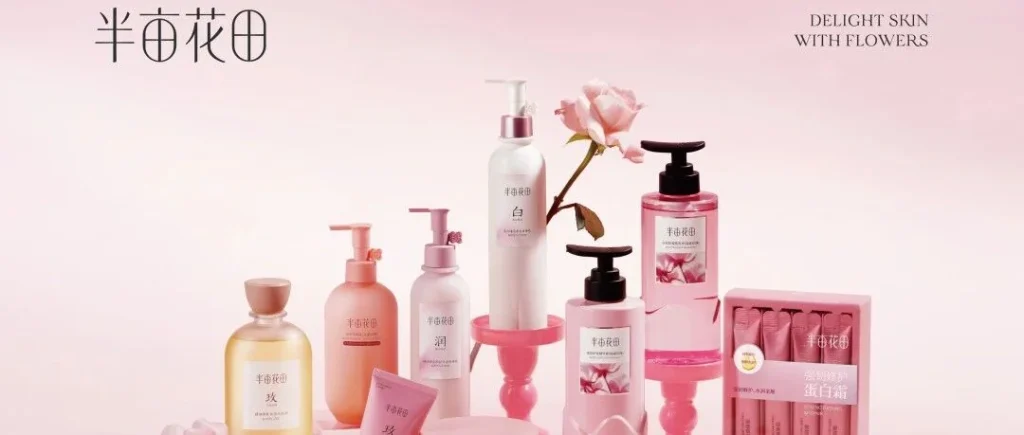
For global beauty brands and investors, the story of Little Dream Garden (Banmu Huatian) illustrates the systemic challenges facing China's "digital-native" beauty brands. While hyper-aggressive social media marketing can generate massive short-term sales, sustaining that growth without deep R&D or proprietary formulations is becoming nearly impossible under tightening regulatory scrutiny.
A domestic brand that built a nearly 2 billion RMB (approx. $275 million USD) annual empire on affordable body lotions and scrubs has seen its Hong Kong IPO plans disrupted by regulators. The CSRC inquiry, a key aspect of cosmetics regulatory compliance, targeted the brand's shareholding structure, sudden pre-IPO financing, and erratic business scope, exposing the collective dilemma of traffic-driven brands trying to enter capital markets.
The Rise of a Digital-Native Giant
Founded in 2010 in Pingyin, Shandong, as a small rose-processing workshop, Little Dream Garden spent its first eight years quietly building a presence in China's then-underserved body care sector, focusing on affordable body lotions and scrubs.
Its breakthrough came in 2018 with the rise of short-video platforms, which enabled the brand to go "all-in" on social commerce through content marketing. By 2019, it was partnering with roughly 200 multi-channel network (MCN) agencies. For a single body scrub product, it collaborated with over 3,500 influencers between May and July alone.
Priced at just a few dollars and backed by seemingly authentic user reviews, the products quickly won over Gen Z consumers. In 2019, Douyin (TikTok's Chinese sister app) alone generated 1.5 billion RMB in sales. By 2024, annual revenue reached 1.5 billion RMB, and surged to 1.895 billion RMB (approx. $261 million USD) in the first three quarters of 2025. Backed by high-profile celebrity endorsements from actress Dilraba Dilmurat and table tennis champion Sun Yingsha, the brand secured its spot as China's top domestic body care player.
The Cracks in the Traffic-Driven Model
Behind the stellar sales figures, structural vulnerabilities were mounting. Between 2023 and the first three quarters of 2025, sales and marketing expenses consumed 53.2%, 45.2%, and 47.3% of revenue, respectively. Nearly half of every dollar earned was immediately reinvested into buying traffic.
Meanwhile, R&D spending plummeted from a modest 2.4% of revenue to a mere 1.5%. Lacking proprietary formulas or exclusive patents, the brand relied heavily on generic industry templates. With an average product price of just 21 RMB (approx. $2.90 USD), Little Dream Garden found itself trapped: raising prices risked alienating its highly price-sensitive customer base, while keeping prices low meant profits were steadily eaten away by soaring customer acquisition costs.
Quality control issues also plagued the brand's 100% outsourced manufacturing (OEM/ODM) model, leading to frequent consumer complaints regarding skin allergies, batch inconsistencies, and off-putting scents. In March 2025, the brand's official account on Xiaohongshu—China's leading lifestyle and shopping platform—was temporarily banned due to allegations of fabricating consumer reviews through organized astroturfing campaigns.
Regulatory Roadblocks Halt the IPO
When Little Dream Garden filed its prospectus for a Hong Kong IPO in January 2026, the market initially viewed the brand as a highly promising contender. However, five months later, an inquiry letter from the CSRC exposed the company's structural weaknesses.
The CSRC raised six critical questions, targeting fundamental governance issues. The company remains a tightly controlled family business, with the founding couple holding over 85% of the voting rights. Furthermore, the regulator questioned a sudden round of pre-IPO financing that brought in institutional investors and even the founders of competing beauty brands, rapidly inflating the company's valuation to 4.2 billion RMB (approx. $580 million USD).
Perhaps most bizarrely, the company's official business registration listed activities completely unrelated to cosmetics, such as electric vehicle sales and charging station operations. The regulatory inquiry also flagged issues regarding equity incentive compliance, special shareholder agreements, and foreign investment access, casting a long shadow over its listing prospects.
The Hard Transition to Brand Equity
Little Dream Garden's current bottleneck reflects a broader shift across the Chinese beauty industry. Over the past decade, dozens of digital-native brands scaled rapidly by riding the wave of emerging e-commerce channels, only to stall as traffic costs became unsustainable.
This struggle to transition from short-term viral success to long-term brand equity is a common hurdle for Chinese beauty companies, raising questions about whether players like Shanghai Jahwa can turn viral hits into a mature beauty empire as they restructure their portfolios.
In contrast, successful survivors like Proya Cosmetics have managed to navigate these cycles. While Proya also capitalized on early e-commerce dividends, it aggressively redirected resources toward R&D and proprietary "hero products," successfully elevating its average price point to the 300 RMB (approx. $41 USD) range. Although Proya maintains a similar 50% marketing spend ratio, its marketing serves to build long-term brand equity rather than chasing immediate transactional conversions. This difference is starkly reflected in their bottom lines: Proya boasts a net profit margin of over 14%, compared to Little Dream Garden's 7.8%.
Little Dream Garden is attempting to pivot by building an omni-channel retail presence and establishing three dedicated R&D centers in Jinan, Guangzhou, and Shanghai. However, for a brand seeking an IPO, a public listing is not the finish line, but the beginning of a painful restructuring. Moving from a traffic-driven model to a brand-driven one is a steep climb—and shedding the "viral internet brand" label to become a resilient, R&D-backed household name remains its ultimate test.
Conversation
0 Comments