Can Shanghai Jahwa Turn Viral Hits Into a Mature Beauty Empire?
As Shanghai Jahwa pivots to high-margin beauty, the Chinese giant faces the ultimate test: replicating its viral hero products into sustainable brand equity.


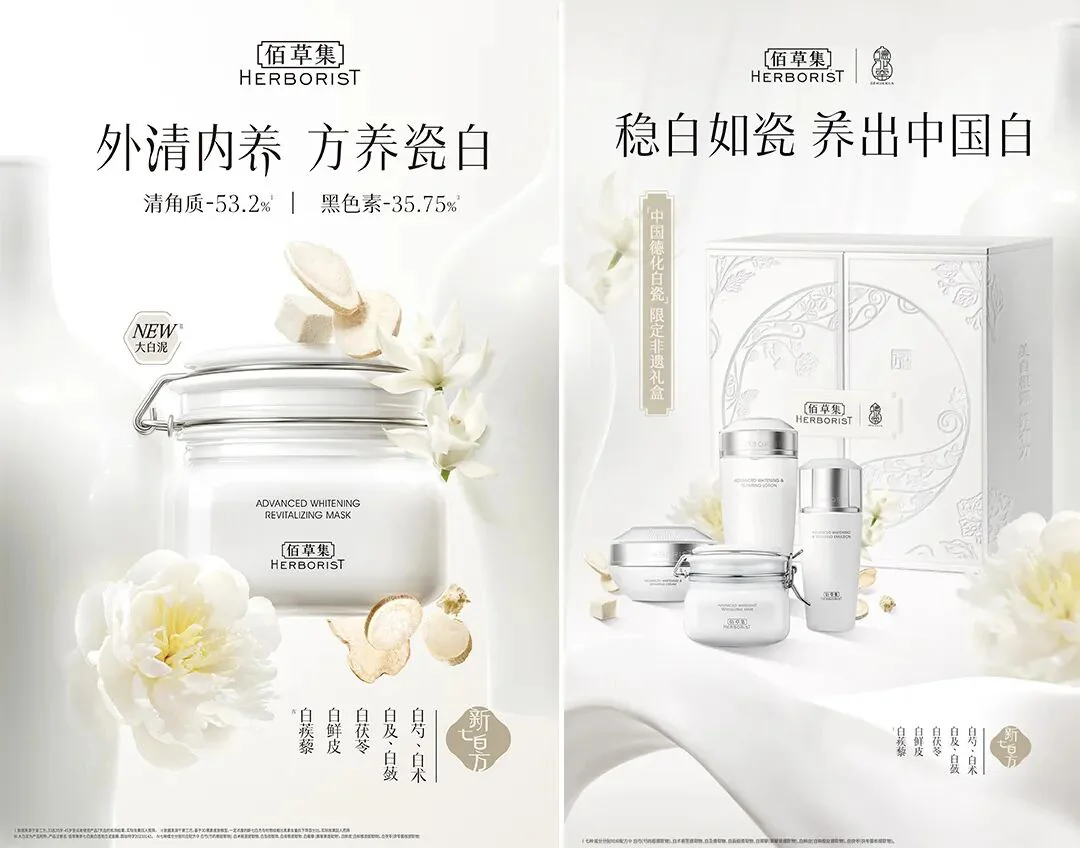
Earlier this month, legacy Chinese cosmetics and personal care giant Shanghai Jahwa hosted its Autumn/Winter 2026 brand strategy conference. Eight of its core brands—including mass-market daily chemical brand Liushen, clinical skincare brand Yuze, herbal skincare brand Herborist, and heritage brand Maxam—unveiled their product pipelines, marketing campaigns, and channel strategies for the second half of the year. The company reported meeting its first-half revenue and profit targets, driven by improved operational, organizational, and marketing efficiency.
Days later, a Shanghai Jahwa subsidiary completed the regulatory filing for a new cosmetic ingredient: amentoflavone. Combined with its previously registered proprietary ingredients, Osmunda japonica extract and Ganoderma lucidum (white reishi) extract, the group is actively integrating proprietary active ingredients into its premium brands, including Herborist, Yuze, and Dr. Yu. While the strategy conference focused on commercial efficiency, these R&D milestones aim to build product differentiation.

These moves come amid a shifting financial backdrop. In Q1 2026, Shanghai Jahwa’s revenue rose 5.4% year-on-year, while non-GAAP net profit surged 38.2%. Domestic online sales grew by 47%, propelled by a 62.5% spike in online beauty sales. With its digital and beauty divisions expanding, the company is shifting its focus toward efficiency, R&D, and pipeline development.
After more than a year of restructuring, Shanghai Jahwa has found a growth formula centered on core brands, e-commerce channels, and "hero products" (defined as single SKUs generating over 100 million RMB, or roughly $14 million USD, in annual sales). However, the real test lies ahead: Can the group continue to repair its net profit margins? Will its hero products shift from volume-driven growth to premium positioning? How much runway do these star products have, and how close is Shanghai Jahwa to becoming a mature, multi-brand beauty powerhouse?
Why It Matters
For global beauty brands and suppliers, Shanghai Jahwa's transition is a bellwether for China's legacy personal care market and the broader beauty industry. As domestic giants move away from low-margin daily chemicals toward high-margin clinical and herbal skincare, they are increasingly investing in proprietary ingredients and in-house digital ecosystems. Understanding how these legacy players scale hero products offers critical insights into competing in China's highly digitalized beauty landscape.
Efficiency is Key to Restoring Profit Margins
In 2025, Shanghai Jahwa reported revenue of 6.32 billion RMB ($870 million USD), up 11.2% year-on-year, turning a net profit of 270 million RMB ($37 million USD) to achieve a financial turnaround. Operating cash flow rose to 800 million RMB, while accounts receivable and inventory fell by 26.5% and 7.6%, respectively. These figures indicate that the company's recovery has spread from top-line revenue to inventory health and cash flow.
However, Shanghai Jahwa’s net profit margin in 2025 hovered around 4.2%. To close the gap with global beauty industry standards, the company must examine the quality of its growth.
Historically, the group relied on mass-market daily chemical brands like Liushen (famous for its traditional herbal Florida Water) and Maxam to drive volume. While these brands boast deep retail penetration and high purchase frequency, their premium pricing power is limited. In 2025, the group's beauty division grew by 53.7% and online sales surged by 60.6%, becoming the primary growth engines. While a higher share of beauty sales boosts gross margins, it also demands heavy spending on traffic acquisition, livestreamer commissions, and content creation.
Thus, translating beauty growth into higher net margins requires a two-step transmission. First, scaling hero products concentrates R&D, content, and channel resources onto a few SKUs, diluting fixed costs. Second, optimizing content, channel, and supply chain efficiency ensures that sales and administrative expenses grow slower than revenue.
Shanghai Jahwa has built in-house content creation teams for Liushen, Yuze, and Herborist, leveraging self-run livestreams, influencer collaborations, and organic social seeding on platforms like Xiaohongshu (China's lifestyle and shopping platform) and Douyin (TikTok's Chinese sister app). Offline, the company is expanding into untapped lower-tier counties while closing underperforming department store counters. Management attributes its improved profitability to top-line growth, gross margin expansion, channel efficiency, and lower administrative expense ratios.
Ultimately, whether profit margins can continue to rise depends on lowering the incremental marketing, channel, and organizational costs required to generate each new dollar of revenue. This means hero products can no longer be judged solely by sales volume.
Rethinking the Playbook for Hero Products
In 2025, Shanghai Jahwa nurtured three hero products that surpassed the 100-million-yuan ($14 million USD) milestone: the Liushen "Egg" mosquito repellent, the Yuze Barrier Repair Cream, and the Herborist Clay Mask. Notably, the Liushen "Egg" hit this milestone within its launch year, while the Herborist Clay Mask surpassed 200 million RMB. These three products maintained strong momentum into Q1 2026.
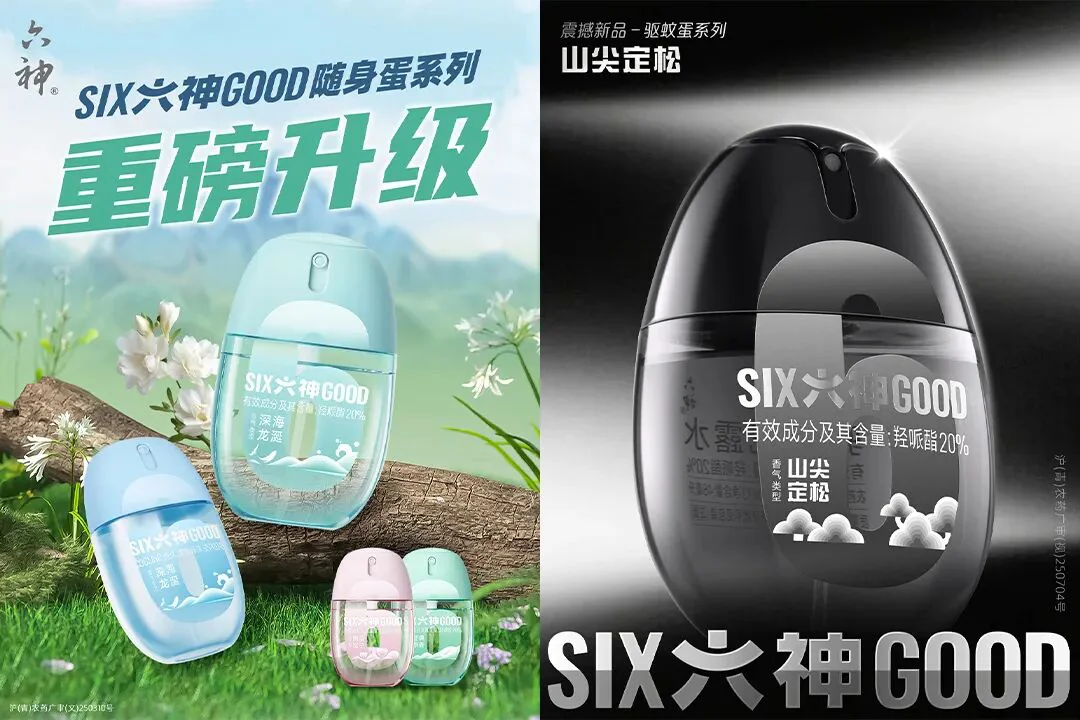
These products span personal care, clinical skincare, and herbal skincare, proving that Shanghai Jahwa can identify niche segments and concentrate resources to scale them. However, three success stories are not yet enough to prove that this playbook is systematically repeatable.
Therefore, 2026 remains a year of scaling. The three existing hero products must sustain year-over-year growth, while next-in-line candidates—such as Liushen's fragrance body wash, Herborist's Dendrobium oil, Yuze's ultra-moisturizing cream, and Yuze's sunscreen and repair ampoules—must step up. As sun protection and skin repair gain momentum globally, with post-sun care set for a global boom driven by consumers seeking skin longevity, Shanghai Jahwa's focus on Yuze's sunscreen and barrier repair ampoules aligns with international skincare trends.
By 2027, the evaluation metrics for these products must shift toward repeat purchase rates, organic traffic share, price stability, and SKU-level profitability. While top-tier livestreaming can quickly push a product past the 100-million-yuan mark, a brand's true strength is tested by whether it can maintain sales after ad spend is dialed back, and whether a single hero product can drive traffic to the rest of the portfolio.
By 2028, the focus will turn to product relay. Liushen must expand from mosquito repellents into baby care and fragrance body washes to reduce its seasonal dependence on summer sales; Yuze needs to transition consumers from its barrier cream to its broader moisturizing, sun protection, and serum lines; Herborist must establish a dual-pillar strategy centered on its clay masks and facial oils.
This means that over the next three years, Shanghai Jahwa must scale its hero products while narrowing its brand, category, and SKU boundaries. Otherwise, a proliferation of brands and new launches will dilute its resources.
The Ceiling of a Hero Product is Its Ability to Spawn the Next
While the Liushen "Egg," Herborist Clay Mask, and Yuze Barrier Repair Cream remain reliable growth drivers, their long-term potential cannot be projected solely based on current sales.
The Liushen "Egg" successfully repositioned traditional herbal Florida Water for portable, long-lasting, and fragranced use cases. The company has since launched "Little Liushen" to target the baby mosquito repellent market. Despite the seasonal nature of insect repellents, the "Egg" is projected to reach a scale of 300 million to 500 million RMB over the next three years. Its greater value lies in whether it can anchor outdoor protection, baby care, and fragrance body washes, extending Liushen's relevance beyond the summer months.
The Herborist Clay Mask surpassed 200 million RMB in 2025. While clay masks offer instant visual results that perform well in short-video marketing, they suffer from low usage frequency and intense competition. Over the next three years, the mask's realistic ceiling is estimated at 300 million to 400 million RMB. For Herborist, the critical question is whether clay mask buyers can be converted into loyal users of its premium Dendrobium facial oil, face creams, and whitening lines.
Yuze's growth relies heavily on product serialization. Its barrier cream has successfully established a strong reputation for skin barrier repair, and the brand is now expanding into daily sunscreens and repair ampoules. If these products can leverage the professional trust earned by the barrier cream, Yuze's cream and repair portfolio could reach 400 million to 600 million RMB in the next three years. The challenge lies in translating its clinical partnerships, patented technologies, and ingredient research into clear, consumer-friendly product benefits.
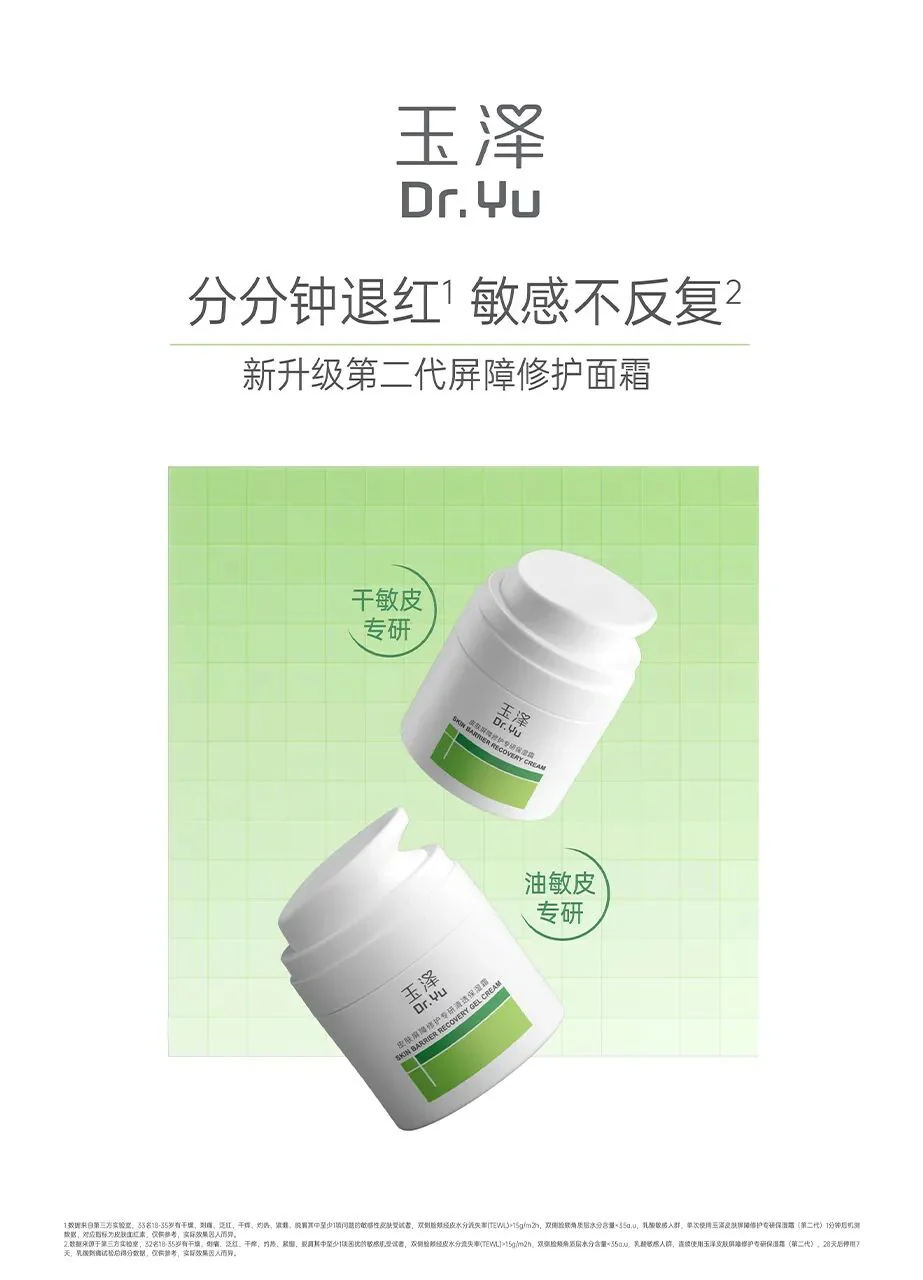
Currently, Liushen's fragrance body wash, Herborist's Dendrobium oil, and Yuze's sunscreen and repair ampoules form the second tier. Meanwhile, "Little Liushen," Herborist's clay-and-oil lines, and new launches from Maxam, GF (men's care), and Dr. Yu serve as pipeline reserves.
Under a moderate scenario, Shanghai Jahwa could establish 7 to 10 hero products generating a combined 2 billion to 3 billion RMB in revenue by 2028. However, this projection assumes that existing hero products can successfully transfer their user base, content assets, and brand equity to the next generation of products. If every new launch requires buying traffic from scratch, they will remain isolated viral hits rather than sustainable brand pillars.
The Challenge of Replicating Success
Scaling a daily chemical and beauty enterprise typically involves three stages: acquiring consumers through high-performing products, driving repeat purchases and premium pricing through brand equity, and leveraging organizational capabilities to replicate that success across multiple brands.
This path requires five core capabilities: stable brand positioning, a continuous pipeline of hero products, R&D that translates into consumer value, an efficient channel and supply chain network, and an organizational structure capable of cross-brand replication.
Shanghai Jahwa already possesses a solid industrial foundation. Brands like Liushen, Maxam, Herborist, and Yuze enjoy high consumer awareness. The company operates two major R&D centers, five manufacturing plants, and a multi-channel sales network. In 2025, its R&D investment grew by 29.1%, while logistics costs fell by 1.26 percentage points.
Initial success in hero product replication and e-commerce operations is also visible. Its three 100-million-yuan products span three distinct brands, and the company has successfully established in-house content teams, self-livestreaming operations, and price-control mechanisms. However, whether single-product buyers can be converted into long-term brand loyalists, whether online growth can sustainably lower customer acquisition costs, and whether other portfolio brands can replicate the playbooks of Liushen, Yuze, and Herborist remains to be seen.
Evaluating the company across the five core capabilities reveals that its brand equity, R&D, and supply chain foundations are mature. Its hero product playbook, content efficiency, and user retention strategies are taking shape. However, long-term brand equity compounding and systematic multi-brand replication capabilities still need to be fully realized.
At the strategy conference, Shanghai Jahwa's repeated emphasis on operational, human, and marketing efficiency highlights its current focus. Whether the Herborist Clay Mask can lower the consumer education cost for its Dendrobium oil, whether the Barrier Repair Cream can lend clinical credibility to Yuze's sunscreen, and whether the "Egg" can transition Liushen into year-round personal care will determine if these hero products are merely temporary sales spikes or the foundation for the group's next era of growth.
Only when one successful product naturally paves the way for the next will Shanghai Jahwa have truly built a mature, world-class beauty operating model.
Conversation
0 Comments