Lily & Beauty Swings to Profit Driven by Master Distribution Expansion
Chinese beauty e-commerce partner Lily & Beauty swung to a net profit of 22.52 million yuan in H1 2026, led by strong growth in master distribution.

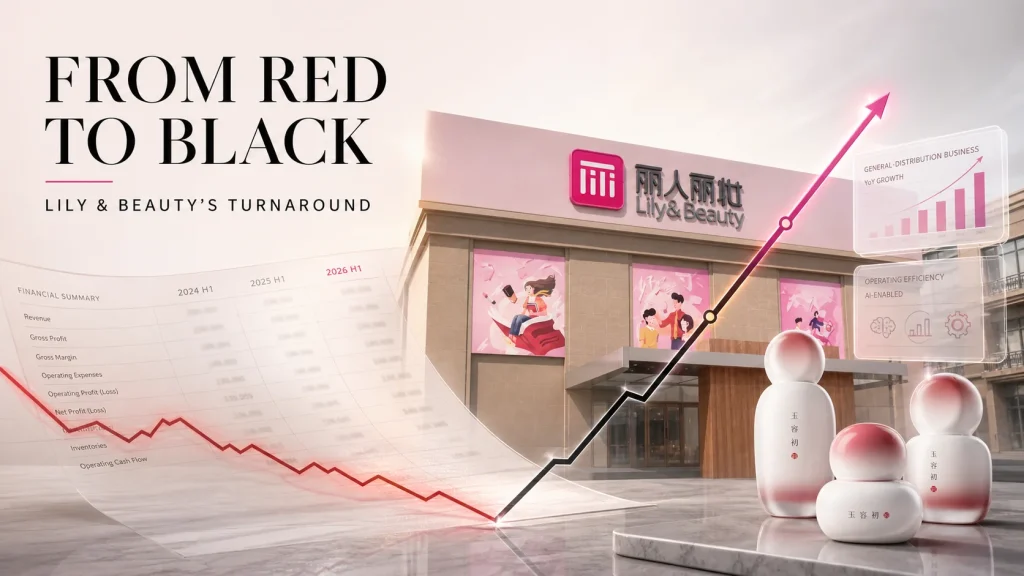
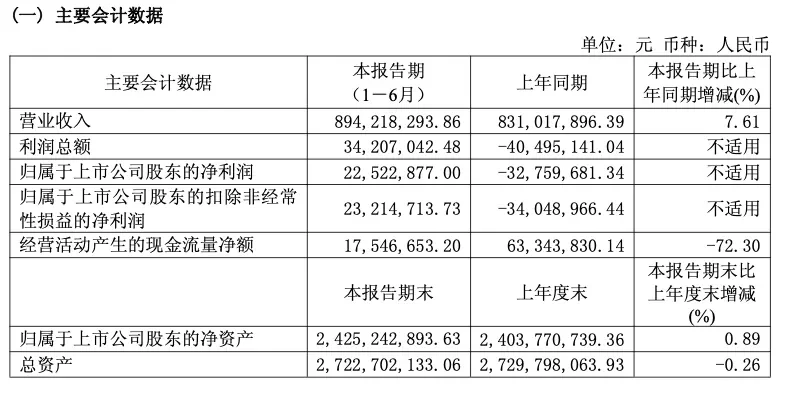
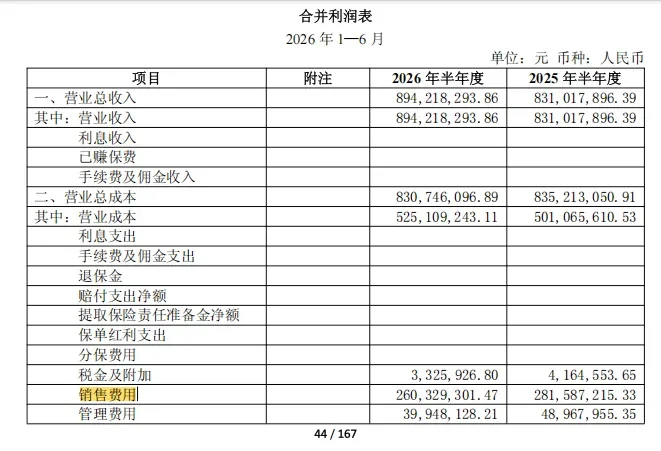
On August 14, 2026, Shanghai-listed beauty e-commerce partner Lily & Beauty released its semi-annual report for 2026. Revenue reached 894 million yuan ($124 million), up 7.61% year-over-year. Total profit reached 34.21 million yuan, reversing a loss of 40.50 million yuan in H1 2025. Net profit attributable to shareholders reached 22.52 million yuan, compared to a loss of 32.76 million yuan in the prior-year period, while non-GAAP net profit reached 23.21 million yuan.
Five months earlier, Lily & Beauty presented a far more challenging picture in its 2025 annual report, recording full-year revenue of 1.69 billion yuan (down 2.08% year-over-year) and a net loss of 79.99 million yuan.
The turnaround within six months highlights how the Chinese beauty operator restructured its core business model to recover profitability.
Strategic Pivot: Moving From Defense to Growth
In its 2025 annual report, Lily & Beauty cited a slowing recovery in domestic consumer spending and operational pressure across China's beauty market. Business model adjustments and contract terminations by partner brands had pulled down revenue.
In response, management focused on improving operational efficiency. The company adjusted its self-owned brand portfolio, scaling back labels that lagged consumer demand. By the end of 2025, inventory had fallen 4.31% year-over-year to 417 million yuan.
By early 2026, management acknowledged that domestic retail had entered a deeper consolidation phase marked by widening performance gaps between brands. In April, the company issued an operational action plan emphasizing core business profitability.
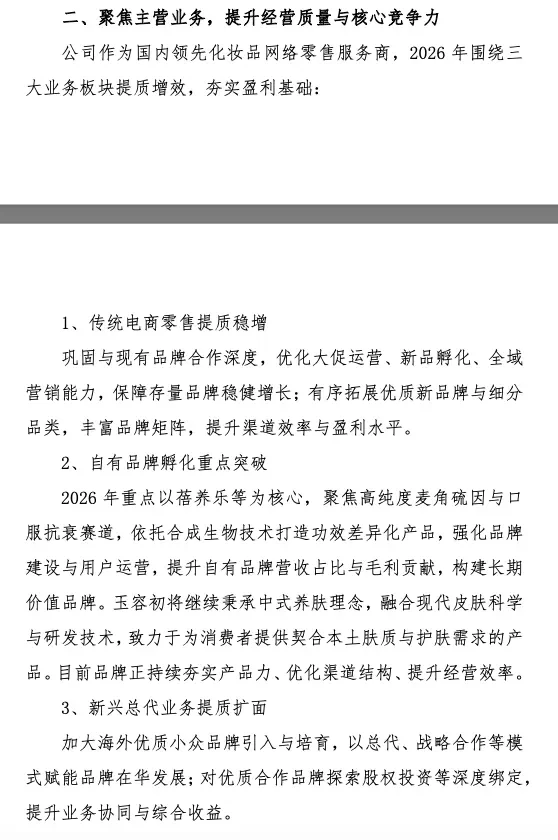
As retail landscape shifts extended beyond domestic borders—a trend reflected as nearly 10,000 beauty brands exit Southeast Asia as e-commerce competition shifts—Lily & Beauty concentrated resources across three pillars: stabilizing traditional e-commerce store operations, incubating proprietary brands organically, and expanding its emerging master distribution model.
The operational pivot showed immediate impact on the financial results. In H1 2026, total profit improved by more than 74 million yuan year-over-year, driven by gross margin gains, lower operating expenses, and reduced asset impairment charges.
Master Distribution: Becoming a Core Growth Engine
To execute its strategic shift, Lily & Beauty relied heavily on its master distribution business, launched in 2024. While traditional e-commerce operations maintained sales volume and self-owned brands remained in development, master distribution delivered rapid momentum.
In H1 2026, master distribution revenue grew over 200% year-over-year. After contributing more than 8% of total revenue in 2025, the segment became the company's primary driver of growth in the first half of the year.
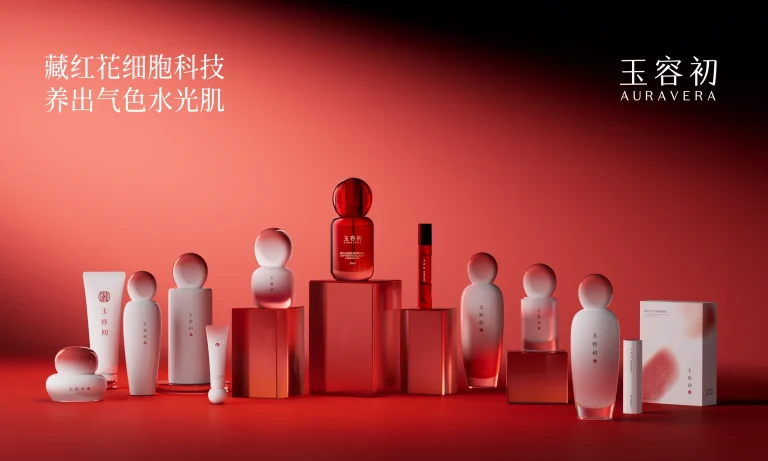
Skincare brand Wenlici illustrates the strategy.
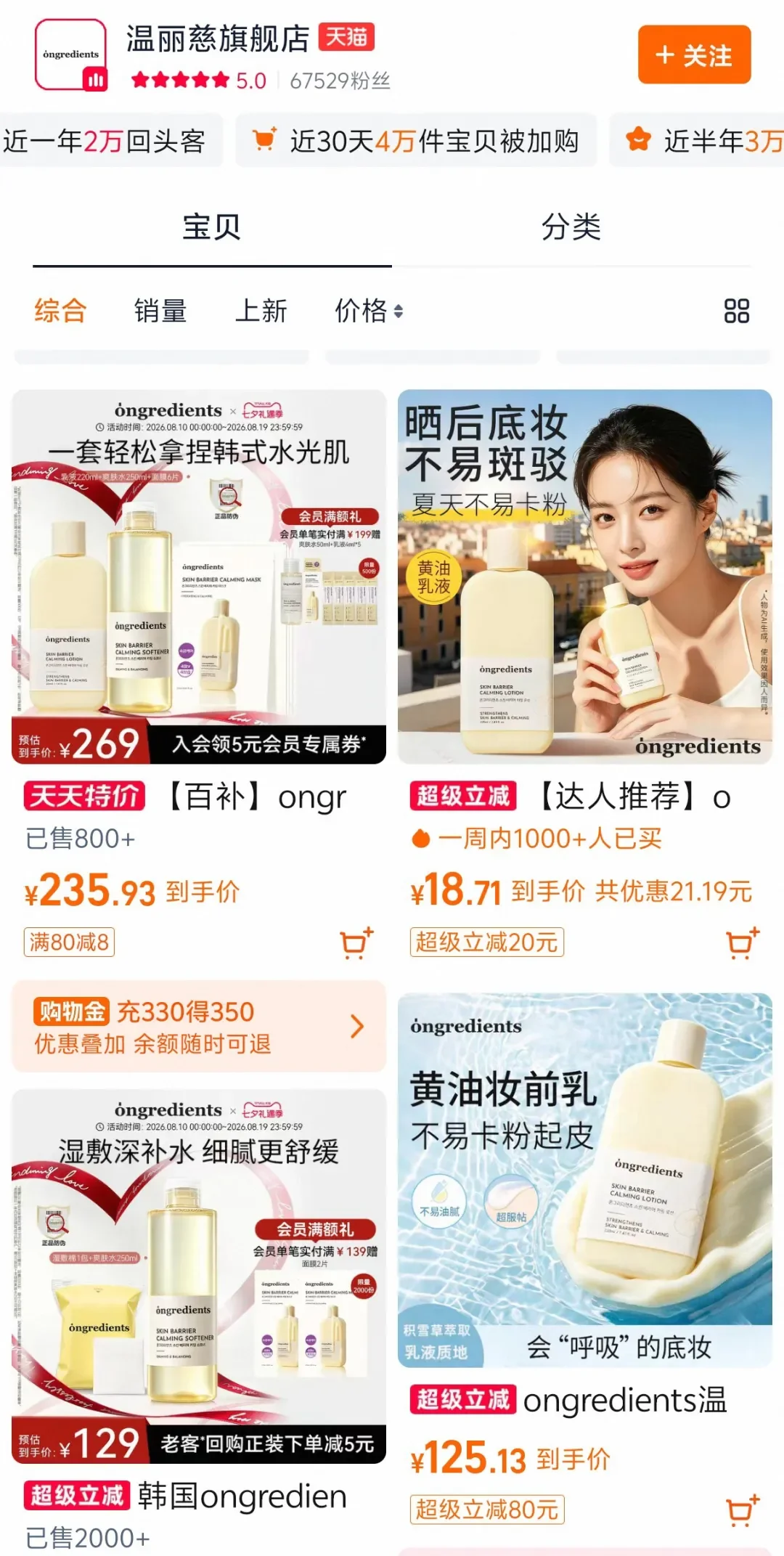
Lily & Beauty adopted a hero-product strategy for Wenlici, focusing marketing efforts on a single "water-glow primer" to avoid saturated lotion categories. Within one year of launch, Wenlici generated over 160 million yuan in gross merchandise value (GMV). By May 2026, offline sales surpassed its total 2025 volume, up 142% year-over-year, while initial sales on Douyin—TikTok's Chinese sister platform—exceeded 11 million yuan during the mid-year 618 shopping festival.
Simultaneously, Lily & Beauty expanded its European brand partnerships. In June 2026, the company signed an agreement at the London headquarters of the China-Britain Business Council with the licensee of the Royal Botanic Gardens, Kew, becoming its exclusive online distributor in China. The company's European brand footprint now covers functional skincare, body care, and natural fragrances.
The shift toward master distribution marks an evolution for Chinese e-commerce operating partners (TPs). Beyond executing product listings on major platforms like Tmall and Douyin, master distributors manage end-to-end launch strategy, content seeding, digital marketing, and offline retail distribution.
Profitability Check: Shifting From Scale to Margin Quality
Financial statements demonstrate the impact of operational restructuring. The H1 2026 profit turnaround of approximately 75.28 million yuan was driven by three main factors: a 39.16 million yuan gross profit increase from master distribution, a 30.28 million yuan reduction in combined sales and administrative expenses, and a 9.39 million yuan decrease in inventory impairment charges.
Operating efficiency improved alongside revenue growth. Sales expenses fell 7.55% year-over-year, administrative expenses dropped 18.42%, and gross margin expanded from 39.73% to 41.28%.
Efficiency gains were supported by artificial intelligence tools. Lily & Beauty integrated AI image generation into store visual production and deployed AI digital hosts for livestreaming during off-peak hours. In February 2026, Alibaba's Tmall platform recognized the company for digital intelligence capability and service experience.
Despite the profit recovery, operational risks remain. Net operating cash flow fell 72.3% year-over-year to 17.54 million yuan in H1 2026, reflecting high working capital demands during master distribution expansion. Asset impairment provisions totaled 27.16 million yuan for the period.
Regulatory compliance also presents ongoing scrutiny. In July 2026, the Shanghai Securities Regulatory Bureau issued a warning letter to Lily & Beauty over governance issues, including undisclosed guarantees, unrecorded related-party transactions, and advance payments for legal fees on behalf of the controlling shareholder.
While Lily & Beauty demonstrated that shifting to high-margin master distribution can drive quick financial recovery, managing working capital and compliance standards will dictate its long-term stability.
Conversation
0 Comments