Medicube Face Cream Flagged in Hong Kong Over Banned Sudan Dye
Hong Kong Customs has flagged Medicube's popular PDRN cream for containing banned Sudan dye, sparking a dispute over formulation safety and supply chain...


Nine months after a major safety scare involving Sudan dye shook the Chinese beauty market, the controversy has resurfaced—this time targeting APR, one of South Korea's fastest-growing beauty tech companies.
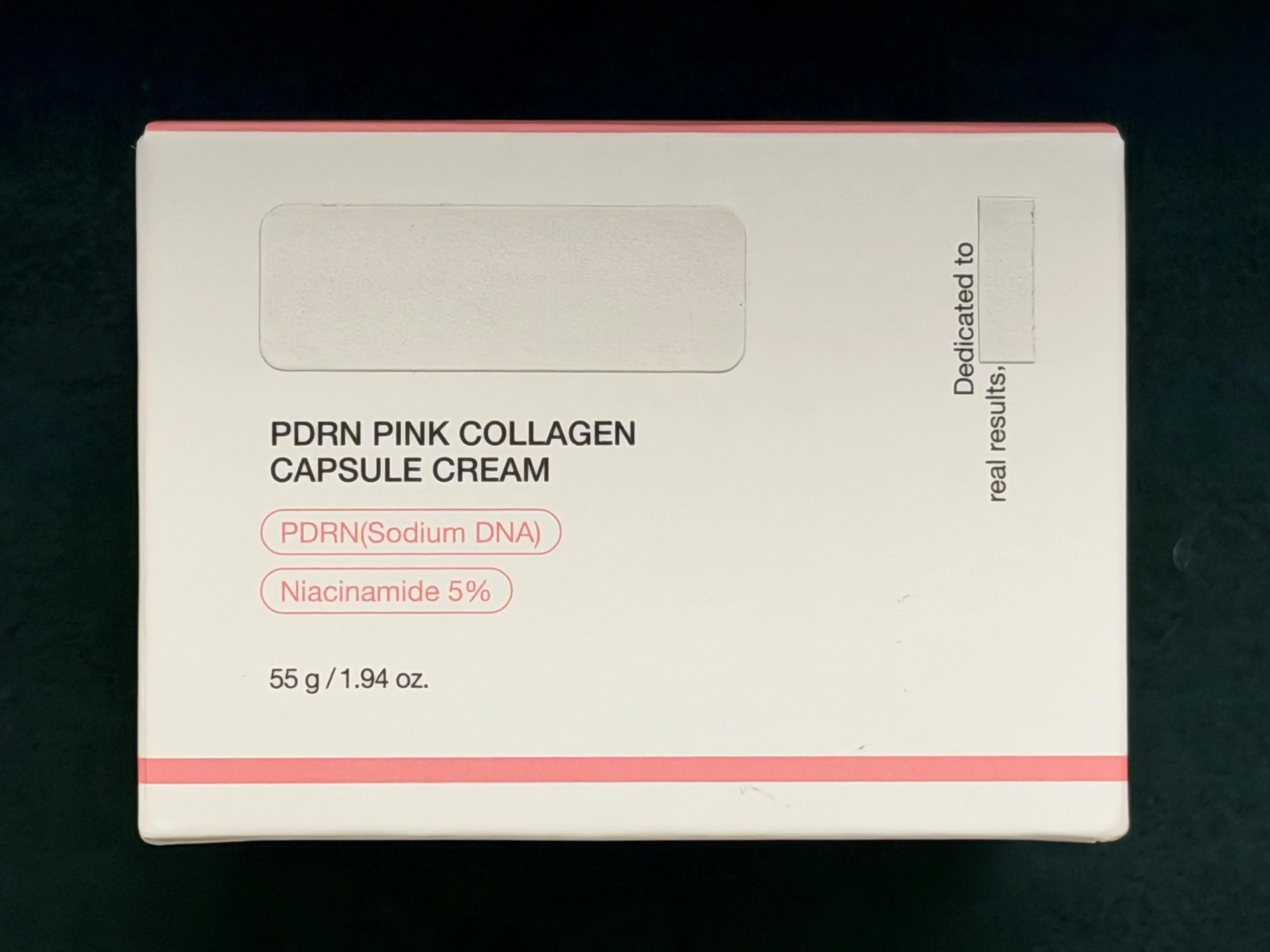
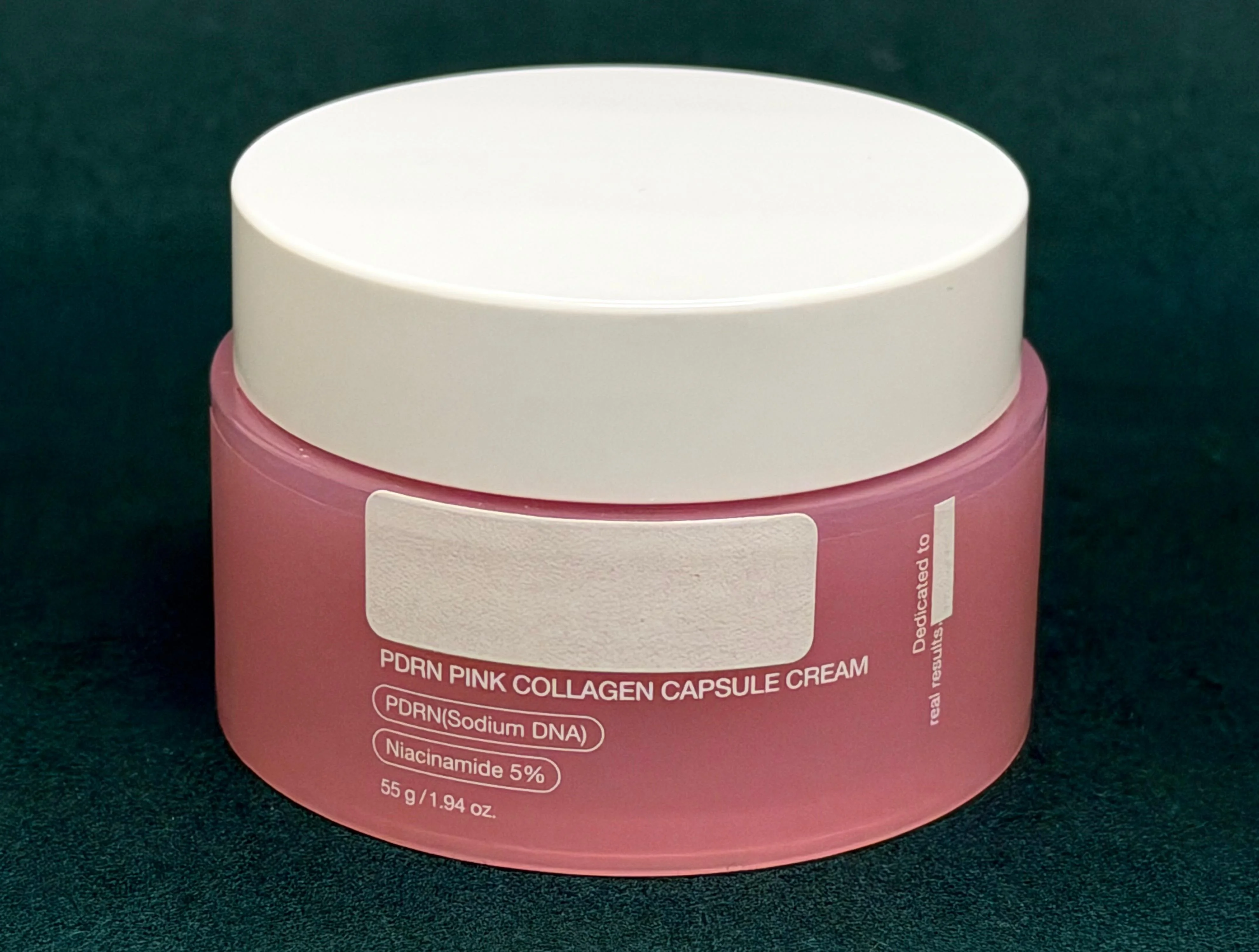
On July 24, the Hong Kong Customs and Excise Department issued a public warning regarding the "PDRN Pink Peptide Capsule Cream" from Medicube, a skincare brand owned by APR. According to government laboratory tests, the product was found to contain Sudan dye, a toxic industrial colorant strictly banned in cosmetics.
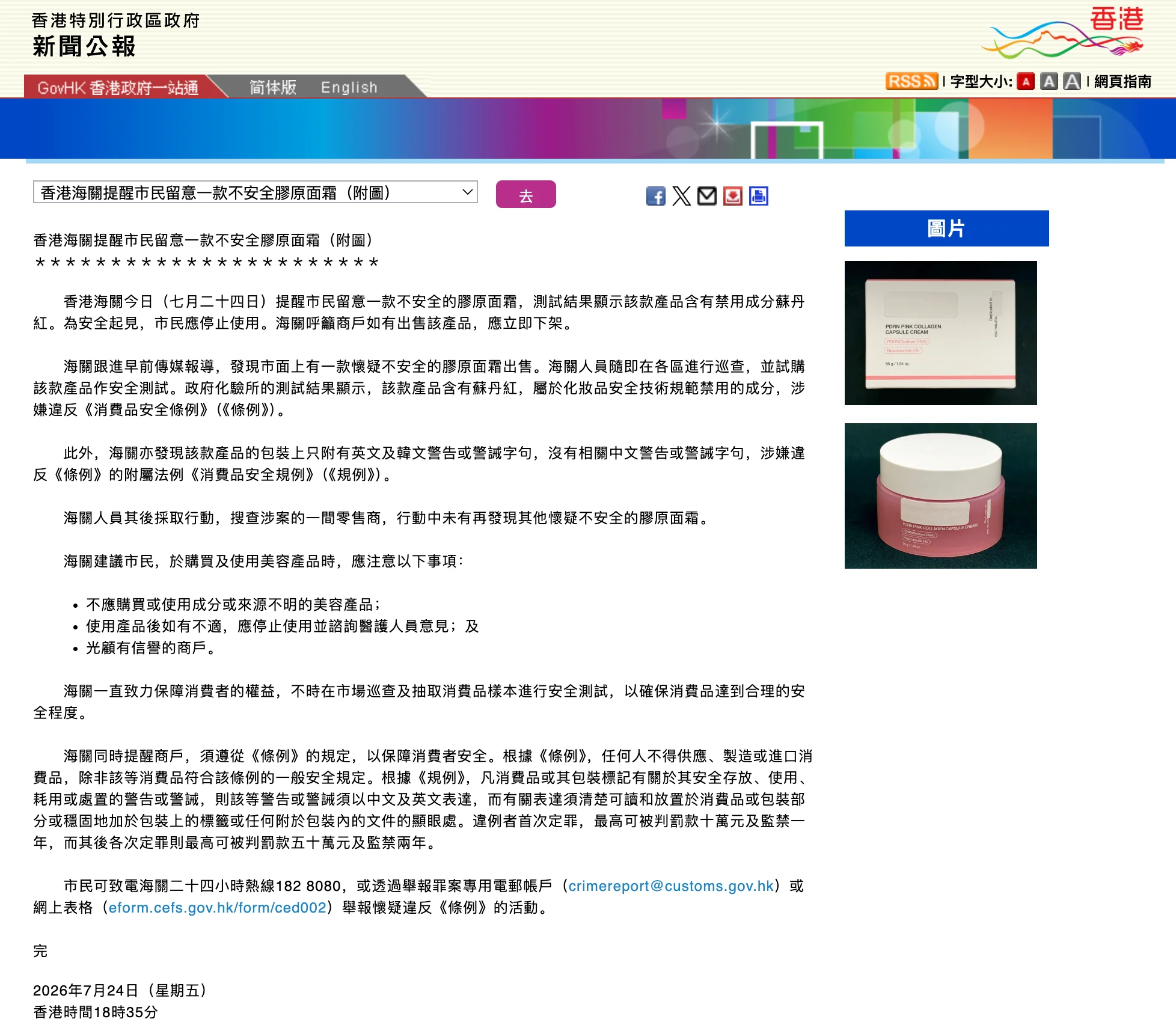
The official government release emphasized that Sudan dye is a prohibited ingredient under cosmetic safety technical standards, and its inclusion violates Hong Kong's Consumer Goods Safety Ordinance.
In response to the escalating situation, Medicube Hong Kong released an official statement. The brand asserted that following the government's announcement, it proactively commissioned Intertek, a leading global third-party testing agency, to conduct independent testing on the product. According to Medicube, the Intertek report confirmed that no Sudan dye was detected.
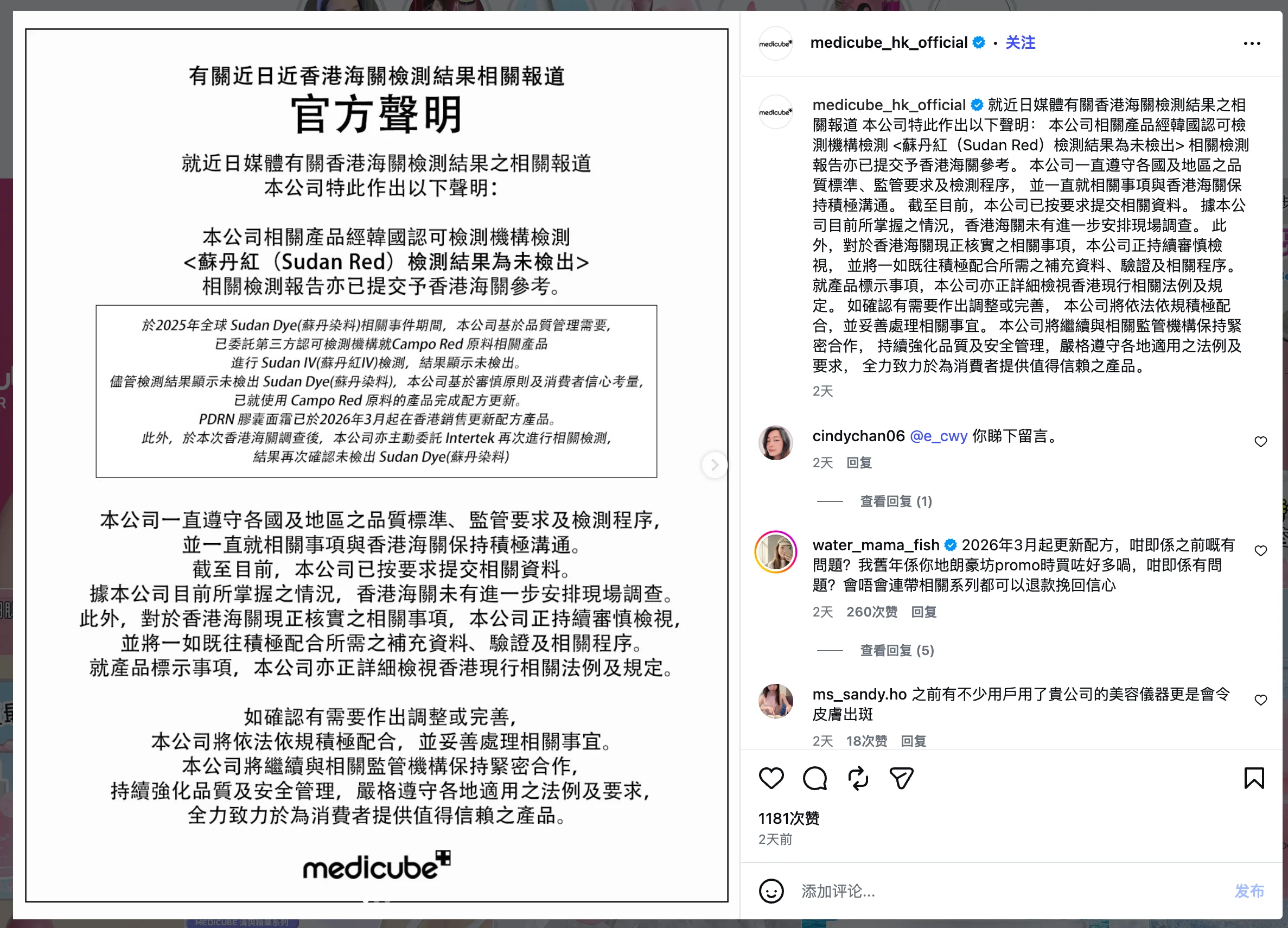
The conflicting results—an official government warning on one side and a brand-commissioned third-party report on the other—have left consumers and industry observers with lingering questions about the product's actual safety and the source of the alleged contamination.
Repeated Controversies and Formulation Changes
The investigation began when Hong Kong Customs, following up on media reports, conducted spot checks across various retail districts and purchased the Medicube cream for safety testing.
In addition to detecting the banned dye, authorities found that the product packaging only featured warnings in English and Korean, lacking the required Chinese-language safety instructions. This omission violates the Consumer Goods Safety Regulation, a subsidiary legislation of the Consumer Goods Safety Ordinance.
Under Hong Kong law, safety warnings on consumer goods or their packaging must be clearly legible in both Chinese and English. First-time offenders face fines of up to HK$100,000 (approx. $12,800 USD) and one year in prison, with subsequent offenses carrying fines of up to HK$500,000 and two years in prison.
Medicube Hong Kong stated that tests conducted by an accredited South Korean laboratory also returned negative results for Sudan dye. The brand has submitted these reports to Hong Kong Customs, though authorities have not yet initiated further on-site investigations.
This is not Medicube's first encounter with Sudan dye allegations. In November 2025, rumors circulated that the brand's PDRN line contained the banned substance. At the time, Medicube Hong Kong issued a denial, claiming that no Sudan dye-related ingredients were present in any of its PDRN products. The "PDRN Pink Peptide Capsule Cream" currently under scrutiny is a core product in that very line.
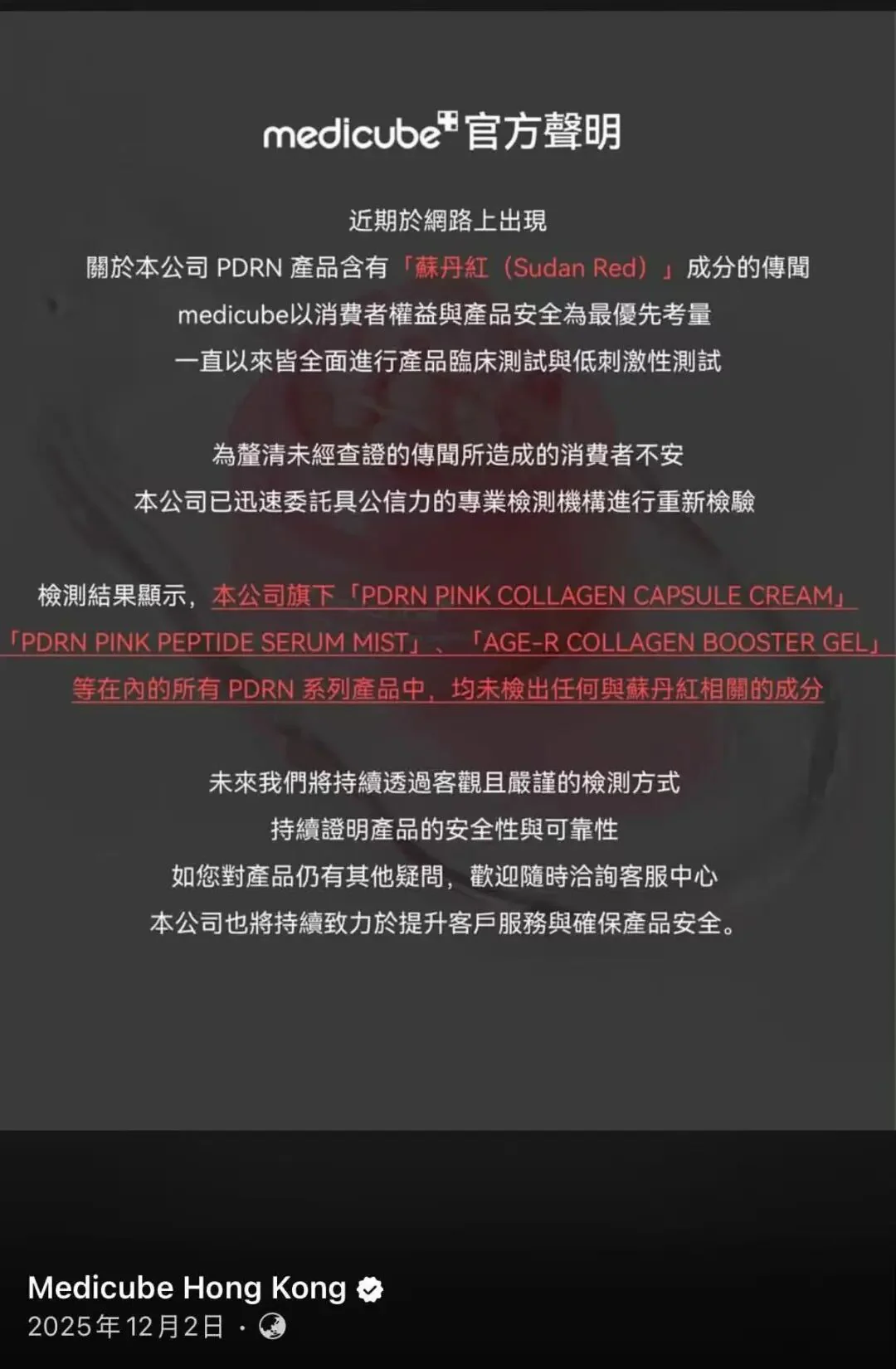
Adding to the controversy, social media users have pointed out a timely change in the product's formulation.
According to online posts, the original formulation of the PDRN cream contained three specific botanical ingredients: Eclipta prostrata extract, Melia azadirachta leaf extract, and Moringa oleifera seed oil. While Medicube's official Korean website has since updated the ingredient list to replace these with Lithospermum erythrorhizon (Gromwell) root extract, the older formulation reportedly remains on shelves in several overseas markets.
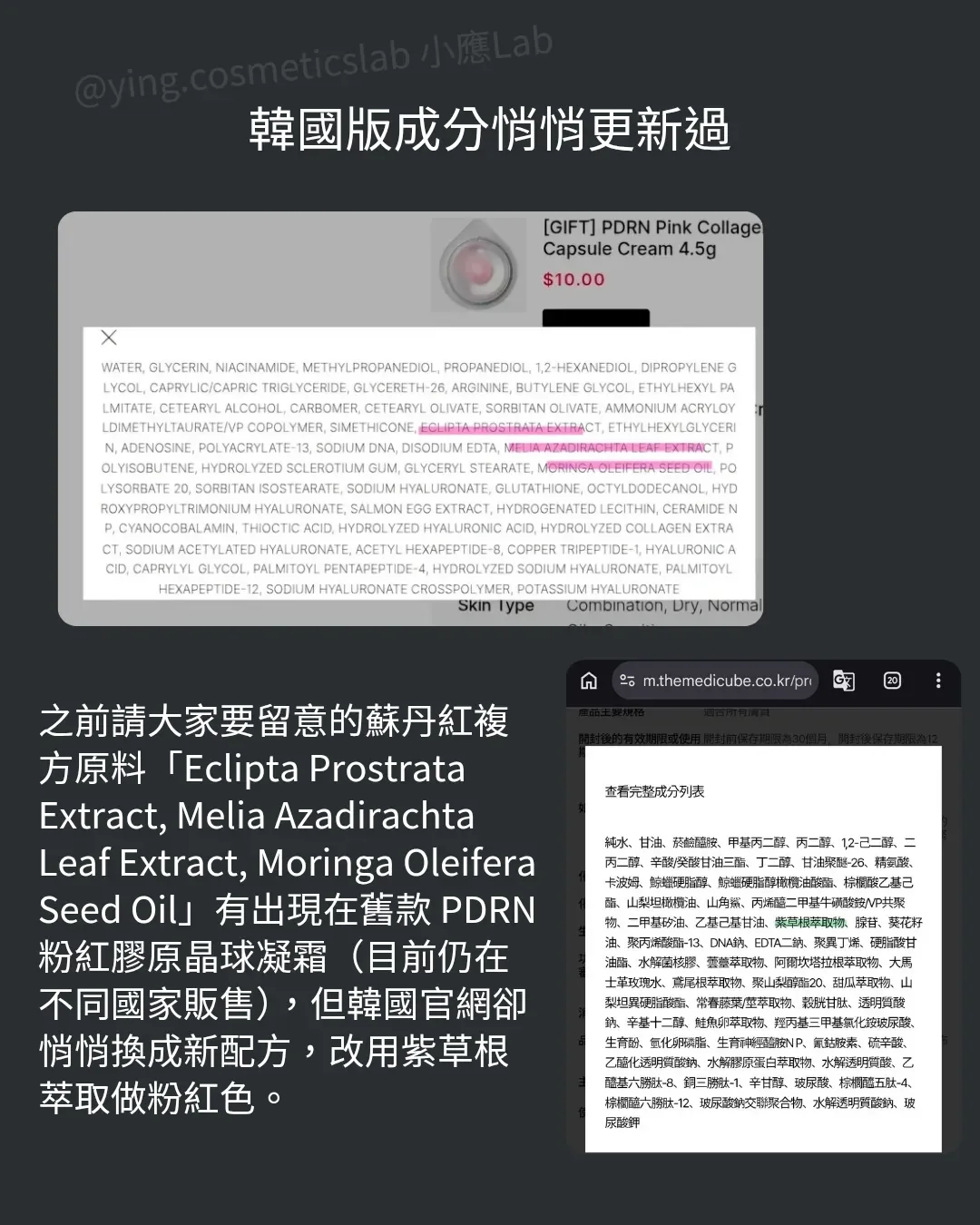
These three original botanical ingredients mirror the key culprits in a previous Sudan dye scandal in mainland China. An investigation by Daddy Lab, a prominent Chinese consumer product testing and review platform, previously revealed that cosmetics containing this exact trio of ingredients often tested positive for Sudan IV.
In its latest statement, Medicube Hong Kong acknowledged that it had updated the formulation, noting that the new version has been sold in Hong Kong since March 2026.
Crucially, the brand admitted that the original formulation utilized "CampoRed," a raw material supplied by Campo Research (also known as Campo Cosmetics), a Singapore-registered ingredients company that was previously identified as the source of the Sudan dye contamination in the mainland Chinese market.
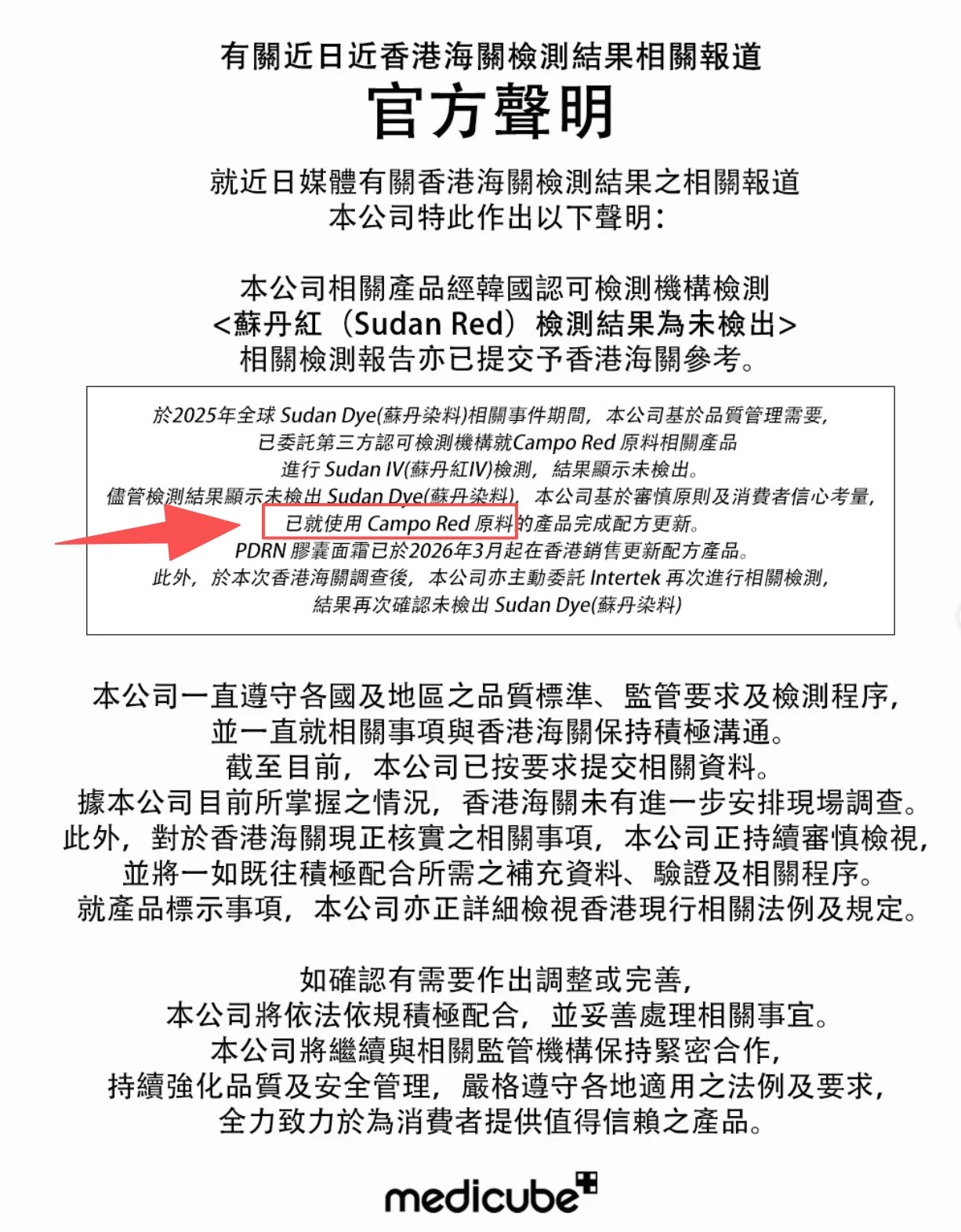
Whether the Hong Kong Customs finding is due to leftover inventory of the old formulation circulating in the market or a deeper, ongoing quality control issue remains to be determined. However, two safety scares in just nine months highlight persistent vulnerabilities in global cosmetic supply chains.
Rapid Growth Demands Stronger Quality Control
The controversy comes at a time of unprecedented success for Medicube's parent company, APR. As one of the most prominent rising stars in the South Korean beauty sector, APR's market capitalization surpassed 9 trillion KRW within 18 months of its IPO, eclipsing legacy giants like Amorepacific and LG Household & Health Care to become the most valuable listed cosmetics company in South Korea.
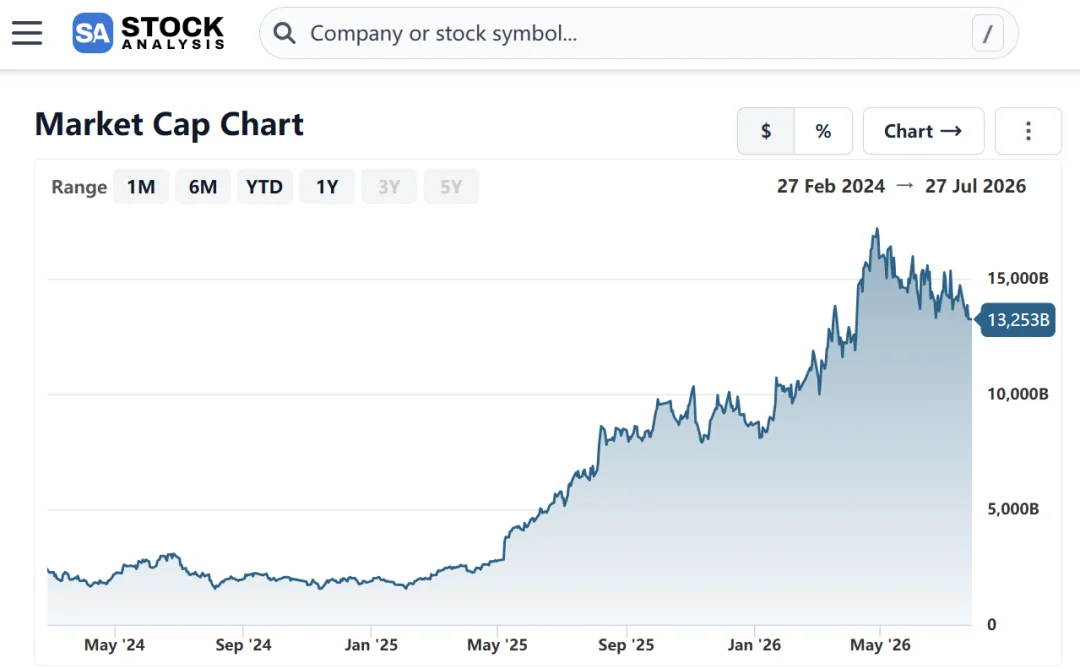
Since listing, APR's market value has skyrocketed by over 450%, representing a compound annual growth rate of 102.7%.
This growth has been heavily driven by international expansion. In 2025, overseas markets accounted for 89% of APR's total revenue, up from 71% the previous year, marking a 180% year-on-year increase. The PDRN series, which includes the flagged cream, has recorded cumulative sales exceeding 50 million units.
Medicube has also emerged as a powerhouse on social commerce platforms. In the first half of 2026, the brand generated approximately $107 million in sales on TikTok Shop, surpassing its total 2025 gross merchandise value (GMV) of $98.9 million by 8%.
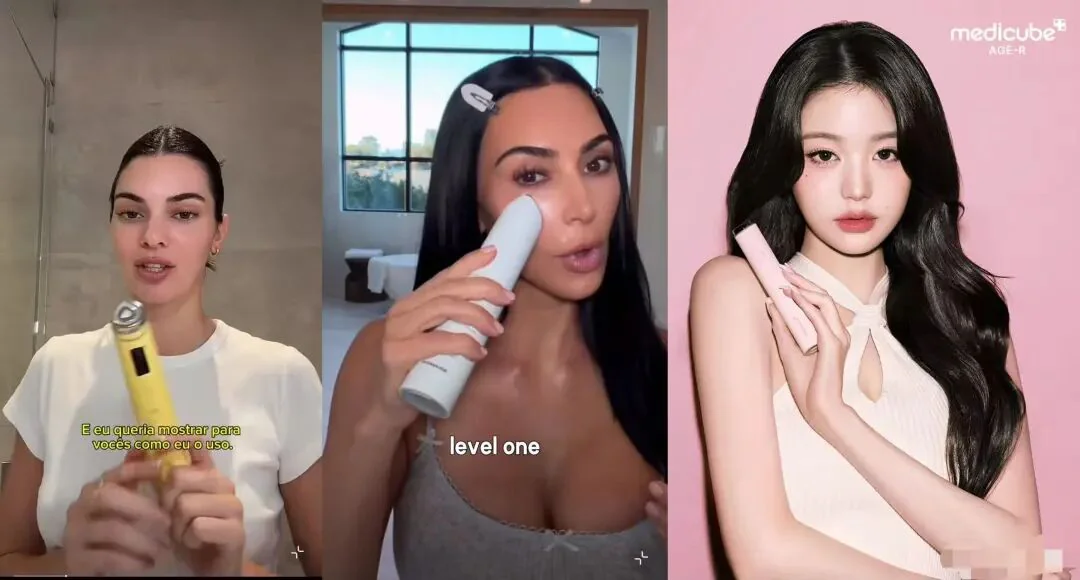
During Amazon's Prime Day event, Medicube achieved record-breaking sales and became the most-searched brand across all categories on Amazon US. Its high-tech beauty devices have also gained massive visibility through endorsements from global influencers like Kim Kardashian and Kylie Jenner, as well as K-pop stars like Jang Wonyoung.
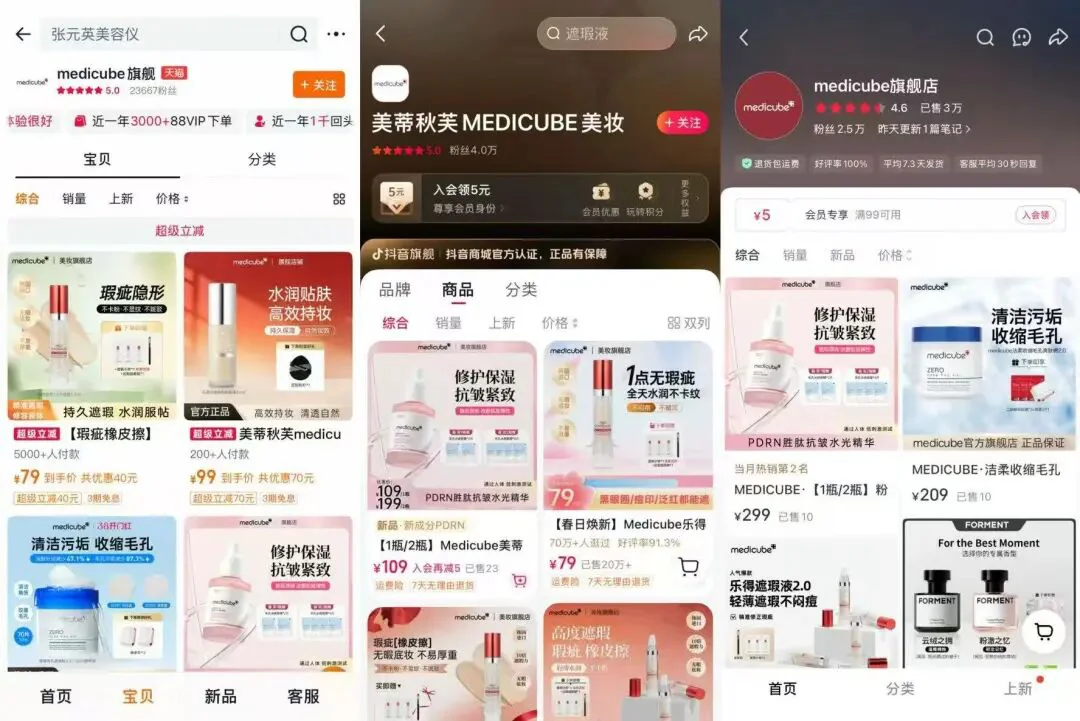
While Medicube has established official flagship stores on major Chinese e-commerce and social platforms like Tmall, Douyin (TikTok's Chinese sister app), and Xiaohongshu (a lifestyle and shopping platform), its product offerings there remain limited, and the PDRN Pink Peptide Capsule Cream has not yet been launched in mainland China.
To further expand its physical footprint, Medicube opened its first offline experience store in Beijing in late December 2025.
The rapid rise of Korean "K-beauty tech" brands has been fueled by clinical efficacy claims and advanced beauty devices. However, Medicube's current regulatory hurdles in Hong Kong serve as a reminder that rapid commercial expansion must be backed by rigorous quality assurance.
The rapid growth of beauty brands on social media often masks underlying supply chain vulnerabilities. Just as some digital-native brands have faced hurdles due to tightening regulatory scrutiny, global expansion requires a bulletproof approach to quality control.
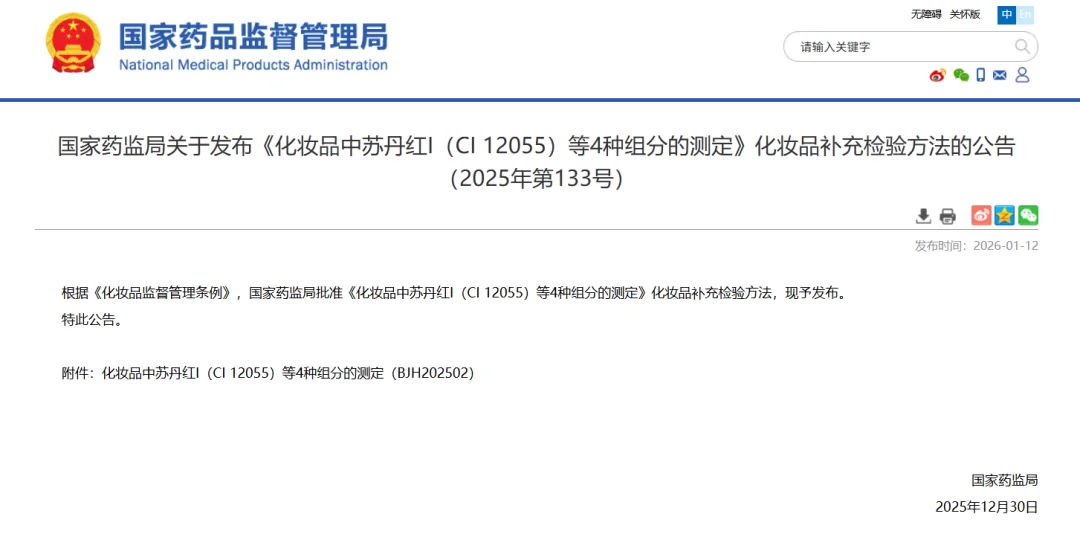
Following the mainland Chinese Sudan dye scare, China's National Medical Products Administration (NMPA) officially introduced a supplementary testing method in January 2026 specifically designed to detect four types of Sudan dye in liquid, oil, and cream cosmetics. This regulatory update provides authorities with a standardized, official method to police skincare and hair care products.
Product safety knows no borders. Whether for domestic players or international brands, the use of banned or carcinogenic colorants remains a strict regulatory red line. No amount of marketing hype or celebrity endorsement can compensate for a failure in basic product safety. For any beauty brand looking to build long-term trust, a secure and transparent supply chain is not optional—it is the foundation of survival.

Conversation
0 Comments