How Beauty Brands Are Adapting to Modern Fragrance Manufacturing Complexity
Rising supply chain risks and shifting consumer demands are forcing fragrance brands to rethink manufacturing, sourcing, and packaging strategies.

The fragrance category has rarely been more complex or dynamic than it is today.
Consumer demand is fragmenting in directions that didn’t exist five years ago, sourcing is now as much a geopolitical question as a logistical one, and packaging has become as important to a launch’s success as the scent inside the bottle. The core challenge for beauty executives is no longer simply defining what a brand smells like, but whether the business can move fast enough, source resiliently enough, and stand out on crowded digital and physical shelves.
Within this environment, Cohere Beauty operates as a Contract Development and Manufacturing Organization (CDMO) and strategic innovation partner, supporting fragrance launches from liquid blending through commercial scale. Cohere Beauty addresses three of the most pressing operational challenges facing fragrance brands today:
- Navigating Sourcing Risk in a Volatile Global Market: Fragrance supply chains have reached a level of geopolitical complexity where international exposure is a primary vulnerability. The strategic mandate for brands extends beyond scent creation to building a supply chain resilient enough to withstand regional disruptions. Cohere Beauty addresses this through domestic, in-house blending and regulatory infrastructure rather than reliance on fragmented vendor networks.
- Aligning Packaging Engineering with Consumer Identity: As consumer demand shifts toward gender fluidity, fragrance stacking, and highly visual, shareable packaging, brands face growing pressure to treat packaging as an operational asset. The challenge extends beyond aesthetic design to engineering bottles, components, and pumps that can be manufactured, filled, and shipped at scale without causing supply bottlenecks.
- Expanding Formats Without Operational Friction: The market is broadening beyond traditional fine fragrance into body mists, hair mists, pet fragrances, and adjacent personal care categories, even as the core formulation science of oil, alcohol, and water remains consistent. Growth depends on expanding product formats without sacrificing the manufacturing discipline required to deliver orders on time and on budget.
In this white paper, the second in a three-part series, we examine how Cohere Beauty leverages its Cedar Grove facility in New Jersey and specialized technical expertise to help brands manage sourcing, packaging, and regulatory requirements in the modern fragrance market. We explore how brand managers should evaluate contract manufacturing partners and the specific capabilities required to bring a fragrance concept to retail scale.
How Cohere Beauty is reshaping the fragrance industry through manufacturing depth and packaging expertise
Section 1: The New Fragrance Standard
Fragrance has reached an inflection point where a compelling formulation is no longer enough to secure retail placement. Brands are forced to treat supply chain resilience and structural packaging design as core business strategies, reflecting broader key beauty supply chain and formulation trends across the global market. Cohere Beauty identifies three key trends driving this shift.
Geopolitical disruption is exposing single-source risk. A finished fragrance bottle retailing for $40 to $50 relies on a supply chain spanning dozens of countries before reaching a contract filling line. Mohammed Jahmour, director of quality control and regulatory affairs at Cohere Beauty’s Cedar Grove facility—who brings 16 years of plant-floor experience—outlines the structural footprint: raw ingredients sourced from Japan, China, and India are blended into concentrated fragrance oil; mist pumps and mechanical closures are manufactured in China; and glass bottles are produced domestically. This complex global network is often invisible to brand founders until a disruption occurs.
Recent global events demonstrate how fragile this network can be. Iran produces over 85% of the world’s saffron supply and remains a major producer of Damascus rose oil and rosewater—both foundational raw materials for amber and floral perfumery profile development. When commercial shipping through the Strait of Hormuz experienced severe disruptions in early 2026, ingredient costs spiked rapidly across the global market.
Indonesia presents a similar single-region dependency, producing nearly 90% of global patchouli oil, a core base note across fine fragrance formulations. For beauty brands relying on single-source suppliers for key raw materials, localized disruptions quickly become operational liabilities. In response, brand procurement teams are re-evaluating single-source vulnerabilities and establishing dual-sourcing models to mitigate cost volatility.
Evolving consumer identity is redefining packaging requirements. Approximately 73% of Gen Z consumers report wearing fragrance three or more times per week. As gender distinctions in fragrance market positioning continue to blur, unisex and gender-neutral launches account for an increasing share of unit sales. This structural shift requires brands to engineer versatile packaging systems that appeal across demographics while maintaining distinct visual identity at the point of sale.
At the same time, fragrance stacking—or layering multiple scents to build a customized profile—is altering how products are formulated and merchandised. As fragrance continues to outperform other beauty categories, consumers are increasingly purchasing multiple scents at once. That buying behavior drives demand for smaller formats and cohesive collection packaging rather than reliance on a single hero bottle.
Jahmour explains how this trend shifts demands on the factory floor.

“The innovation is almost always in the packaging, and that packaging gets more intricate by the day,” he noted. He pointed to a current licensed character program where “every bottle is distinct, and every cap requires a different shape,” requiring custom molded components, foam-lined boxes, and labor-intensive hand assembly.
- Key takeaway: Brands winning on shelf build modular packaging systems that adapt across target demographics, product formats, and usage occasions. Flexible packaging is no longer optional; it is a core operational advantage.
Fragrance is expanding beyond traditional formats. Consumer appetite for scent is extending into body care, hair care, and multi-step routines as the boundary between fragrance and personal care blurs, particularly as Sol de Janeiro launches premium mists to tap upmarket fragrance demand. This expansion reaches adjacent categories like pet care, where demand for premium products creates fresh opportunities. The global pet perfume market reached $1.4 billion in 2024 and is projected to reach $2.7 billion by 2034, prompting indie and luxury brands alike to introduce pet-safe line extensions.
Expanding across these formats requires more than extending an existing formula. Jahmour emphasized that liquid formulations often change far less than the physical production steps. “A fragrance formula is fairly consistent whether it’s a body mist, eau de parfum, or eau de toilette,” he said. Instead, operational complexity lies in component specifications and filling requirements—filling an 8,000-gallon hot-pour batch demands an entirely different process than filling a 100-ml glass bottle.
Section 2: The Strategic Manufacturing Partnership
Selecting a Contract Development and Manufacturing Organization (CDMO) involves more than securing filling capacity. It requires a manufacturing partner capable of absorbing technical complexity before it creates downstream delays. This strategic approach is increasingly crucial as beauty capital returns as investors shift focus to long-term innovation and operational resilience. Emerging brands frequently underestimate the technical requirements and expense of commercializing a fragrance. Mandated stability and packaging compatibility testing alone can cost tens of thousands of dollars per study and require months of lead time—expenses and timelines that often surprise first-time brand owners.
Brands also tend to overlook how early packaging choices impact assembly line efficiency. Jahmour highlighted one detail often ignored during design: the internal carton liner or insert that secures the bottle. “The bottle liner is consistently our largest operational challenge,” he said. “It is the primary bottleneck on most assembly jobs.”
On intricate packaging runs, Jahmour estimated that 30% to 40% of filling line labor is spent exclusively on assembling cardboard liners by hand. That labor cost catches brand owners off guard when comparing supplier estimates for what appears to be a basic bottle configuration. To bridge this gap, Cohere Beauty’s Cedar Grove facility operates as a strategic manufacturing partner rather than a standard contract filler, offering on-site regulatory compliance and labeling expertise to help brands navigate complex trade rules.
“Regulatory requirements vary significantly across target markets,” Jahmour noted. “Managing international compliance requires dedicated external regulatory consulting alongside internal manufacturing controls.”
He cited California’s strict limits on volatile organic compounds (VOCs)—which cap alcohol concentration in finished fragrance formulations at 70%—as a regional regulation that often trips up brands assuming market approval in one territory guarantees compliance in another. He also highlighted compliance mandates under the U.S. Modernization of Cosmetics Regulation Act (MoCRA), which has expanded federal oversight of cosmetic products and ingredient traceability.
Cohere Beauty reinforces this partnership through:
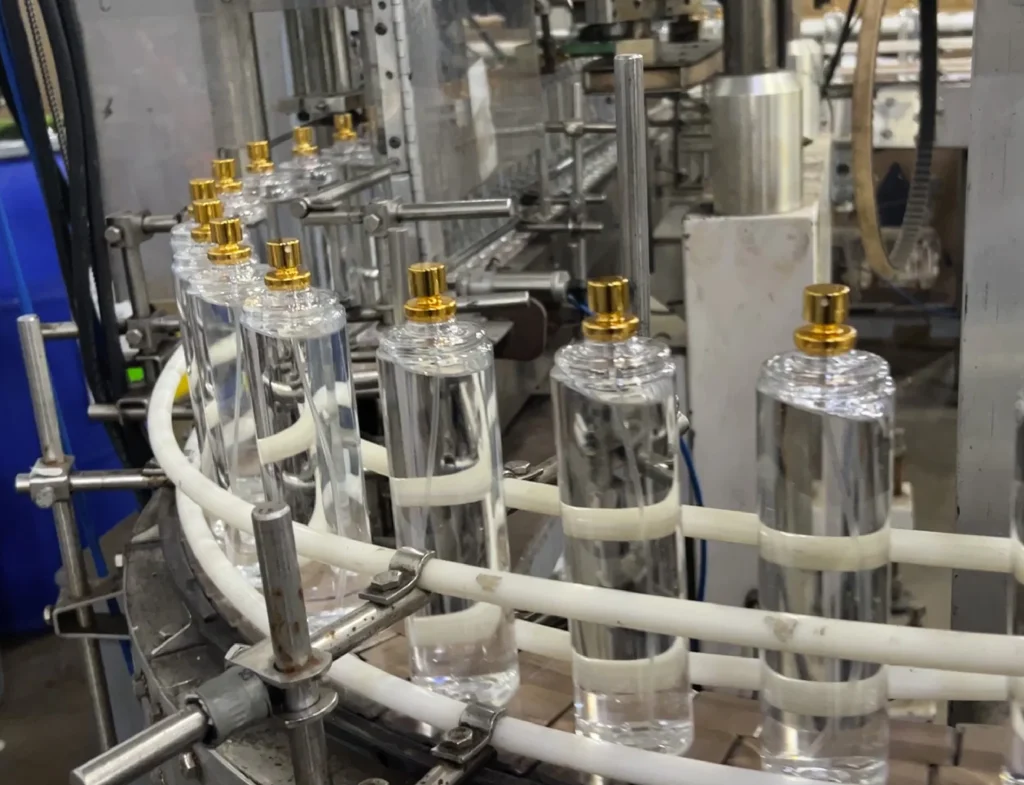
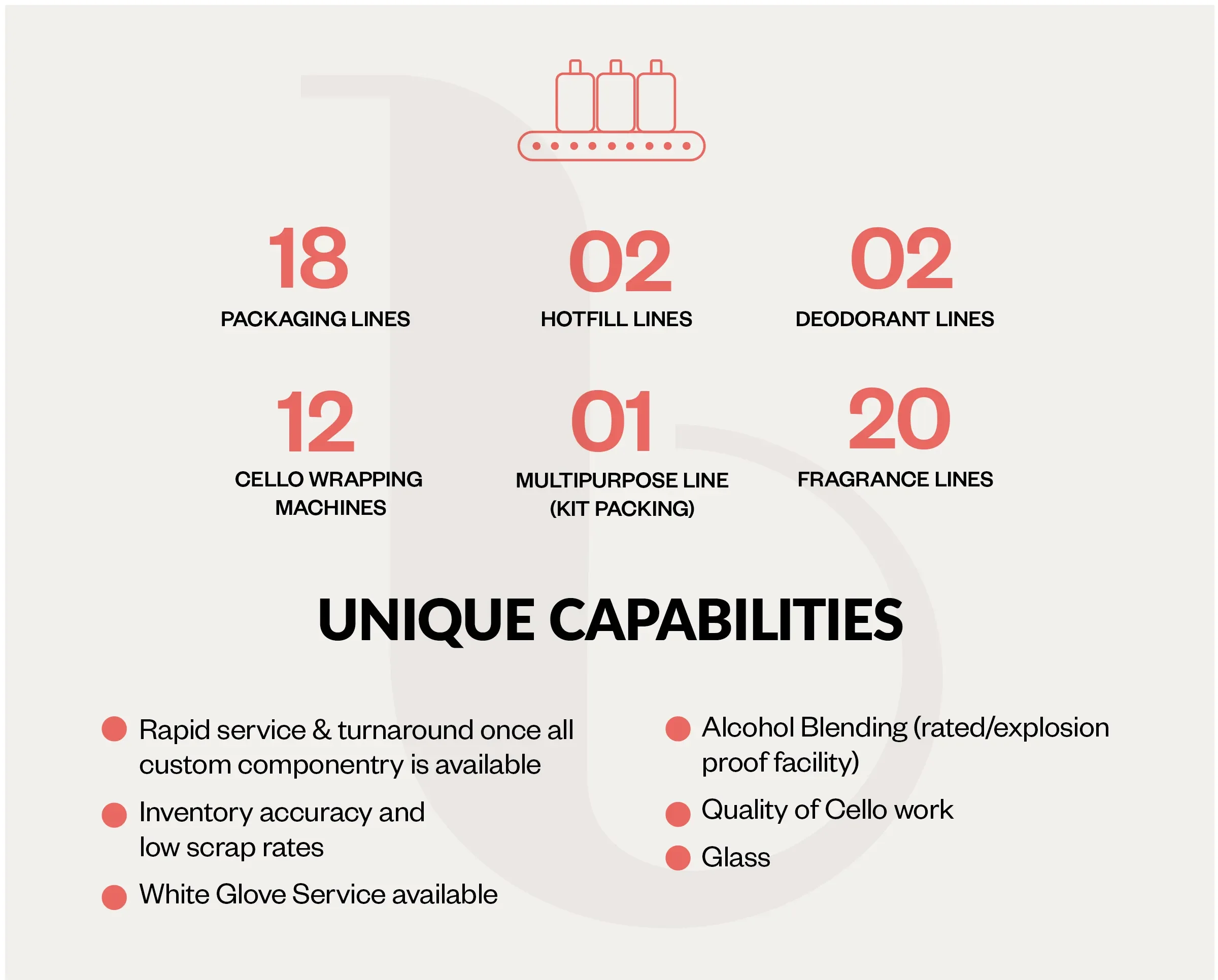
- Fragrance-Specific Infrastructure: Cedar Grove’s 147,000-square-foot facility operates 18 packaging lines—including dedicated hot-fill, deodorant, and 20 fragrance-specific lines—supported by 45 storage and mixing tanks (ranging from 1,000 to 2,000 gallons), seven hot-water and four hot-oil jacketed kettles, and 12 cello-wrapping machines. This infrastructure gives brands the throughput required to scale seamlessly from small production runs to outputs in the millions.
- Explosion-Proof Alcohol Blending: In-house, rated explosion-proof blending allows the facility to safely process flammable, high-proof fragrance formulas without relying on third-party processors, complemented by specialized glass-handling capabilities and high-precision cello wrapping.
- Regulatory Bandwidth: On-site compliance and labeling specialists help brands manage market-by-market requirements and regulatory frameworks like the Modernization of Cosmetics Regulation Act (MoCRA) proactively, preventing compliance gaps after products have already shipped.
- Certified, Audited Operations: The facility holds FDA cosmetic manufacturing registration and New Jersey Department of Health food and cosmetics certification. It supports clean formulation capabilities—including vegan, non-GMO, gluten-free, paraben-free, and cruelty-free claims—and complies with restricted-substance standards across major retail partners such as Sephora, Ulta Beauty, Target, Walmart, Costco, Credo Beauty, and Whole Foods.
Section 3: Turning Ambitious Packaging Concepts Into Reality Through Smart Manufacturing
While distinctive packaging is critical to standing out on retail shelves, complex designs require early, transparent conversations with contract development and manufacturing organizations (CDMOs) to ensure seamless execution.
“Ninety-nine percent of people come here when they have their designs already finalized,” said Jahmour, noting that late-stage consultation leaves little flexibility after brands have committed capital to molds and tooling. The brands that achieve the smoothest rollouts bring prototypes to their manufacturing partner before pricing and production schedules are locked in. “Samples always help,” he stressed.
Early communication and a trusted manufacturing partner are critical to overcoming production bottlenecks, particularly around bottle stability and durability. “If it’s not stable, it will be difficult to fill,” Jahmour noted.
If a custom bottle does not sit securely on a high-speed production line, accurate filling becomes impossible. Similarly, if a container is too fragile to withstand the rails, rollers, and mechanical guides of an automated line, months of design work can be ruined by surface scratches. Engaging CDMO partners during the initial design phase helps brands prevent physical constraints from compromising production.
Brands also frequently overlook the risks of single-sourcing custom components or novel materials for key product launches. A delay with a single vendor can derail an entire launch timeline. Cedar Grove’s technical team evaluates ambitious packaging concepts against decades of hands-on production experience, identifying potential filling line issues before they lead to expensive adjustments late in the manufacturing cycle.
As one of the few North American CDMOs purpose-built for fragrance compounding and filling, Cedar Grove operates a 147,000-square-foot facility staffed by 110 employees. The operation has adapted alongside changing consumer trends for decades, transitioning from a dedicated perfume house into a modern manufacturing hub for body mists, scent-stacking formats, and complex packaging programs.
Notable Takeaways for Modern Fragrance Brands
Move from vendor to manufacturing extension: The most resilient fragrance brands integrate their contract manufacturer as a direct extension of their internal operations. This partnership relies on transparent communication, where packaging modifications, timeline shifts, and cost assessments are resolved collaboratively.
Solid infrastructure over “idea-only” packaging: Creative bottle designs must align with high-speed filling, assembly, and transit requirements. Engaging manufacturing engineers early prevents costly redesigns, scrapped tooling, or component failures during mass production.
Build on a regulatory foundation: Global compliance—from state and regional volatile organic compound (VOC) limits to federal MoCRA traceability mandates—is essential for risk management. Working with compliance-ready CDMOs ensures seamless market expansion without the threat of stop-sale orders or emergency reformulations.
Diversify sourcing, don’t just absorb cost: Given ongoing geopolitical instability and regional supply disruptions for key raw materials, brands must move beyond short-term cost absorption. Establishing alternative ingredient and component sources with manufacturing partners ensures operational resilience during supply shortages.

Conversation
0 Comments