
China Beauty Shakeout Escalates as Brands Pivot to Profitability
As imported brands lose market share and retail formats pivot online, cosmetics companies in China are replacing expansion with disciplined profitability.
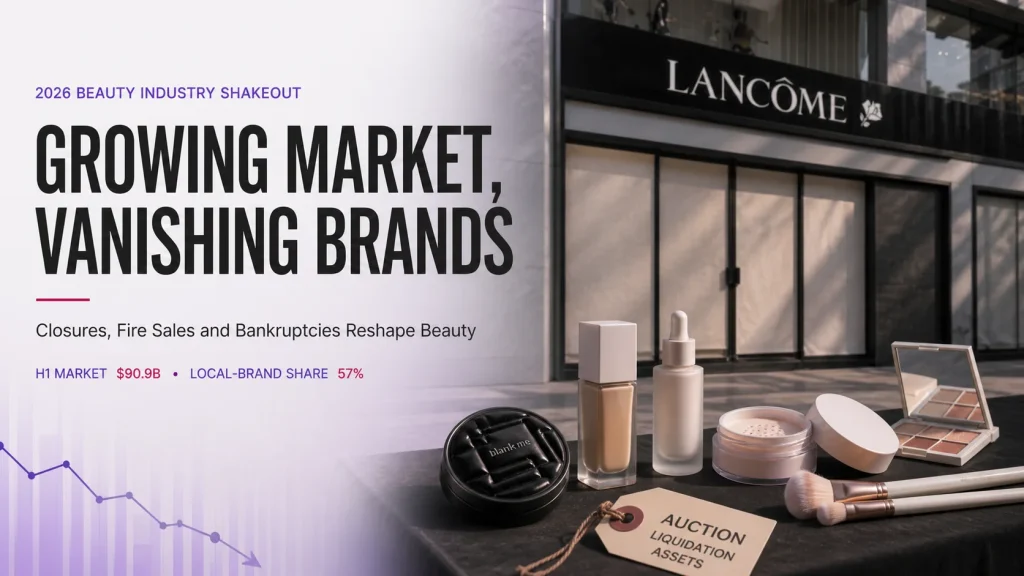
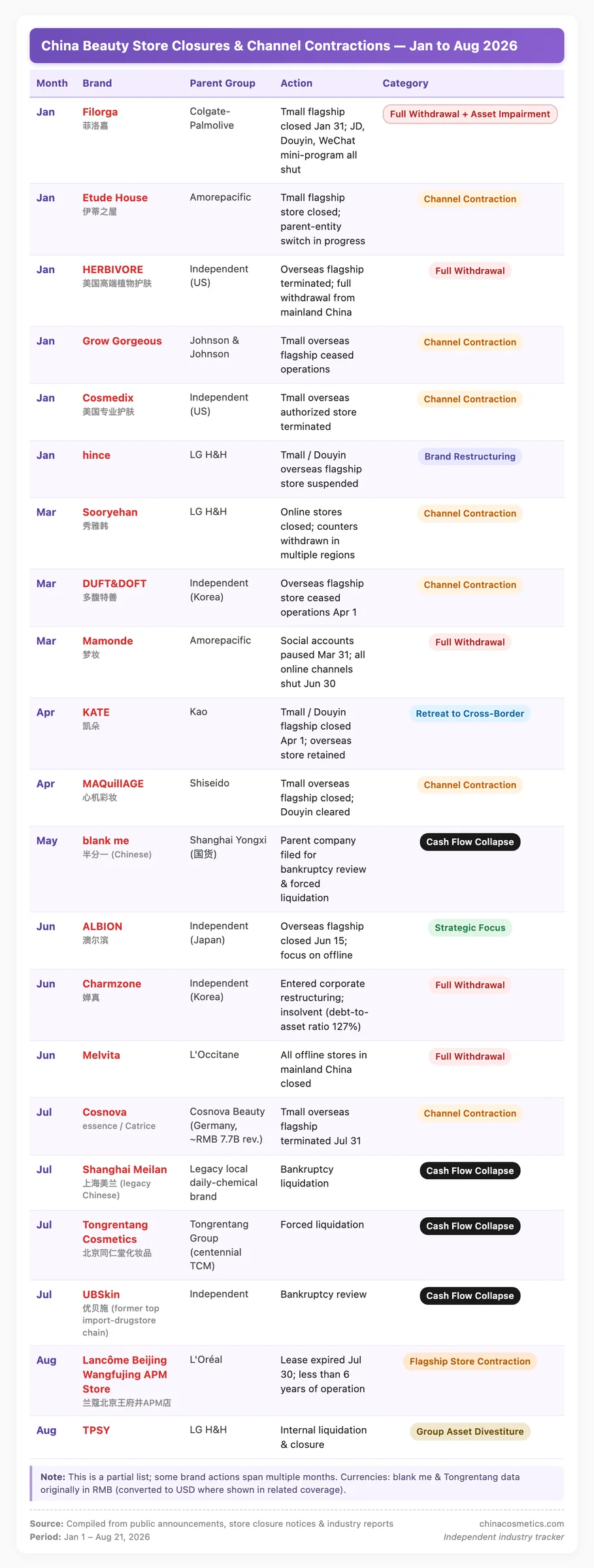
In the first half of 2026, store closures, asset sell-offs, and liquidations swept across China's beauty market, making corporate survival and margin defense top operational priorities for executive leadership. Global conglomerates including Amorepacific, LG Household & Health Care (LG H&H), Kao Corporation, L'Occitane, Johnson & Johnson, and Colgate-Palmolive shuttered online flagship stores, closed physical retail locations across mainland China, or divested underperforming brand assets. Concurrently, heritage domestic enterprises such as Beijing Tongrentang and Shanghai Meilan entered court-ordered bankruptcy or forced liquidation proceedings.
Despite individual brand closures, aggregate industry sales continued to grow. Data from the China Fragrance Flavor and Cosmetic Industry Association (CAFFCI) shows that total omnichannel cosmetics transaction volume in China reached 611.41 billion yuan (approx. $90.94 billion USD) in the first half of 2026, a 4.35% year-over-year increase. Data from the National Bureau of Statistics (NBS) shows that total retail sales of consumer goods reached 28.77 trillion yuan ($4.28 trillion USD) from January to July 2026, up 1.2% year-over-year. Within consumer packaged goods, cosmetics delivered a stable performance: retail sales for January through July reached 272.3 billion yuan ($40.51 billion USD), up 6.3% year-over-year, while July cosmetics retail sales hit 28.5 billion yuan ($4.24 billion USD), up 6.8%.
This divergence between rising total sales and accelerating brand exits marks a classic structural shakeout. The overall cosmetics market continues to expand, but market share among mass-market and underperforming players is rapidly contracting. This shift is not merely a retreat of foreign brands or a temporary pullback in consumer spending, but a fundamental reallocation of market capital.
Behind Domestic Brands' 57% Share: The Decline of the Import Premium
The most significant structural shift in China's beauty sector in 2026 is the erosion of the historical premium enjoyed by imported brands. CAFFCI figures show that domestic brands expanded their market share from 47.25% in 2020 to 57.37% in 2025, with projections reaching 58.69% in 2026. Conversely, imported cosmetics saw their market share drop from 52.75% to 42.63% over the same period. By region of origin, French brands held 16.1% of the market, U.S. brands 11.7%, Japanese brands 6.4%, and South Korean brands 4.00%.
This structural transition is driven by three verifiable market dynamics:
First, consumer purchasing criteria have fundamentally shifted toward active ingredients, efficacy, and value. Chinese beauty consumers have shifted from prestige brand origins to evaluating specific formulations, clinical benefits, and cost-effectiveness. According to iiMedia Research's 2024-2025 consumer report, product active ingredients (58.8%) and clinical efficacy (41.4%) rank as the primary purchase drivers. This purchasing behavior has reshaped retail price tiers into a barbell distribution: products priced below 300 yuan ($44.60 USD) accounted for 58.88% of market sales in 2025, while products over 1,000 yuan ($148.70 USD) held a 14.75% share. The mid-tier price segment between 300 and 1,000 yuan continues to compress.
Second, the 'imported' origin label has lost its automatic marketing premium. Consumers are increasingly replacing mass-market foreign items with local brands. As domestic beauty brands like Judydoll, FLOWER KNOWS, MAOGEPING, and Carslan deliver rapid product iterations and targeted localized formulations at competitive price points, an imported label can become an operational headwind involving longer product rollout cycles, slower market response times, and higher regulatory compliance overhead. Furthermore, domestic manufacturers are pivoting from marketing spending toward scientific R&D. PROYA established specialized skin research laboratories focusing on proprietary actives like ergothioneine and natural astaxanthin; Winona focused on sensitive skin dermatological solutions; and Bloomage Biotech leveraged its hyaluronic acid manufacturing scale to propel active skincare lines Biohyalux and QuadHA into functional skincare leadership. As domestic brands build technical entry barriers, mass foreign brands struggle to match local pricing flexibility or differentiate from prestige heritage lines within their parent portfolios.
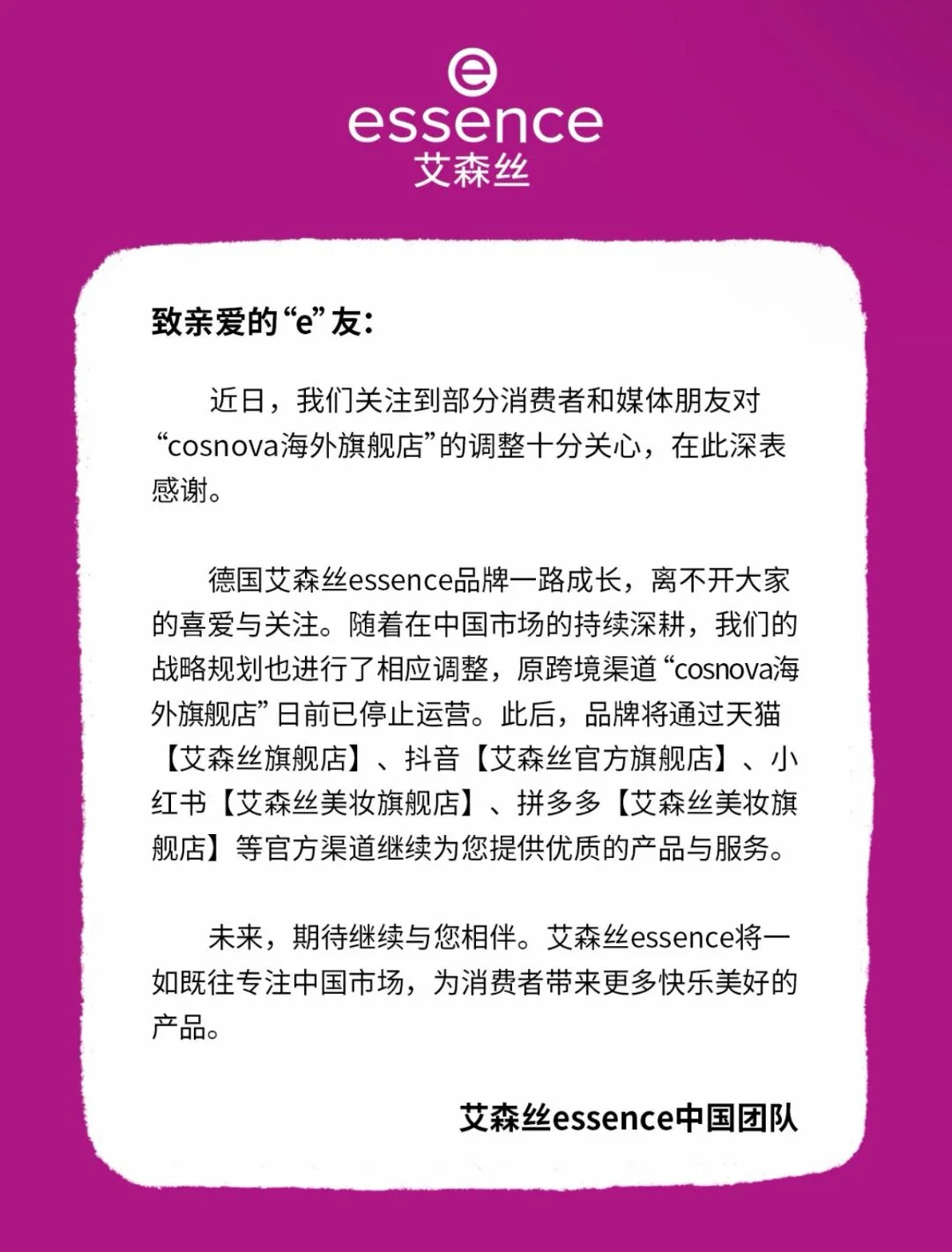
Third, mass-market color cosmetics face severe margin compression. International mass-market color cosmetics brands have experienced successive store contractions in China, starting with e.l.f. Cosmetics exiting in 2023, followed by NYX and KOSÉ's AUBE in 2024, and KATE and Cosnova in 2026. Notably, KATE—the mass-market color cosmetics brand owned by Kao Corporation—announced in March 2026 that its official flagship stores on Tmall and Douyin (TikTok's Chinese sister app) would permanently cease sales on April 1, closing storefronts that previously amassed over 2.3 million followers. Kao reported that its cosmetics business in mainland China recorded year-over-year revenue declines exceeding 10% in Q3 2024, marking multiple consecutive quarters of contraction. Similarly, German manufacturer Cosnova's mass cosmetics brand essence, which entered China via Tmall Global in 2019 and sold over 2.3 million units of its flagship powder, struggled to launch follow-up hero products over a seven-year period. Cosnova's sister brand CATRICE stopped updating official online channels in 2022, and Cosnova permanently terminated its Tmall Global flagship operations on July 31, 2026.
Domestic Chinese cosmetics crossed 50% market share in 2022, climbing to 52.82% in 2023, 55.20% in 2024, and 57.37% in 2025. This growth coincided directly with the exit window for foreign mass-market brands. Rather than competing solely on price, local brands such as Perfect Diary, COLORKEY, Judydoll, JOOCYEE, INTO YOU, and FLOWER KNOWS captured market share through fast-turnaround product development, customized color palettes, and localized social commerce campaigns across digital platforms.
Global Portfolio Pruning: Profitability Takes Priority Over Scale
In 2026, global beauty companies are actively restructuring non-core assets to prioritize operating margins, technical innovation, and strategic fit over sheer top-line expansion.
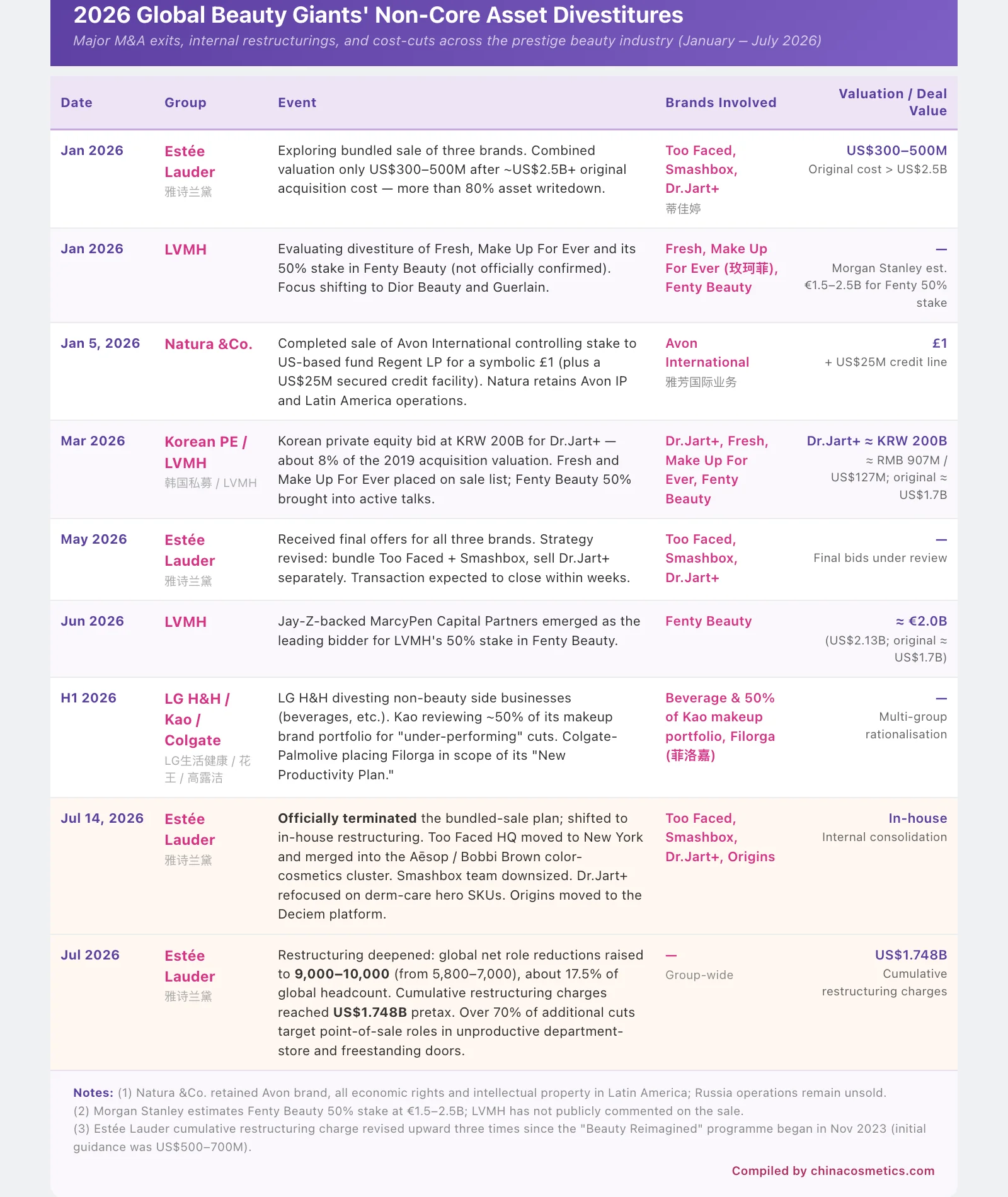
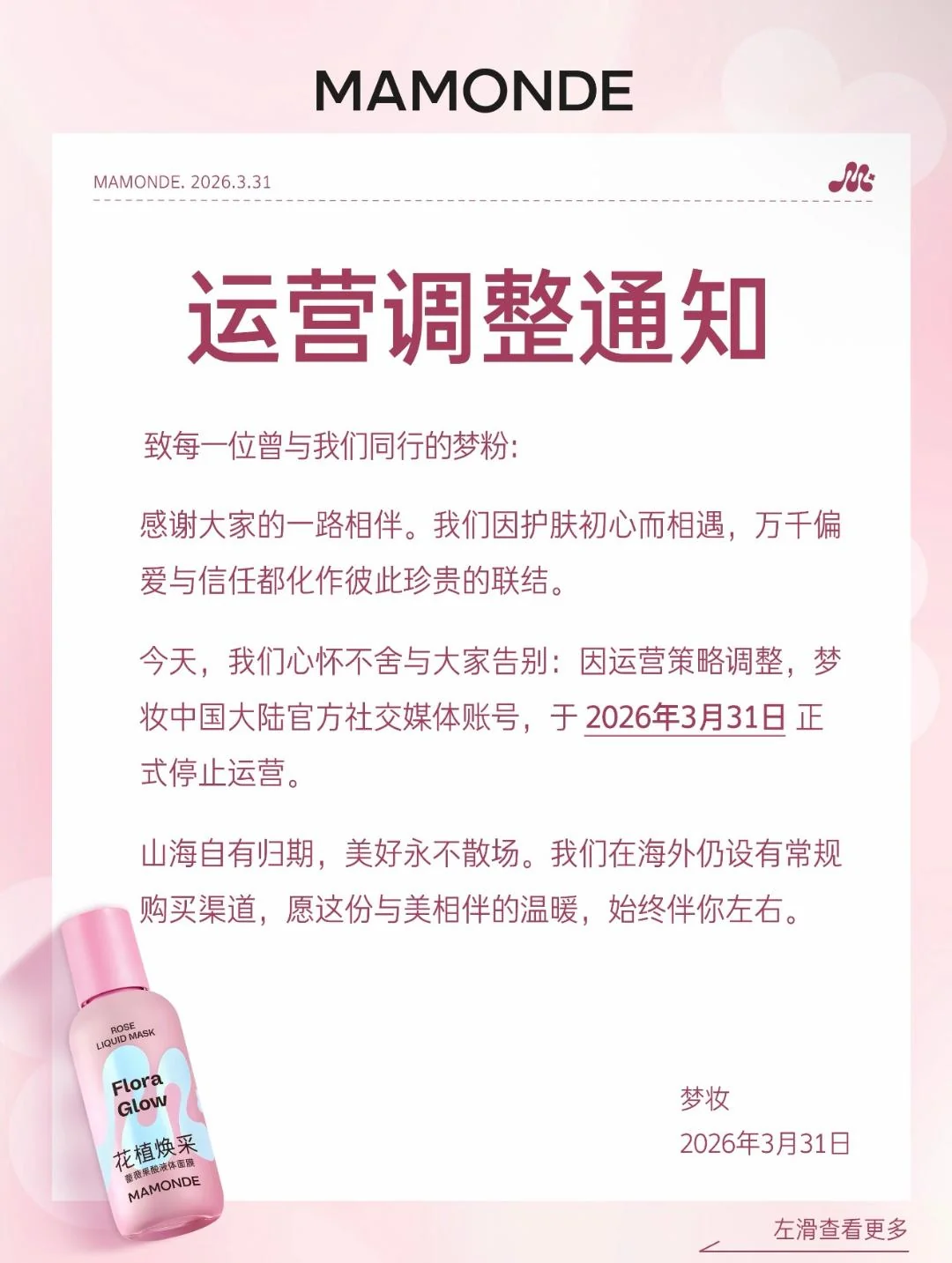
This disciplined portfolio management aligns with broader trends seen across global beauty earnings reports, where major cosmetics conglomerates are prioritizing operating profit over unprofitable expansion. In China, South Korean skincare brand Mamonde—owned by Amorepacific—entered the market in 2005 and built a network of over 4,000 retail points and 2.78 million online followers, yet was shuttered as part of parent company restructuring. Amorepacific stated that the adjustment aimed to optimize capital allocation across its global portfolio.
Concurrently, major South Korean beauty conglomerates are reallocating strategic resources from China toward North America. Amorepacific's Q2 2026 consolidated revenue reached 1.2543 trillion KRW ($907 million USD), up 14.6% year-over-year, while operating profit surged 53.3% to 122.8 billion KRW ($88.78 million USD). However, North Asia sales (including mainland China, Hong Kong, Macao, and Taiwan) fell 6.2% to 124.5 billion KRW ($90.16 million USD)—the only operating region to record a decline. In contrast, Americas revenue jumped 56.5% to 210.4 billion KRW ($152 million USD), and EMEA sales rose 63.3%.
LG Household & Health Care reported Q2 2026 North American revenue grew 47.3% year-over-year to 205.8 billion KRW ($149 million USD), surpassing its China revenue of 176.0 billion KRW ($127 million USD, down 5.0%) for the first time in corporate history. Customs data for H1 2026 shows South Korea's cosmetics exports to China dropped to 14.4% ($1.01 billion USD) of total beauty exports, moving China to South Korea's second-largest export destination behind the U.S., which reached $1.45 billion USD (20.7% share, up 41.5% YoY). Total South Korean cosmetics exports reached a record $7.0 billion USD, up 27.3% year-over-year. Euromonitor International data shows China's share of global online K-beauty sales fell from 69% in 2022 to 23% in 2025, while the U.S. share expanded from 18% to 51%. This shift highlights how K-beauty groups are strategically pivoting to North America while treating China as a highly competitive mature market.
Channel Restructuring: Large Physical Stores Shift from Sales Drivers to Expensive Outlets
During the first half of 2026, online cosmetics transaction volume in China reached 294.97 billion yuan ($43.89 billion USD), a 10.13% year-over-year increase, driving online penetration from 53.97% to 56.85%. Douyin maintained its position as the top online platform with 146.79 billion yuan ($21.84 billion USD) in GMV, contributing over 80% of total online growth.
However, online customer acquisition costs continue to rise. Data from 36Kr indicates Douyin's e-commerce GMV growth slowed to nearly 20% in H1 2026. Online commerce is diversifying into a multi-platform structure comprising Douyin, JD.com, Tencent's Channels (WeChat Video Account), and contracting channels on Tmall and Kuaishou, forcing brands to optimize customer acquisition costs across multiple touchpoints.
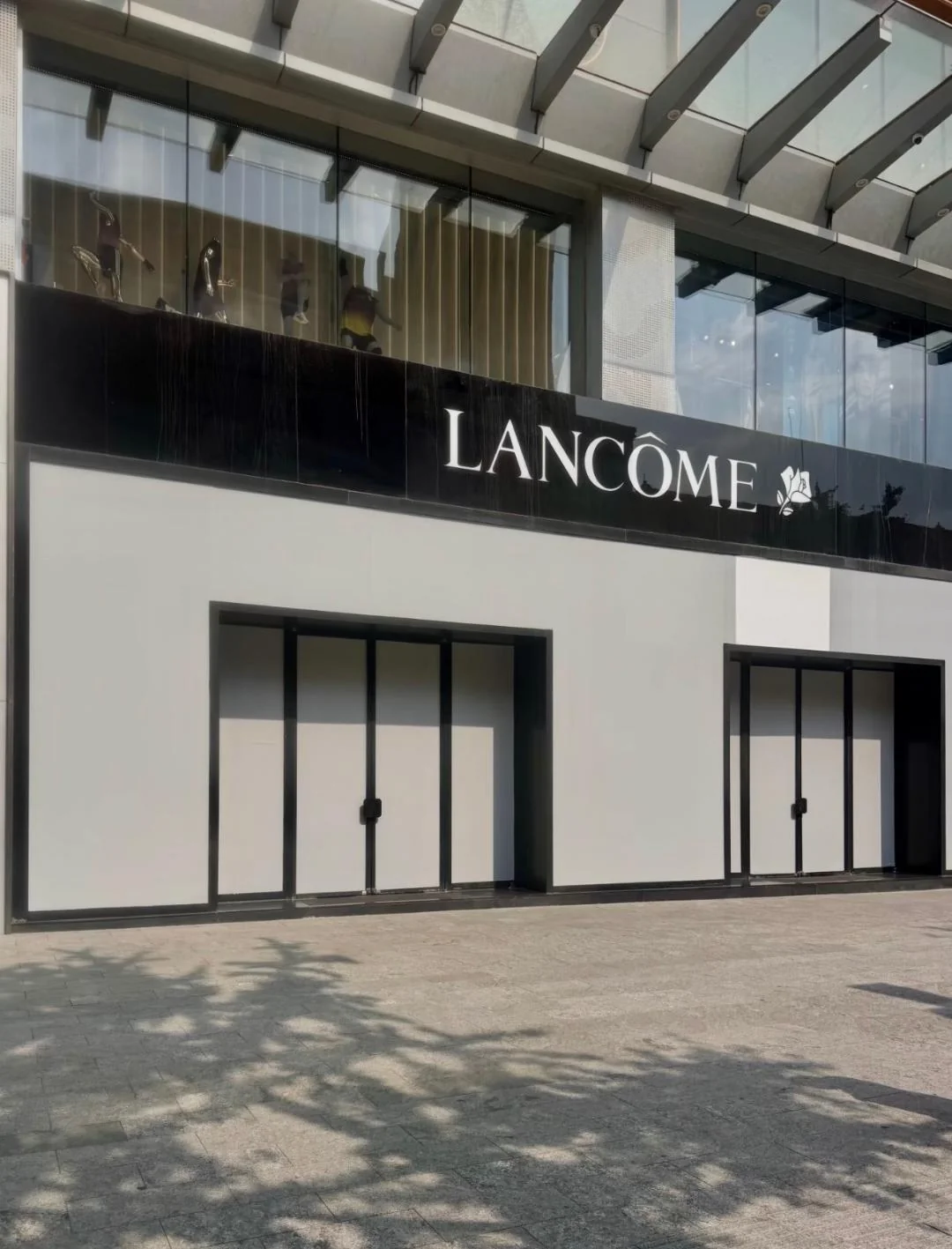
1. Operational pressures on large-format flagship stores In August 2026, Lancôme closed its 320-square-meter Asia-Pacific flagship store at Beijing Wangfujing APM after less than six years of operation. Commercial real estate sources indicated the closure was driven by channel shifting, as Lancôme's online sales surpassed 50% of total China sales. As online channels process more than half of transactions, large flagship stores struggle to maintain sales volume needed to offset high retail rents, staffing, and store operations. Industry estimates put total cosmetics retail operating costs at 38% of sales, with lease payments taking up to 18%. Monthly sales density for cosmetics department store counters averages around 1,390 yuan per square meter ($206.80 USD/sqm), compared to 10,000–15,000 yuan per square meter ($1,487–$2,231 USD/sqm) for high-turnover beverage concepts, putting large beauty footprints at a lease-negotiation disadvantage. Consumer shopping habits—researching products on Xiaohongshu (a Chinese lifestyle platform), evaluating prices via livestreams, and purchasing during major e-commerce promotions—have transformed flagship stores into sampling touchpoints rather than high-margin sales venues.
2. Network contraction across multi-brand beauty specialty retailers Multi-brand retail chains are undergoing store network optimization due to three structural challenges:
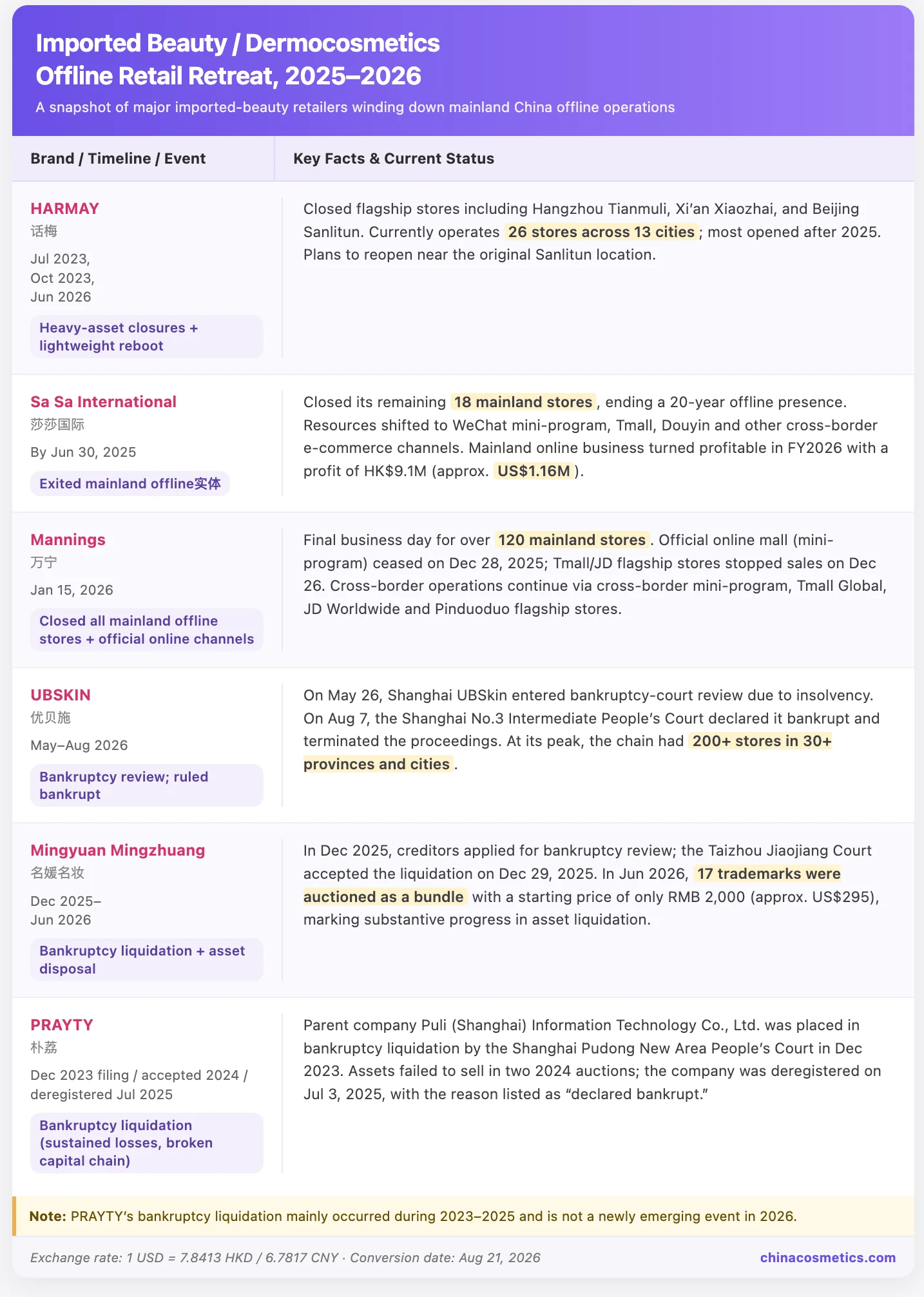
- Diminishing returns on social-first store formats: Experiential store designs and novelty product samplers face waning consumer interest. Retailer HAYDON closed nearly 90% of its peak 19 stores, operating just 2 locations nationwide. WOW COLOUR shuttered over half of its peak 300 locations, while ONLY WRITE largely exited physical retail. Hong Kong retail chains Sa Sa and Mannings withdrew from mainland store networks, and Watsons reported net store closures for consecutive years.
- Channel disintermediation: Global luxury brands and domestic clinical skincare labels are expanding direct-to-consumer flagship networks, while livestreaming, instant delivery, and cross-border e-commerce platforms bypass traditional retail stockists.
- Misaligned operating cost structures: Large footprints and custom store fit-outs generate heavy capital depreciation alongside escalating prime commercial rents. As store sales density drops below operational breakeven points, retailers are forced to reduce store counts. Multi-brand retailer HARMAY is responding by shifting from large flagship locations to smaller, service-oriented retail outlets.
Emerging Domestic Brands Face Traffic Addiction Withdrawal
Unlike foreign brand exits, domestic brand closures in early 2026 were concentrated in isolated cases like foundation brand blank me. This limited count reflects prior shakeout cycles that previously cleared out undercapitalized direct-to-consumer brands, leaving surviving market players with established operational models or tight cash cushions.
As market growth normalizes, leading domestic groups like Chicmax pivot to multi-brand strategies to shield earnings against category slowdowns. By contrast, single-brand digital natives have faced steeper risks. blank me, once a top-ranking domestic foundation brand, shuttered within five years of launching due to unsustainable customer acquisition economics. High international contract manufacturing costs, extensive brand branding campaigns, and high influencer commission rates generated persistent cash burn. In September 2025, cosmetics contract manufacturer Nox Bellcow (NBC) pursued legal recovery of 89,000 yuan ($13,200 USD) in unpaid manufacturing invoices, forcing the once highly valued brand into credit default lists.
The traditional digital expansion playbook—combining social seeding, paid ads, and livestream sales—has faced unit economic challenges. QuestMobile data showed cost-per-click (CPC) rates for top color cosmetics keywords reached 8–15 yuan ($1.19–$2.23 USD) in 2023, while conversion rates averaged 0.8%–1.5%. When acquisition costs approach customer lifetime value, ad-driven growth becomes unviable. Miscalculating product inventory further tied up working capital, limiting subsequent marketing spend.
Venture capital strategies have adjusted accordingly. Between 2021 and June 2026, approximately 102 domestic Chinese beauty brands closed or ceased operations, including digital-native brands VENUS MARBLE, HEDONE, Fomomy, Naijizi, and YOUNGMAY. Venture capital firms have shifted focus from consumer brand equity to upstream raw material suppliers and AI cosmetics tech, favoring industrial M&A over early-stage brand equity financing.
With venture funding for consumer-facing brands cooling, capital is increasingly shifting toward raw material innovation and technology, mirroring efforts highlighted at industry gatherings focused on supply chain synergy and AI technology.
Market Pivot: Shifting from Brand Dividends to Operational Efficiency
Despite domestic retail adjustments, major foreign multinational consumer groups continue to invest in China under refined localized models. On July 23, 2026, Vice Minister of Commerce Yan Dong stated at a State Council Information Office conference that nearly 4,800 foreign-invested enterprises expanded their investments in China in H1 2026, with newly established foreign firms up 5.3% year-over-year and high-tech sector foreign investment rising 33.2%.
Multinational cosmetics and consumer leaders remaining in China are adapting their operational models:
- L'Oréal reported record H1 2026 global sales of €23.77 billion ($27.80 billion USD). Vincent Boinay, President of L'Oréal North Asia and CEO of L'Oréal China, stated that L'Oréal China is evolving from a regional sales growth engine into a global innovation hub for the group.
- Unilever is positioning its China operations as a global R&D and consumer research hub, focusing investments on active formulation science and supply chain infrastructure.
- Procter & Gamble is concentrating resources on ultra-premium product lines, pruning low-margin SKUs, and developing localized formulas.
- Sam's Club China reported Q1 net sales of $8.0 billion USD, up 22.3% year-over-year across 63 warehouse stores, maintaining membership renewal rates between 80% and 85%.
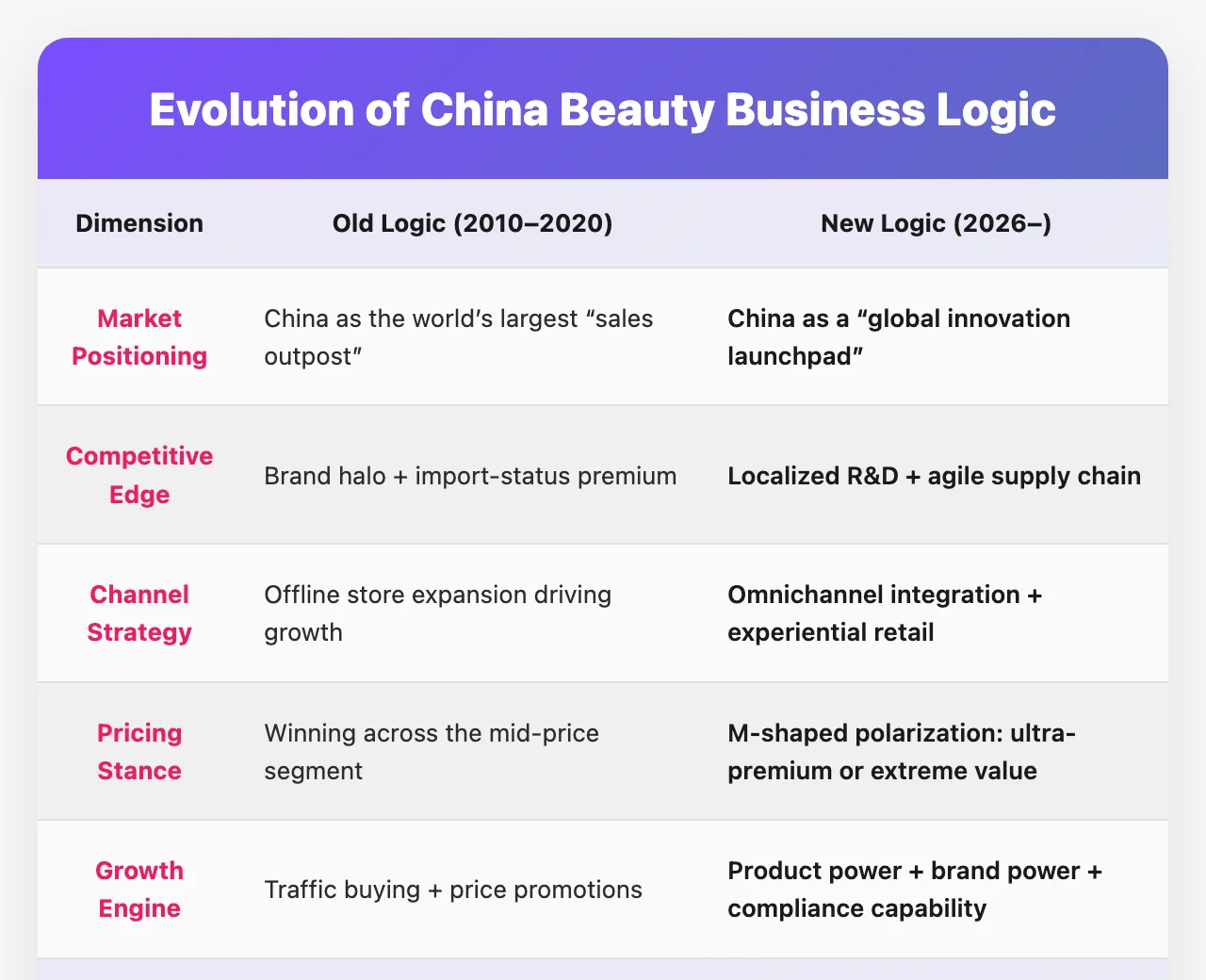
The competitive dynamic in China's cosmetics sector has shifted from early market expansion to operational depth. With total market revenues remaining substantial, domestic brands holding over 57% market share, and low-margin operators exiting, success in China's beauty market requires localized product development, active ingredient innovation, and disciplined channel management.
Conversation
0 Comments