
Debt of Chinese Skincare Brand Hanhoo's Parent Put Up for Auction
The parent of Chinese skincare brand Hanhoo faces a $23 million debt auction as founder Wang Guo'an struggles to rescue the former top 10 beauty brand.
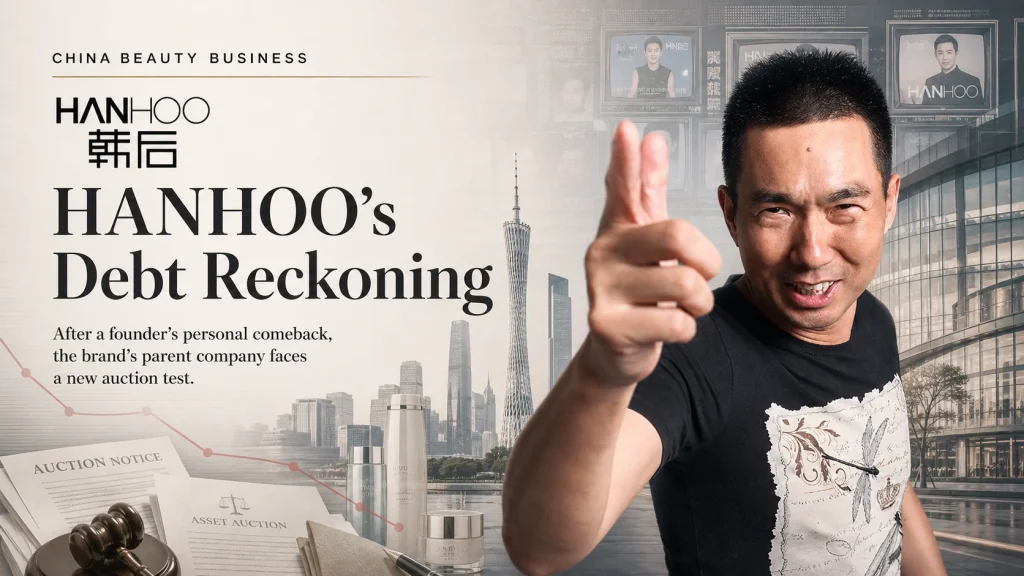
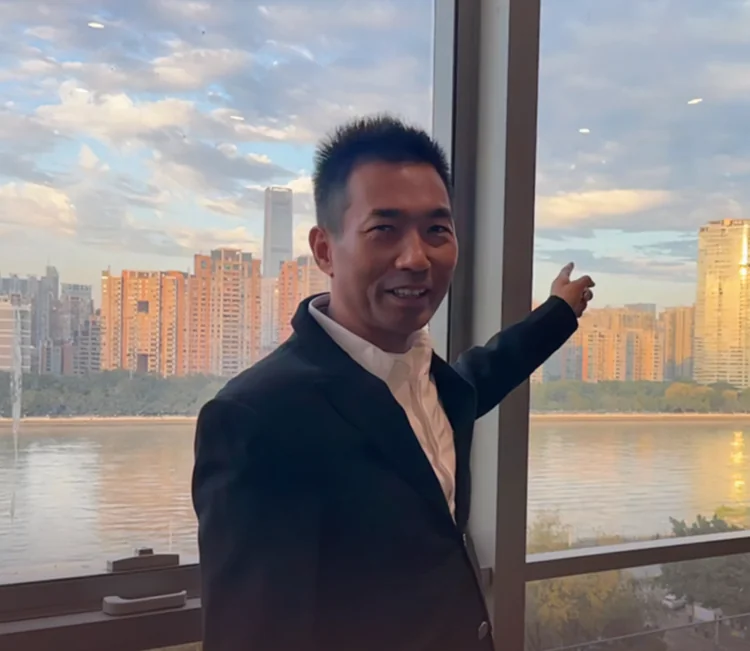
"The beauty industry still offers massive opportunities to break through. No matter how tough current market conditions get, they pale in comparison to the hardship of starting from scratch in the early days. For domestic Chinese brands, as long as you dare to fight and act, there is always a way out," Hanhoo founder Wang Guo'an once reflected in an interview.
In early 2026, news that Wang had paid off 1.5 billion RMB ($210 million) in debt sparked widespread discussion across Chinese social media. Known in his heyday as the audaciously aggressive operator behind skincare brand Hanhoo, the founder staged a dramatic personal comeback by selling off more than 300 real estate properties to settle obligations. Yet in a stark corporate paradox, while the founder's personal debts are nearly resolved, his company's survival hangs by a thread.
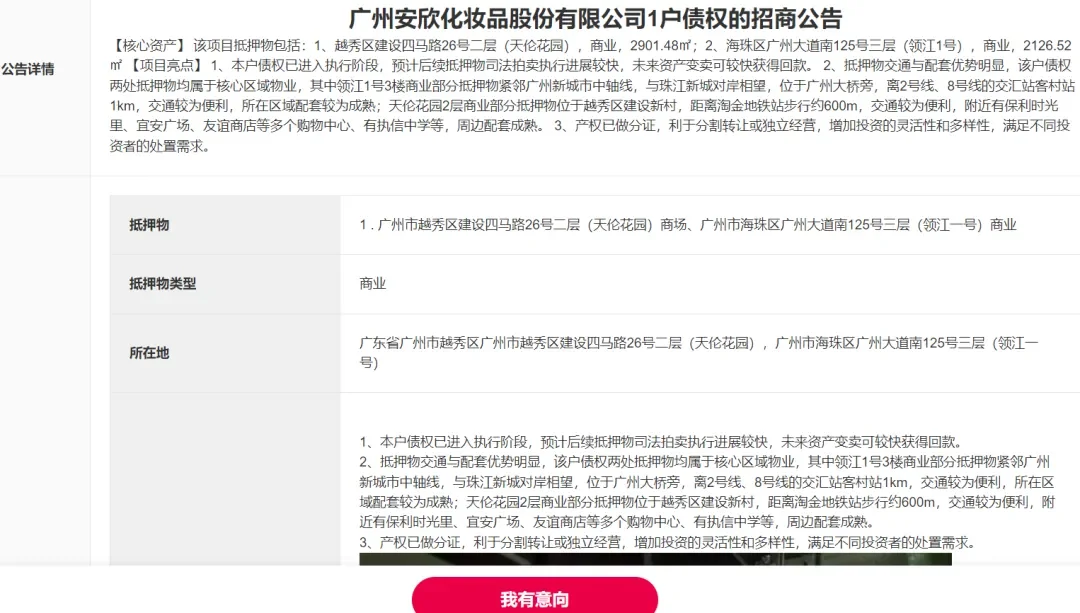
Alibaba's judicial auction platform recently updated a public investment solicitation notice for a single non-performing debt package belonging to Guangzhou Anxin Cosmetics Co., Ltd.—the primary operating entity and parent company behind Hanhoo.
Parent Company Debt Exceeding 150 Million Yuan Listed for Auction
According to the listing, state-owned asset manager Guangzhou Asset Management Co., Ltd. is disposing of the distressed debt claim against Anxin Cosmetics via Alibaba's judicial auction platform. The investor solicitation window runs from July 24, 2026, to January 20, 2027.
The debt package is secured through a combination of commercial mortgages and personal guarantees. As of April 10, 2024, the principal stood at 144.2 million RMB ($20.1 million) with accrued interest of 8.2 million RMB, bringing initial total debt to approximately 152 million RMB. By an updated benchmark calculation date, total accrued obligations reached roughly 168 million RMB ($23.4 million).
Collateral backing the debt auction includes two commercial real estate properties located in prime Guangzhou retail districts: a 2,901.48-square-meter commercial space on the second floor of Tianlun Garden in Yuexiu District, and a 2,126.52-square-meter commercial space on the third floor of Lingjiang No. 1 in Haizhu District.

Both properties have received separate title certificates, facilitating divided operations or piecemeal transfers. The debt claim has entered formal judicial execution, where prospective buyers first submit expressions of interest for specialized negotiations before proceeding to an online public bidding process.
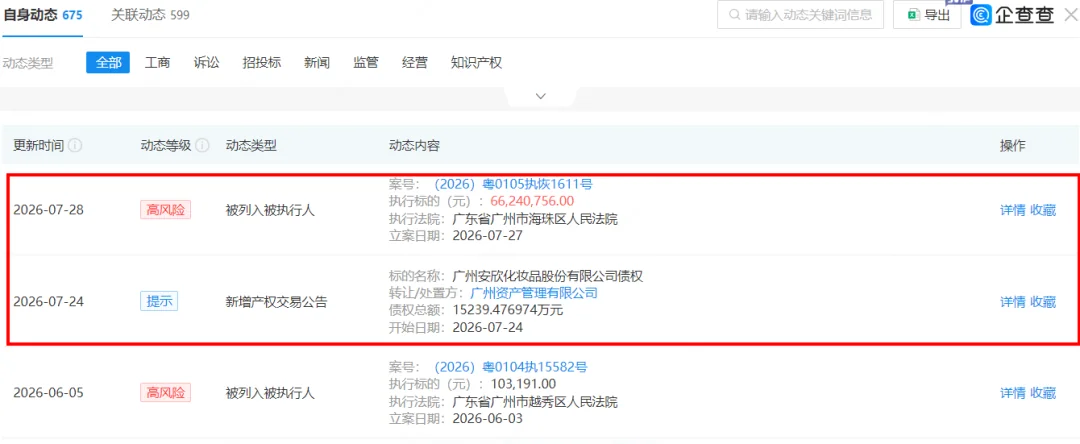
Data from corporate registry database Qichacha shows that between March 26 and July 28, 2026, Anxin Cosmetics was listed as an enforcement target and dishonest judgment debtor across four separate court rulings. On March 26, after initial execution proceedings concluded, the company was tagged for unfulfilled legal obligations totaling 66.24 million RMB ($9.2 million), with enforcement on this debt resumed in late July. Two additional enforcement actions followed in April and June for 687,265 RMB and 103,200 RMB respectively. Excluding duplicate entries for identical debts, total principal during this period reached approximately 67.03 million RMB ($9.3 million).
How a Short-Term Loan Triggered a Domino Collapse for a $200M Brand
The current auction follows years of severe operational disruption, debt litigation, failed public listings, and asset seizures for Hanhoo and its parent company.
destination turned on a single short-term borrowing deal. The transaction triggered a multi-year domino effect that transformed Wang Guo'an from a real estate mogul owning hundreds of properties to a debtor left with only an impounded parking space, while brand revenue plummeted from billions of yuan to a fraction of its former size.
In January 2017, Wang borrowed 15 million RMB ($2.1 million) from Jiaolong Asset Management Co., Ltd. for one month to top up capital in a trust scheme. After failing to repay the loan on time, he was dragged into a protracted legal battle.
By 2018, Hanhoo was preparing a backdoor listing via Huaren Pharmaceutical at a valuation of 2 billion RMB ($280 million). However, a lawsuit filed by Jiaolong Asset Management resulted in the freezing of Wang's equity shares, abruptly derailing the transaction. A devastating chain reaction ensued: banks pulled credit lines, investment partners demanded redemptions, and employees withdrew equity capital, causing total liabilities to compound rapidly to 1.5 billion RMB ($210 million).
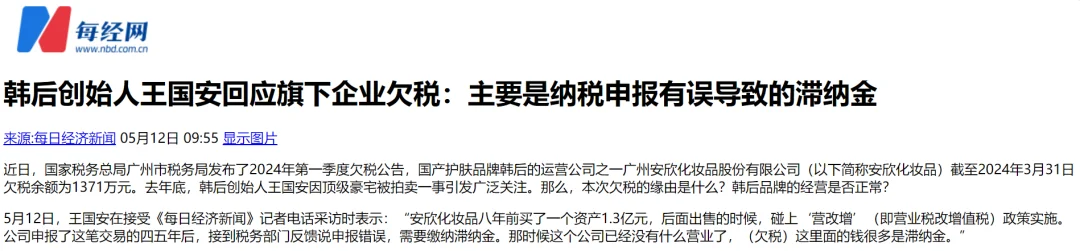
Following the failed listing, Anxin Cosmetics effectively suspended core operations for four to five years. In September 2023, Chinese courts issued mandatory execution orders against Wang and Anxin Cosmetics for nearly 149 million RMB ($20.8 million). In 2024, the Guangzhou Municipal Tax Bureau publicly cited Anxin Cosmetics for unpaid tax obligations amounting to 13.71 million RMB ($1.9 million).
During this period, Wang's luxury penthouse in Guangzhou's prestigious Huiyuitai complex was repeatedly put up for auction. Initially listed in late 2023 at an opening price of 70 million RMB ($9.8 million), the auction was withdrawn after parties reached a temporary settlement. In February 2025, the property was re-listed at 87.41 million RMB ($12.2 million). By late 2025, Wang announced that his 1.5 billion RMB debt was largely resolved—having won a 1 billion RMB lawsuit against Zheshang Bank, cleared another 300 million RMB in bank debt through court asset liquidations, and settled supplier claims by pledging two to three hundred residential properties.
However, during the seven years between the failed 2018 IPO attempt and the debt resolution in 2025, Hanhoo's annual revenue collapsed from 1.4–1.5 billion RMB ($200M+) down to 400–500 million RMB ($55–70M) in 2023. While the founder was embroiled in personal debt battles, the brand missed the golden five-year boom of domestic beauty market growth.

Former Marketing Titan Once Ranked Among China's Top 10 Beauty Brands
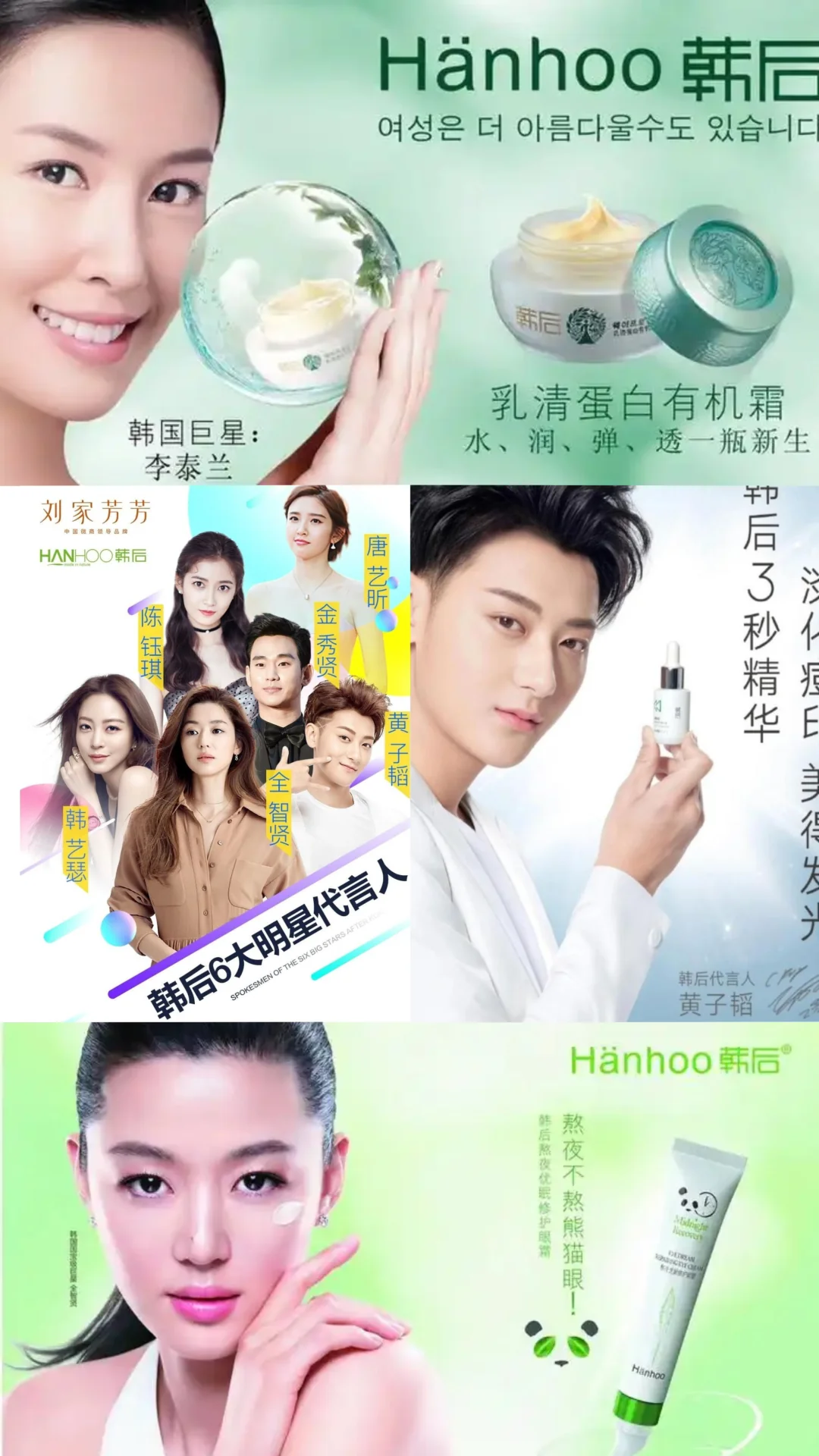
This slump stands in stark contrast to Hanhoo's glory days, when Wang's aggressive marketing strategy propelled the company into the top 10 domestic cosmetics brands in China. Hanhoo spent heavily to secure exclusive title sponsorships across satellite networks including Jiangsu TV, Hunan TV, and state broadcaster CCTV, repeatedly earning Wang the nickname "Bidding King" at television ad auctions. Armed with massive advertising budgets and leveraging the regional K-beauty wave, Hanhoo signed top-tier Korean celebrity endorsements including Jun Ji-hyun and Kim Soo-hyun.
A decade ago, Hanhoo was one of the fastest-growing players in China's mass skincare sector.
Born in a rural village in Jiangxi province in 1977, Wang arrived in Guangzhou in 1999 with just 468 RMB ($65) in his pocket. After establishing Hanhoo in 2005, he brought his high-risk appetite into corporate strategy. In 2008, the company initiated formal brand operations, and the following year secured title sponsorship for Hunan TV's flagship drama slot, kicking off an era of ad spending.
Between 2011 and 2013, Hanhoo spent 465 million RMB ($65 million) to dominate satellite television ad slots, claiming the beauty industry's top TV ad bidder title for three consecutive years. In 2012 alone, the company paid 120 million RMB to win Jiangsu TV's primary ad package while signing Korean actress Jun Ji-hyun, pioneering a commercial model that paired Korean pop culture star power with domestic skincare formulas. By 2013, Hanhoo's broadcasts covered 10 major satellite networks nationwide, setting single-day retail sales records over 100 million RMB ($14 million).

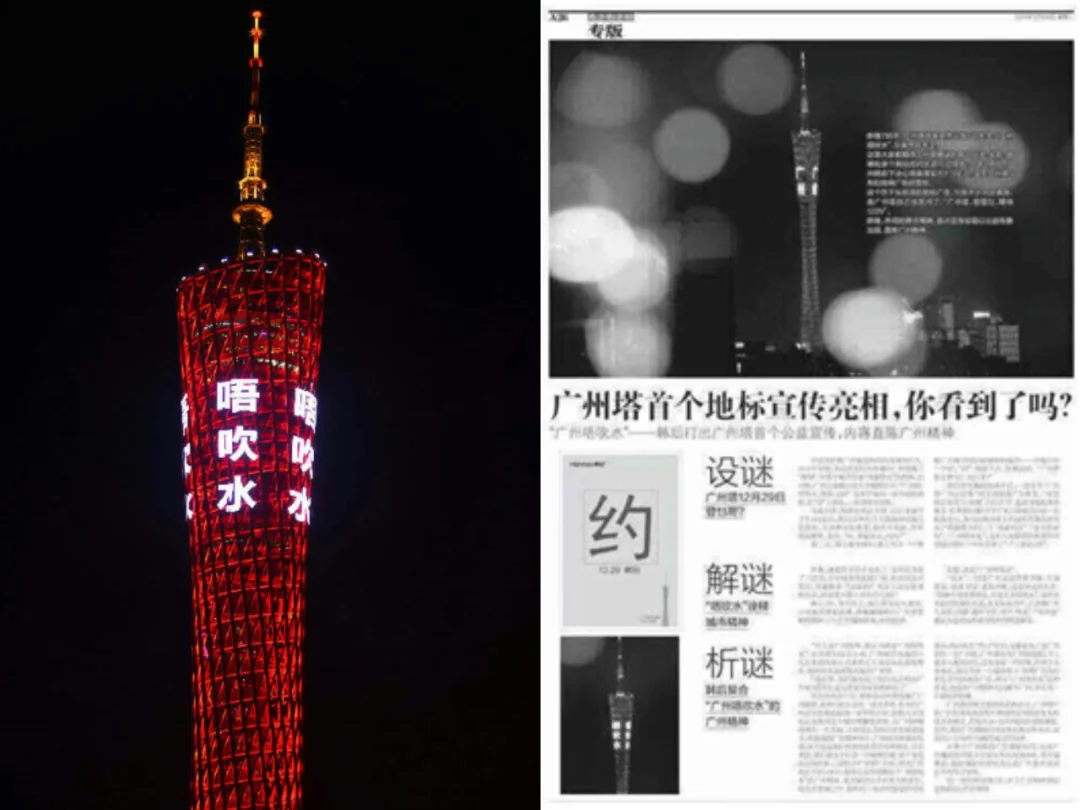
In 2014, Hanhoo won a 200 million RMB ($28 million) bid for a five-year outdoor LED advertising contract on Guangzhou's Canton Tower, becoming the first consumer brand to display on the landmark skyscraper. That same year, it secured dual sponsorship rights for CCTV's Spring Festival and Lantern Festival Galas—an unprecedented achievement for a domestic cosmetics brand.
Venture capital and retail channel expansion followed the ad spending spree. Hanhoo secured over 100 million RMB in Series A funding from Sequoia Capital China in 2014, followed by a Series B round over 100 million RMB in 2015 co-led by Sequoia China and Eastern Bell Capital. By 2016, Hanhoo surpassed 1 billion RMB in annual sales, joined China's top 10 beauty brands with 16,934 offline retail touchpoints, and filed its initial public offering registration.
In October 2018, listed pharmaceutical firm Huaren Pharmaceutical announced plans to acquire Hanhoo's parent entity, paying Wang a 30 million RMB earnest deposit. However, the deal stalled when Hanhoo became entangled in contract disputes involving media group Hualu Baina. Amid changing market conditions and valuation disagreements, Huaren Pharmaceutical officially terminated the acquisition in June 2019.
Wang later acknowledged that his personal debt disputes served as the fuse that derailed the enterprise. Following the acquisition breakdown, Hanhoo scaled back offline stores to focus on e-commerce platforms. In 2021, the parent company was renamed Guangzhou Anxin Cosmetics, with Wang Yuanqing replacing Wang Guo'an as legal representative, marking the end of the founder's direct management era.
"Great advertising is created through waste," was Wang Guo'an's signature philosophy. During the era when television advertising controlled mass-market consumer traffic, Hanhoo expanded rapidly through TV ad saturation, celebrity endorsements, and a vast traditional distributor network.
While global financial institutions continue strengthening their sector coverage—such as Wells Fargo naming Anthony Giuliano head of beauty and wellness—Hanhoo's trajectory illustrates the vulnerability of beauty brands reliant on heavy leverage and short-term marketing spent during market transitions.
That strategy defined Hanhoo's golden era, but as China's beauty market shifted toward online social commerce, ingredient-led formulas, and refined brand equity, heavy ad spending proved insufficient. As Wang Guo'an insisted, "As long as I stay at the table, there is hope." Yet for beauty brands seeking sustainable growth, short-term advertising blitzes cannot substitute for operational resilience and product-led value.

Conversation
0 Comments