
Chinese Beauty Leaders Outline Global Strategy at 19th Cosmetics Convention
Chinese cosmetics executives and international experts gathered at the 19th China Cosmetics Convention to outline global strategy and technological innovation.
Decades of rapid market expansion and introspective technical growth have brought Chinese cosmetics to a pivotal moment. As international markets pay closer attention to "C-Beauty" (Chinese Beauty), domestic industry leaders are examining how Chinese brands can evolve from simply gaining market visibility to establishing long-term global credibility.
On August 6, 2026, the 19th China Cosmetics Convention officially opened at the Powerlong Museum in Shanghai. Organised by industry trade media Pinguan and Cosmetics Observation, in strategic partnership with Beihao Group, Freda Biotechnology, Zhongtong Biochemical, and Wuxi Kolmar, the convention kicked off with a main forum centered on brand identity and global positioning. The event gathered executives from domestic powerhouses—including Freda, Shanghai Jahwa, Chicmax, Chando Group, and Forest Cabin (Lin Qingxuan)—alongside sociologists, beauty artists, and contract manufacturing leaders to discuss the strategic future of C-Beauty.
Hosting an industrial summit within an art museum signaled a deliberate shift: the Chinese cosmetics sector is expanding beyond purely functional product benchmarks into cultural positioning and brand storytelling. The discussions focused on how domestic brands can bridge the gap between initial market exposure and lasting brand equity through a combination of proprietary science and cultural identity.
Deng Min: Chinese Beauty Enters the 'Cultural Dividend Era'
"C-Beauty has entered an era driven by cultural dividends," said Deng Min, Chairman of Pinguan and curator of the CiE Beauty Innovation Expo. Deng noted that industry dividends emerge when consumer demand aligns precisely with brand supply at specific historical junctures. Early growth was propelled by digital traffic and social commerce, elevating brands like Perfect Diary and Florasis. Next came the functional efficacy boom, driven by ingredient-conscious consumers and supply-chain technological upgrades. Today, consumer focus is shifting from basic functionality to emotional meaning.
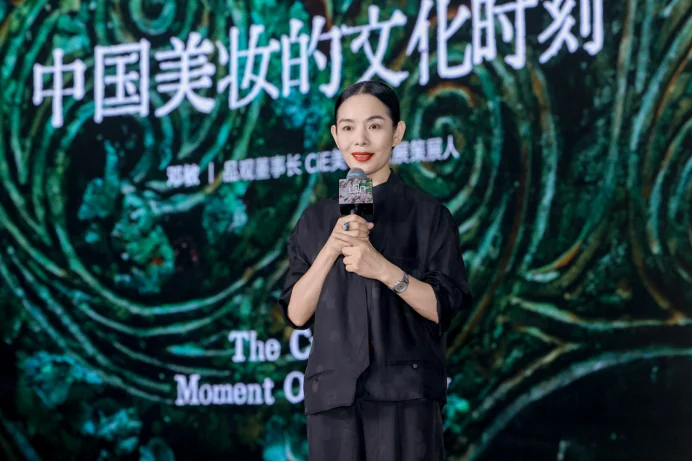
Deng highlighted national strategic initiatives in technological innovation and cultural revitalization as major macro drivers. On the technology front, the integration of AI and advances in life sciences continue to create new opportunities for product differentiation. On the cultural side, brand longevity requires connecting with consumer values. After four decades of learning from Western and Asian counterparts, domestic beauty brands must root themselves in their local cultural heritage to build enduring brand equity.
Atsushi Miura: In the Fifth Consumption Era, Beauty Moves Toward Health, Nature, and Resilience
Japanese sociologist and consumer researcher Atsushi Miura delivered a keynote titled Evolution of Consumer Society and the Future of Beauty, drawing on a century of Japanese retail history to map changing consumer values.
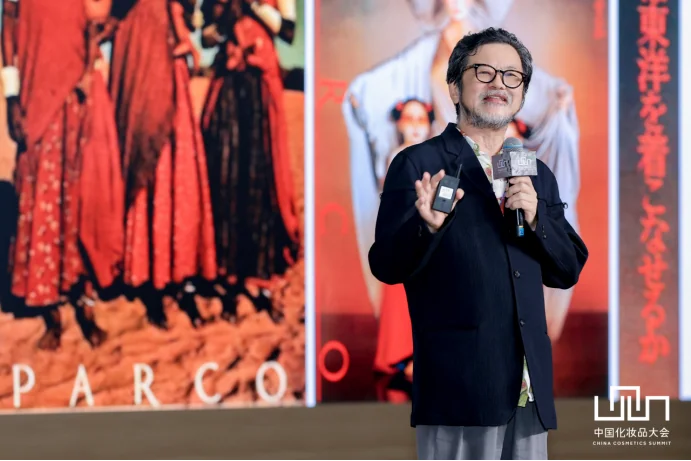
Miura emphasized that consumer eras do not neatly replace one another; instead, they coexist in overlapping layers. Demand has become highly fragmented, ending the dominance of universal blockbuster products and allowing niche brands to challenge established conglomerates. He outlined Japan's shift through four stages: Westernized enlightenment, post-war reconstruction, premium personalization, and finally a preference for simplicity and relaxation. Brands like MUJI succeeded by anticipating the fourth era while society was still transitioning out of the third.
Looking ahead to what he terms the "Fifth Consumption Era," Miura summarized future trends using seven key descriptors: Slow, Sensuous, Sociable, Soft, Story, Sustainable, and Solution of Social Problems. He predicted that portrayals of resilient, distinct women will increasingly influence the global cosmetics market, with health awareness, social responsibility, feminism, and pop-culture subcultures shaping future aesthetic standards.
Freda's Gao Chunming: Emotional Resonance Is the True Source of Premium Value
Gao Chunming, Chairman and General Manager of Freda Biotechnology, addressed the intense price competition and declining return on marketing spend affecting the sector. Speaking on the strategy behind Freda's Yiparhan brand, Gao argued that technical efficacy is merely the entry ticket, while emotional resonance confers pricing power.
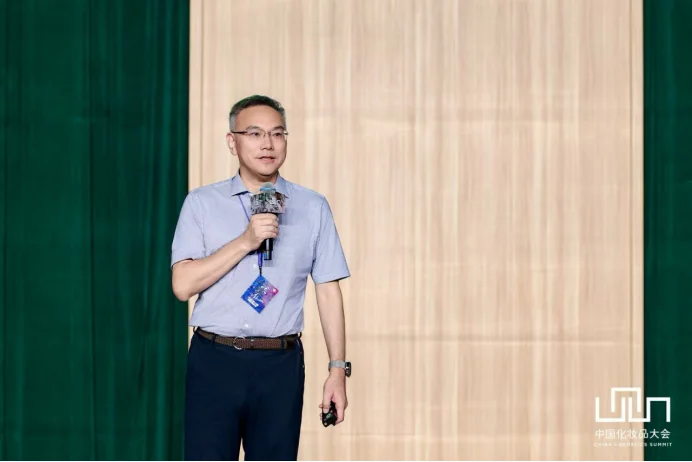
Gao noted that Chinese skincare manufacturing and R&D standards now rival global competitors. However, many domestic brands remain trapped in a feature-war mindset because they prioritize ingredient metrics over emotional engagement. As consumer purchasing shifts toward emotional wellbeing and self-care, brands must pivot from selling functional benefits to fostering cultural and personal alignment. Yiparhan's strategy leverages its native sourcing roots in Xinjiang's Ili Valley, a clear brand philosophy, and dedicated day-and-night emotional skincare formulations to build a distinct brand identity.
Forest Cabin's Sun Laichun: Facial Oils Are a High-Growth Category
Sun Laichun, founder of Forest Cabin (Lin Qingxuan), recounted his long-term commitment to indigenous botanicals. In 2012, Sun observed traditional Hakka skincare practices utilizing red camellia seed oil, leading him to focus exclusively on camellia-based facial oils.
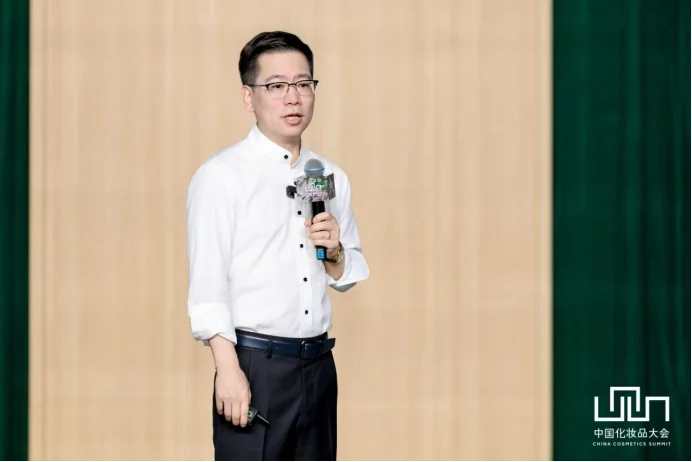
Over the past 14 years, Forest Cabin avoided short-term industry trends like micro-merchandising or hyper-focusing on trending synthetic actives, instead iterating its core camellia oil line through six product generations. Market data shows that Forest Cabin has held the top market position in China's facial oil category for 12 consecutive years. Domestic brands now occupy eight of the top ten positions in China's facial oil market.
On formulation technology, Sun compared the rapid advancement of Chinese skincare formulations to the country's electric vehicle sector. At a major raw material exhibition in Paris earlier this year, over 400 of the 1,000 exhibitors originated from China, reflecting a massive surge in domestic cosmetic chemistry innovations. This influx of active ingredients aligns with broader market shifts where state capital powers China's biotech surge in beauty raw materials, providing domestic brands with an increasingly sophisticated local supply chain.
'Qui Zui Zhongguo' Founder Zhang Haifeng: Shifting from Utilitarian Use to Authentic Experience
Zhang Haifeng, founder of cultural media platform Qui Zui Zhongguo, framed the market's evolution as a shift from a functional utility mindset to an experiential identity era.
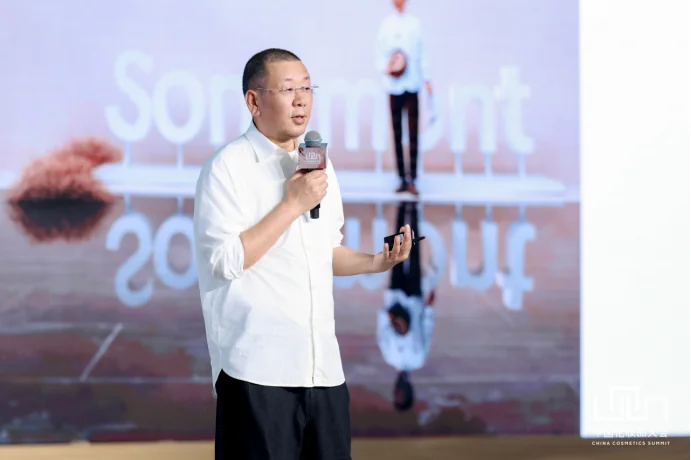
Zhang stated that the past four decades focused on catching up with global benchmarks through technical proficiency. The next phase requires brands to establish distinct worldviews and cultural positions. Beyond operational competence, founders must integrate aesthetic and cultural understanding directly into their business models. Cultural confidence must evolve into personal taste confidence, allowing brands to forge genuine emotional connections with consumers.
C-Beauty Roundtable: Moving Eastern Aesthetics from Visual Symbols to Perceivable Lifestyles and Scientific Systems
In a morning panel moderated by industry host Joan, executives including Chen Min (General Manager of Shanghai Jahwa's Beauty Division), Liu Ming (Vice President of Chicmax and Co-founder of newpage), Chen Juanling (General Manager of Public Affairs at Chando Group), and Zhang Yaodong (Founding Partner of Baoding Venture Capital) discussed defining the core identity of C-Beauty.

The panelists noted that Chinese beauty is moving from budget alternatives to market leadership, supported by complete supply-chain infrastructure and growing narrative confidence. Liu Ming emphasized that breaking away from value-tier positioning requires brands to boldly redefine category standards rather than follow external benchmarks. Chen Juanling shared Chando's work with the Chinese Academy of Sciences analyzing skin data from 320,000 Chinese consumers to tailor functional formulations. On global expansion, Zhang Yaodong noted that international success requires combining consumer familiarity with distinctive localized novelty, grounding traditional Eastern aesthetic concepts in validated science and tangible lifestyle benefits.
Beihao's Liang Hongli: Premiumization Is the Only Path for Chinese Sheet Masks
Liang Hongli, CEO of sheet mask manufacturing specialist Beihao Group, argued that sheet masks represent China's most competitive beauty category internationally. However, global beauty conglomerates still dominate the high-end pricing tier.

Liang stressed that domestic mask manufacturers must move upmarket by combining technical rigor with cultural expression. Over 20 years, Beihao has driven multiple material and technical innovations in the category. To mark this progression, the company invested nearly 30 million RMB ($4.2 million USD) to construct a sheet mask art museum set to open in early 2027. Beihao also released its 2026 Premium Chinese Sheet Mask Industry Whitepaper, establishing manufacturing standards designed to help domestic contract manufacturers transition from volume suppliers to high-value creators.
Li Dongtian: Learning from the World While Finding Our Own Identity
Veteran beauty artist and founder of Dongtian Styling, Li Dongtian, reflected on the evolution of Chinese beauty standards over the past three decades.
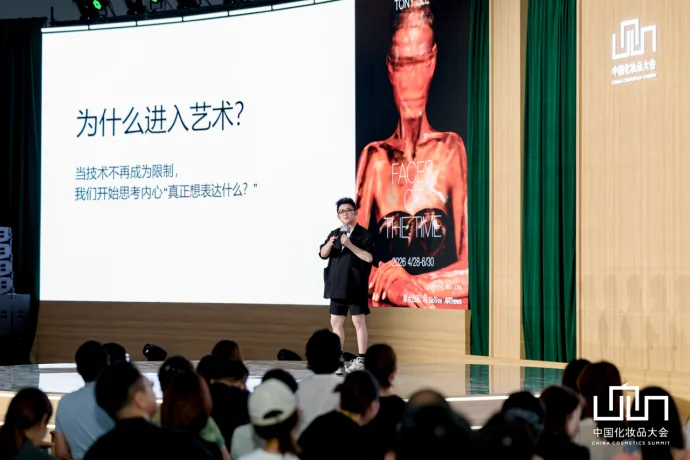
Li recalled that Chinese makeup in the 1990s heavily copied Western contours, often working against East Asian facial structures. Having styled portraits for 36 years, Li emphasized that makeup should celebrate native features—such as single eyelids and natural eye contours—rather than alter them. As technical formulation gaps between domestic and international brands close, Li noted that a brand's ultimate competitive edge lies in deep cultural resonance and authentic aesthetic confidence.
Huang Weijie: Beauty Needs Art to Build Emotional Connections
Huang Weijie, founder of ARTOX GROUP, addressed how artistic partnerships enhance retail spaces and product value.
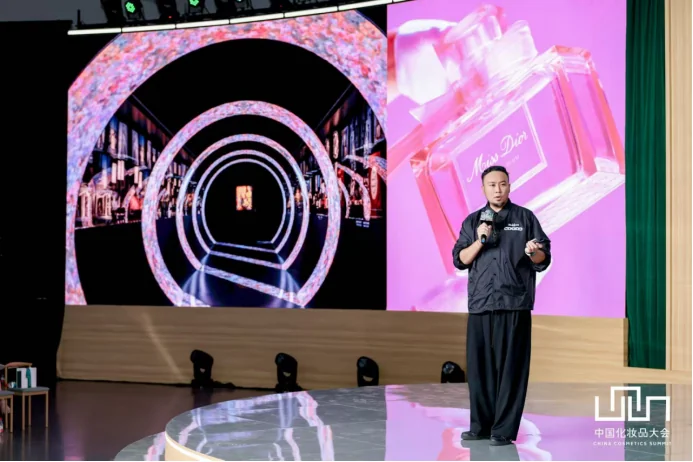
Huang noted that transforming traditional retail locations into art-infused experiential environments significantly increases dwell time, conversion rates, and average basket size. Unlike basic merchandising displays, artistic curation communicates brand positioning implicitly without aggressive sales pitches. He outlined five steps for execution: selecting art forms tailored to target audiences, partnering with artists through social and gallery networks, embedding artistic elements into packaging and interior design, installing large-scale installations, and maintaining artistic consistency across all corporate touchpoints.
Nianxiang's Jiang Guozheng: A Brand with True Character Never Pleases Everyone
Jiang Guozheng, founder of brand strategy consultancy Nianxiang, offered a critique of brand authenticity in current consumer media.
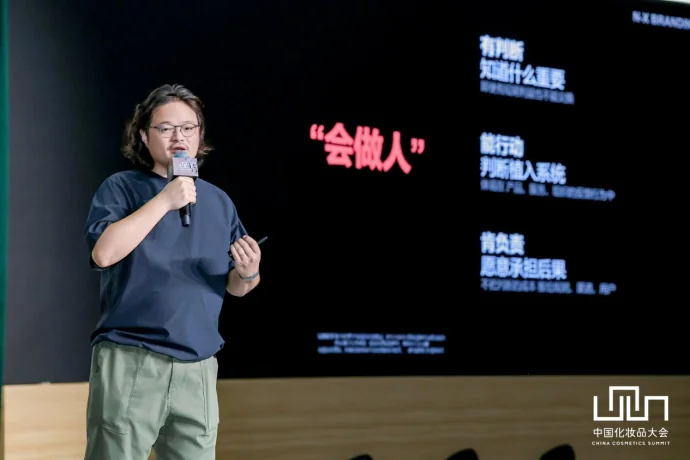
Jiang defined true brand character as an operational discipline: making firm decisions about core values, translating those values into products and organizational culture, and accepting responsibility for the costs involved. Citing Patagonia's historical decisions—such as transitioning fully to organic cotton and making key technologies open-source—Jiang argued that values without tangible trade-offs are merely preferences. For Chinese brands, establishing authentic identity requires combining solid brand conviction with local market operational logic.
Lan Vu: Now Is the Best Time to Push C-Beauty onto the Global Stage
Lan Vu, founder of international trend forecasting firm BEAUTYSTREAMS, stated that global market conditions are uniquely favorable for C-Beauty's international expansion.
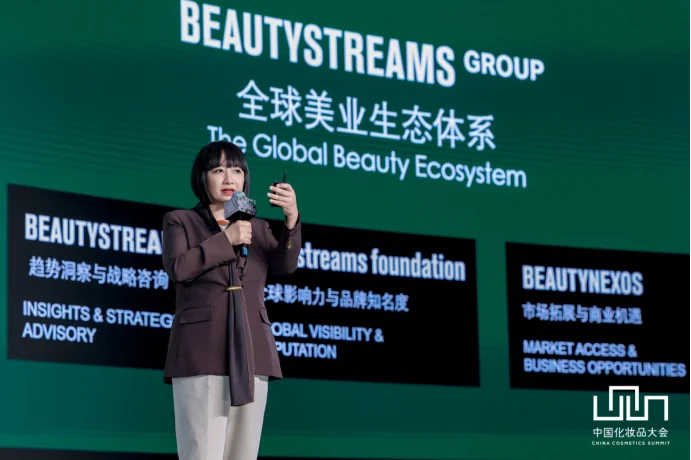
Vu noted that J-Beauty established global consumer trust through high craftsmanship, while K-Beauty popularized novel formats and fast-trend beauty. C-Beauty's global opportunity lies in defining hyper-personalized, tech-enabled beauty. She highlighted six competitive advantages: AI-integrated manufacturing, advanced biotech research labs, traditional wellness concepts, mass customisation capabilities, global-first design capabilities, and forward-looking investments in sustainable circular supply chains. Lan Vu highlighted AI-driven manufacturing and custom formulations as major strengths for C-Beauty, reflecting broader industry trends detailed in a recent Revieve report highlighting the rise of AI personalization.
Zhongtong Biochemical's Zhu Hong: Overseas Expansion Is About Integration, Not Domination
Zhu Hong, General Manager of contract manufacturer Zhongtong Biochemical, offered a pragmatic assessment of Chinese beauty brands expanding overseas.
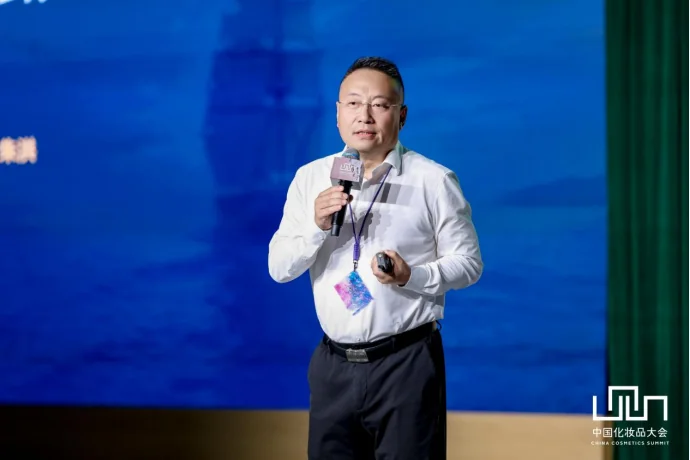
Zhu cautioned against price wars in export markets, noting that aggressive price undercut strategies undermine local regulatory trust and squeeze profit margins. While Chinese manufacturers excel in supply-chain flexibility, speed, and cost efficiency, international expansion requires adherence to core values: quality, operational efficiency, innovation, social responsibility, and cultural respect. He outlined three strict operational boundaries for Zhongtong's global business: no compromised consumer safety, strict compliance with local laws in destination markets, and maintaining sustainable profitability.
Kolmar Korea's Kim Jin-ho: Three Core Competencies Driving C-Beauty
Kim Jin-ho, Executive Director of the Marketing Creative Center at Kolmar Korea, analyzed C-Beauty's global potential from an ODM supply-chain perspective.
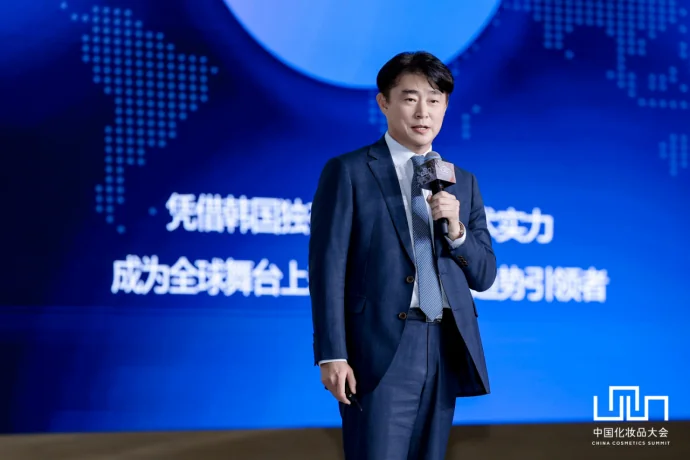
Kim identified three core competitive advantages driving C-Beauty: fast trend iteration driven by digital platforms and livestream commerce, strong brand messaging infused with distinct cultural narratives, and massive localized manufacturing hubs in regions like Shanghai and Guangzhou that enable end-to-end supply chain execution. Combining these capabilities with global ODM R&D and regulatory infrastructure will help Chinese brands scale efficiently across international markets.
Founders Panel: Defining the Global Narrative of C-Beauty
In the convention's concluding panel, Han Xiao, founding editor of Beauty Insider, moderated a discussion on global expansion with Ju Da (founder of Daisy's Sky), Fang Xing (founder of Focallure), Wu Yifan (General Manager of Yangshengtang Cosmetics), and Zhu Zhiguo (founder of SKINSHA PTE. LTD.).
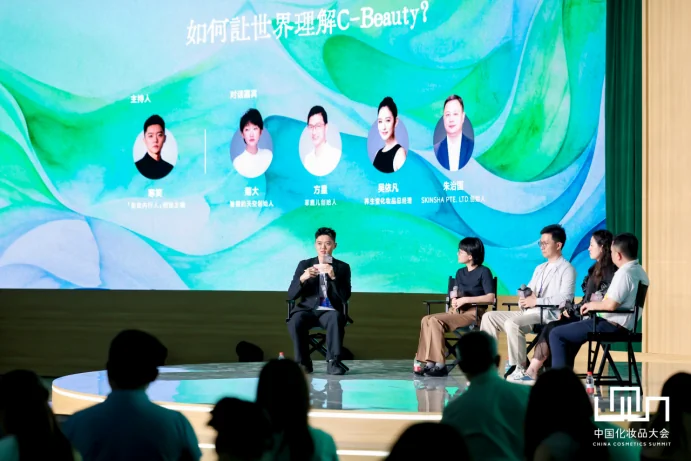
Focallure's Fang Xing, whose color cosmetics brand exports to over 50 countries, noted that human operational capability and persistent iteration have driven international recognition for domestic brands. Yangshengtang's Wu Yifan highlighted the brand's pioneering waterless skincare system launched in 2017, arguing that long-term international credibility depends on verified technological leadership. Zhu Zhiguo, who distributes over 60 Chinese beauty brands across Southeast Asia through 300 to 400 retail outlets, emphasized that operating in diverse overseas markets requires localized packaging, marketing, and regulatory management.
Alongside the main forum, the C-Beauty Exhibition showcased over 100 brands, raw material suppliers, and contract manufacturers. Major enterprise brands like Proya, Kans, Chando, and Pechoin exhibited alongside clinical skincare players including Winona, Comfy, Guyu, and HBN, plus color cosmetic brands such as Timage, East Lounge (Dongbian Yeshou), Flower Knows, and Florasis.
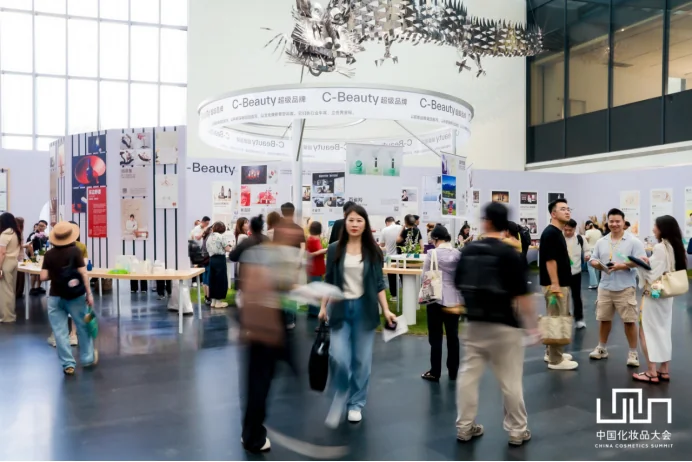
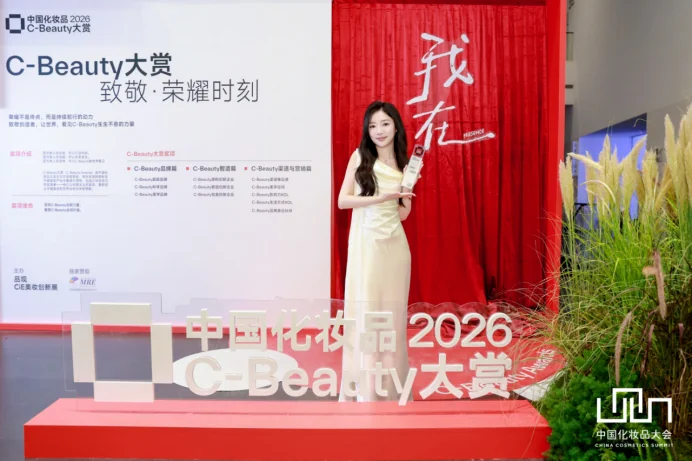
The event concluded with the 2026 C-Beauty Awards ceremony, honoring 11 industry achievements across brand strategy, formulation technology, packaging design, retail channels, and supply chain execution.
Conversation
0 Comments