
Why Chinese Stars Use Sheet Masks to Launch Beauty Empires
Chinese celebrities like Fan Bingbing and Zhao Lusi are leveraging mature OEM supply chains and low consumer barriers to build beauty brands around sheet masks.
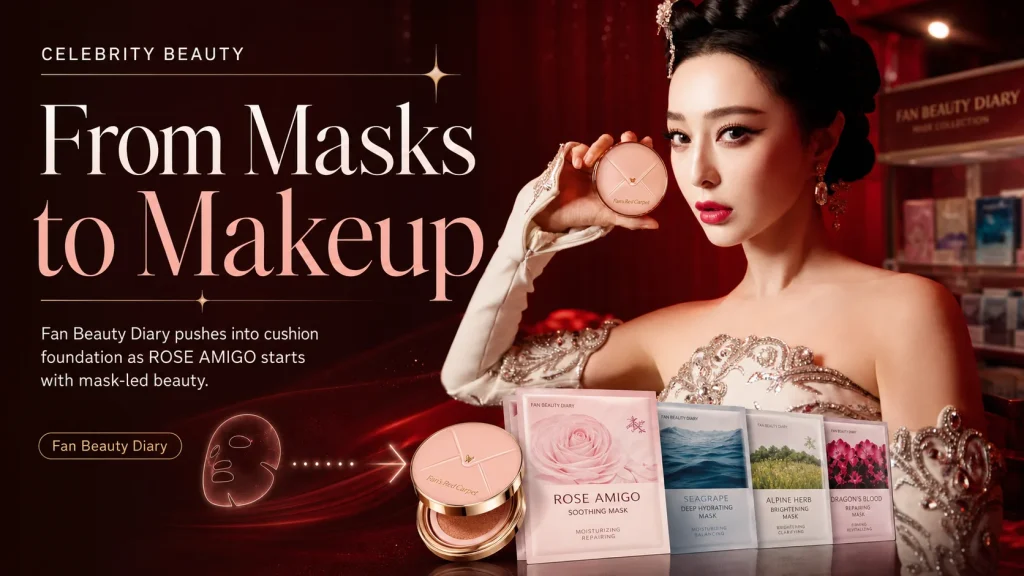
Chinese actress Fan Bingbing’s beauty brand, Fan Beauty Diary, recently teased its first base makeup product on social media ahead of an official commercial launch.
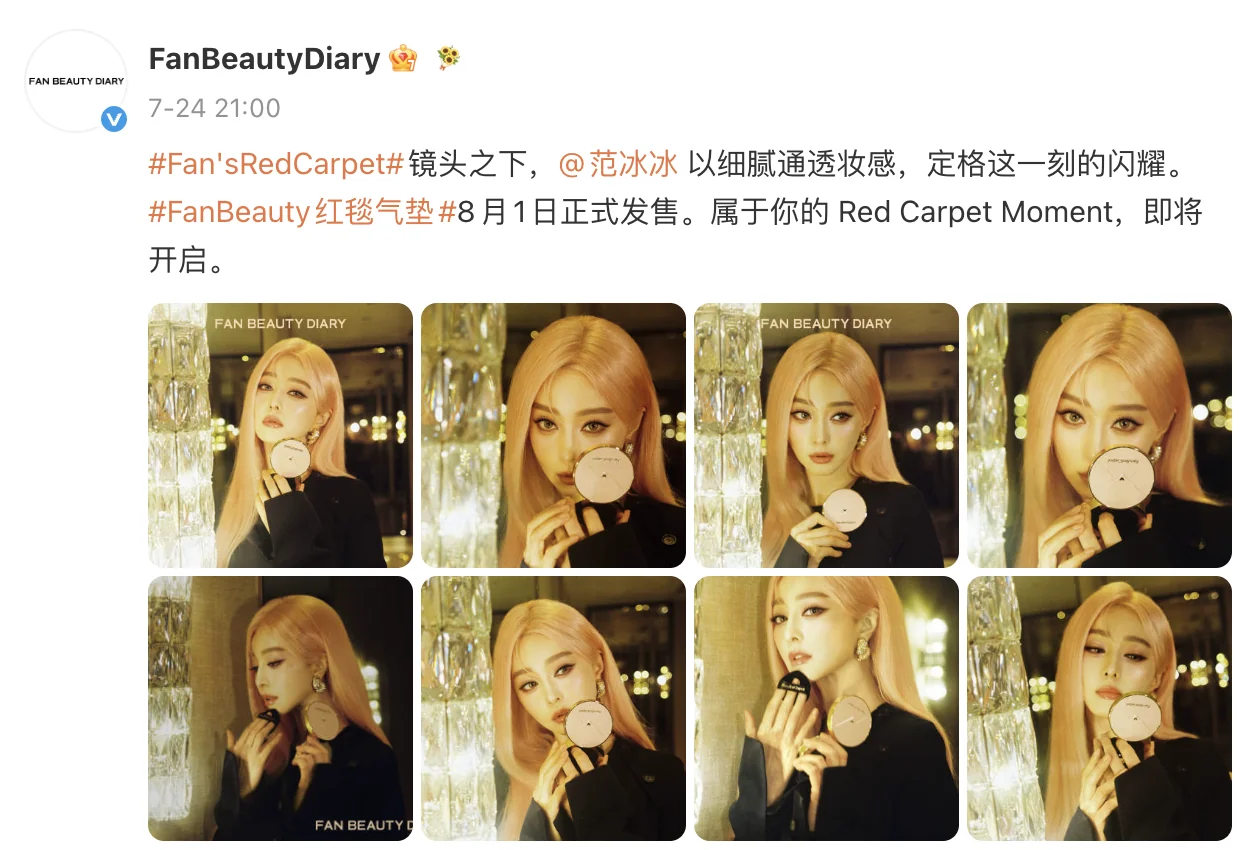
A spokesperson for Fan Beauty Diary confirmed that the new product, the Red Carpet Radiance Cushion Foundation, is set to go on sale on August 1. Formulated to combine skincare serum benefits with long-wearing coverage, the brand plans to evaluate initial market feedback before expanding further into color cosmetics.
Prior to entering base makeup, Fan Beauty Diary built its business around sheet masks. The category served as the brand’s entry point into China's competitive cosmetics market, where a single hero mask SKU eventually crossed 100 million units in cumulative sales.
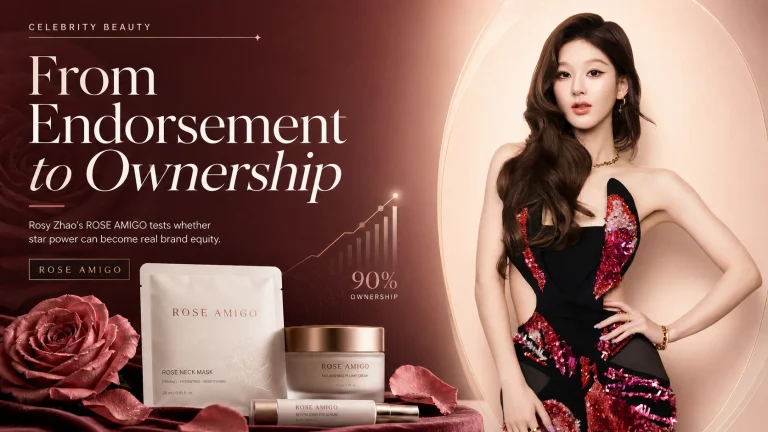
Popular Chinese actress Zhao Lusi recently stepped into the beauty market with her new venture, ROSE AMIGO, which also debuted using specialized mask products. The brand first appeared as concert gift sets before launching dedicated social media channels.
Filings with China’s National Medical Products Administration (NMPA) show that ROSE AMIGO has registered two inaugural products: a lip mask and a dual face-and-neck mask. A spokesperson told reporters that the brand remains in pre-launch preparation, polishing product formulas and brand positioning.
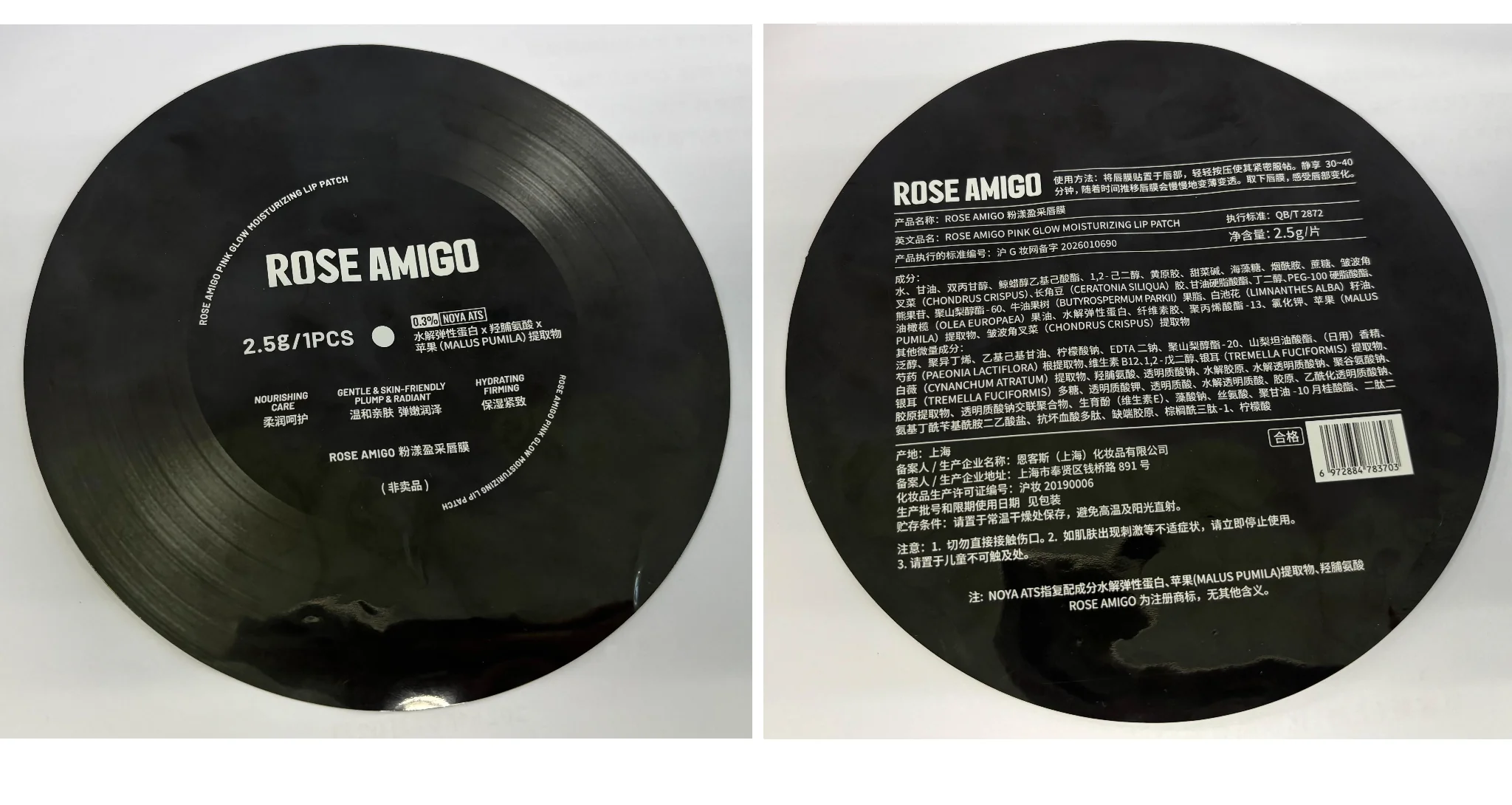
While one celebrity brand is expanding from masks into complex color cosmetics and another is launching with targeted lip and neck masks, both reflect a broader market trend: the unique strategic role sheet masks play in celebrity beauty ventures.
According to Mangqijin, lead beauty science writer and head of science communication at Chaogui Research Institute, sheet masks carry a low psychological trial barrier for consumers. Unlike high-potency anti-aging serums that require weeks of consistent application to demonstrate results, sheet masks offer instant gratification. Users immediately feel hydration, softness, and skin tightness, creating instant positive feedback.
This immediate experience makes masks ideal for social commerce: a celebrity can demonstrate a mask in a single short video or livestream, clearly communicating texture, usage, and skin feel. For fans, buying a box of sheet masks requires far less financial commitment than investing in a high-ticket treatment serum or moisturizer.
The sheet mask format is also an ideal starting point because of China’s highly mature contract manufacturing ecosystem.
Celebrity entrepreneurs do not need to build manufacturing facilities. Original Equipment Manufacturers (OEMs) and Original Design Manufacturers (ODMs) handle everything from formulation development and substrate selection to filling and packaging. Lip, eye, neck, and body masks follow the same core production logic, requiring only adjustments in shape, size, and application scenarios.
Mangqijin noted that these specialized formats remain governed by standard cosmetic regulatory frameworks, meaning brand founders face no regulatory gray areas when shifting application zones. For star-led ventures, turnkey OEM capabilities mean rapid speed-to-market and the flexibility to innovate on traditional sheet mask formats to create new usage rituals.
ROSE AMIGO’s decision to launch a face-and-neck mask expands topical coverage while generating novelty. Because consumers are already familiar with sheet masks, the brand does not need to invest heavily in consumer education.
A transparent cost structure also leaves ample room for healthy profit margins.
While sheet masks appear simple, unit costs vary based on substrate quality, active ingredients, order volume, and packaging. Mangqijin estimates that ex-factory production costs for sheet masks in China typically range from a few cents to a few RMB per sheet, depending on formula complexity and order scale.
Financial disclosures illustrate this cost dynamic. According to 2025 annual report data from listed Chinese skincare company Fuershi, the procurement cost for the mask fabric and foil pouch of its lactobionic acid pore-refining mask was just 0.40 yuan ($0.06). On major e-commerce platforms, a 5-sheet box retails for 118 yuan ($16.50), or roughly 23.60 yuan ($3.30) per sheet. While the 0.40 yuan figure covers only the bare fabric and pouch—excluding essence, filling, testing, and outer packaging—it highlights the favorable gross margins in the category.
Similarly, Fan Beauty Diary’s Sea Grape Hydrating Mask retails at roughly 137 yuan ($19) per 5-pack box, averaging 27.40 yuan ($3.80) per sheet.
However, the difference between production cost and retail price does not equal pure profit. Celebrity brands must absorb expenses across packaging design, warehousing, fulfillment, platform commissions, influencer revenue sharing, promotional discounts, returns, and operational overhead. Despite built-in fame, star brands still require substantial investment in content creation, livestream commerce operations, and customer service.
Where star power truly changes the economics is pricing leverage and customer acquisition cost (CAC). Celebrity backing raises the pricing ceiling while lowering initial customer acquisition barriers. Consumers are not merely purchasing a substrate and serum; they are buying into celebrity image, lifestyle content, and brand equity.
Starting with masks also allows celebrity brands to test market demand with minimal SKUs.
Traditional cosmetics companies usually need broad product lineups across skin types, efficacy claims, and price tiers. Celebrity brands, by contrast, can launch with just one or two hero products.
A lean SKU portfolio minimizes initial supply chain outlay and reduces inventory risk. For fans, making a purchase decision does not require comparing dozens of options; they simply buy the signature item endorsed by the star.
In short, celebrity founders leverage personal IP to lower early acquisition costs, rely on turnkey ODM infrastructure to avoid fixed capital expenditure, control inventory risk through minimalist SKU counts, and capture direct-to-consumer margins via premium pricing.
Fan Bingbing’s Fan Beauty Diary has successfully scaled this model. The brand reported 2025 annual revenues of 1.8 billion yuan (~$250 million), putting its scale near established public mask players like Fuershi. Its sales remain heavily anchored by masks: the flagship Sea Grape Hydrating Mask has surpassed 100 million sheets sold, while follow-up launches like the Dragon's Blood Repair Mask and Vitamin C Brightening Mask expanded into targeted repair and brightening categories.
After achieving scale with hero masks, Fan Beauty Diary systematically broadened its assortment. The Sea Grape lineup expanded into cleansers, toners, serums, lotions, and creams. Future product roadmaps include unit-dose ampoules and post-procedure dermatological care.
Expanding into cushion foundations signals Fan Beauty Diary's ambition to evolve beyond single-category reliance and compete in the crowded color cosmetics market. Zhao Lusi’s ROSE AMIGO, meanwhile, represents the initial phase of building brand awareness through specialized mask formats.
Yet celebrity traffic alone cannot build a sustainable brand. As Mangqijin emphasized, launching a product is very different from managing a long-term beauty brand. Personal care products must deliver reliable functional value; while fans may purchase once or twice out of loyalty, repeat purchases depend entirely on product efficacy and value.
Conversation
0 Comments