
China's Sun Care Market Shifts as Consumers Ditch Heavy Sunscreen Lotions
Chinese consumers are trading heavy sunscreen creams for lightweight sprays, forcing beauty brands to prioritize texture, daily usability, and compliance.
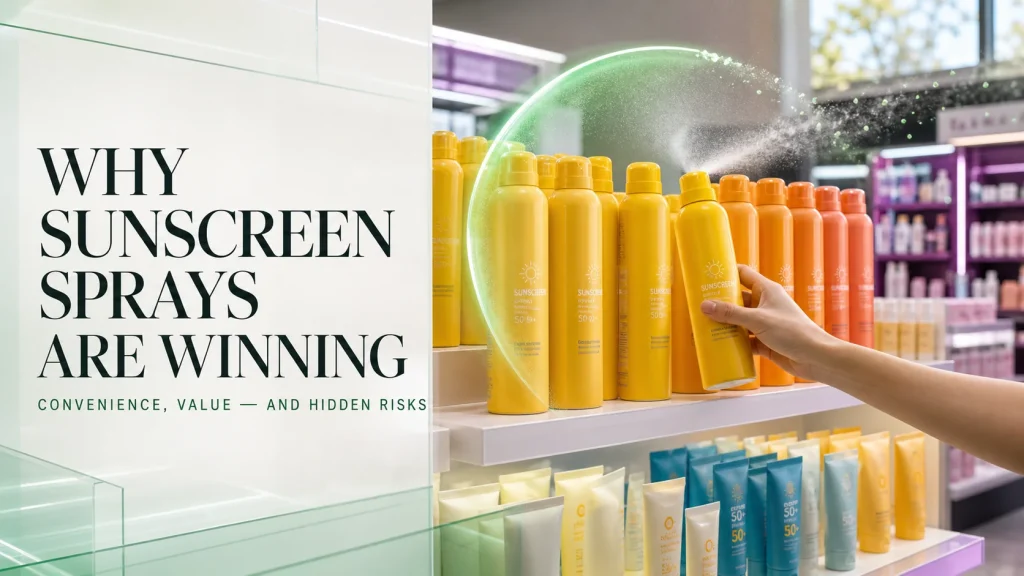
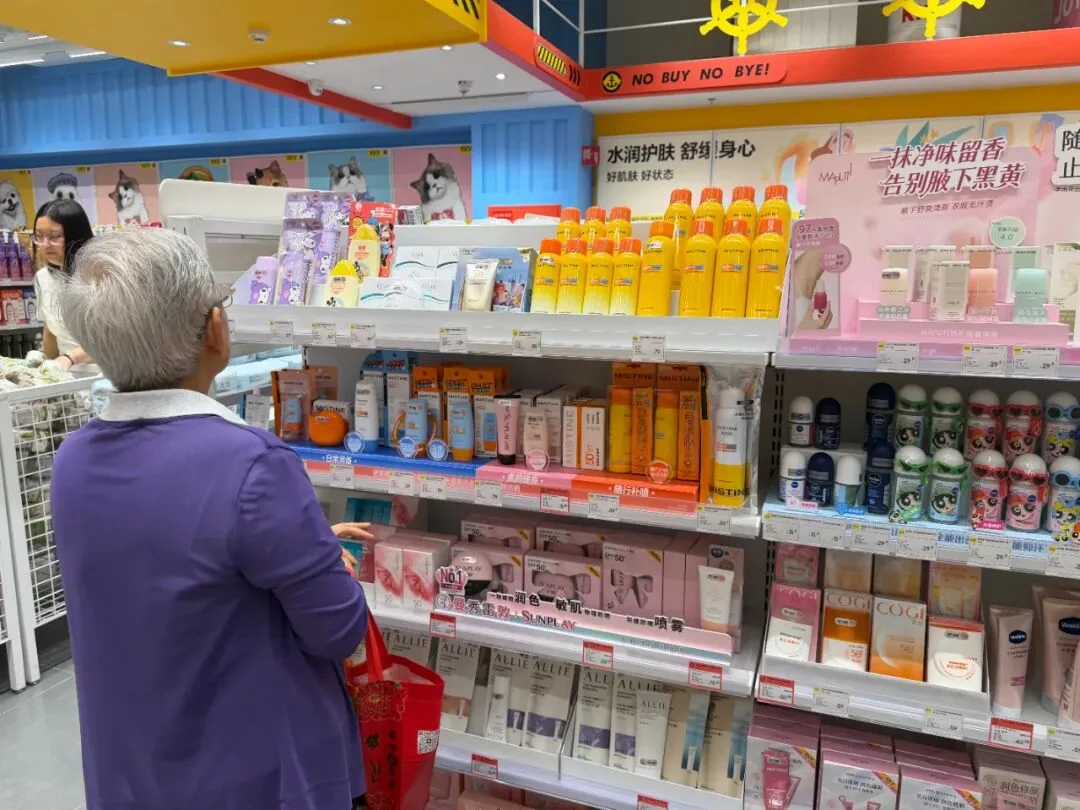
In the peak of summer heat, beauty counters across major Beijing shopping centers—including Chaoyang Joy City, Sanlitun, and Hopson One—reveal a distinct operational shift: traditional sunscreen creams and lotions have surrendered prime display positions to sunscreen sprays, which are drawing steady lines of young shoppers. On the ground floor of Chaoyang Joy City, a retail sales associate restocked a sample station by stacking sunscreen sprays seven layers high while leaving just two rows for traditional lotions. In previous years, sunscreen creams were the primary revenue driver, but demand for heavy creams has dropped noticeably this season.
Consumers have not abandoned sun protection, but their buying criteria are shifting. Moving from tanning prevention to photoprotection against skin aging, and from chasing high numerical SPF ratings to prioritizing sensory skin feel, Chinese shoppers are redefining product performance expectations. Yet alongside this demand for lighter textures, many consumers continue to harbor misconceptions about proper application density and UV defense.
Why Traditional Sunscreen Lotions Are Losing Ground
The 2026 Sun Care Cosmetics Quality and Safety Research Report projects that China's domestic sun care market will surpass 32 billion yuan ($4.4 billion) this year, with total online category sales growing more than 10% year over year. However, despite overall category expansion, traditional sunscreen lotions are experiencing a sharp slowdown.
Retail staff at multi-brand beauty outlets in Beijing note that while shoppers previously inquired about SPF levels first, inquiries now focus on whether a formula feels greasy, leaves a white cast, or blends easily into the skin.
Commercial data platform Jiuqian Data analyzed more than 3.29 million verified consumer reviews and found that 22% of sun protection usage scenarios now center on daily morning commutes and urban routines. Urban consumers primarily face fragmented UV exposure during brief walks or public transit, driving demand for convenient, lightweight formats that apply quickly without disturbing makeup.
Consumer purchasing behavior has grown increasingly pragmatic. Industry data shows sales of premium sun care products priced above 149 yuan ($21) fell 64% year over year, with their market share shrinking from 33.67% to 12.09%. Conversely, entry-level products priced under 50 yuan ($7) recorded a 107% sales increase. Overall sun care category sales volume fell 18.4% in the first quarter, outstripping an 8.3% decline in sales revenue, indicating that consumers are purchasing less frequently and opting for lower transaction amounts.
Store sales staff report that marketing concepts like skincare benefits or anti-aging ingredients are no longer enough to justify high price points for short daily commutes.
Zhou Mingyuan, a former cosmetic safety evaluation researcher, noted that the sun care sector is transitioning from functional claim marketing to experience-driven product design. Once SPF 50+ became an industry baseline, numerical ratings lost their ability to command premium pricing. Consumers now seek comfortable, low-maintenance wear rather than thick, occlusive barrier films.
The Rapid Rise of Sunscreen Sprays
While traditional lotions contracted, sunscreen sprays emerged as the primary growth driver across channels.
According to the Q1 2026 Sun Care Market Review, first-quarter sales of traditional sunscreen lotions reached 2.847 billion yuan ($390 million), down 9.5% year over year, with unit sales volume dropping 20.4%. By contrast, sunscreen sprays generated 105 million yuan ($14.4 million) across major e-commerce platforms. Although sprays represent 3.6% of the total sun care market, they achieved the highest growth rates, with sales value up 40.6% and volume up 48.4% at an average retail price of 68.2 yuan ($9.40).
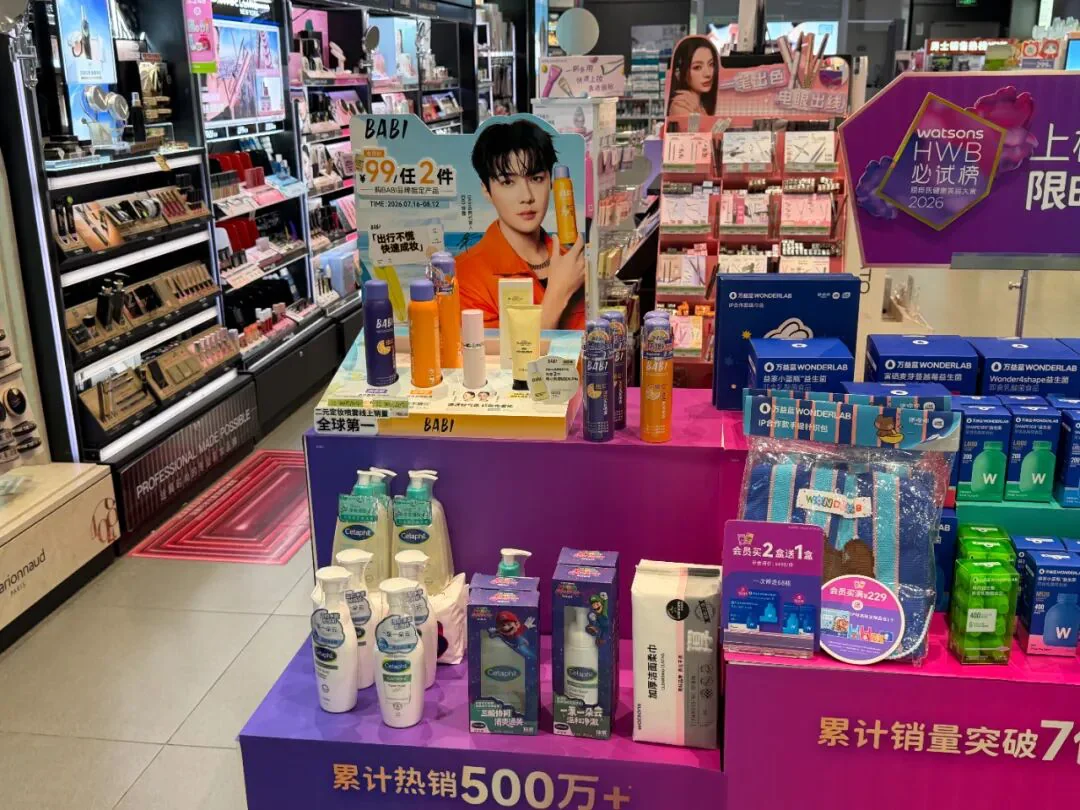
At a Watsons store in Beijing's Xidan retail district, sunscreen sprays displayed top-seller tags as shoppers tested quick-drying formulas. Retail staff highlighted two key performance requirements driving spray sales: fast film formation that sets within seconds without staining clothing, and a light, non-sticky feel. Formulations that leave a greasy residue have rapidly lost consumer traction.
Usage occasions are also broadening. While outdoor activity drove spray purchases in past years, office workers are increasingly buying sprays to keep in office drawers for midday reapplication. Male consumers are also adopting spray formats due to their ease of application.
However, growth in the spray category is concentrated in specific price bands. Market share for mid-tier sprays priced between 89 and 149 yuan ($12 to $21) grew from 20.42% to 37.88%, signaling consumer willingness to pay moderate prices for fast-drying, makeup-friendly performance. High-end sprays priced above 149 yuan saw sales drop 64%. Brand rankings have re-aligned as a result: Mistine held the leading market share at 24.09%, while established brands Anessa and Naris recorded sales declines of 6.8% and 25%, respectively. Emerging brands Babi and Banana Boat posted sales growth of 819% and 364%.
He Jing, a former cosmetic formulation chemist at a multinational beauty corporation, noted that spray formats address compliance challenges by encouraging consistent user application. As observed in broader beauty supply chain and formulation trends, cosmetic developers must balance active efficacy with lightweight textures to ensure daily consumer adherence.
Expert Advice on Common Sunscreen Misconceptions
Despite the rapid growth of sunscreen sprays, beauty experts emphasize that convenient formats carry operational limitations, reflecting widespread consumer misconceptions regarding proper sun protection:
- High SPF values: SPF ratings exhibit diminishing returns. SPF 15 blocks approximately 93% of UVB radiation, SPF 30 blocks 96.7%, and SPF 50 blocks roughly 98%. Increasing from SPF 30 to SPF 50 yields only a minor increase in actual UV protection. Dermatologists note that prolonged daily use of heavy, high-SPF formulations can cause skin barrier irritation or clogged pores. Broad-spectrum products rated SPF 25–30 and PA+++ are sufficient for standard daily commutes, while SPF 50+ and PA++++ should be reserved for high-intensity outdoor exposure.
- Application volume: Consumer surveys reveal that most individuals apply only 25% to 50% of the recommended product quantity. Standardized SPF testing requires an application density of 2 milligrams per square centimeter—equivalent to roughly 1 gram, or a quarter-sized amount, for the face. Applying half the required dosage reduces an SPF 50 lotion's practical protection level to approximately SPF 7.
- Spray application limits: Aerosol sprays face distribution challenges, making it difficult for users to achieve the uniform 2 mg/cm² coverage needed for labeled protection. Additionally, fine aerosol particles present inhalation risks when sprayed directly onto the face. The National Institutes for Food and Drug Control explicitly advise against aerosol sunscreens for children in technical guidelines for pediatric cosmetics. Experts recommend spraying aerosol formulas into the hands before face application, or opting for traditional lotions for consumers with sensitive airways.
- Hybrid makeup products: Multifunctional "all-in-one" cosmetics offering built-in SPF frequently fall short of declared sun protection levels. Because consumers apply cosmetic foundations and primers in thin layers to maintain a natural finish, actual coverage density remains far below standard sun protection testing requirements.
Regulatory Inspections Highlight Compliance Issues
Consumer confusion is compounded by ongoing regulatory non-compliance in the sun care category.
In May, China's National Medical Products Administration (NMPA) published Notice No. 19 of 2026 on non-compliant cosmetics. Sun care products accounted for 19 out of 40 rejected product batches, representing 47.5% of total failures.
Securing special-use cosmetic administrative permits for sun care products in China requires a 6- to 12-month evaluation period and costs nearly 100,000 yuan ($13,800) in regulatory testing fees per product prior to manufacturing. These high regulatory barriers lead some brands to alter approved formulations or mislabel ingredients, resulting in product rejections during random market surveillance.
Data from corporate intelligence provider Qichacha indicates that only 16 new sun care enterprises registered in China through July 20, averaging one new entrant every 13 days. While market consolidation is reducing overall player counts, compliance pressure on remaining brands continues to rise.
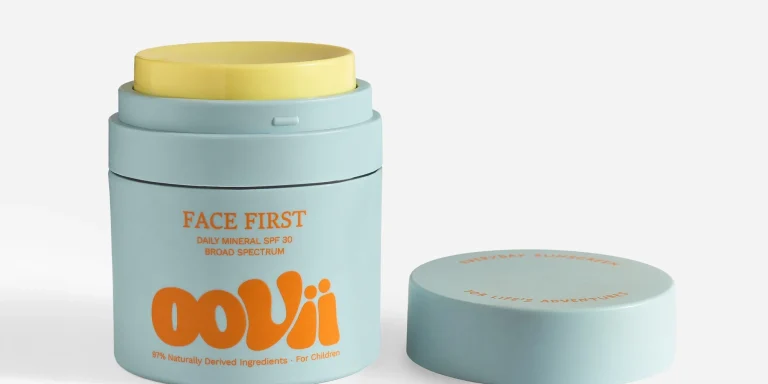
Retail channels reflect a shift toward market segmentation. At a Sephora store in Beijing, sales associates highlighted a newly launched physical mineral sunscreen for children, formulated without alcohol, fragrance, or artificial preservatives and priced at 189 yuan ($26), which sold out within two weeks of launch. Specialized displays for sensitive skin products from domestic brands such as Winona and Yuze also occupy prominent retail space.
Formulation experts conclude that the sun care market is diversifying rather than contracting, moving away from single mass-market SKUs toward products tailored by age group, skin sensitivity, and specific lifestyle scenarios.
Conversation
0 Comments