
K-Beauty Dominates as Amazon Prime Day Beauty Sales Soften
Korean skincare brands led Amazon Prime Day sales, but overall beauty growth slowed as inflation-weary consumers prioritized replenishment over discovery.
Chronological news and analysis articles from the Markets & Trends category.
Korean skincare brands led Amazon Prime Day sales, but overall beauty growth slowed as inflation-weary consumers prioritized replenishment over discovery.
As marketing-driven growth slows, venture capital is pouring into China's upstream beauty sector, led by deep-tech pioneers developing advanced bio-ingredients.
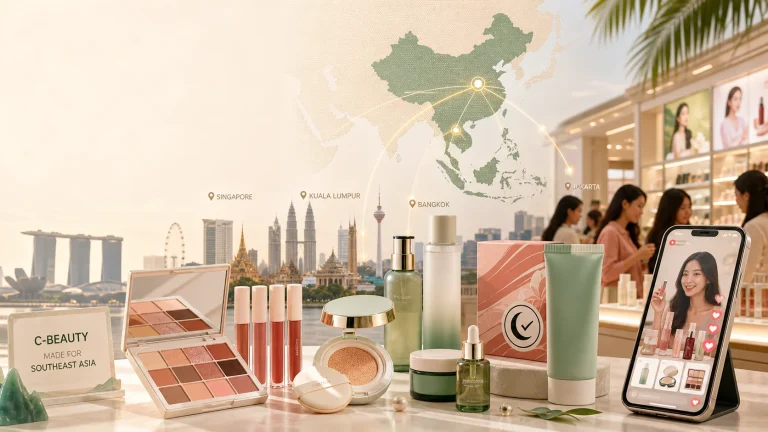
As domestic competition intensifies, Chinese cosmetics brands are leveraging localized products and digital ecosystems to dominate Southeast Asia.
China’s beauty market surpassed 1.1 trillion RMB in 2025, driving domestic brands to transition from "cheap dupes" to science-backed, global competitors.

Chinese beauty brands with massive sales are struggling to build genuine brand equity. Industry insiders explain why relying on paid traffic is failing and how the market is shifting toward long-term value.

As China’s beauty market surpasses the trillion-yuan mark, consumer behavior is shifting from brand-chasing to authenticity. Here is how brands are leveraging Kuaishou to build trust and drive conversions.

May 2026 data reveals that Southeast Asia’s booming TikTok beauty market requires highly localized strategies, from mini-sized makeup in Vietnam to ingredient-focused skincare in Thailand.
As China's color cosmetics market enters a mature phase, decorative makeup is cooling down while functional base makeup and 'lazy beauty' products drive resilient growth on Douyin.

Global luxury beauty giants like Estée Lauder and L'Oréal are shifting their focus to Douyin, TikTok's Chinese sister app, as traditional e-commerce and offline retail channels in China slow down.

Charmzone, once Korea's top cosmetics brand, is being sold after years of losses. Its fall reflects the broader retreat of K-beauty from China, where domestic brands now command nearly 60% of the market.

EastBuy's beauty line is powered by 12 specialist manufacturers, from Cosmax to niche suppliers, showing how Dongfang Zhenxuan is building margin through private label.

China's General Administration of Customs has released new cosmetics import-export regulations, effective December 2026, tightening traceability, closing sample loopholes, and strengthening oversight — just as the import market rebounds after four years of decline.
