
Why Deep-Tech Investors Are Betting Big on Chinese Cosmetic Ingredients
As marketing-driven growth slows, venture capital is pouring into China's upstream beauty sector, led by deep-tech pioneers developing advanced bio-ingredients.
The upstream supply chain has become the ultimate battleground, and Chinese cosmetic ingredient manufacturers are rewriting the industry's balance of power.
In 2026, the flow of capital in the beauty industry is undergoing a fundamental shift. As the era of marketing-driven brand growth and easy online traffic fades, upstream raw materials have emerged as the ultimate destination for venture capital. Technologies like synthetic biology, AI-driven R&D, and high-end specialty ingredients—terms once reserved for pharmaceuticals and deep tech—are reshaping the beauty industry's power dynamics.
Why It Matters
As global beauty brands seek the next generation of active ingredients, China's upstream supply chain is transitioning from low-cost manufacturing to high-tech R&D. Venture capital is pouring into Chinese biotech startups, positioning them to challenge multinational chemical giants in the active ingredient market.
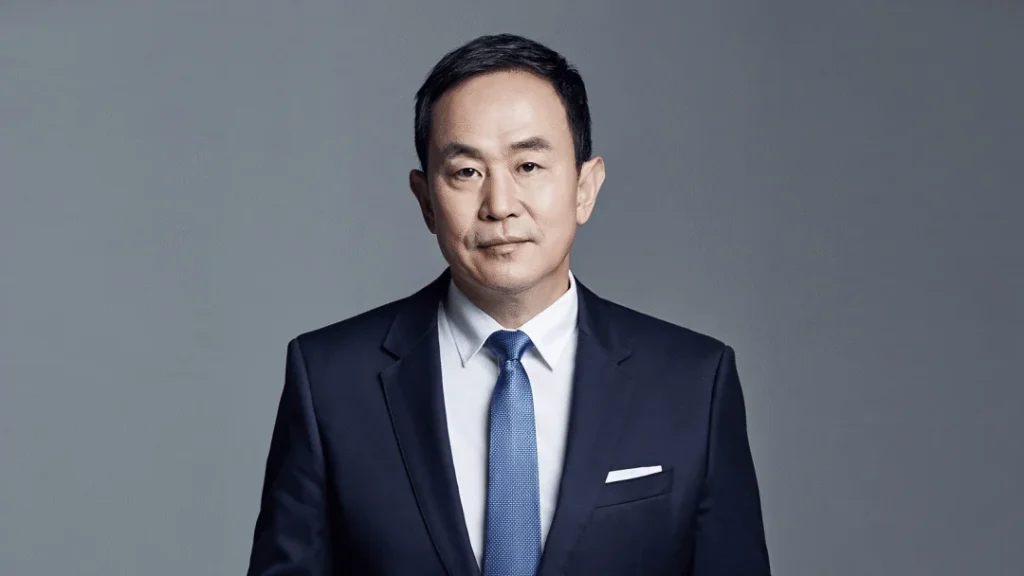
One niche sector is drawing intense interest: self-assembling short peptides. Leading the charge is Li Wei, a 30-year veteran of China's venture capital scene and founding partner of Songhe Capital. He has taken a hands-on role in Zhitai Biotech (Zhitai Shengchuang), a startup less than four years old that has already completed three funding rounds and secured two new cosmetic ingredient registrations.
Why would an investor who backed tech giants like DJI (drones) and BGI Genomics pivot to a cosmetics ingredient supplier? What is capital chasing in the upstream beauty sector?
The Pioneer of Self-Assembling Short Peptides
Founded in September 2022, Shenzhen-based Zhitai Biotech serves as the company's headquarters, with Li Wei acting as its legal representative. Its wholly-owned manufacturing arm, Changzhou Zhitai Biotech, was established in January 2023 to handle industrial scale-up, mass production, and regional R&D.

At first glance, Zhitai Biotech might look like a typical functional skincare ingredient supplier. However, its core technology tells a different story.
The company specializes in "self-assembling short peptides"—small-molecule peptides consisting of 2 to 20 amino acids. Without external processing, these molecules spontaneously form ordered nanostructures through intermolecular forces. In simple terms, they act like molecular building blocks. When applied to the skin, they self-assemble into a biomimetic scaffold that simultaneously triggers cellular signals for regeneration and provides physical structural support for long-term anti-aging and active ingredient delivery.
First discovered by academician Shuguang Zhang in the late 20th century, this technology spent two decades developing primarily in regenerative medicine and drug delivery. Zhitai Biotech is the first company in China to commercialize self-assembling short peptides for cosmetics.


On October 18, 2023, Zhitai Biotech's flagship ingredient, Acetyl Octapeptide-1, completed its registration with China's National Medical Products Administration (NMPA), becoming the country's first registered self-assembling short peptide cosmetic ingredient. A derivative ingredient, Acetyl Octapeptide-6, was registered on April 30, 2025, by its subsidiary, Shenzhen Zhitai Aesthetics Technology.
In March 2026, international consulting firm China Insights Consultancy (CIC) officially certified Zhitai Biotech as the "Pioneer of Self-Assembling Short Peptide Cosmetic Ingredients in China." The company holds China's first patent for self-assembling short peptides and has built a proprietary molecular library containing over 290 innovative structures. This "AI + synthetic biology" R&D paradigm provides a continuous pipeline of differentiated active ingredients.
The company's ambitions extend beyond cosmetics. Zhitai Biotech has structured its business into three divisions: cosmetic ingredients, medical device hemostatic materials, and innovative peptide drugs. This creates a complete value chain spanning from regenerative medicine to consumer healthcare. In April 2026, the company disclosed a new patent for self-assembling short peptides in nanobiotechnology and regenerative medicine.
Financially, the startup raised an eight-figure RMB angel round in January 2023, followed by another eight-figure Series A in 2024. It recently secured tens of millions of RMB in an exclusive investment from Songhe Capital, signaling strong market confidence.
From Deep Tech to Cosmetics
Why did Li Wei, an investor famous for backing DJI and BGI Genomics, become a co-founder of Zhitai Biotech? This transition from financial investor to active operator was no accident.
Born in 1963 and a 1985 chemistry graduate from Peking University, Li is a pioneer in China's financial markets, having designed some of the country's first convertible bonds and warrants. In 1997, he founded Songhe Capital, which now manages over 24 billion RMB ($3.3 billion USD) across more than 400 portfolio companies, focusing heavily on deep tech.

To Li, cosmetic ingredients are not just consumer goods—they are deep tech.
"Core cosmetic ingredients represent the strategic high ground of the industry," Li has noted. Technical barriers dictate pricing power and competitiveness. For decades, high-value active ingredients were dominated by multinational giants like BASF and DSM. Self-assembling short peptides sit at the intersection of regenerative medicine, synthetic biology, and materials science. Rather than a simple ingredient replacement, the technology represents a fundamental paradigm shift in how skin repair is engineered at the molecular level.
As Songhe Capital noted in a statement: "True investment is about scarcity and growth." Zhitai Biotech offers both: it is the only domestic player to successfully register and industrialize medical-grade self-assembling short peptides for cosmetics, backed by a pipeline that spans pharmaceuticals, medical aesthetics, and skincare.
The Upstream Gold Rush
Li Wei is not alone. The entire cosmetic ingredients sector in China is experiencing an unprecedented influx of capital.
According to data from Kaiyuan Securities, China's cosmetic ingredients market grew from 114.78 billion RMB in 2019 to 160.39 billion RMB in 2024, representing a 6.9% compound annual growth rate (CAGR). The market is projected to accelerate at a 9.9% CAGR from 2025 to 2029, reaching 256.18 billion RMB ($35.3 billion USD) by 2029.
This trend accelerated in the first half of 2026. According to data compiled by luxury industry outlet Luxe.CO, there have been at least 10 major funding rounds of 100 million RMB ($13.8 million USD) or more in China's beauty sector since January 2026—with 70% of those deals concentrated in raw materials and biotechnology. Capital is flowing heavily into synthetic biology, AI-driven ingredient discovery, and high-end specialty ingredients.
This shift toward upstream innovation aligns with broader industry trends, such as the rise of AI and smart design in advanced manufacturing and packaging, which are redefining the beauty supply chain.
The race for premium ingredient assets is heating up. In May 2026, peptide manufacturer Vicky cleared its IPO review for the Beijing Stock Exchange, putting it on track to become the first beauty ingredients company to list there in 2026. In the primary market, Huaguan Biotech raised hundreds of millions of RMB in a Series C round, while Hechen Biotech and Kangweijian secured Series A and B+ rounds exceeding 100 million RMB, respectively. Capital is systematically backing every link of the raw material supply chain, from early-stage R&D to commercial scale-up.
Regulatory reforms are also fueling this boom. Since China's updated Cosmetics Supervision and Administration Regulation (CSAR) took effect in 2021, cosmetic ingredients have been managed under a streamlined, risk-based filing system. On June 26, 2026, the NMPA released updated provisions for new ingredient registration and filing, set to take effect on July 15, 2026. In 2025, China registered 169 new cosmetic ingredients. In just the first half of 2026, registrations reached nearly 70% of the previous year's total—a 43.21% year-on-year increase—with domestic ingredients accounting for over 85% of filings.
This surge indicates a profound shift in industry power. As Li Wei noted in a 2026 address, "Deep-tech investment and entrepreneurship today is a narrow but necessary path." As capital and talent flood upstream, the ultimate battleground for the beauty industry is moving from the retail shelf to the laboratory.
Conversation
0 Comments