
Why $400 Million Chinese Beauty Giants Envy a $1.40 Legacy Brand
Chinese beauty brands with massive sales are struggling to build genuine brand equity. Industry insiders explain why relying on paid traffic is failing and how the market is shifting toward long-term value.

The massive imbalance between scale and brand value has become a critical challenge in the Chinese cosmetics industry.
Why It Matters For global beauty brands and supply chain players, the evolution of the Chinese market offers both a cautionary tale and a strategic roadmap. As Chinese beauty giants pivot from hyper-growth fueled by paid traffic to sustainable brand building, the competitive landscape is shifting. Success in this next era will require deep R&D, emotional resonance, and robust offline integration rather than transactional, discount-driven e-commerce.
China Cosmetics recently spoke with several beauty brand founders and industry veterans, uncovering a deep-seated anxiety.
"Even with annual revenues reaching 3 billion RMB (around $415 million USD), I still feel like I'm just selling products, not building a brand," confessed one veteran founder.
This paradox is alarming: Chinese beauty brands have achieved massive scale, with several hitting multi-billion RMB milestones, yet they remain trapped in a transactional loop—lacking brand premiums, consumer mindshare, and long-term brand equity. They sell the most volume but command the least respect. Where did it go wrong?
The Traffic Trap: 'Bloated' Giants and the Poison of Paid Growth
Wu Zhigang, General Manager of OIB.CHINA and founder of the New Brand Study Club, cuts straight to the core of this collective anxiety: "These are brands bloated by traffic, and now they are being consumed by it."
He compares paid traffic to a necessary poison. "You have to take it because without it, you can't survive." Over the past decade, Chinese beauty brands rode the wave of e-commerce and social media, rapidly boosting their Gross Merchandise Volume (GMV) through hyper-efficient ad spend. But this growth was hollow.
Traffic-driven growth prioritizes speed, efficiency, and instant conversion, compressing the timeline of brand building. The time required to cultivate brand culture, heritage, storytelling, and deep consumer relationships is treated as a liability in the logic of pure traffic. The result? World-class sales volumes, but factory-level margins and low-end brand perceptions.
"Selling products is a one-time transaction; building a brand is earning long-term consumer trust," says Cheng Yingqi, founder of Bingquan, an innovative oral care brand. He notes that the root of the crisis is a "quick money" mindset. When everyone is obsessed with Return on Investment (ROI), no one wants to invest in R&D or unique value proposition. It is a slow process, and discounting is far easier.
The Three Pillars of Brand Identity: Efficacy, Aesthetics, and Emotion
Cheng outlines three core pillars of brand building, highlighting where domestic brands often fall short:
Product Efficacy is the Foundation. Chinese brands are excellent at pushing ingredient concentrations and clinical specs to the absolute limit. However, Cheng warns: "If efficacy is inconsistent, repeat purchases drop to zero. Without repeat customers, brand identity is just a house of cards."

Packaging Design is the Gateway. Cheng recalls an early lesson with Bingquan: in an attempt to look "professional," the brand strayed from its "young and trendy" positioning in its packaging design, causing repeat purchases to dip. For today's younger consumers, visual appeal is a non-negotiable prerequisite. If a product lacks visual appeal, it never even gets a trial. This focus on visual appeal is also driving international trends, as seen when South Korean beauty brands flock to China for packaging innovation to capture younger consumers.
Emotional Value is the Soul. This is the ultimate battleground for brand premiums, and historically the weakest link for Chinese brands. "Emotional value is the heart of brand identity," Cheng emphasizes. Bingquan succeeded because it looked beyond the functional attributes of toothpaste, layering on emotional benefits like "social confidence" and "breath-freshening lifestyle appeal." "You want consumers to have associations when they hear the name, fantasies when they see the packaging, and reflections when they use the product."
The Premium Dilemma: It’s Not a Lack of Will, But a Lack of Capability
Many founders complain: "We want to charge a premium and raise our prices, but consumers won't buy it!"
Wu Zhigang offers a sharp reality check: Chinese beauty brands cannot command premium pricing not because they don't want to, but because they lack the comprehensive capabilities. Pricing a product at 39 RMB ($5), 139 RMB ($19), or 339 RMB ($47) requires three entirely different operational ecosystems.
At the product level, do you hold exclusive patents or rare, proprietary ingredients to justify a high price? At the brand level, do you have the narrative capability to weave a compelling story and create an aspirational atmosphere that makes consumers happy to pay more? At the organizational level, does your team have the expertise to service high-end clientele?
At the same time, Wu advises the industry to abandon the obsession with elite, high-end branding. China's mass market does not desperately need more ultra-luxury skincare brands; it needs high-quality, reliable everyday brands. Take Bee & Flower (Fenghua), a legacy hair care brand that has anchored itself in the market for over 30 years. With its iconic 9.9 RMB ($1.40) conditioner, it remains a beloved household staple. Brands are not superior or inferior based on price; as long as they execute flawlessly within their price tier and secure deep customer loyalty, they are highly successful.
From Viral Hit to Cultural Symbol
Cheng shared Bingquan's three-step strategy for building a resilient brand:
Step 1: Capture Mindshare with Differentiation. While competitors fought over whitening or sensitivity, Bingquan targeted the "social confidence" pain point of Gen Z, pioneering the "gum-flavor toothpaste" category. Using trendy, appealing flavors like milk tea and fruit as entry points, they got young consumers to try the product simply because it was fun and attractive.
Step 2: Elevate the Value from 'Pleasant' to 'Professional.' A brand cannot survive on fragrance alone. Bingquan introduced its "Fragrance+" strategy, pairing breath-freshening properties with hard science, including patented oral microbiome technologies and whitening patents, while reinforcing the emotional value of social confidence.

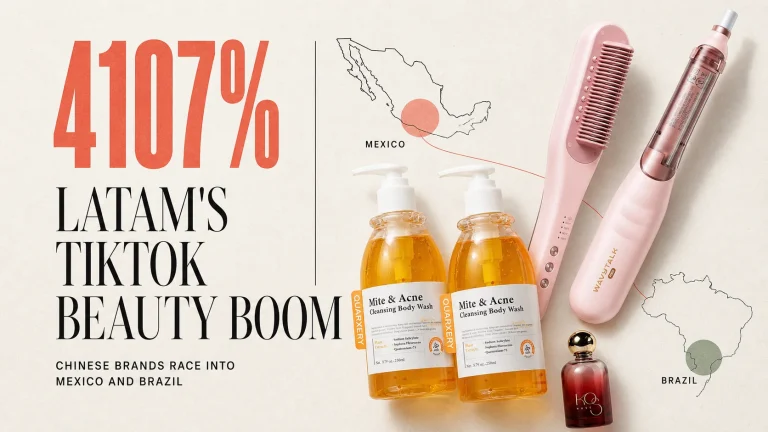
Step 3: Build Omnichannel Trust. Bingquan maintains a strategy of "speed online, trust offline." While driving massive awareness across social platforms, the brand aggressively expanded into trendy offline beauty retailers like Watsons and The Colorist. This omnichannel penetration transformed Bingquan from a viral online product into an indispensable lifestyle brand. As brands look beyond domestic traffic traps, some are finding success by expanding overseas; for instance, TikTok beauty sales explode in Southeast Asia as localized strategies pay off for agile players.
The Next 3 to 5 Years: The Ultimate Brand Showdown
As the era of easy, traffic-driven growth comes to an end, Cheng believes the future of beauty retail will be decided by a "Four-Force Model":
Hard Power (R&D/Technology/Patents): The foundation. Without proprietary technology, a brand is a flash in the pan.
Soft Power (Mindshare/Emotion/Culture): The source of premium pricing, giving consumers a reason to believe in the brand.
User Power (Retention/LTV): As traffic costs soar, nurturing existing customers is far more vital than constantly acquiring new ones.
Organizational Power (Long-termism/Talent/Supply Chain): Building a brand requires a highly coordinated team, not just a charismatic founder.
Wu Zhigang emphasizes the critical role of multi-sensory brand experiences. Online shopping limits sensory engagement, whereas offline retail offers an immersive, five-sensory experience. Brands that can seamlessly bridge online and offline channels, leveraging AI and digital operations to build a cohesive sensory brand experience, will finally break free from the traffic trap.
Chinese beauty brands have never lacked scale, buzz, or traffic. What they have lacked is the patience to build long-term value, heritage, and brand equity.
Short-term sales rely on traffic; long-term brands rely on value. Traffic can make a brand famous overnight, but only the multi-dimensional accumulation of product strength, mindshare, emotional resonance, and organizational capability will allow a brand to truly take root in the industry and in the hearts of consumers.

Conversation
0 Comments