Former SkinCeuticals and Murad Execs Launch Relab to Tackle Psoriasis Early
Former SkinCeuticals and Murad executives launched Relab, a biotech skincare brand using bacterial effector proteins to target early psoriasis inflammation.

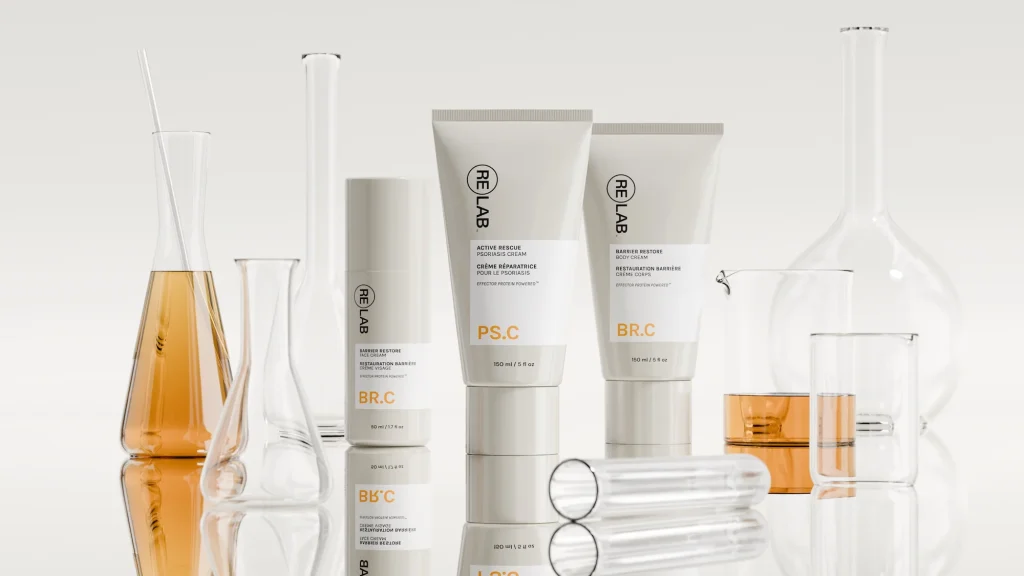
The unsexy side of skincare is getting a fresh look as brands seek to demystify and treat stigmatized chronic conditions like psoriasis, eczema, rosacea, and dermatitis. The latest entrant, Relab, launches today with a mission to bring biotechnology-backed novel solutions to psoriasis sufferers.
Founded by Eric Cowles, former president of Dr. Dennis Gross Skincare and general manager at L’Oréal for Decléor, Carita, and SkinCeuticals, and Ellie Schmidt, who led product development, formulation science, and ingredient innovation at Murad, Moon Juice, and Flamingo Estate, the brand is entering a category that has long relied on a limited mix of prescription and over-the-counter treatments for symptom management, supplemented by daily skincare to support the skin barrier.
Relab is launching with three new products designed to bridge the gap between early flare-up care and long-term barrier support: the $62 Barrier Restore Body Cream, $55 Barrier Restore Face Cream, and $72 Active Rescue Psoriasis Cream. The brand aims to translate emerging science into topical skincare, and the centerpiece of its debut assortment is Active Rescue Psoriasis Cream, an OTC product containing YopM, a patent-pending bacterial effector protein intended to target inflammation earlier than current psoriasis treatments.
“This brand exists to bring a novel technology to market,” said Cowles. “As I was looking at opportunities, the scientists behind our effector protein technology, who have been in the space nearly their entire careers, were brought to my attention.”
Cowles’ experience at large beauty companies taught him that promising ingredient technologies can spend years or even decades inside corporate R&D organizations before reaching consumers. That is a big reason why he was drawn to Relab and the potential of effector proteins for psoriasis.
Dermatologist Andrea Rencic, clinical advisor and principal clinical investigator at Relab, underscores YopM’s key differentiator as where it acts in the inflammatory process. “Many of the current treatments for psoriasis target downstream targets, which are in the adaptive immune system. YopM targets the innate immune system,” she says. “It’s not only a brand new effector protein, it’s also a brand new target.”
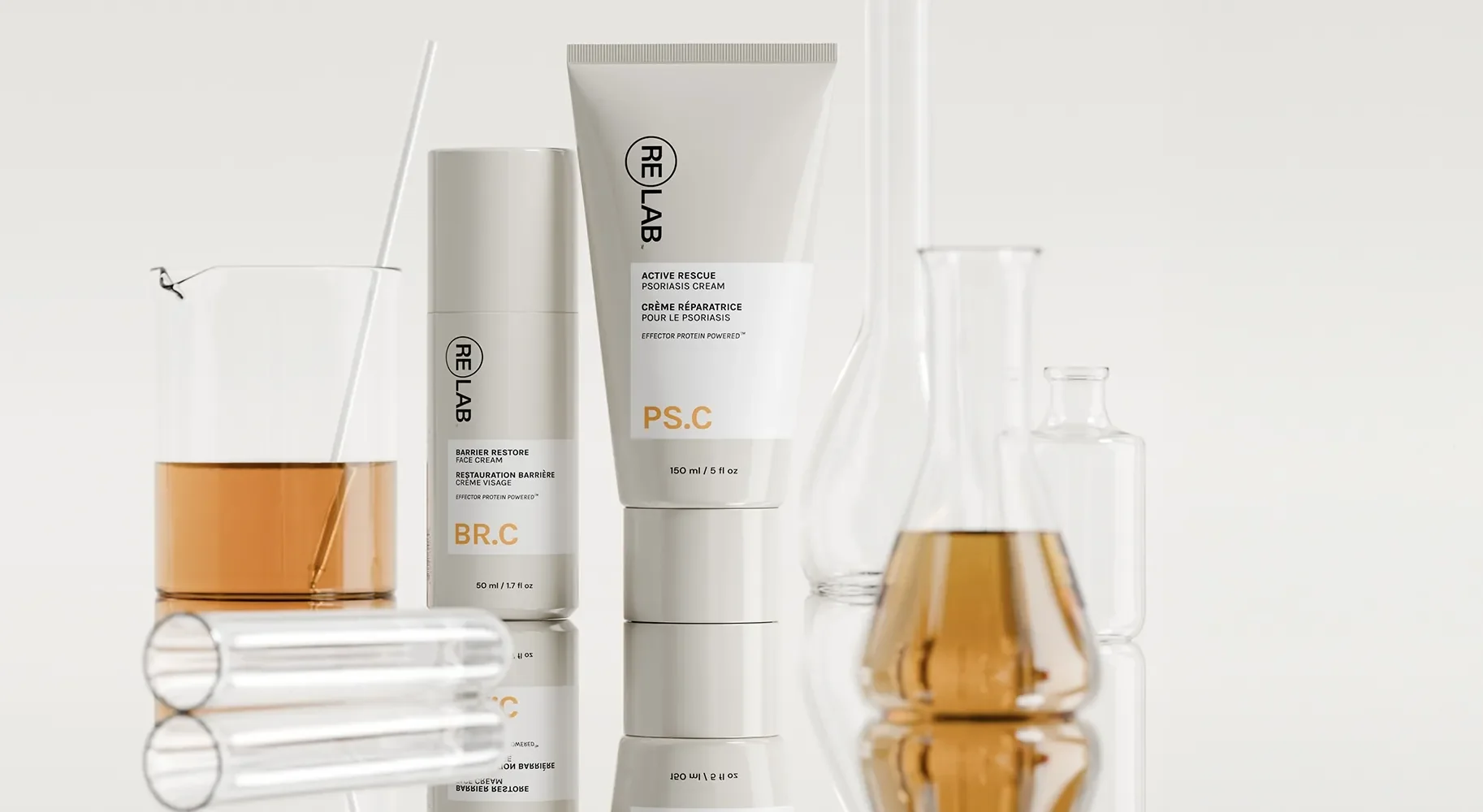
As the beauty industry searches for white space, brands like Relab are mining opportunities in skincare’s less glamorous categories, from psoriasis and dermatitis to scar care and sensitive skin. The opportunity is substantial. According to Fortune Business Insights, the global psoriasis treatment market was valued at more than $29 billion in 2025 and is projected to reach $73 billion by 2034. North America accounted for nearly 75% of the market last year. According to the National Psoriasis Foundation, nearly 8 million Americans have psoriasis, more than 500,000 of whom remain undiagnosed.
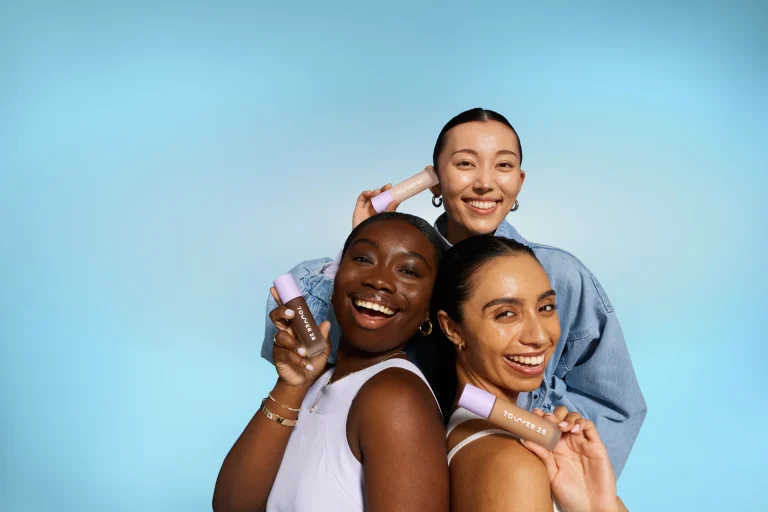
Hypochlorous acid products from brands like Tower 28 and Magic Molecule have exploded in popularity as consumers seek solutions for inflammatory skin conditions. Meanwhile, the broader clinical skincare category has come to the forefront of the skincare market as discerning consumers increasingly demand products backed by clinical research.
The “unsexy” side of skincare has attracted interest from companies of all sizes. Procter & Gamble previously added eczema- and psoriasis-focused Bodewell to its portfolio after acquiring sensitive-skin specialist First Aid Beauty. On the indie side, brands such as Topicals, Marin, and Gently Soap have built businesses around chronic skin conditions that legacy beauty brands historically overlooked, echoing a broader market shift where America's quiet beauty giants build massive momentum by solving functional skin health concerns.
Rencic credits social media for helping sufferers to start the diagnosis process earlier than before. “People can obtain information about a variety of medical conditions, and now celebrities are revealing that they have these conditions like psoriasis and eczema and even unusual cancers,” she says. “When people can name what that skin condition is on their skin because they see it somewhere else, they can seek treatment on their own.”
Relab’s strategy isn’t to replace existing psoriasis treatments, but to complement them. “We like to say it’s another tool in our toolbox,” says Rencic. “There are many tools in the toolbox. This is an additional one.”
Relab sees expansive potential for effector proteins and views its launch as the beginning of a broader shift toward more precise, condition-specific skincare. In the near term, however, the brand is focused on building a comprehensive regimen for people with psoriasis.
“We’re already working behind the scenes on other extensions and logical additions that can help the psoriatic community,” says Cowles. “It’s very natural to look at scalp, to look at nail,” pointing toward targeted category expansions similar to those pursued by dedicated scalp care brands like Aware Hair that address specific dermatological concerns.
Conversation
0 Comments