How Beauty Founders Can Use Debt Financing to Scale Retail Growth
Executives at SG Credit Partners explain how beauty brands can leverage asset-backed debt financing, balance equity, and fund major retail expansions.

In the beauty industry, venture capital and equity rounds often steal the spotlight, but securing the right debt financing from the right lender at the right time can be just as crucial. Brands that manage debt strategically can preserve founder equity, extend their cash runway, and avoid relying on dilutive equity financing for every growth milestone.
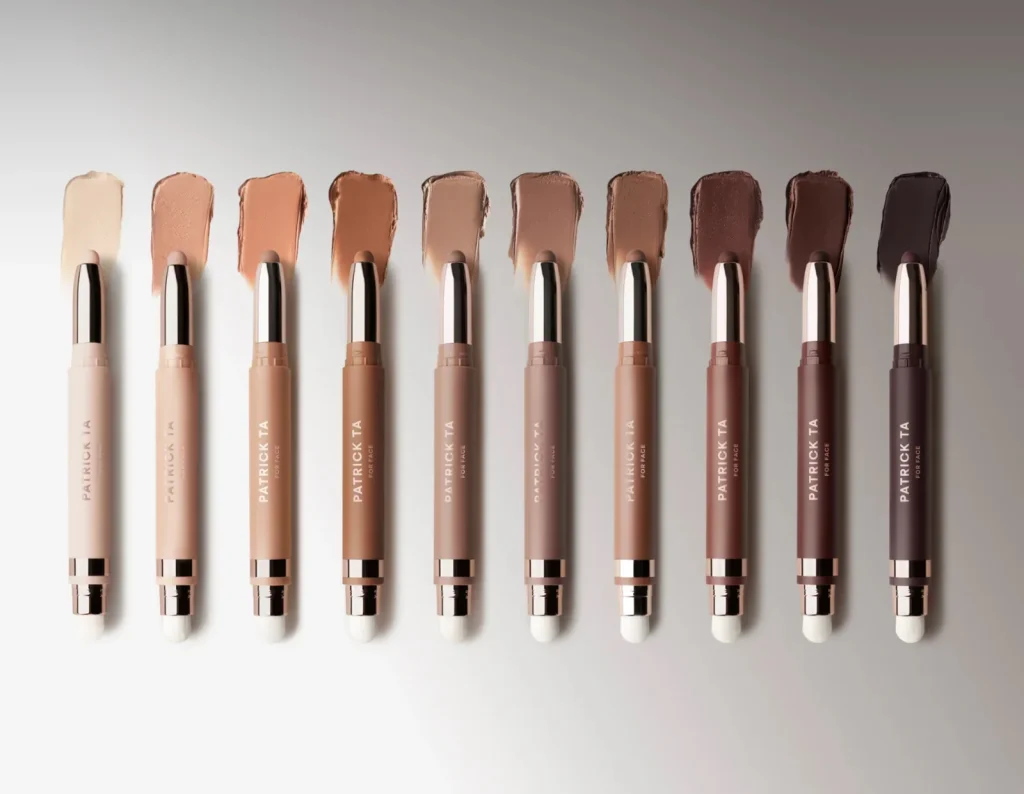
The Consumer Products Division at SG Credit Partners specializes in helping high-growth beauty and consumer brands do exactly that. The firm typically works with companies generating at least $10 million in annual revenue, providing working capital and long-term financing through two- to four-year loans ranging from $5 million to over $50 million. Its portfolio includes roughly 50 consumer brands—about 20% of them in beauty, including Nécessaire, Saie, Pacha Soap Co., and Patrick Ta Beauty.
Beauty Independent spoke with Jordan Hoppe, managing director and head of beauty and wellness at SG Credit Partners, and Charles Perer, head of originations, about choosing the right lender, how bootstrapped brands can scale at retail, balancing debt and equity, navigating the evolving private credit landscape, and what founders need to know before signing a deal.
Give us a typical example of when a brand comes to you.
Hoppe: Typically, a brand comes to us when they are preparing to enter retail or have recently launched in store doors. In many cases, they already have fintech debt tied to top-line revenue or purchase order (PO) financing for inventory. Once they build up a solid base of accounts receivable (AR) and inventory, we can step in and lend against those assets.
We provide far more structural flexibility once brands reach a certain scale beyond what a fintech platform can offer. As they continue to grow, we can also lend beyond AR and inventory through an intellectual property (IP) term loan.
Fintechs serve a purpose, but we have seen several go under over the last few years—Ampla being a prominent example that many beauty brands relied on. While some fintechs lend off total revenue, we lend against tangible assets like accounts receivable and inventory. If you have a down month, revenue-based models restrict how much you can borrow right when you need liquidity most.
Perer: We look for companies that have moved past the proof-of-concept stage and need a credit partner that truly understands retail concentration in beauty—whether a brand is 100% focused on Sephora, Ulta Beauty, or another major retailer. Traditional commercial banks often push back against heavy concentration in a single retailer, but in beauty and wellness, that is frequently the reality.
We actually view that concentration as a strength rather than a risk. Time and again, we have seen brands succeed by focusing deeply on a single key retail partner. Once a major retailer is invested in a brand's success, they are much less likely to walk away. Conversely, brands that spread themselves across too many retailers too early often lack the staffing and capital to execute each relationship effectively.
Our beauty expertise lies in identifying scalable companies and tailoring lending solutions—whether that means asset-based working capital or, for top-performing brands, lending against the value of their intellectual property.

When brands are evaluating lenders, what questions should they be asking? What do they often overlook?
Hoppe: The No. 1 question founders should ask is who their dedicated portfolio or relationship manager will be post-closing. Too often, brands are sold by a pitch team and then handed off to an account manager who doesn't understand their business model. Lending is a relationship business, and the real partnership begins after the deal is closed. You could work with the best firm in the market, but if you are paired with the wrong account manager, it is going to be a bumpy ride.
This is especially true for fast-growing brands, where rapid scaling leads to frequent loan amendments. Our model is deeply category-specific—I lead our beauty and wellness division, and our entire team understands the underlying unit economics, inventory cycles, and retail landscape. We also stay disciplined about serving brands within our target size and capital profile. Friction usually occurs when a brand or lender tries to force a proverbial round peg into a square hole regarding company size or capital requirements.
Founders should also ask for client case studies, references, and concrete examples of how the lender handles business shifts, along with questions that test whether they truly understand the beauty ecosystem. While credit isn't glamorous, it is often the financial lifeblood of these companies.
Why would you turn away a brand?
Hoppe: Stagnant revenue growth is a primary concern unless there is a clear, compelling story behind it. If a brand is generating $20 million in sales but flatlining, that is harder for us to support because power retailers like Sephora and Ulta demand steady growth. If it were strictly a direct-to-consumer business, that might be a different conversation.
What’s the cost of capital at SG, and how does it compare with other financing options?
Hoppe: Depending on the scale of the business, its liquidity, and profitability, our pricing generally falls in the high single digits to low double digits. That aligns closely with our direct competitors in private credit. By comparison, fintech lenders or venture debt typically range in the mid-teens, while traditional commercial banks land in the mid-single digits.
Perer: We typically trade at just a two- to three-point spread above traditional banks. That is our sweet spot because our client base spans emerging disruptors to much larger enterprises, allowing us to adjust capital solutions up or down as their needs evolve.
Can brands still succeed in major retail without outside capital?
Hoppe: More often than not, no. We’ve seen a limited number of brands do it, depending on the product they’re bringing to market, its price point, and its margins. I’d say it’s maybe 5% of the deals we see.
If you were advising a founder who wanted to remain bootstrapped, what would that business need to look like?
Hoppe: Your offering should focus on one hero product, maybe at a higher price point, with lower-cost products to enter the brand—a strategy aligned with why many legacy beauty brands are doubling down on hero products to build brand equity efficiently. But it’s difficult. The brands I’ve seen succeed without outside capital launched at a larger price point. If they didn’t have anything entry-level, it’s been hard for them to succeed because there’s a lower purchase rate on those higher-cost items.

Charles Perer, head of originations at SG Credit Partners, believes founders should look beyond pricing when choosing a lender. He says, “When something goes wrong, you want a lender that understands your business.”
What do you want to see in terms of profitability from the beauty brands you lend to?
Hoppe: Specific to beauty brands, a lot of times it’s a three-year facility, so we don’t necessarily expect them to be profitable in the first year. But there should be a line of sight to them becoming breakeven or profitable. Depending on the retailer they’re launching with, that dictates how much potential cash burn there will be. That’s why it’s important to be well capitalized through a line of credit with someone like us and/or outside equity to make sure you succeed at one of these major retailers.
How are beauty brands doing on cash flow management? What are the biggest areas they need to work on?
Hoppe: The beauty industry is unique because a lot of cash goes into componentry, much of which is sourced overseas, shipped here, and then filled domestically. Managing inventory is the most important thing, but it’s also the hardest because you don’t want to run out of stock. It’s a fine balance between having enough inventory to meet demand while making sure you’re not sitting on two years’ worth of lipstick. Inventory ties up so much cash that it’s one of the most important things to manage appropriately.
When a brand is ready to graduate to SG Credit, how should its debt be structured?
Hoppe: Ideally, not a mix of debt because a lot of times brands over-leverage themselves. Maybe they got a loan from Settle to finance inventory. They also got a loan from Shopify Capital. At a certain point, you’re paying a lot in interest, and there may not be another lender willing to take out that debt. Maybe it was worth it because they pushed off an equity raise, but it’s rather risky, leaves you with limited options, and you’ll probably have to use cash to pay off some of that debt if you want to work with a more traditional lender. I’d stick with one, maybe a credit card.
Perer: How founders finance their companies is idiosyncratic to their personal risk tolerance. Some recognize they can use expensive debt to fuel growth and increase their equity valuation. When it works, it’s incredible wealth creation. When it doesn’t work, their business goes away, and we’ve seen both.
When something goes wrong, you want a lender that understands your business. If founders have five different loans and things go sideways, they’re often dealing with multiple small-ticket lenders that don’t have the experience or flexibility to make judgment calls.
If a fast-growing beauty brand wants to maximize wealth creation while limiting dilution, what financing options should it consider?
Hoppe: Assuming a brand has moved from a fintech lender to a more traditional asset-based lender like us and has consistent growth, there are secondary mezzanine loans that can sit behind a traditional asset-based lender, depending on the size of the business. That can help limit the amount of outside capital a brand needs to raise.
As we mentioned earlier, we also provide intellectual property term loan financing beyond our traditional asset-based products. That’s another way we’ve helped brands push off additional equity raises. Beauty brands often have large deposits they need to pay, creating a short-term capital need. They don’t want to raise equity for that. We can bridge that gap until the order ships, they collect the cash, and can pay it back.
Can brands make the opposite mistake and rely too heavily on equity?
Hoppe: We’ve seen brands raise only equity and never take on asset-based financing from us or a similar lender. It’s kind of crazy some of the brands we see that are doing more than $50 million in sales and have never taken any debt. In those instances, they could have pushed off an equity raise and gotten a better valuation if they had leveraged debt along the way instead.
Fintechs can help brands get to $10 million or $15 million without needing additional capital because of the flexibility they offer. They can also be very helpful in delaying a capital raise. I think building slowly to start, with a limited assortment, is how brands can grow smartly without taking a huge check too early.
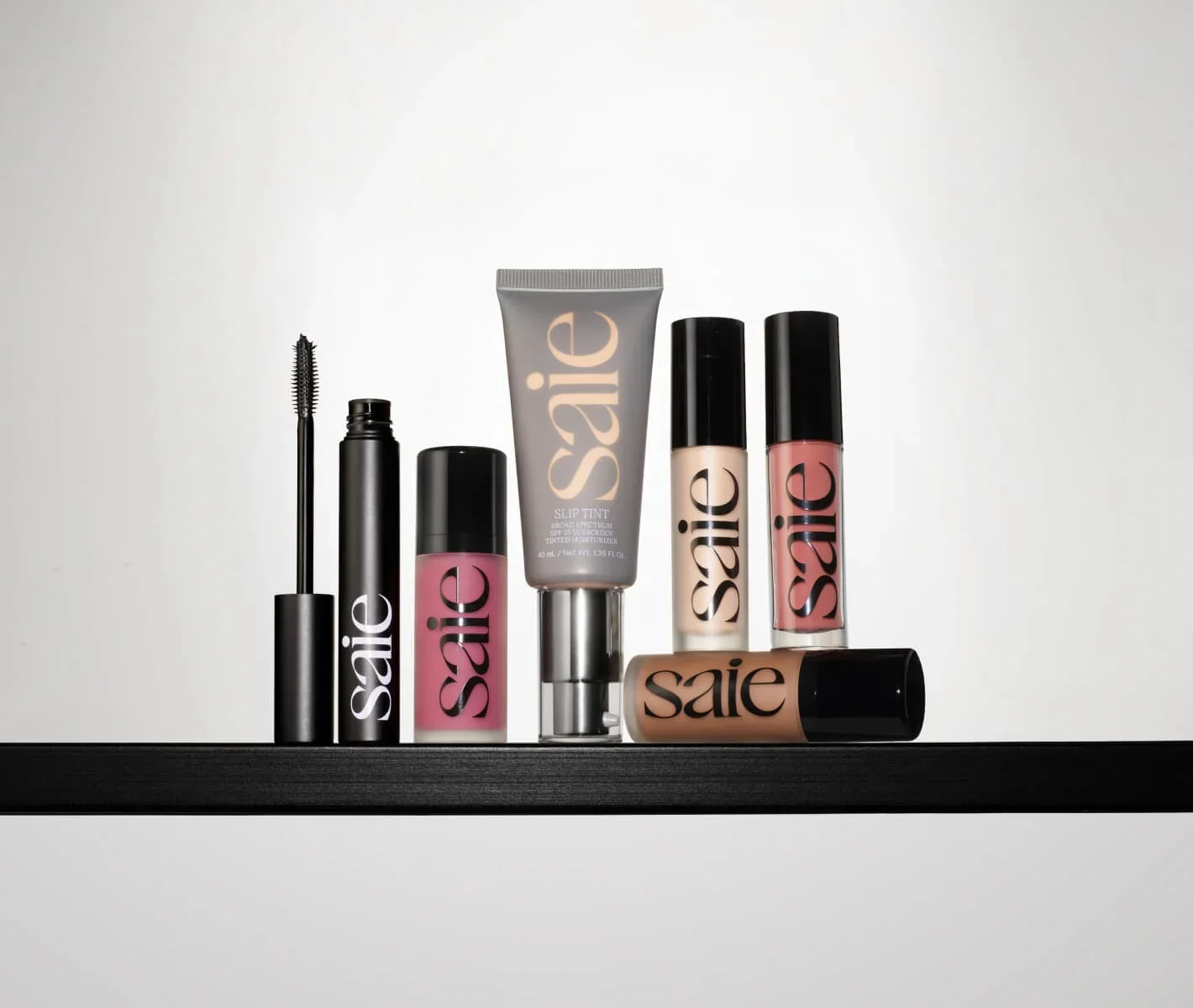
Saie is among the beauty brands in SG Credit Partners’ portfolio. As brands expand into retail, debt can help finance inventory, working capital, and other capital needs alongside equity financing.
How has the balance of power between investors and brands shifted over the past year?
Hoppe: I think the power’s with the brands right now. A lot of investors waited out last year and were very specific about what they wanted to invest in. Some only did one or two deals. I think this is the year brands have the most leverage when it comes to growth equity raises.
In beauty and wellness in particular, private equity firms are investing much earlier than they historically have. While their typical minimum check size is around $20 million, many are now willing to write checks of $5 million to $10 million because they realize that if they wait, they risk missing out on prime opportunities. This shifting investor landscape is evident in major deals, such as when TSG Consumer acquired a majority stake in body care brand Saltair.
Our approach is similar. Many beauty brands, especially as they enter major retail channels, will hit our revenue thresholds in short order. If we don't engage six months earlier, we might lose the opportunity entirely. So for the brands we truly believe in, we prefer to step in a bit earlier.
There has been a lot of discussion around private credit recently. What should beauty founders understand about how it works?
Perer: "Private credit" is largely a marketing buzzword. It primarily refers to large cash-flow lenders financing much bigger companies through cash-flow- or enterprise-value-based loans. If that enterprise valuation drops, the lender takes on significant risk.
What we—and most lenders in our segment—do is asset-based lending. To be clear, it is a category of private credit, but it carries far less risk. If a business runs into trouble, we are securing collateral by collecting receivables from retailers like Sephora and selling through inventory. We are lending against tangible assets, not enterprise value.


Conversation
0 Comments