
Struggling Beauty Founders Turn to Social Media to Find Buyers
As venture capital tightens, emerging beauty founders are taking to Instagram and TikTok to seek acquirers, strategic partners, and fresh investment.
Social media has moved many corporate conversations previously held behind closed doors directly into the public square. As entrepreneurs chronicle everything from sold-out product drops to corporate liquidations online, that public candor now extends to founders of struggling beauty brands searching for buyers.
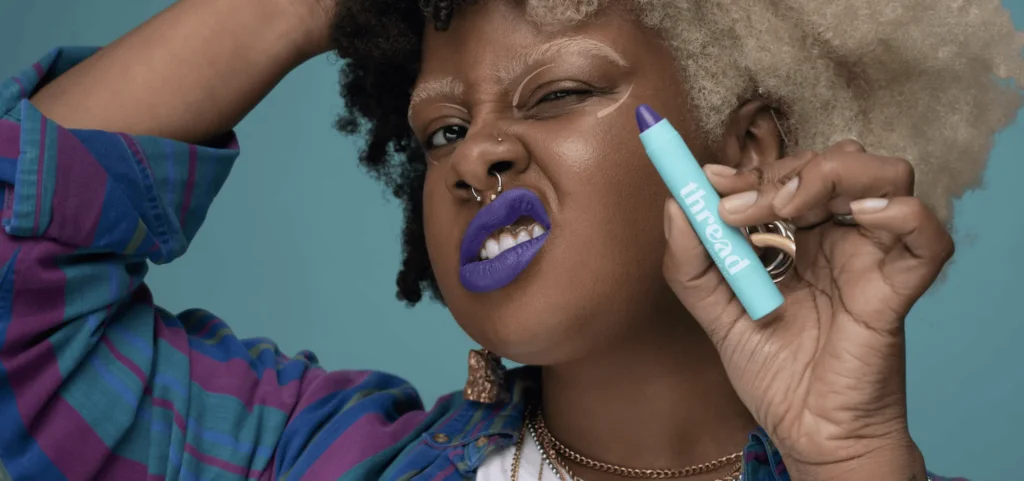
The latest example comes from Melissa Butler, founder and CEO of makeup brands The Lip Bar and Thread Beauty. On Aug. 10, she told her more than 93,000 Instagram followers that she is searching for a business partner to save Thread Beauty. Her public call follows similar open appeals from the founders of perimenopause wellness brand Valerie, hormonal skincare line Faace, and clean beauty retailer Pretty Well Beauty.
As entrepreneurs build their brands in public, the vulnerability displayed by these founders reflects a broader shift toward transparency around operational and financial hurdles. In June, Topicals founder Olamide Olowe took to TikTok to share that a new launch from Bread Beauty Supply—the haircare brand she acquired in 2025—had generated "almost no sales," revealing she had spent nearly her life savings trying to turn the business around. Instead of simply announcing a revised corporate strategy, Olowe asked her community for candid feedback on what was missing. The video accumulated nearly 640,000 views in less than 24 hours.
Social platforms have lowered the barrier for founders to broadcast their struggles, particularly as peer openness signals that community support or potential deal leads may follow. However, this public outreach is colliding with a financing environment that remains selective, even as beauty capital returns with a heightened investor focus on sustainable business models over top-line growth.
Andrew Ross, senior advisor and venture partner at XRC Ventures, views these public calls as a symptom of a broader "valley of death" in the beauty sector. In this phase, undercapitalized brands gain initial market traction that requires meaningful capital to scale, yet fall short of the volume needed to attract institutional private equity or strategic acquirers. With cash reserves dwindling, turning to digital communities becomes a founder's last resort—though Ross cautions it introduces distinct commercial risks.
"I really would not recommend this unless you are truly out of any other options," Ross says. "It may be a potential tactic if you have truly reached the end of the road, but it essentially broadcasts that to the world, leaving you with no leverage." He adds that the approach frequently attracts low-quality prospects and predatory tire-kickers, leaving desperate founders as price takers.
Tina Bou-Saba, founder of [CXT Investments](http://CXT Investments), notes that widening the prospective buyer pool through social media outreach does not resolve the structural issues that made a brand unsustainable in the first place. "If this doesn't work for the founder, why do you think it would work for you?" she asks. "The amount of money that these businesses need to raise is real, and if a founder couldn't do it, why would someone else be able to do it?"
The pressure of building and scaling in an increasingly crowded beauty market has accelerated a broader brand shakeout. In 2025, emerging labels including Ami Colé and Youthforia closed down, alongside established names like Ren and Drew Barrymore’s Flower Beauty. That momentum has persisted this year, with color cosmetic brands Flyte.70 and Auric shuttering, while brand incubator AS Beauty shut down Cover FX and Mally Beauty in January.
View on Instagram
Calling On Community
Butler launched Thread Beauty at Target in 2022 as an affordable, Gen Z-focused companion brand to The Lip Bar. Four years later, she shared on Instagram that the brand had struggled to gain traction, which she partly attributes to not having a dedicated, public-facing founder. She is now seeking a partner to take on operational and brand leadership while she focuses on The Lip Bar and a new venture.
"It's not working," Butler said in the video clip, which has logged over 100,000 views. "I underestimated that it really needed a face, it really needed that human connection. If you have been thinking about wanting a beauty brand, I'm literally taking applications for not only a business partner but a face of the brand."
Pretty Well Beauty founder Jazmin Alvarez is similarly betting on radical transparency to unearth potential buyers or partners. Launched as an e-commerce platform in 2019 before opening a New York City boutique in 2022, Pretty Well Beauty saw sales decline over three years amid inflation, tariffs, intense competition, and broader economic uncertainty. Alvarez, who built the business without external investment, plans to close the retail operation if she cannot secure a buyer before relocating to Barcelona next month. Her Instagram video explaining the decision has gathered more than 10,000 views.
Publicly broadcasting a search for buyers exposes brands to networks far beyond traditional private investment channels. While Bou-Saba understands the impulse, she cautions that public interest rarely converts into viable deals. "I want to acknowledge that that takes courage because no one wants to admit that they couldn't make the business a success," she says. "They just believe that what they've built is an asset that someone might pay for, but unfortunately this is typically not the case."
Broadening the search can also create operational friction. Thomas Winarick, founder and CEO of Kindred Brands—a holding company that acquires distressed and undervalued beauty assets—explains that an open call usually attracts significant interest from buyers unqualified to complete a transaction. Vetting those leads can be labor-intensive and distracting without guaranteeing a closed deal.
Winarick believes the strongest prospects are strategic buyers with specific operational synergies. For a brand like Thread Beauty, that might mean a smaller, cash-flush company seeking access to Target's retail footprint, or an aggregator like Kindred looking for undervalued assets. "For us, it would have to either fit within our current core distribution or perhaps open the door to a new retailer," Winarick notes.
View on Instagram
From Leads To Buyers
Valerie co-founders Wizz Selvey and Olly Johnson put their perimenopause wellness brand up for sale last month after failing to secure capital to scale. Setting an Aug. 3 deadline to find an acquirer or wind down operations, Johnson wrote on LinkedIn on July 28: "After months of relentless fundraising, and despite follow-on backing from new and existing investors, we did not raise the capital needed for our next stage of growth…So I'm asking my network for help." In a subsequent LinkedIn post, Johnson confirmed the appeal yielded an influx of acquisition leads and that sale discussions remain active.
Founded in 2024, Valerie raised £514,000 (approximately $730,000) in pre-seed funding last year and secured shelf placement with major UK retailers Liberty and Holland & Barrett. Johnson noted the brand had agreed on commercial terms with two additional national stockists, boasting gross margins near 80% and an average order value of £70 (about $95).
For Faace, digital community outreach delivered a tangible result. In 2024, founder Jasmine Wicks-Stephens posted an Instagram video describing founder burnout and asking followers for assistance in identifying an acquirer. The call came after Faace had successfully secured investment from three dragons on the BBC show Dragons' Den.
While social media connected Wicks-Stephens with a prospective buyer, closing the transaction proved complex. An initial agreement collapsed, leading Wicks-Stephens to announce in 2025 that the brand would shut down. That closure announcement sparked a second wave of buyer interest, ultimately leading to a final transaction that saved the brand. Faace plans to relaunch under new ownership later this year, with Wicks-Stephens staying on as the brand face while relinquishing daily operations.
"If it does go ahead then it will be bigger and better than before," Wicks-Stephens said in an Instagram video posted Nov. 30. "We're going to revisit the lineup, we're going to make changes to formula, pack sizes, bringing new products and hopefully reignite the love that there is for the brand whilst making it kind of a more commercially stable business."
Securing a buyer, however, is rarely enough to guarantee long-term stability. Bou-Saba emphasizes that distressed beauty brands often require immediate injections of capital for fresh inventory, marketing spending, and working capital after founders have slashed budgets to conserve cash. Even a low purchase price can demand substantial follow-on capital post-closing.
"The barriers to entry in beauty are very low, so if a brand has not grown meaningfully and demonstrated profitability or a clear path to it, it is generally worth little if anything in the market," Bou-Saba says. "This is brutal, I agree, especially given the time and treasure that founders invest in their businesses, but it's the reality of this market."

Conversation
0 Comments