K-Beauty Expands Beyond Skincare Into Personal Care and Fragrance
K-beauty momentum is pushing beyond skincare into sexual wellness, fragrance, and feminine care as US retail sales reach $2.8 billion.

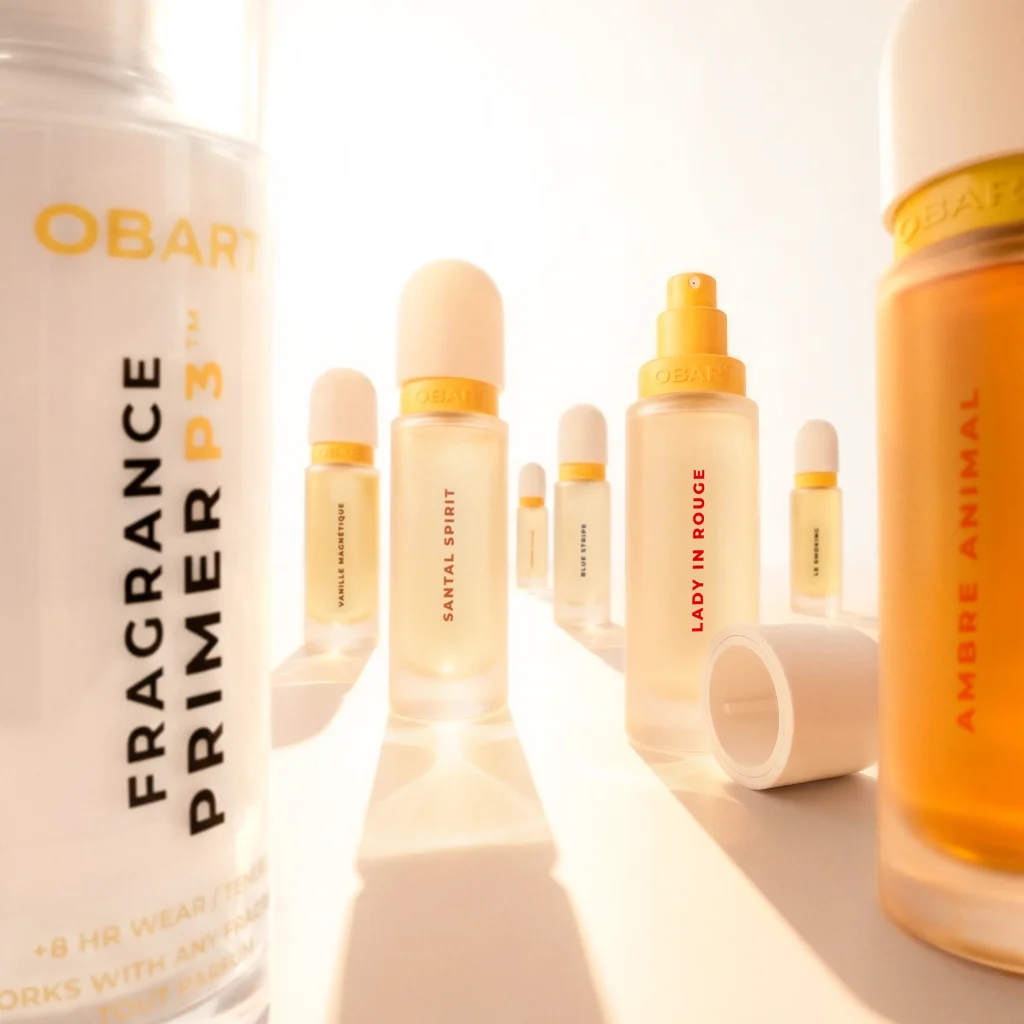
This week, K-beauty’s expansion extends beyond traditional skincare and color cosmetics into menstrual care, sexual wellness, and fragrance. Additionally, makeup artist Katie Jane Hughes’ beauty brand prepares for its Sephora debut, and Amouage posts strong first-half financial growth.
How everything became K-beauty
When the first K-beauty wave arrived in the U.S. market during the 2010s, the trend centered primarily on multi-step skincare routines, sheet masks, and viral ingredients like snail mucin. By 2026, Korean formulation standards and manufacturing have influenced a broader range of personal care categories, including intimate wellness.
“We always say that South Korea brought skin care to your bathroom shelf, and now Mila’s bringing it into your bedroom,” said Ada Trujillo, co-founder of sexual wellness brand Mila. Trujillo and Kim Aviv developed the formulas for their lubricants and intimate wipes in South Korea using skincare-grade botanical extracts like Camellia sinensis leaf water and collagen. In June, the Miami-based brand emerged from stealth with $2.5 million in funding led by Mensch VC and Sticker Ventures.
A decade after its initial international rise, K-beauty has broadened into hair care, personal fragrance, and body care. As consumer demand for Korean formulation innovation rises, brand founders are testing how far the label can extend.
“The first wave was about rewriting skin care and makeup. Now the market is more mature, and this second wave is about entering every other personal care category,” said Marc-Alexandre Risch, co-founder of fragrance brand Obart.
Although raised in France and based in Dubai, Risch established formulation partnerships in South Korea to develop what he calls a “scent-care” brand. Obart launched a line of fragrance primers engineered to extend perfume longevity at Sephora locations across the U.K., EU, and Switzerland, with a U.S. Sephora launch scheduled for September. For many consumers, a “Made in Korea” label functions as a benchmark for cosmetic efficacy and formula development.
“People originally viewed K-beauty as a single category or a temporary trend. Now they understand it serves as a mark of product quality and formulation innovation,” Risch said.
Commercial incentives to align with Korean manufacturing remain strong. According to NielsenIQ market data, U.S. sales of K-beauty products reached $2.8 billion in early 2026, marking a 48% increase year-over-year. On Amazon, K-beauty brand Medicube ranked as the top-selling beauty brand for the second quarter of 2026, according to e-commerce intelligence firm Front Row. Overall sales of Korean facial skincare on Amazon grew 80% in the first half of 2026, outpacing general skincare category growth by three times.
While the initial K-beauty wave popularized BB creams and cushion compacts in North America, sustained brick-and-mortar retail momentum proved difficult to maintain. Today, social-commerce channels like TikTok have accelerated consumer adoption and product discovery cycles. As cushion foundations gain global traction through Western retail expansion, Korean suppliers and beauty brands are securing a more permanent presence in physical retail stores.
“Korean manufacturers excel at product development and agile execution, but building enduring global brand stories was historically challenging,” said Yanghee Paik, CEO and co-founder of intimate-care brand Rael. “Before TikTok and social commerce simplified consumer education, U.S. market entry required brand-led storytelling that Asian companies were less positioned to execute directly.”
The growth of social commerce, influencer marketing, and livestream shopping in Western markets mirrors long-standing digital retail models across East Asia. This alignment allows Korean manufacturers to launch rapid-cycle product innovations into receptive consumer channels. Major U.S. retailers including Sephora and Ulta Beauty are expanding Korean beauty offerings, while South Korean retail giant Olive Young opened its first U.S. flagship location in Los Angeles, alongside hosting the inaugural Olive Young Festa L.A. 2026.
This retail landscape has also reshaped marketing strategies for Korean-founded brands in the U.S. When Rael launched in 2017, its organic credentials served as the primary differentiator in the feminine care aisle. As consumer familiarity with Korean beauty tech increased, Rael highlighted its Korean manufacturing origins and ingredient standards across its expanded lineup of skincare and wellness supplements.
“As our skincare business expanded and K-beauty achieved mainstream adoption, communicating that our personal care technologies originated in Korea resonated directly with consumers,” Paik said.
The adoption of Korean personal care products reflects broader cultural crossover. Netflix’s animated feature KPop Demon Hunters generated over 20.5 billion viewing minutes in the U.S. within a year of its release, driving licensed cosmetic collaborations such as co-branded sheet masks with skincare brand Anua.
“Korean culture has successfully established a distinct perspective across fashion, food, wellness, and entertainment, establishing high expectations for product quality,” said Ani Hadjinian, co-founder and CEO of POV Beauty, which launched with Korean-manufactured skincare formulations.
Executive moves:
-
Alex Kalatzis joined social commerce agency SuperOrdinary as Vice President of Marketing. Kalatzis previously served as Director of Marketing at Tower 28, following marketing roles at GHD and Supergoop.
-
L’Oréal named Rahquel Purcell as Chief Diversity, Equity, and Inclusion Officer for North America. Purcell has been with L’Oréal since 2016, most recently serving as Chief Transformation Officer for North America.
-
Kira Jackson joined makeup artist Mary Phillips’ brand M.ph as Chief Marketing Officer, moving from direct-to-consumer apparel brand Set Active where she served as Chief Brand Officer.
-
Clearstem appointed Diana Dennett as President. Dennett, who held prior leadership roles at Dermalogica and Oliveda, will oversee the skincare brand’s expansion across direct-to-consumer and retail channels.
News to know:
-
KJH Brand, founded by makeup artist Katie Jane Hughes, will launch online and across more than 300 Sephora locations in the U.S. and Canada on August 21 as its debut retail partner.
-
Rare Beauty Brands opened applications for its founder accelerator program. The parent company of Kate Somerville and Patchology will provide mentorship, equity grant funding of $10,000, and retail pitch opportunities with JCPenney to underrepresented beauty entrepreneurs.
-
Omani luxury fragrance house Amouage reported first-half 2026 revenue growth of 74% year-over-year to approximately $360 million, driven by new boutique openings in Beverly Hills and Shanghai alongside a 286% sales surge in China.
Stat of the week:
Banana-scented fragrances generated over 191,000 weekly views on TikTok, according to consumer intelligence firm Spate, marking a 560% year-over-year increase in platform search volume and engagement.
In the headlines:
Estée Lauder heir Ronald Lauder halts political campaign donations. Retailer Claire’s launches a store redesign program starting with its ear-piercing stations. Holiday inventory tracking begins for 2026 beauty advent calendar rollouts from Liberty London and Lookfantastic. Analysis indicates China’s home fragrance market faces adoption hurdles around consistent consumer usage habits.
Listen in:
On the latest Glossy Beauty Podcast episode, host Lexy Lebsack speaks with PRTNRS Management founders Marissa Alfe and Lauren FitzGerald about how beauty brand sponsorships and talent partnerships are structured for red-carpet award shows.
Industry highlights:
Beauty brands continue expanding into entertainment property licensing. Direct-to-consumer scalp brand Jupiter enters Ulta Beauty as the retailer expands clinical hair care offerings for solution-focused treatments. Meanwhile, Rhode generated $27 million in single-day direct sales as it plans expansion across 19 international markets. Retailer Ulta Beauty bets on the growing scalp care market with prestige brand Nutrire, while oral care startups introduce novel daily formulations to challenge established personal care conglomerates.


Conversation
0 Comments