LVMH Sells Back Patou as Luxury Conglomerates Streamline Portfolios
LVMH has sold majority control of historic house Patou back to owner Dilesh Mehta, marking its latest divestment as luxury giants cut non-core brands.

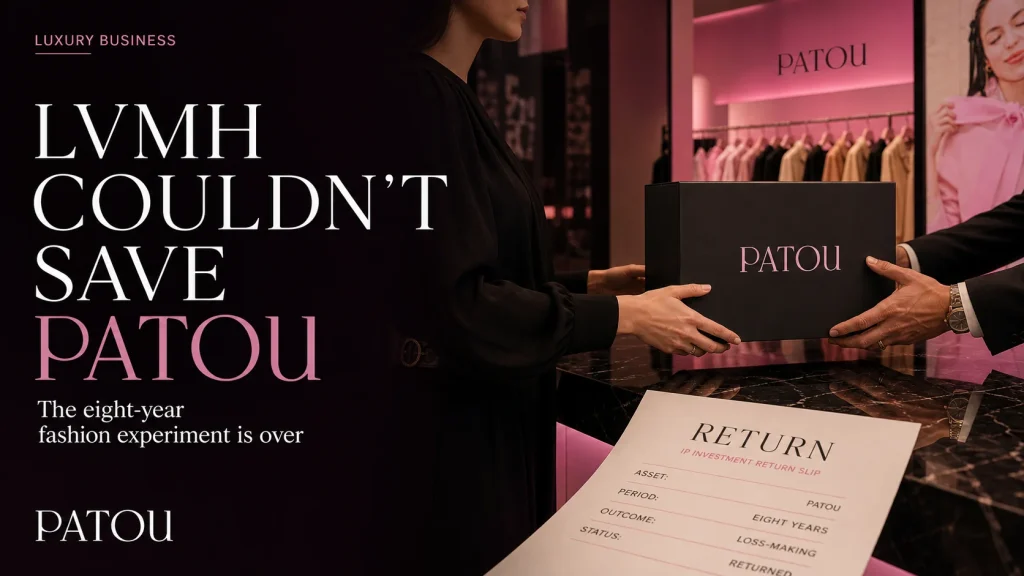
On August 4, LVMH completed a notable turnaround deal, selling back its majority stake in hundred-year-old fashion house Patou to British businessman Dilesh Mehta, who had sold the brand to the French luxury group eight years earlier.
For many beauty industry insiders, Patou remains best known for its fragrance heritage. The sale marks LVMH's second fashion divestment in three months, following the sale of Marc Jacobs in May.
While financial terms were not disclosed, Patou's departure from the LVMH conglomerate back to independent operation is now finalized.
The Cost of an Eight-Year Experiment
When LVMH took control of Patou in 2018, the brand had been dormant for three decades.
Patou's last fashion collection was presented in 1987, when designer Christian Lacroix left to launch his eponymous label. Jean Patou subsequently shuttered its haute couture line, relying solely on its fragrance business to survive.
For decades, the brand lived on through Joy, its legendary 1930 perfume that was named "Scent of the Century" at the 2000 FiFi Awards, briefly outshining Chanel No. 5—a testament to how historical cosmetics preserve brand legacy, much like when Erin Parsons launched an online makeup archive featuring rare vintage beauty artifacts.
Fragrance alone, however, was not enough to satisfy LVMH’s ambitions to revive the historic fashion brand.
LVMH took a gamble: shortening the brand name from Jean Patou to a sleeker Patou, hiring designer Guillaume Henry—who had previously spearheaded revamps at Carven and Nina Ricci—and appointing internal executive Sophie Brocart as CEO in an attempt to re-establish the brand in ready-to-wear fashion.
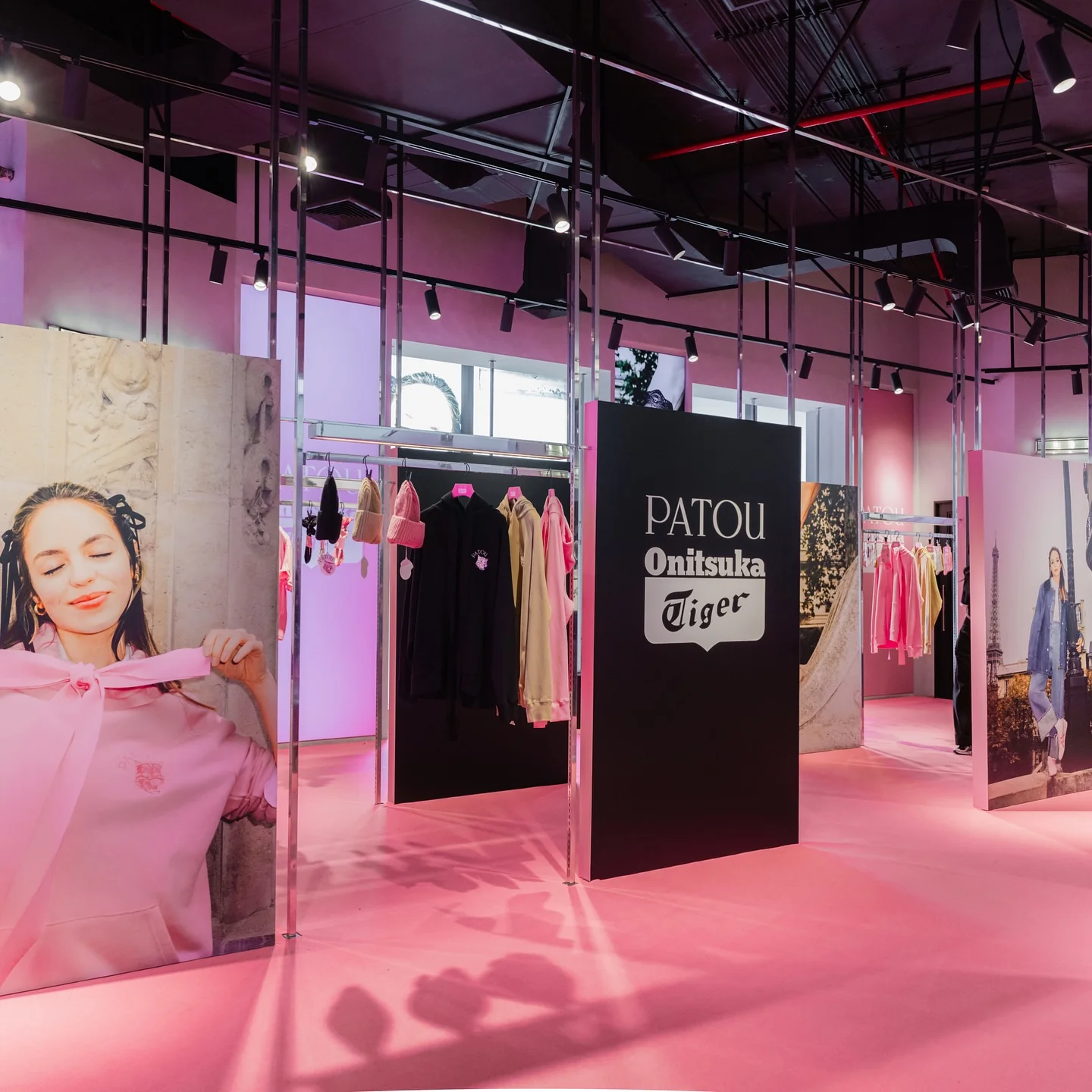
In its initial years, Patou made significant noise, showing during Paris Haute Couture Week, opening boutiques in Tokyo's Omotesando and Seoul, and expanding its wholesale network to roughly 100 global retailers. The brand also collaborated with sneaker label Onitsuka Tiger and Parisian bakery Ladurée to generate buzz on social media.
However, social media engagement failed to yield profitability. Financial filings submitted to the French Commercial Court show that Patou’s revenue grew from €3.95 million ($4.3 million) in 2021 to €13.76 million ($15.0 million) in 2024.
Yet losses mounted alongside top-line growth. Net losses stood at €8.86 million in 2021, narrowed briefly to €2.16 million in 2022, before expanding to €5.74 million in 2023 and reaching €7.18 million in 2024. In total, Patou accumulated over €23.9 million ($26.1 million) in net losses over four years.
After eight years and substantial resource investment, LVMH was left with a brand generating just over €13 million in annual revenue while continually burning cash. Compared with Louis Vuitton's tens of billions in quarterly sales, Patou’s scale was negligible.
In February, creative director Guillaume Henry stepped down after seven years upon contract expiration. Patou’s official statement cited a "mutual decision" and vaguely noted plans to "explore a new development model." Without a successor named or a new collection produced over the following six months, the August transaction confirmed that the separation was already underway.
Notably, when LVMH acquired Patou in 2018, it secured key intellectual property rights to the "Joy" name for Parfums Christian Dior, launching Joy by Dior that same year. LVMH retains rights associated with the iconic name, meaning the core heritage asset remains inside the conglomerate even as the fashion house departs.
Luxury Conglomerates Streamline Their Portfolios
Patou is not LVMH’s first divestment this year, nor is it likely to be its last.
In May, LVMH sold Marc Jacobs—a brand it had held for nearly 30 years—to U.S. brand management firm WHP Global for approximately $850 million. Prior to that, LVMH divested streetwear label Off-White in 2024 and parted with its 49% stake in Stella McCartney in 2025. Counting Patou, LVMH has shed at least four fashion brands over the past 18 months.
Market speculation continues over potential future sales. Media reports have pointed to Fenty Beauty, Make Up For Ever, and Napa Valley winery Joseph Phelps Vineyards as potential candidates for divestment, though LVMH has declined to comment on these reports.
LVMH's half-year financial report published in late July showed group revenue fell 3% year-over-year to €38.6 billion ($42.2 billion), while recurring operating profit dropped 4% to €8.69 billion ($9.5 billion), marking a second consecutive year of profit decline. Organic sales in the key Fashion & Leather Goods division fell 5% in FY2025.
With core profit drivers slowing down, peripheral brands face immediate pressure. LVMH has implemented strict cost controls since 2023. In an environment where flagship brands like Louis Vuitton, Dior, and Celine absorb the majority of capital, patience for smaller brands with under €20 million in revenue has rapidly thinned.
Other luxury conglomerates are making similar moves. Under its new leadership, Kering sold its developing beauty arm to L'Oréal to focus capital on Gucci and Bottega Veneta. Richemont previously divested Shanghai Tang and Lancel, shuttered AZ Factory, and sold off loss-making e-commerce platform YNAP to refocus on hard luxury items like watches and jewelry.
The decade-long strategy of continuous acquisition and portfolio expansion is giving way to consolidation. As resources shift toward mega-brands, mid-tier labels struggling with growth are increasingly being divested.
Dilesh Mehta, who repurchased Patou, operates Designer Parfums, a specialist in fragrance licensing whose portfolio includes celebrity fragrance deals with Ariana Grande and Jennifer Lopez. Rather than selling to a direct luxury competitor, LVMH transferred the brand to a lean, specialized operator capable of managing low-cost structures in an increasingly cautious market.
Conversation
0 Comments