Unilever Faces New Lawsuit Over TRESemmé Hair Loss and Ingredient Safety
Unilever faces a new class-action lawsuit over TRESemmé products containing the preservative DMDM hydantoin, sparking wider industry debates.

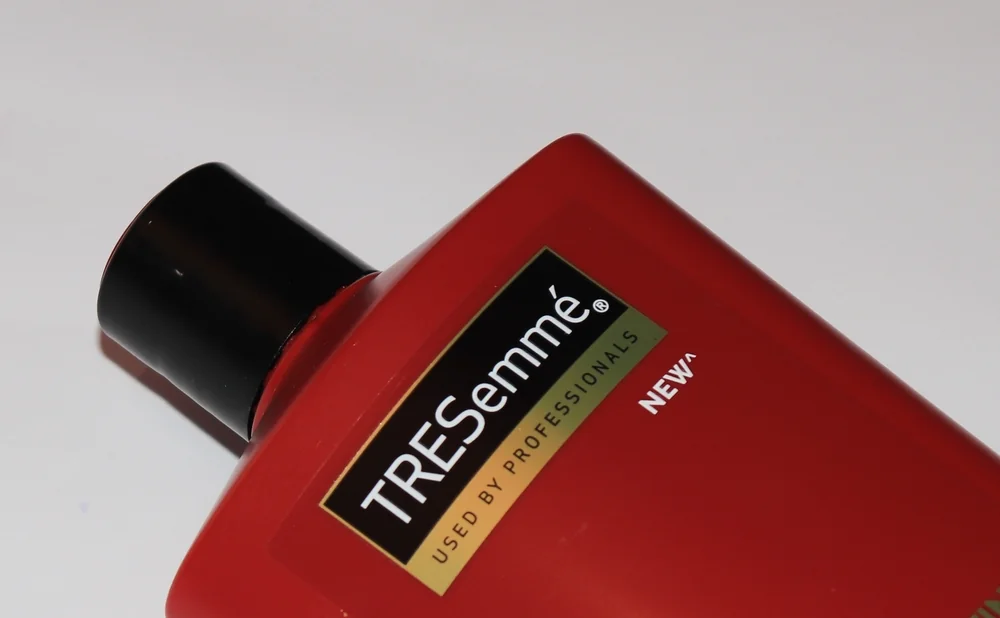
Can a mass-market shampoo really cost a consumer goods giant millions of dollars?
In recent years, the functional hair care boom has swept the global beauty market. High-frequency consumer demand and a focus on niche segments have drawn significant capital and consumer attention. Multinational giants like Procter & Gamble and Unilever, alongside leading local brands, have rushed to capture this market share.
However, beneath the hype, the category faces growing scrutiny over ingredient compliance and safety. Many controversies center on hair-loss prevention and scalp health, with several household brands stumbling due to non-compliant ingredients, raw materials, or labeling.
On July 14, six women filed a lawsuit against Unilever in the U.S. District Court for the District of New Jersey, naming Conopco, Inc. (a Unilever subsidiary) as the defendant. The plaintiffs alleged they experienced hair loss, thinning, allergic reactions, and other scalp irritation after using TRESemmé shampoos or conditioners.
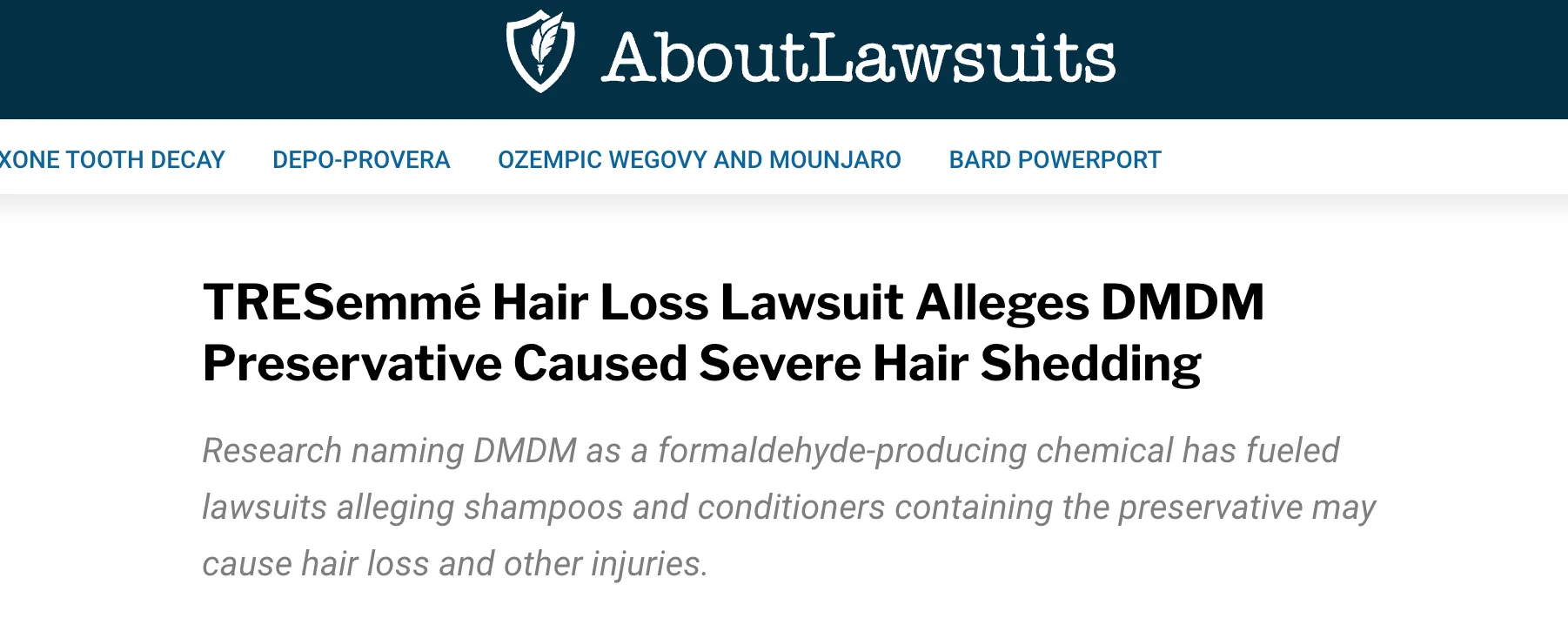
They further alleged that Unilever knowingly used DMDM hydantoin, a formaldehyde-releasing preservative, despite being aware of these side effects. The consumer goods giant has been embroiled in similar legal battles for over a decade.
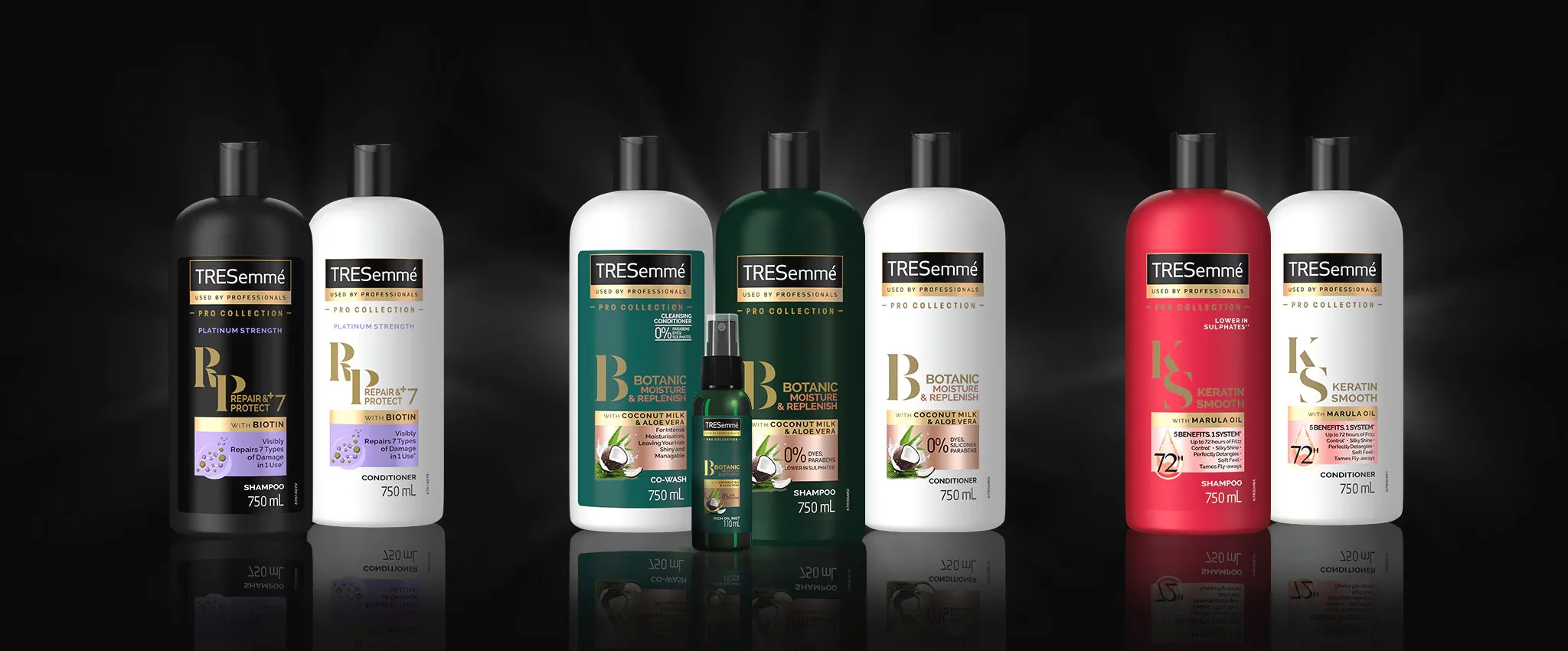
The core of the dispute lies in the preservative DMDM hydantoin. The ingredient releases formaldehyde, which the International Agency for Research on Cancer (IARC) classifies as a Group 1 human carcinogen.
Known to trigger contact dermatitis and skin or scalp allergies, repeated exposure to DMDM hydantoin can increase sensitization risks. This has led to a wave of hair care-related lawsuits globally.
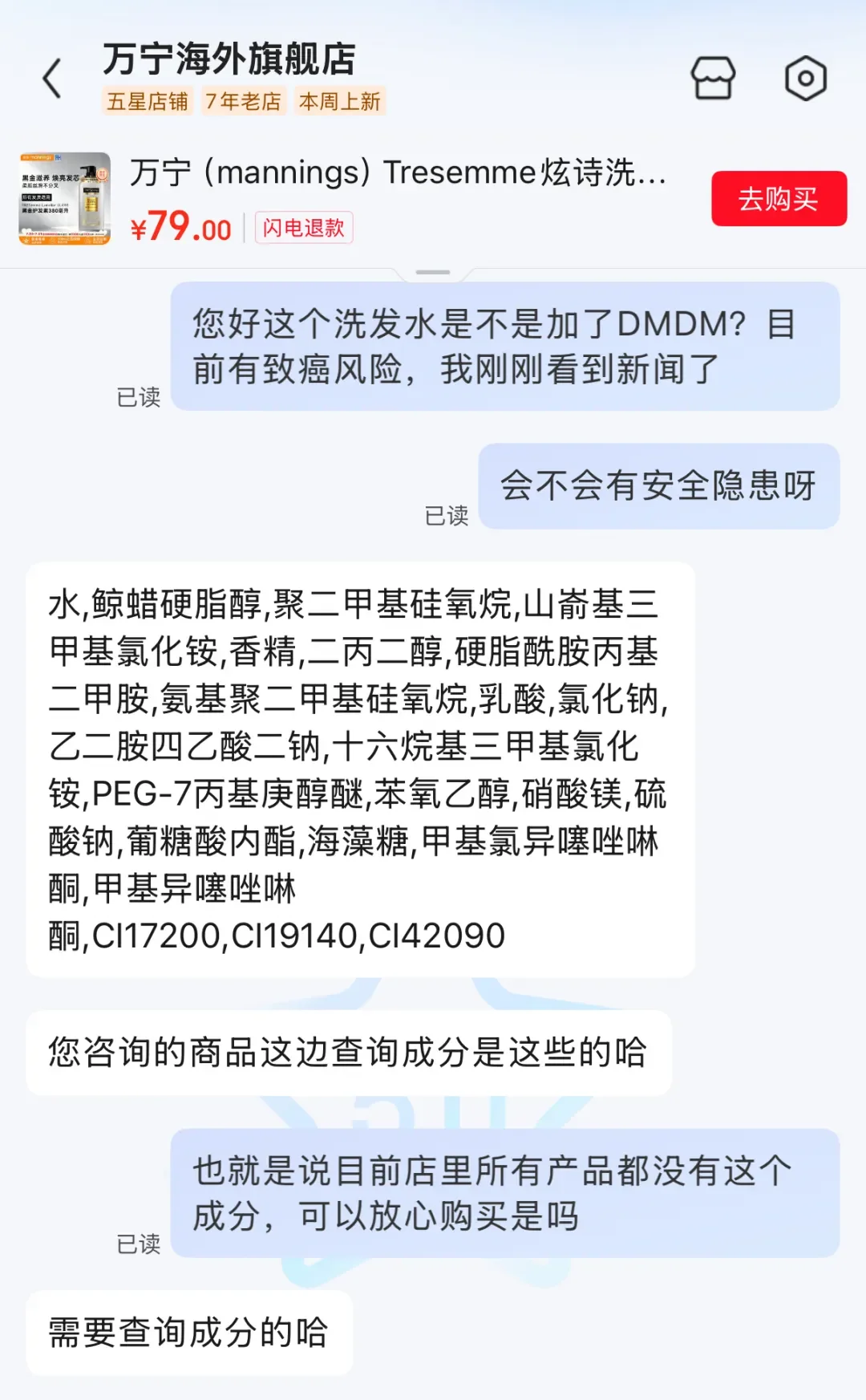
In China, where TRESemmé is sold on major e-commerce platforms, customer service representatives at the brand's flagship store on JD.com (a major Chinese e-commerce platform) stated that the formulations currently registered and sold in the market do not contain this ingredient.
Does Unilever's Hair Care Line Pose a Health Risk?
This latest legal challenge highlights how Unilever hair loss lawsuits face off against cosmetic science, as brands struggle to bridge the gap between consumer perception and regulatory-approved ingredients.
In the complaint, the plaintiffs raise four core claims: design and manufacturing defects; failure to warn; claims for medical expenses, personal injury, emotional distress, and punitive damages; and false advertising, alleging the brand marketed "smoothing and nourishing" benefits while concealing risks.
This is not an isolated incident, but rather the latest chapter in a decade-long series of safety challenges for Unilever's hair care portfolio.
Back in 2012, Unilever's Suave brand faced a class-action lawsuit over DMDM hydantoin, with consumers alleging hair loss, breakage, and scalp burns. The U.S. FDA found the brand had falsely advertised "formaldehyde-free" claims while using formaldehyde-releasing agents. Unilever recalled over 380,000 product sets and eventually settled the lawsuit in 2014 for $10.2 million.
The legal battles continued. In January 2023, a consumer named Maddox sued Unilever, claiming long-term use of TRESemmé caused permanent, irreversible hair loss. Unilever denied liability, arguing there was no direct causal link. In May 2026, the court ruled in Unilever's favor, dismissing the case.
Other major beauty players, including Johnson & Johnson, Wen by Chaz Dean, Paul Mitchell, and Keratin Complex, have also faced class-action lawsuits over DMDM hydantoin.
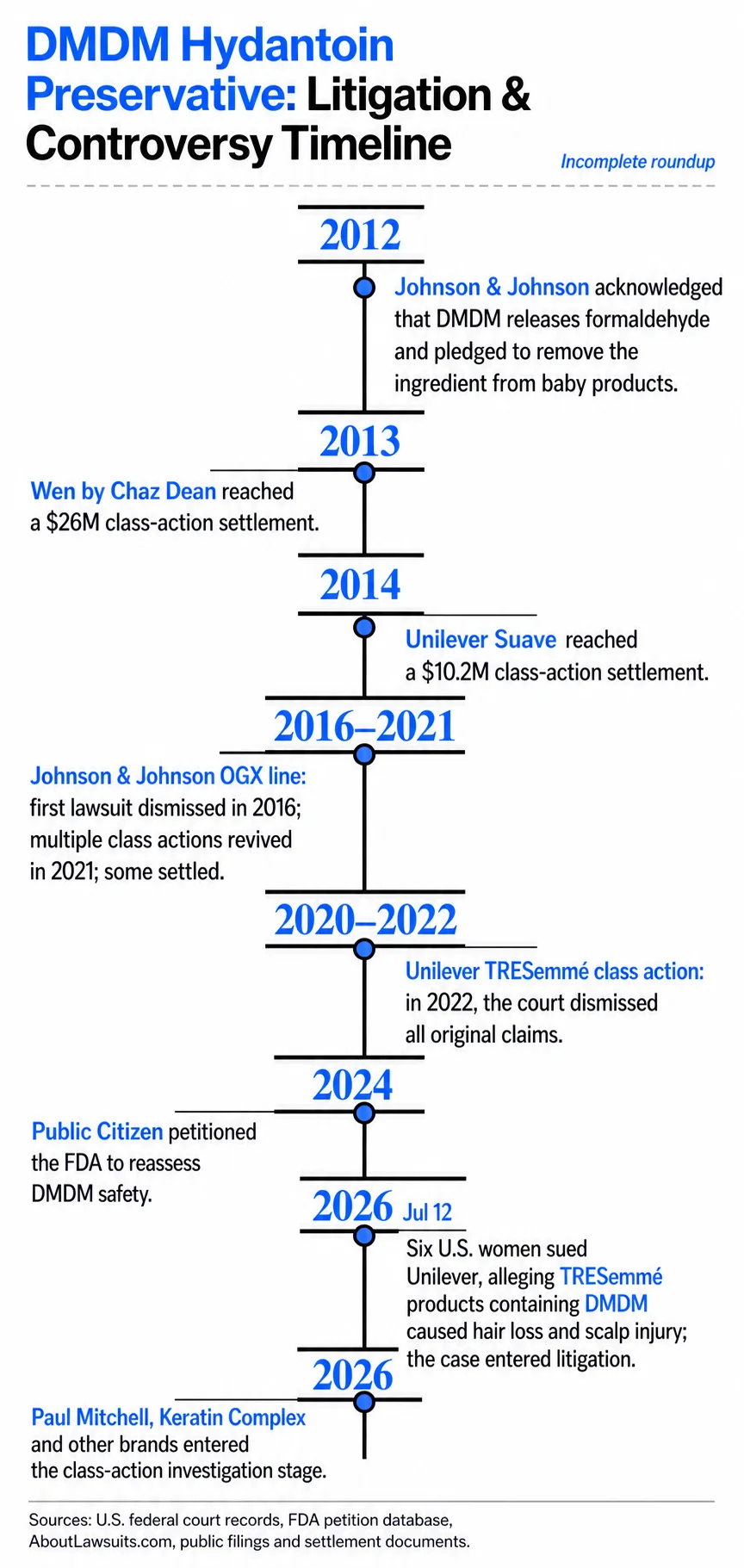
In 2009, advocacy groups exposed J&J's use of formaldehyde-releasing preservatives in baby shampoos, accusing the company of double standards in international markets. Following years of public pressure, J&J confirmed in 2012 that these preservatives release formaldehyde and pledged to reformulate baby products by 2013 and adult products by 2015. However, J&J's later acquisition, OGX, continued to use the ingredient, sparking prolonged litigation starting in 2016.
Although DMDM hydantoin remains legally permitted in many markets, safety debates persist. When formulation issues or regulatory challenges arise, brands often turn to specialized consultants to mitigate damage, showing how beauty troubleshooter Laura Lam-Phaure fixes costly product failures before they escalate into full-blown class actions.
A History of Ingredient Controversies for Beauty Giants
TRESemmé, founded in 1948 by stylist Edna Emmé, is a well-known salon-inspired hair care brand.

Positioned around "Hair Cosmetics," the brand offers products like volumizing powders, hair capsules, heat protectants, and smoothing oils, priced between £3.50 and £8.65.
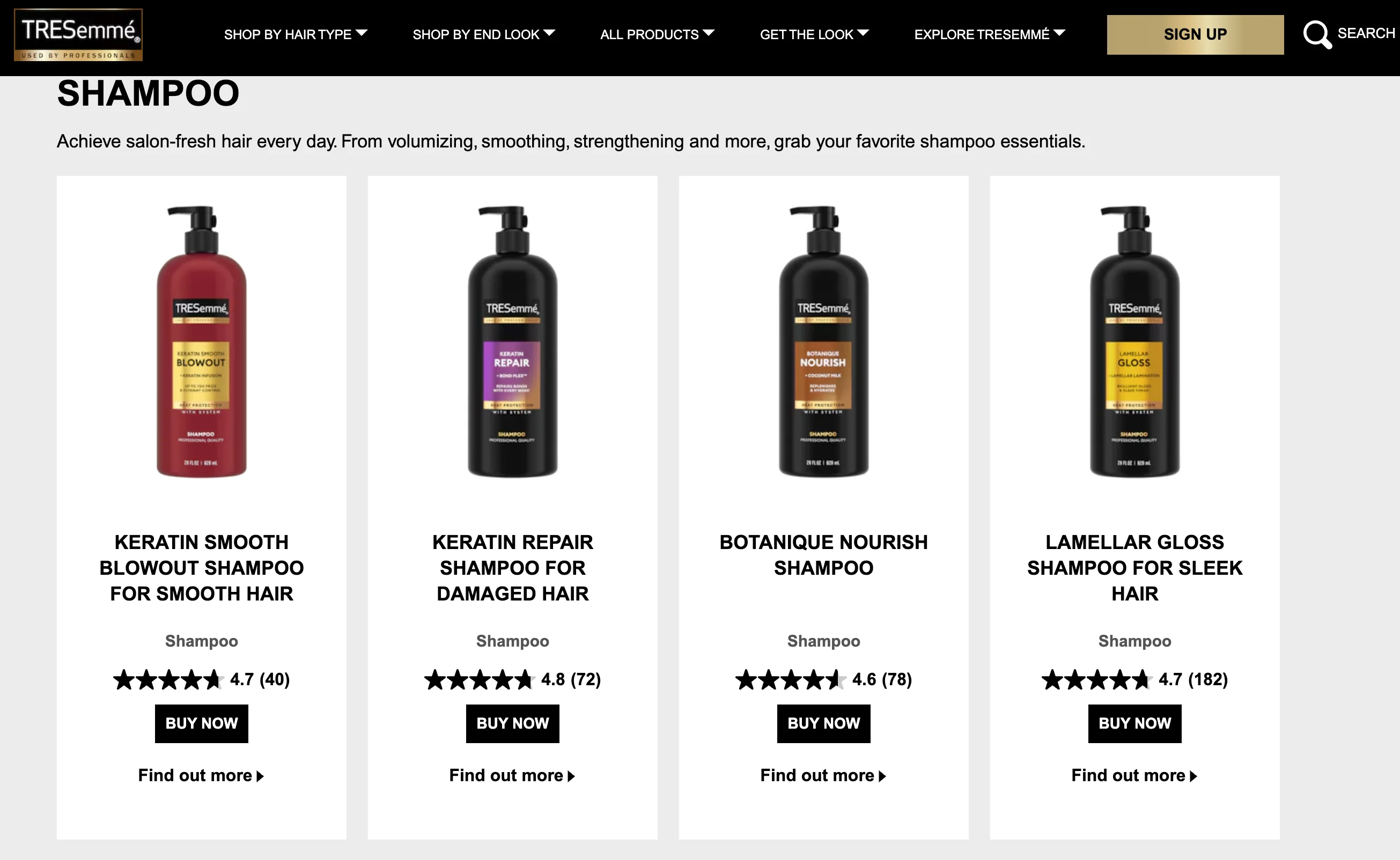
While TRESemmé claims a leading position in global professional hair styling sales, Unilever's recent financial reports show sluggish performance. In the first half of 2025, TRESemmé dragged down Unilever's hair care division, showing only marginal growth in Q3 2025.
In the Chinese market, TRESemmé previously established official flagship stores on e-commerce platforms like Tmall and appointed high-profile celebrity ambassadors like Chris Lee (Li Yuchun) and Jiang Xin, alongside product placements in the hit TV drama Ode to Joy 2.

Despite its long heritage, TRESemmé's struggles show that ingredient safety remains a highly sensitive issue for consumers in a rapidly evolving beauty market.
This is part of a broader trend. Over the years, several global beauty giants have faced major ingredient crises. Since 2007, at least 10 high-profile cases have involved giants like Johnson & Johnson, L'Oréal, Estée Lauder, and Shiseido.
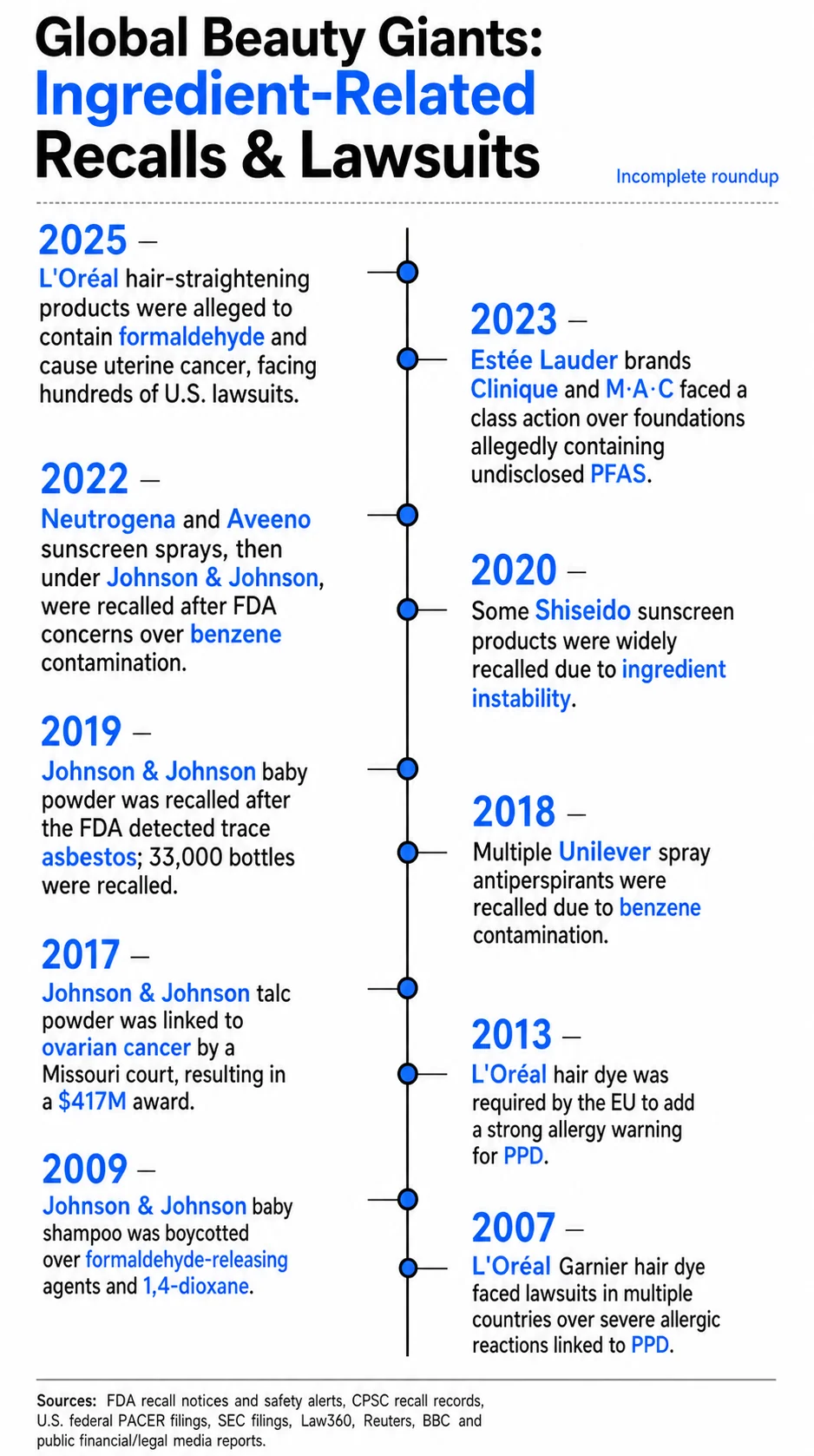
The most notable is J&J's talc litigation, which began in 1986 and peaked after 2011. Plaintiffs alleged that asbestos contamination in J&J's talcum powder caused cancer, leading to massive verdicts—including a historic $4.69 billion award to 22 women in Missouri in 2018. J&J eventually transitioned to cornstarch-based baby powder globally.
Other common ingredient controversies include PPD allergies in hair dyes (affecting several L'Oréal brands), benzene contamination (affecting Unilever and J&J aerosol products), formaldehyde-releasing agents, and PFAS.
While the hair care market has grown rapidly, it faces mounting regulatory and safety challenges. In China, several local and niche brands have faced regulatory crackdowns and product recalls due to banned ingredients or microbial contamination.
As TRESemmé faces renewed scrutiny, it serves as a stark reminder to the beauty industry: no matter how established a brand is, ingredient safety and formulation control remain the ultimate baseline for consumer trust.

Conversation
0 Comments