How Beauty Troubleshooter Laura Lam-Phaure Fixes Costly Product Failures
LPB Group founder Laura Lam-Phaure explains how she helps emerging beauty brands resolve formulation failures, regulatory hurdles, and scaling crises.

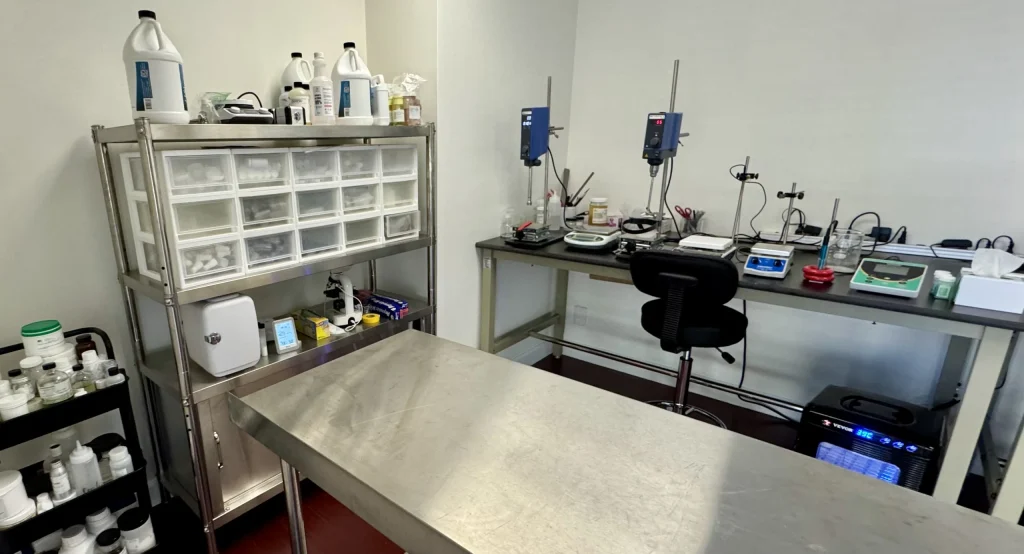
Why it matters: As indie beauty brands scale rapidly, they often lack the in-house technical expertise to navigate formulation stability, regulatory compliance, and manufacturing hurdles. Outsourced technical partners like LPB Group are emerging to bridge this gap, helping brands protect their intellectual property and avoid costly product recalls.
When Laura Lam-Phaure gets a call or an email, it is rarely good news. By the time beauty brands reach out to her, they are usually facing a crisis: a formulation is separating, a product claim is drawing regulatory scrutiny, a contamination issue has surfaced, or a lawsuit is already underway. As seen in recent product liability lawsuits over approved ingredients, navigating the gap between consumer perception and scientific consensus is an ongoing challenge. Her job is to diagnose the technical failure, assess the business risks, and chart a path forward.
A trained cosmetic chemist, Lam-Phaure founded LPB Group in 2024 after more than a decade in the beauty industry, including roles at Pixi Beauty, brand incubator SOS Beauty, and contract manufacturer Product Society. Throughout her career, she realized that emerging brands often lack an independent technical advocate. While manufacturers and suppliers generally operate in good faith, their advice is inevitably shaped by their own commercial interests.
She also observed that brand product development teams are frequently dragged into troubleshooting manufacturing, testing, and quality control issues that fall outside their core expertise. Instead of focusing on innovation, they spend their time putting out fires across the supply chain. When these challenges escalate beyond their control, brands turn to Lam-Phaure.
"People find me when they need to be reactive," she says, "and they keep me when they realize they need to be proactive."
Today, LPB Group services about six ongoing retainer clients alongside project-based brands. Lam-Phaure is building what she describes as an outsourced technical department for beauty brands. For a starting rate of roughly $4,000 per month—a fraction of the cost of hiring an in-house team—LPB Group provides comprehensive expertise in research and development, quality control, regulatory compliance, and commercialization.
To expand its capabilities and hire more technical talent, LPB Group is currently raising a $600,000 seed round. Its advisory board includes Chemist Confessions co-founders Gloria Lu and Victoria Fu, Concept Labs VP of Innovation Nick Dindio, and former Azelis executive Ali Witwit.
We spoke with Lam-Phaure about the evolving role of cosmetic chemists, the technical risks of prioritizing speed to market, what buyers look for during brand acquisitions, and the most common product failures she encounters.
What kinds of problems typically bring brands to your door?
Brands usually come to me when they are in trouble. It could be a stability issue, packaging incompatibility, microbial contamination, misleading claims, ingredient safety concerns, or manufacturing defects that require a recall or reformulation. Sometimes they are already facing a lawsuit. My job is to step in and figure out how to fix it.
Often, the issue is purely technical. A formulation that performs perfectly at 5,000 units might fail completely when scaled up to 50,000 units. You have to figure out how to adjust the process to commercialize it successfully.
My day-to-day is focused on problem-solving and helping brands implement preventative measures so they can avoid bad online reviews or, worse, product recalls.
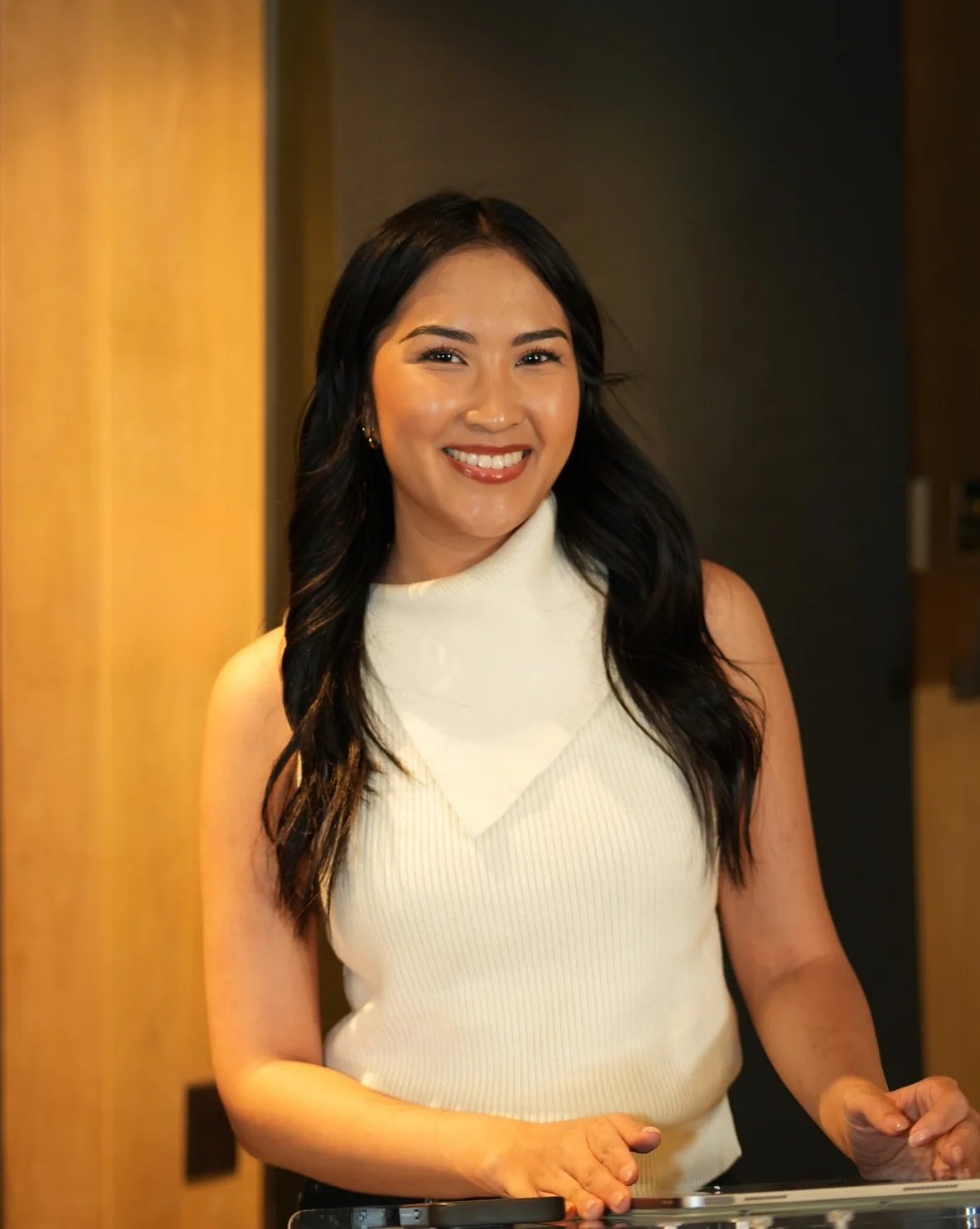
The role of the cosmetic chemist has shifted significantly. What trends are you seeing?
If you talk to chemists who entered the industry 30 or 40 years ago, many will tell you they simply applied for a general chemistry job and ended up formulating creams. Today, people become cosmetic chemists because they are genuinely obsessed with beauty products. It is an intentional career choice, not an accident.
The challenge is that entry-level salaries have not kept pace with the cost of living, especially since major manufacturing hubs are located in expensive areas like Los Angeles. Entry-level roles typically pay between $40,000 and $60,000 a year.
Because of this, many chemists are striking out on their own, gaining experience, and realizing they can monetize their own intellectual property. When you work for a contract manufacturer, the formulation IP belongs to the employer. As a freelancer, you can charge development fees and retain or sell the formulation IP. Some freelancers charge upwards of $10,000 per formula on top of development fees, allowing them to make more in a single quarter than they would in a year of traditional employment.
Many contract manufacturers fail to recognize the true value of their chemists. Formulating requires a unique blend of technical science and creative artistry; it is not just about churning out recipes.
What is the most common product issue you encounter?
Product claims compliance is by far the most frequent issue. Emerging brands often do not understand regulatory boundaries. I help them refine their marketing language to remain compliant. This is especially critical as mass-market personal care premiumizes and brands update their positioning to focus on clean performance.
"Barrier repair" is another major gray area right now. It is incredibly trendy to market barrier-repair ingredients and claim a product "repairs the skin barrier." However, claiming to repair the skin implies you are altering or curing a physiological structure, which crosses into drug territory. Instead, brands should claim the product "supports" the skin barrier. If they want to make an explicit "repair" claim, they must invest in clinical testing, such as transepidermal water loss (TEWL) studies, to back it up.
If a brand wants to make a high-performance claim, I explain the testing required, the associated costs, and help them evaluate whether the return on investment makes sense for their business.
What testing requirements do brands most frequently misunderstand?
The biggest misunderstanding is that there is no single, legally mandated testing standard for cosmetics. While the FDA requires products to be safe, the industry has had to self-regulate and establish its own best practices. The specific testing required is highly dependent on your unique formulation and the specific claims you want to make.
Brands often don’t know what testing they need and simply go with whatever their contract manufacturer suggests. That’s not always in their best interest. The FDA only requires brands to establish that a product is safe before it enters the market, but how you do that is largely up to the brand.
I typically ask the marketing team for their dream claims and then work backward. If you’re making an eye cream, for example, you should probably run stability testing, compatibility testing, repeat insult patch testing (RIPT), preservative efficacy testing (PET), and eye safety testing. From there, we can determine what additional testing is needed to support specific claims and whether it fits within the brand’s budget.
You mentioned problems when a brand scales up a product. What’s an example of that?
I worked on a cream bronzer where some units had swirls and others varied in shade, even though they came from the same batch. The pigment wasn’t staying evenly suspended during filling. We had to figure out why and adjust the process so the pigments remained suspended throughout production.
That’s a common challenge. A formula can work perfectly at a bench scale, but once you scale up manufacturing, issues can emerge that weren’t obvious before.
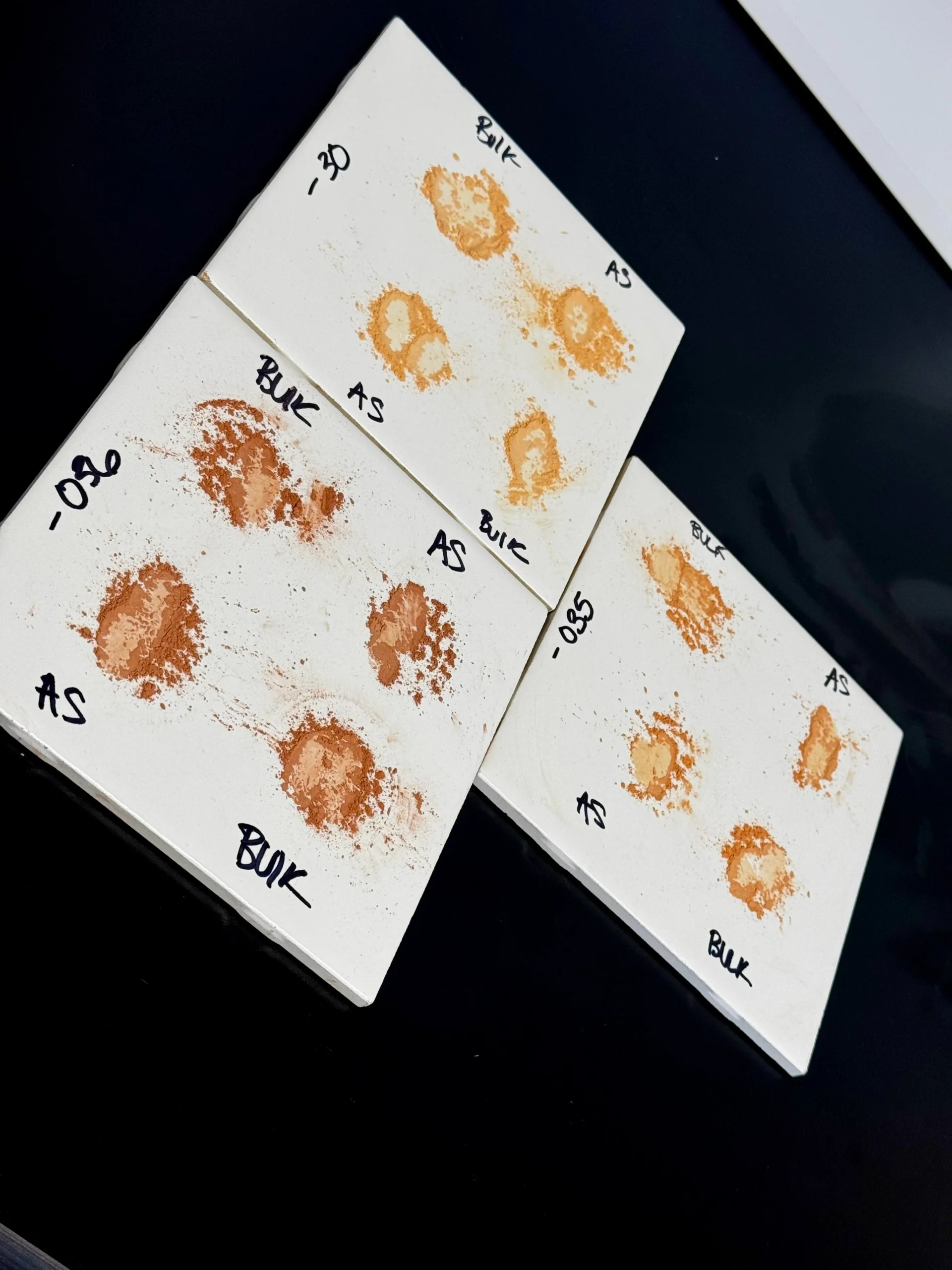
LPB Group helps beauty brands navigate a range of technical challenges, from contamination investigations and claims substantiation to manufacturing scale-up issues, quality concerns, and acquisition due diligence.
What lessons should brands take from recalls and contamination issues?
Every raw material entering a manufacturing facility should undergo microbial testing if it’s water-based and capable of harboring mold, yeast, or bacteria. It should be quarantined, and only released for production once it passes testing.
That’s one of the corners that often gets cut. If a manufacturer is trying to move quickly, a raw material may not be quarantined before it’s used. That’s why it’s critical to vet contract manufacturers and thoroughly understand their quality-control protocols.
I help brands evaluate manufacturers and their quality systems to ensure they’re producing products to a high standard. Contamination issues almost always come down to quality processes and whether corners were cut along the way.
What’s the highest-stakes problem you’ve been brought in to solve?
A brand came to me because it was being sued over contamination concerns. They were preparing to settle because they assumed the allegations were valid. When I got involved, I started digging into the data to understand what actually happened.
The more we looked at it, the more questions I had. We conducted additional testing and examined the evidence more closely. In the end, the testing did not support the contamination claims. Everyone had initially assumed the product was contaminated simply because that’s what the complaint alleged. Once we relied on data instead of assumptions, the picture changed completely.
The lawsuit ultimately went away. It reinforced something I tell brands all the time: whether it’s a contamination concern, a claims issue, or a manufacturing problem, you must understand what’s actually happening before making decisions. Data has to drive the response.
You’ve helped brands prepare for acquisitions. What tends to get scrutinized most closely during technical due diligence?
During a brand acquisition, you have to evaluate all the intellectual property (IP) and assets the brand may or may not own. If there’s IP they don’t own, you have to determine whether acquiring it would increase the company’s enterprise value. If it’s a bestselling SKU, you obviously want to own the formula.
When a brand asks a manufacturer for its IP, they often don’t know which documents to request. I’ve seen contract manufacturers send over documents and say, 'Here’s your IP,' and I’m like, 'Where’s the rest of it? I couldn’t make this even if I tried, and I’m a chemist.' There is a massive list of documents brands need to request, maintain, and organize.
You also want a robust quality-control program demonstrating that the products are made consistently, can be reproduced, and can be scaled without wasting money. Sometimes brands get acquired and then have to reformulate everything because the formulas weren’t properly commercialized or were too expensive to produce at scale.
I also conduct safety-testing risk assessments to identify which products have gaps in testing and what needs to be updated to mitigate liability. When a brand presents its documentation to investors, it should be able to prove that its formulas are reproducible and scalable, its key IP is fully owned, and its testing is in order.
How much risk do brands take on when they prioritize speed to market?
For custom product development, the fastest timeline I’ve seen is about six months to market. To hit that, brands often have to cut corners. They may sign a waiver and go into production before testing is complete, essentially manufacturing on risk. While some fast-growing brands manage to scale globally by leveraging rapid supply chain models, doing so without rigorous testing introduces significant risk.
For example, preservative efficacy testing (PET) may still be ongoing when production begins. If the testing later fails, those units are trash, and the brand is on the hook for the financial loss.
I think there’s a disconnect where founders say, 'I’ll just sign a waiver.' You need to understand the actual risk you’re taking. The contract manufacturer wants you to sign that waiver because once the product is made, they can bill you. My job is to make sure brands understand those liabilities before they make a decision.
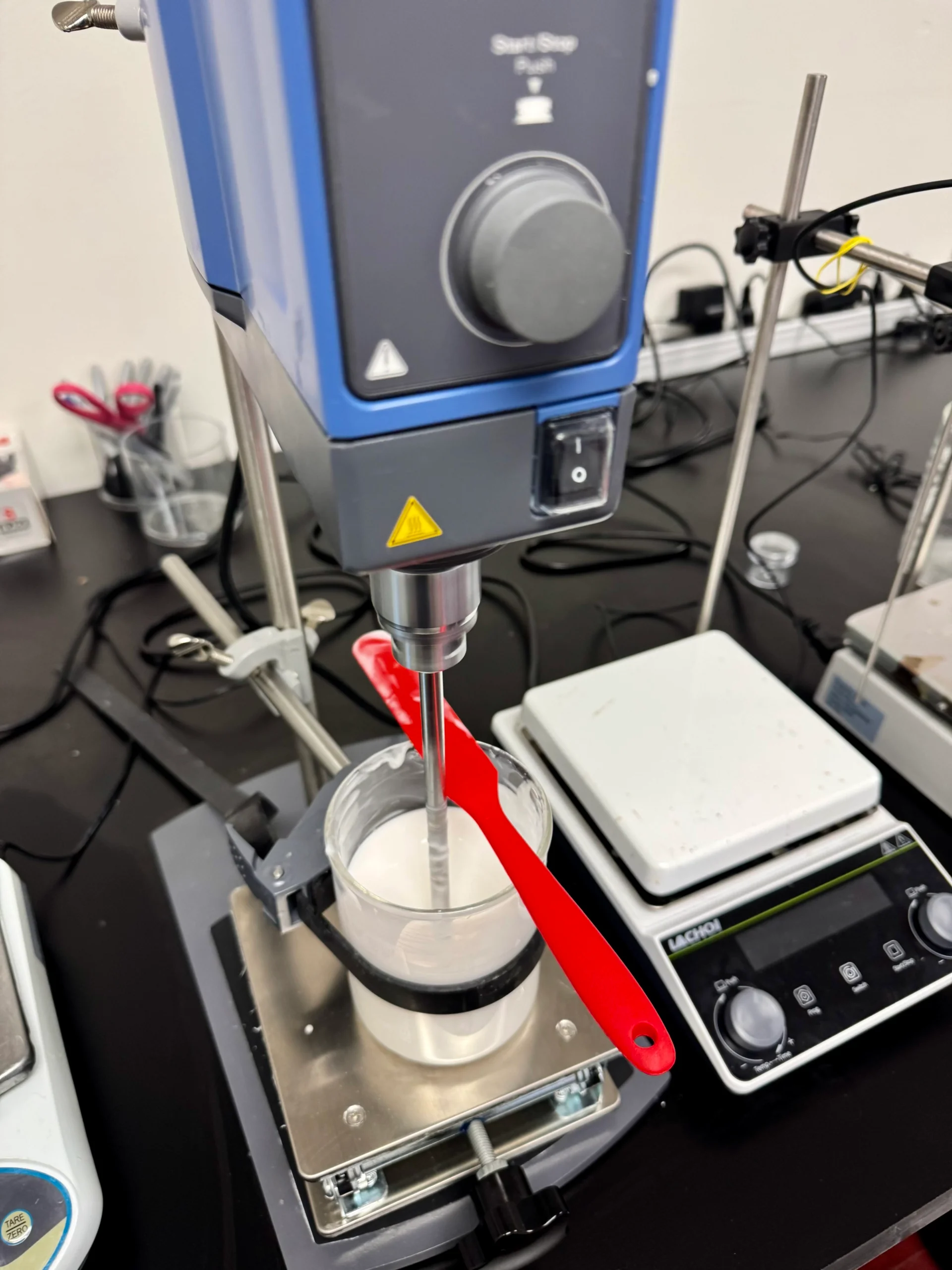
LPB Group’s $600,000 seed raise is intended to help the company scale a model that gives beauty brands access to R&D, quality, regulatory, and manufacturing expertise without building a full in-house technical team.
What can go wrong when brands replace an ingredient in an existing formula?
Replacing an ingredient after a product has launched is incredibly challenging. If you change the formulation, you have to treat it as an entirely new product. That means potentially redoing safety assessments, clinical testing, efficacy claims, and consumer perception studies.
Brands often want to move fast, but you must return to pilot production and scale up gradually. If it’s a bestselling SKU, you can’t just jump straight into a massive production run. If something goes wrong, you risk wasting a significant amount of capital.
Ingredient replacements happen far more often than people realize. Raw materials get discontinued, suppliers exit the market, or brands are forced to find alternatives. My role is to evaluate whether a replacement is truly a one-to-one match, determine what testing needs to be updated, and assess the associated risks.
Sometimes consumers notice the shift. They’ll say, "The last time I bought this, the texture felt different." More often than not, that is because an ingredient changed somewhere along the supply chain.
As AI becomes more common in product development, where does it fall short?
Formulation development is an art. You can technically mix a group of ingredients together to make a cream, but that doesn’t mean it will be a product consumers actually love. It is incredibly difficult to design a product for humans without a human being part of the creative process.
One of the biggest limitations of AI is its inability to understand the nuances between raw materials. It might recommend a carbomer or shea butter, but there are dozens of grades of those ingredients that perform entirely differently depending on the application.
Much of that knowledge isn't documented online. It comes from years of hands-on experience, collaborating with suppliers, and understanding how materials behave on the manufacturing floor. AI can offer suggestions, but it cannot critically problem-solve in real-time when a batch goes wrong during production.
You’re currently raising a seed round. What is the vision for LPB Group?
What I’m building doesn’t exist in the market today. I want to build a modern technical infrastructure for the beauty industry—a single, comprehensive resource that integrates scientific expertise, independent quality oversight, regulatory compliance guidance, and laboratory capabilities throughout a product’s lifecycle.
I believe brands of all sizes deserve access to robust technical support. Currently, only the largest conglomerates can afford dedicated in-house technical, quality, and regulatory teams. My goal is to give emerging brands access to that same level of expertise without the overhead of building an entire scientific department.
The funding will go toward technology and talent acquisition. I already work with five technical advisors, and the goal is to build a broader network that brands can tap into on-demand, rather than having to hire a regulatory specialist, a quality assurance manager, a formulation chemist, and a process engineer individually.
Within two years, my goal is to reach a 35% to 36% profit margin, with a long-term target of 45%. I believe this model can scale into a multimillion-dollar business while helping beauty brands avoid catastrophic mistakes and bring better products to market.
This interview has been lightly edited for length and clarity.

Conversation
0 Comments