How Lashify Built a $400 Million DIY Lash Empire on IP Protection
Lashify founder Sahara Lotti shares how she built a $400M DIY lash powerhouse, secured 800+ patents, and turned IP protection into a core growth strategy.

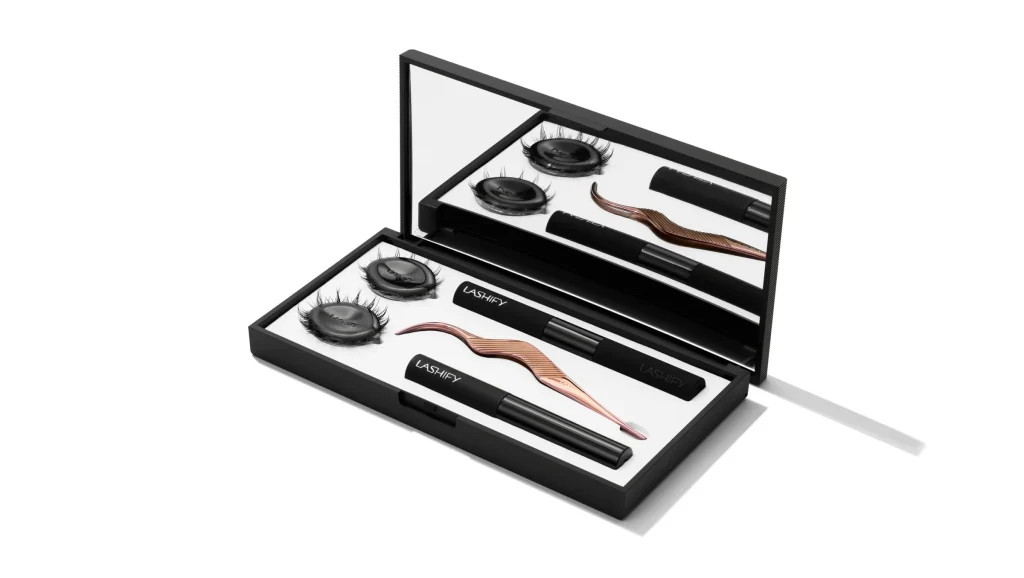
When Sahara Lotti couldn’t get an appointment with her lash technician, she didn’t just look for an alternative—she invented one. Her personal frustration became Lashify, the company credited with popularizing the DIY lash extension category and building one of the most aggressive intellectual property powerhouses in beauty.
Today, Lashify reports it has generated $400 million in sales, grown roughly 20% annually, and remained profitable since its 2018 launch. Behind those impressive numbers sits a portfolio of more than 800 patents and trademarks that Lotti estimates cost nearly $40 million to build and defend. She views IP as one of the company’s most valuable assets.
Lashify’s success comes at a moment of rampant imitation across the beauty sector. In an industry where "dupe culture" has become both a mainstream marketing tactic and a pathway to acquisition, Lotti argues that beauty companies should defend their intellectual property as fiercely as technology or pharmaceutical firms do. She believes patents, licensing, and legal enforcement can serve as growth-driving assets rather than mere overhead costs—a philosophy that challenges how beauty brands approach product innovation.
In a conversation with Beauty Independent, Lotti discusses pioneering a new beauty category, fighting copycats, building a licensing model, and why beauty brands are finally taking intellectual property seriously.
What market gap did you see that existing lash products weren’t addressing?
I was obsessed with lash extensions. They were deeply tied to my self-esteem, but over time, extensions weaken your natural lashes. It’s a time-consuming commitment. One day my lash tech couldn’t squeeze me in, and I got frustrated. I thought, "There has to be a way I can do this myself."
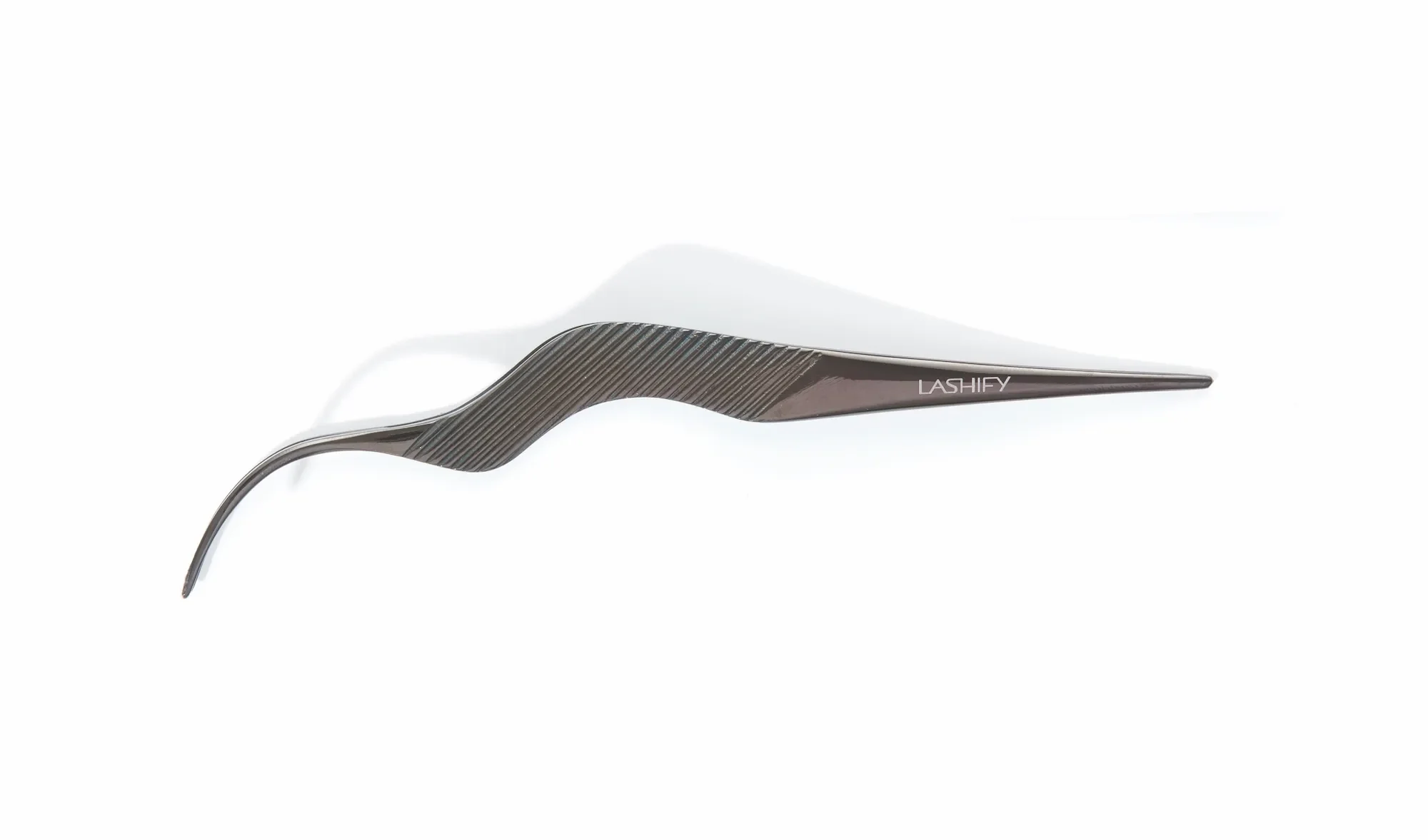
I became obsessed with creating a true DIY alternative to professional extensions. I knew I needed a new kind of flat lash, a specific application tool, a bonding formula, and a method to fuse everything underneath the natural lash line. None of those components existed, so I had to invent them all from scratch.
What were the key breakthroughs required to turn the concept into a commercially viable product?
I built the applicator tool first and then experimented with traditional strip lashes. I managed to apply them under the lash line, but they still didn’t look like individual extensions. That led me to study materials. I discovered lash extensions are made from polybutylene terephthalate (PBT), a synthetic silk that can be heat-molded, flattened, and shaped.
I bought a keratin fusion tool from a beauty supply store and started experimenting. Nobody was heat-pressing the base of a lash, because traditional strip lashes were designed to glue onto the top of the eyelid. I wanted something delicate enough to disappear under the lashes. Once I figured out how to flatten the base with heat, the first Lashify Gossamer lash was born.
When did you realize you were building a new category rather than simply launching a product?
While I was making it. I remember almost crying because I knew it would transform the lash market. As the core customer, I knew exactly how badly people wanted a real home solution.
What was the steepest learning curve moving from screenwriting into product development and intellectual property?
I made every mistake possible early on. Nobody teaches you patent strategy. Every word in a patent claim matters. You want to describe an invention as broadly as possible; the moment you add unnecessary limitations, you give competitors room to design around you.
In litigation, opposing lawyers constantly try to force narrow definitions onto terms not specified in the patent. My answer is simple: "Is it in the patent? No? Then don’t add limitations that aren't there." I never imagined I’d spend years innovating only to hear people claim I invented nothing. I’ve had to fight continuously for my IP, my products, and my business.
How much capital did it take to launch Lashify?
A few hundred thousand dollars of my own savings, $50,000 from angel investor Dean Factor, and a few hundred thousand from my father. In total, we started with about $380,000 and never raised outside venture capital. I simply reinvested our profits back into operations. That capital-efficient path allowed us to scale while retaining full ownership, much like how other indie pioneers like Ayurvedic brand Sahajan scaled profitability with minimal funding.
What did your manufacturing journey teach you about building a global supply chain?
My initial manufacturing experience in South Korea was disappointing. Factory leaders weren't accustomed to working with a female founder as the boss. They repeatedly warned me not to trust Chinese partners, claiming they would steal designs. In reality, the opposite happened. My primary manufacturing partner in China, Mike Dong, has been with me for nine years. Through every supply chain disruption, he remains the one partner who always stood by me—demonstrating how reliability among Chinese beauty suppliers can underpin long-term brand scaling.
You’ve invested approximately $40 million in patents and trademarks. How do you evaluate the return on that investment?
My approach mirrors the pharmaceutical model: invest heavily in R&D, secure patents, and license the technology. But the traditional beauty market wasn't accustomed to that. Historically, companies just copied innovations without paying. I came in and insisted on enforcing licensing fees. If you don't defend your ground, copycats will drain your business.
Drug research gets protected because people respect R&D investment. Beauty innovation deserves that same commercial respect.
How do licensing and enforcement fit into your long-term business strategy?
We’ve identified over 5,000 knockoffs worldwide. The entire category shifted toward our design language. Because brands rarely volunteer to pay licensing fees, we take an aggressive enforcement stance to protect our legal rights case by case.
Lashify recently won a $34 million patent infringement judgment against Qingdao Lashbeauty Cosmetic Co. (Worldbeauty). What did that ruling signal to the industry?
It sent a shockwave across the market. It demonstrated real legal and financial consequences for infringing patents, proving that brands cannot simply clone an existing proprietary blueprint.
What does the company's financial footprint look like today?
We’ve generated roughly $400 million in lifetime sales, serving about 650,000 customers across 126 countries. Repeat orders drive roughly 60% of our revenue, and we maintain an average 20% year-over-year growth rate depending on marketing spend.
What executive capabilities were you looking to add for this next phase?
We have assembled our strongest leadership team yet. Katrina Virani serves as VP of Innovation, Ray Carreon as President, and Raul Mendoza leads Brand Marketing. Bryan Kohm, one of our key litigators in the Worldbeauty trial, joined as Chief Legal Officer. Legal spent was historically one of my biggest expenses, so bringing top-tier legal strategy in-house has been a major operational asset.
Are you open to strategic outside investment or an acquisition?
Yes, provided it involves smart capital and aligns strategically. We receive regular inquiries and remain open to conversations that accelerate our long-term roadmap.
Why is customer education so central to your distribution model?
Education built our community trust. I’ve personally recorded roughly 10,000 application tutorials. That interactive process frames Lashify as an end-to-end service experience rather than just a physical product. While we tested traditional retail shelf space like Selfridges, standalone shelves don't convey application technique effectively. Our ideal physical footprint is a dedicated lash bar service model rather than a standard beauty counter.
How has your leadership style evolved as the business scaled?
You must hire based on objective skill and proven track record rather than personal impulse. Running a $400 million enterprise requires detached, objective decision-making. When significant commercial value is at stake, business relationships must remain strictly professional.
What are Lashify's primary growth priorities for the coming years?
Global service expansion is our focus. Beyond retail, I want Lashify integrated into luxury spa networks globally—ideally establishing a presence across premier hospitality venues like Four Seasons.
We also recently signed as the jersey sponsor for the WNBA's Portland Fire to champion women in sports. Simultaneously, we are expanding into adjacent color categories like lip liners through curated capsule collections. We are truly just getting started.
Conversation
0 Comments