Why Skindinavia Partnered With MCoBeauty After Splitting From Urban Decay
After splitting with Urban Decay, Skindinavia founder Allen Goldman partnered with MCoBeauty to reintroduce his original setting spray formula at Target.

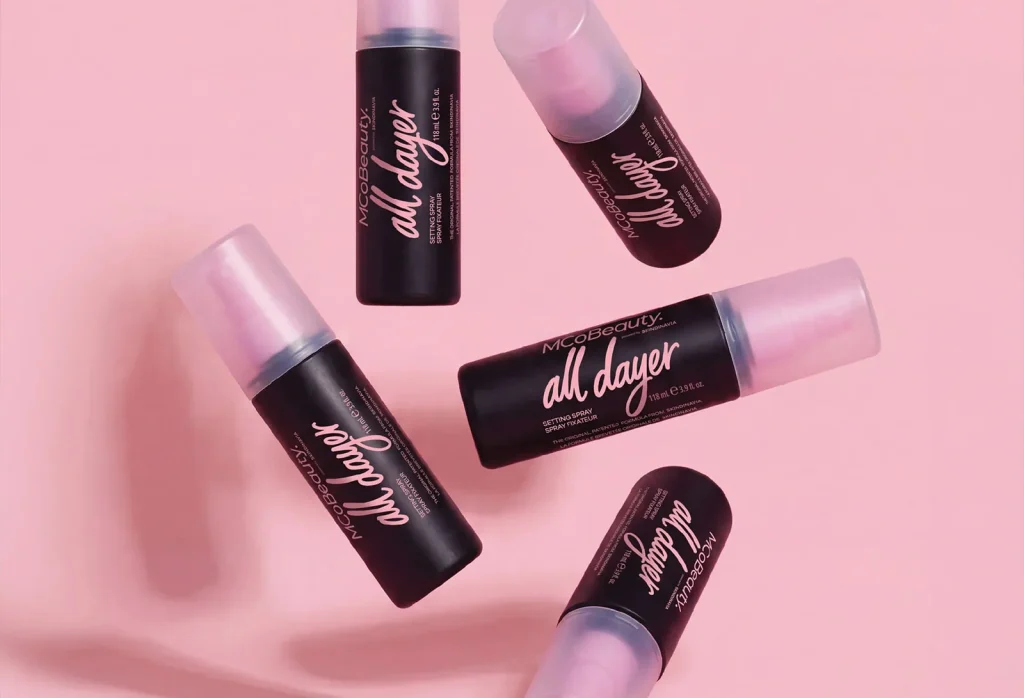
"Everyone has a plan until they get punched in the face." Borrowing Mike Tyson's famous adage, Skindinavia founder Allen Goldman looks back on his company's high-profile split from Urban Decay a year ago as a defining moment for the business. Now that the public noise has settled, Goldman is opening up about why he chose an unexpected path forward.
Before last July, Skindinavia was one of prestige beauty's most successful quiet operators. The independent company spent years developing the patented cooling technology behind Urban Decay's cult-favorite All Nighter Setting Spray, helping power one of prestige beauty's most recognizable products without ever receiving top billing on the bottle. Then the long-standing partnership came to an abrupt end.
What followed went far beyond a standard licensing disagreement. Goldman publicly alleged that Urban Decay had replaced Skindinavia's patented formulation with a new compound while continuing to sell All Nighter under the same name. The public feud turned what could have been a private dispute into one of the beauty sector's most widely discussed founder stories.
Twelve months later, Goldman's next chapter is even more surprising.
Instead of aligning with another legacy luxury retailer, Goldman partnered with Australian beauty brand MCoBeauty, a budget-focused player known for bringing prestige-inspired products to the mass market. The two companies are launching All Dayer, a setting spray formulated with Skindinavia's best-selling Bridal formula. The product launch will debut first across U.S. Target locations—part of Target's growing appetite for accessible beauty rollouts—and will retail for approximately $20, roughly 40% below Urban Decay's $34 All Nighter.
On paper, the partnership seems paradoxical: the inventor of a prestige beauty icon partnering with a brand famous for recreating luxury favorites. Goldman sees it differently. "This may be the first time the original has become the dupe—and the dupe has become the original," he said.
It is a clever soundbite, but it also underscores Skindinavia's strategic shift. Goldman is not simply trying to recreate All Nighter's commercial success; he wants to ensure the company behind the formulation is no longer invisible to consumers.
The Internet Changed the Story
Goldman initially expected to spend the past year rebuilding wholesale distribution. Instead, he found himself focused on consumer brand recognition.
When the split with Urban Decay made waves on social media, Goldman assumed beauty consumers would debate ingredient lists, patent filings, and performance claims. Instead, online discussions quickly centered on the creator behind the product.
Across Reddit and TikTok, beauty shoppers began linking Skindinavia to the setting spray they had used for years. Threads filled with customers realizing for the first time that Skindinavia engineered the original All Nighter, while others questioned whether Urban Decay's updated formula delivered the same results.
The resulting consumer confusion highlighted a systemic reality of beauty manufacturing: supplier invisibility. For nearly two decades, Skindinavia achieved what every beauty founder dreams of by creating a category-defining product. Yet as the product scaled globally through licensing, the original inventor faded from the consumer narrative.
"'I thought it was gone' was probably the comment I heard most," Goldman recalled. "The truth is, we were selling it the whole time."
The experience illustrated a common trade-off in cosmetics commercialization. Licensing agreements, acquisitions, and retail distribution can propel a niche innovation into a mass-market powerhouse overnight. However, brands and retailers capture consumer equity, while original developers rarely build direct brand awareness.
Initially, Goldman thought shoppers were lamenting a discontinued setting spray. Instead, they were responding to the backstory. "The feedback wasn't product specific," Goldman noted. "It became a story of David versus Goliath... integrity... and someone standing up when something was wrong."
One piece of feedback stood out: a consumer shared that reading Goldman's public statement gave her the confidence to resign from her own job and advocate for herself. "It almost felt like a movement," he said.
That response shifted Goldman's strategy. What began as a defense of a patented formula evolved into a mandate for brand equity. Skindinavia's next move could not just rely on finding another retailer—it had to ensure the brand behind the formula achieved the visibility it had built for others.
Why the Cover Band Called
In an Industry Interview, Goldman candidly compares MCoBeauty to a cover band. "They're playing someone else's songs," he said. "Everybody knows they're not The Beatles." While the comparison sounds critical, it explains the underlying logic of the partnership.
Following the split with Urban Decay, more than a dozen companies approached Skindinavia. While partnering with another prestige retailer seemed like the conventional route, Goldman ultimately opted to work with a mass-market brand focused on accessible pricing.
"I wasn't really familiar with them," Goldman admitted. "I knew they were an Australian brand, known for dupes." The paradox was obvious, but for MCoBeauty, All Dayer was never intended to be an imitation.
"This is not a dupe, and it is not an 'inspired by' product," Peter Stocks, Chief Marketing Officer Europe at MCoBeauty, said in a statement. "It is the original patented formula that millions of consumers have trusted for years, now made available at a price point that is more accessible to a wider audience."
MCoBeauty built its footprint in Australia by challenging prestige pricing tiers. Rather than attempting to replicate a top seller, the company saw an opportunity to distribute the genuine patented formula at mass retail prices.
"For too long, the beauty industry has prioritized exclusivity over accessibility," Stocks added. "Our mission has always been to challenge luxury beauty pricing, and this launch proves consumers do not need to compromise on performance to pay less."
For Goldman, the alliance solved a key commercial challenge: re-engaging everyday consumers at scale.
Rolling out at Target in the U.S., followed by Superdrug, TikTok Shop, and Amazon in the UK, gives All Dayer immediate retail scale. Positioned at $19.99 (£15), it brings the original patented formula back to physical and digital shelves at nearly half the price of prestige competitors.
"We'd already spent a year trying to educate customers," Goldman said. "To put it somewhere else and start over would have been incredibly difficult." In the end, the partnership is less about dupes and more about market access.

Conversation
0 Comments