Africa’s Frankincense Boom Threatens Sourcing as Wild Tree Stocks Decline
Surging demand for frankincense in skincare and fragrance is straining supply chains in the Horn of Africa as overharvesting threatens wild Boswellia trees.


Frankincense has moved from temple censers to luxury skincare serums, but the surge in global demand is straining the Horn of Africa’s oldest export. In Somalia, frankincense resin remains the nation's third-largest revenue source after livestock and agriculture, primarily harvested from the mountainous terrain of Somaliland and Puntland. However, a lack of regulatory oversight, exploitation by intermediaries and international traders, and climate change severely threaten the Boswellia species—especially since newly planted trees require up to 25 years to mature and produce resin.
Across the border in Ethiopia, Boswellia papyrifera trees, which supply much of the world’s raw frankincense resin, are declining dramatically and could shrink by 90% over the next 50 years. Meanwhile, market demand continues to escalate. By 2026, the global incense market alone is valued at $6.2 billion and is projected to reach $26.27 billion by 2034. As global luxury houses expand their prestige scent offerings—such as when Giorgio Armani introduced its new men's fragrance franchise—and beauty brands add frankincense to skincare formulations, every product relies on a diminishing population of cliffside trees in the Horn of Africa. This widening gap between soaring consumer appetite and collapsing wild supply defines the supply chain crisis facing African frankincense production.
Overharvesting Is Outpacing Regeneration
The resource scarcity is already reflected in trade data. Tigray, one of Ethiopia’s primary frankincense-producing regions, exported 9,604 tons between 2008 and 2013, earning $32.74 million, with China, Germany, Greece, Tunisia, the UAE, and Vietnam importing 81% of the total. Recent export figures reveal a drastic decline. Officials projected 745 tons of incense would leave Ethiopia in a recent shipping year, but less than 500 tons shipped over a nine-month period, generating $2.2 million. That revenue is five times lower than exports from seven years earlier, when Ethiopia exported 3,500 tons and generated $11.8 million.
Speaking to BeautyMatter, Ali Abdi of Desert Resin outlined the rigorous requirements for sustainable tapping. "Responsible harvesting has very clear limits, and this is something many people outside the industry misunderstand. A healthy frankincense tree should not be tapped continuously or excessively," Abdi said, noting that traditional harvesters allowed trees necessary recovery periods. "The problem today is that some trees are overtapped because of market demand and economic pressure. When trees are stressed repeatedly, resin quality declines and tree health suffers."
Gary Scallan, founder of Afrika Botanicals, who sources Somali frankincense through a single personally vetted supplier, underscored the human and ecological stakes. "If you exploit the raw product, you’re going to get less for it, and the community still remains poor. So you need to protect the plants, the trees, [and] the community," Scallan said, pointing out the paradox of the species: the harsher the environment, the higher the quality of the resin.
The Price Doesn’t Reflect the Real Cost
Market pricing reflects a deep disconnect from harvest realities. Scallan cited a mainstream frankincense essential oil retailing at $103.50 for 20 milliliters, sourced from the same Somali region as his supply, calling the retail markup impossible to justify against the low wages paid to harvesters and local distillers. He expressed skepticism toward mass-market products, such as a $12, 30ml serum listing frankincense as a lead ingredient. "There’s no way that they’re using a real frankincense," he noted.
To test product authenticity, Scallan burned a sample from his Somali supplier as incense over two weeks, monitoring burn time and scent profile. "I’ve smelt the real thing, I’ve tasted the real thing," he said. "I don’t believe a lot of the frankincense people are buying as pure frankincense is sustainable."
Abdi explained the economics behind genuine frankincense production. "Consumers often do not realize how much raw resin is required to produce authentic, steam-distilled frankincense oil," Abdi said. Pure oil production demands large volumes of high-grade resin, meticulous sorting, labor-intensive harvesting, mountain transport, cleaning, and precise distillation. When prices appear unusually low, Abdi warned that buyers should evaluate whether the oil is diluted, low-grade, mislabeled, or untraceable. "One major misconception is that frankincense is an unlimited resource because it has been traded for thousands of years. It is not unlimited."
This systemic undervaluation directly accelerates overharvesting. Research on frankincense-dependent households in Ethiopia’s Borana zone indicates that resin harvesting accounts for roughly 35% of total annual household cash income. Low purchase prices paid to harvesters force workers to overtap trees to maintain basic earnings, driving the environmental depletion threatening the industry.
Local Processing as a Growing Fix
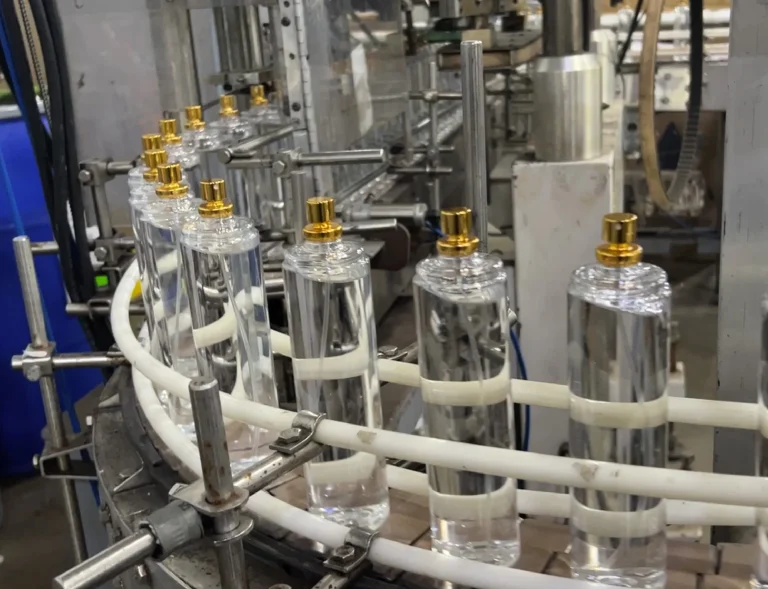
To address these vulnerabilities, in-country processing is emerging as a structural solution. Processing raw resin domestically breaks the traditional cycle of exporting raw materials for offshore refinement and re-importing finished oils at high markups. This model forms the foundation of Sheba Nordic Oils. CEO Meeraf Fulas explained to BeautyMatter: "The stories that we keep hearing are that people take raw material from Africa and then take it elsewhere—sometimes halfway across the world—process it, and send it back to Africa." Fulas established full vertical integration within Ethiopia. "Everything is done in Ethiopia. Even the bottles are produced in Ethiopia," Fulas added.
Fulas emphasized that vertical integration must include eliminating unnecessary intermediaries. "We cut out a lot of middlemen so [farmers] can get a higher percentage of the profits," Fulas said, clarifying that local farmers actively seek fair market value rather than resisting ethical partnerships. "They just want to sell to the highest bidder."
Traceability gaps remain a major challenge across global supply chains. Field research from HALO Trust indicates that low prices paid to harvesting communities drive tree over-tapping, threatening both ecological health and rural economic stability. Abdi noted that buyers must take greater responsibility in verification. "Many supply chains still involve multiple intermediaries, and resin from different regions or species can be mixed before export. Brands can verify sourcing, but only if they build direct relationships, request documentation, and work with suppliers committed to traceability." While domestic processing does not solve every structural issue, it significantly reduces intermediaries before product bottling.
With Boswellia yields projected to drop by half over the next two decades in parts of the Horn of Africa, fair value must reach the harvesters in the field. Current market supplies rely on a slow-growing, wild natural resource that cannot be artificially accelerated or easily substituted.


Conversation
0 Comments