
Can Sheglam Build a Beauty Brand Bigger than Shein?
By reversing the traditional export model, Sheglam has built a $400 million global cosmetics brand powered by social commerce and agile manufacturing.
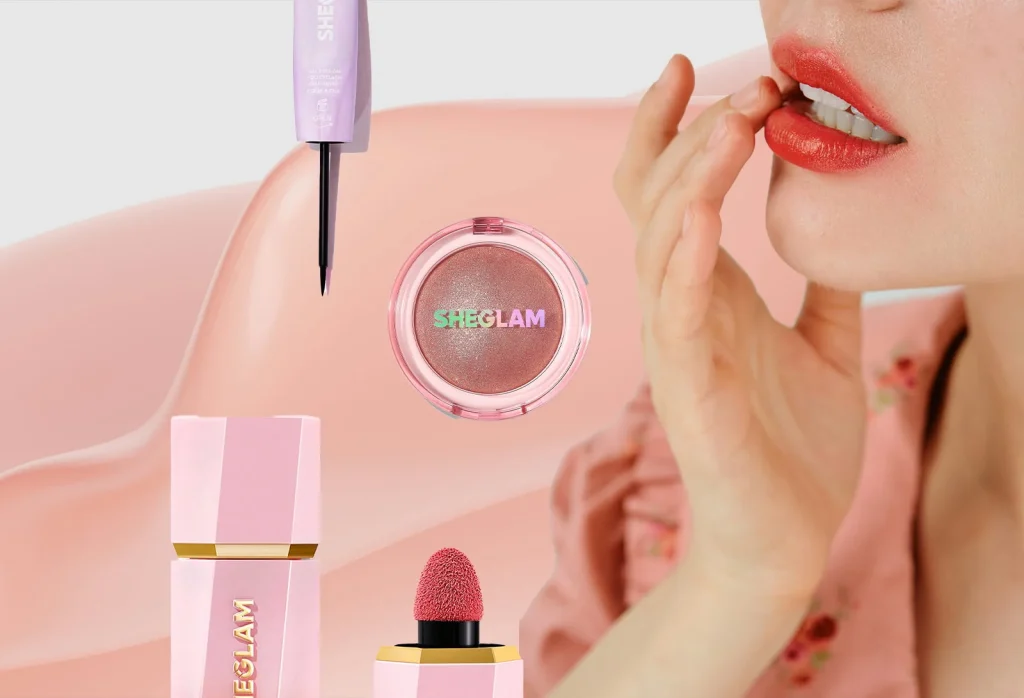
In just six years, Sheglam has quietly become one of the beauty industry's biggest success stories. Launched in 2019 as a small internal project within fast-fashion giant Shein, the color cosmetics brand has grown into an estimated $400 million business, amassed more than 10 million TikTok followers, and expanded into over 4,000 retail counters across 16 countries. Yet despite its massive global scale, many consumers in China, its home market, have never tried the brand—and some have never even heard of it.
That contradiction reflects a broader shift taking place across China's beauty industry. While first-generation C-beauty (Chinese beauty) brands such as Florasis built strong domestic businesses before expanding internationally, Sheglam reversed the model entirely. Rather than exporting products already popular in China, it was designed for global consumers from the outset, using social commerce, creator culture, and agile manufacturing to build an international audience.
The strategy has arrived at an opportune moment. China's beauty exports continue to outpace domestic market growth as more brands look overseas for expansion amid slowing consumption at home. Against that backdrop, Sheglam has emerged as one of the clearest examples of a new generation of Chinese beauty companies that use digital ecosystems, rather than heritage storytelling, to build global relevance.
The brand's rise has also challenged assumptions about what a successful global beauty business should look like. Unlike many established cosmetics companies that still work around seasonal launches and traditional advertising campaigns, Sheglam has built its operating model around constant iteration, rapid product development, and continuous consumer feedback.
"Sheglam's rapid success has been driven by a consistent focus on innovation, especially product innovation and differentiation," Kenneth Liu, General Manager of Sheglam Europe, told BeautyMatter. "At the core of the brand is a simple principle: Every product must be better, newer, or fundamentally different."
Building Beauty for the TikTok Generation
That philosophy extends beyond marketing. The company says it works with laboratories, manufacturers, and ingredient suppliers across Japan, Italy, and Korea, while drawing inspiration from adjacent industries, including skincare and even food science, to develop new formulations and product concepts.
Equally important is the role consumers play throughout the innovation process. Rather than relying exclusively on traditional market research, Sheglam conducts monthly global consumer sessions and one-to-one engagements, using feedback to refine products post-launch.
"We analyzed e-commerce reviews, social insights, and upgraded our products like software post-launch to make them better over time," Liu said.
The comparison is telling. Increasingly, beauty innovation resembles software development more than traditional product design, with launches treated as the start of a feedback loop rather than the finished product. Social platforms no longer simply promote cosmetics; they influence how products are conceived, tested, and refined. This shift highlights why data is becoming the ultimate competitive advantage in beauty, allowing agile brands to bypass traditional wholesale timelines and co-create products directly with their audience.
That approach has allowed Sheglam to move quickly without positioning speed as the end goal. The company launches between five and ten new products or variants each month, with development cycles ranging from four months to more than a year, depending on complexity. Many ideas originate directly from requests consumers make through social media, creating a development process that is unusually responsive to changing preferences.
Its hero products reflect that model. The viral Color Bloom Liquid Blush, retailing for just $5.99, became one of the company's earliest global successes thanks to its sponge applicator, accessible price point, and social-media-friendly payoff. Today, Sheglam's portfolio has grown to more than 1,500 SKUs across complexion, lips, eyes, and beauty tools, with roughly 80% of products retailing for $1 to $10.
Maintaining those prices inevitably invites comparisons with fast fashion, but Liu argues that affordability has been engineered into the business rather than achieved through compromise.
"We partner with world-class manufacturers, ensuring our products meet high levels of quality, consistency, and performance standards," he said. "Today's consumers are very savvy. They prefer to pay for truly good products rather than for expensive advertising."
Instead of investing heavily in traditional media, Sheglam has relied on organic discovery. Tutorials, product demonstrations, and creator reviews appear almost continuously across TikTok and Instagram, turning user-generated content into both marketing and product validation.
This strategy has helped propel the company into the upper ranks of beauty brands on TikTok, where it now boasts more than 10 million followers, outperforming several legacy beauty players with significantly larger marketing budgets. This massive digital presence aligns with broader industry shifts, as TikTok Shop nears $1 billion in beauty sales in a single quarter, cementing social commerce as a dominant channel for next-generation brands.
Roots to Real Life
Yet even for a brand born on social media, executives acknowledge that online visibility alone is no longer enough.
"The success of our Liquid Family and lip plumper has greatly benefited from platforms such as TikTok," Liu said. "At the same time, we've learned that while social platforms are important for product discovery, long-term success is driven by product performance and repeat purchase behavior across markets like the UK and Ireland, where consumers validate products through multiple touchpoints before making a purchase decision."
That realization is shaping the company's next phase of growth. After establishing itself online, Sheglam is investing in physical retail through partners, including Boots in the UK and Ireland and dm in Germany. For color cosmetics in particular, Liu believes consumers still want the opportunity to swatch shades, test textures, and experience products in person.
"Our focus is on building a more established and consistent retail presence while staying aligned with how local consumers already discover and engage with beauty," he said. "The next stage is strengthening the connection between social discovery and the in-store experience."
For a company that built its reputation through algorithms, physical retail represents more than another sales channel. It is the first real test of whether a brand designed for infinite scrolling can earn lasting shelf space.
Conversation
0 Comments