
How Brand Equity, Not Discounts, Won Amazon Prime Day 2026
Amazon Prime Day 2026 reveals a mature beauty market where off-platform brand equity and AI-driven search outweigh last-minute discounting.
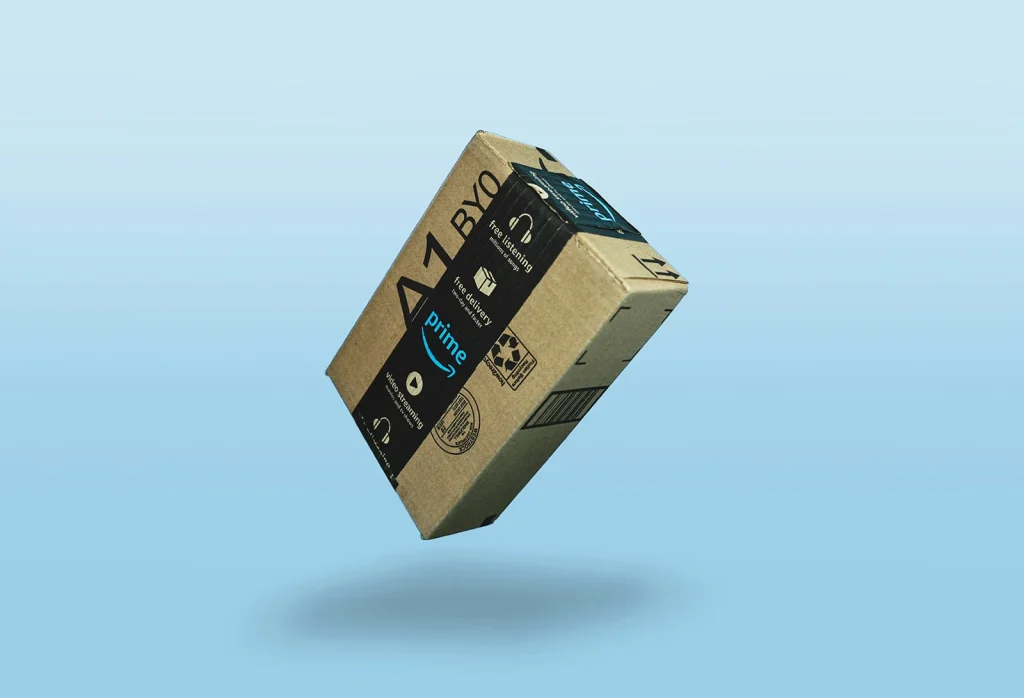
Amazon Prime Day has long served as a critical barometer of consumer spending. However, the latest event points to a more fundamental shift: the beauty industry's biggest shopping moment is becoming less about steep discounts and more about long-term brand equity.
Why It Matters
For global beauty brands, Amazon is no longer just a transactional clearance channel; it is the ultimate destination for high-intent, pre-influenced shoppers. Winning on Prime Day now requires building brand equity and off-platform demand months in advance, rather than relying on last-minute discounting.
Beauty remained Amazon's top-performing department during the event, with sales climbing 7.6% year-over-year, according to NielsenIQ. Purchase frequency rose 13%, buyer penetration reached 84%, and nearly 90% of beauty products sold were priced under $30. This reinforces beauty's status as an affordable luxury that consumers continue to prioritize despite macroeconomic headwinds.
Yet beneath these strong headline figures, growth is becoming harder to capture. Overall Prime Day e-commerce sales grew 9% this year—a sharp deceleration from the 30.3% growth recorded in 2025—even as Adobe forecast total online spending to hit $26.3 billion across the four-day event, surpassing last year's combined Black Friday and Cyber Monday spend.
Prime Day at a Glance
- Category Leadership: Health & Beauty remained Amazon's #1 department.
- Sales Growth: Beauty sales increased 7.6% year-over-year.
- Engagement: Beauty purchase frequency rose 13%.
- Penetration: Amazon beauty buyer penetration reached 84%, up one percentage point year-over-year.
- Basket Size: Consumers purchased an average of 1.5 beauty products per order.
- Pricing Dynamics: Around 90% of beauty units sold cost less than $30, with the majority priced below $15.
- Macro Slowdown: Overall Prime Day e-commerce sales grew 9%, down from 30.3% in 2025.
Data from retail agency Front Row paints a similarly measured picture. While the beauty category proved resilient, year-over-year growth reached just 1% compared to the previous year's event.
"This year's Prime Day tells a clear story: shoppers were being more deliberate with their spending," Emily Safian-Demers, Vice President of Consumer Insights at Front Row, told BeautyMatter. "Categories tied to replenishable goods, everyday essentials, and self-care saw the biggest gains, while consumers pulled back on big-ticket and purely discretionary purchases."
Rather than signaling a market slowdown, these results suggest Amazon's beauty ecosystem has entered a mature phase. Marketplace growth is no longer driven simply by an influx of new shoppers; instead, success is defined by brands actively competing for market share in an increasingly crowded landscape.
Discovery Is Moving Beyond Amazon
Perhaps the biggest shift this Prime Day wasn't what consumers bought; it was how they got to checkout.
For years, Amazon rewarded brands that heavily invested in on-platform optimization, competitive pricing, and retail media. Today, however, consumers are arriving at Amazon with highly specific shopping lists already in mind, having discovered products through platforms like TikTok—where TikTok Shop nears $1 billion in beauty sales—as well as creator recommendations, earned media, and AI-powered shopping assistants.
According to marketplace analytics firm Market Defense, beauty search volume surged 71% during Prime Day week. More tellingly, branded searches overtook generic category discovery. Instead of searching for broad terms like "mascara" or "vitamin C serum," shoppers searched for the exact brands they wanted. In fact, the single most-searched beauty term on Amazon wasn't a product category at all—it was "Medicube."
Jason Weilenmann, Senior Vice President of Marketplace Performance at Front Row, believes this shift is fundamentally reshaping how brands approach major retail moments.
"Consumers are increasingly using both on- and off-site AI assistants to enhance their customer journey, where much of the consumer decision-making process starts before a customer ends up on Amazon," he told BeautyMatter.
"More and more, we see AI assistants condensing the consideration phase, while TikTok remains the awareness and emotional layer. The halo impact TikTok creates for Amazon, especially in beauty, drives a measurable conversion advantage for shoppers who arrive on the marketplace with higher and pre-influenced purchasing intent."
How Beauty Discovery Shifted
- Search Surge: Beauty searches increased 71% during Prime Day week.
- Branded Intent: One in five beauty purchases began with a branded search, up from 17.4% last year.
- The Medicube Effect: Medicube was Amazon's most-searched beauty term, surpassing generic category searches.
- Search Rankings: Data from e-commerce accelerator Pattern clearly shows branded search intent: Medicube averaged #2, Anua #42, Sol de Janeiro #57, Biodance #152, and Laneige jumped from #3,755 to #280.
- AI Influence: Adobe forecasted that AI-driven traffic to retail sites would increase 103% during Prime Day.
- Consumer Sentiment: 85% of shoppers who have used AI for shopping said it improved their experience.
- Conversion Lift: Market Defense found that AI-referred traffic rose 98.3% year-over-year and converted at rates 5.0% higher than email or paid search.
For beauty brands, the implications are significant. Prime Day is no longer won solely through sharper discounts or stronger marketplace execution. It is increasingly won months in advance by building enough brand equity that consumers search for a brand by name when the deals finally arrive.
The Winners: K-Beauty, Makeup, and Hair Tools
If Prime Day offered a snapshot of where beauty demand is heading, it pointed firmly toward K-beauty, makeup, and hair tools. Rather than rallying around a single trend, shoppers distributed their spend across categories that combined high performance, social media momentum, and brand familiarity.
While skincare has dominated industry discourse for the past decade, this year's event indicates that consumers are diversifying their baskets. NielsenIQ reported that cosmetics and nail products gained market share during Prime Day, driven by eye makeup and lip products. Front Row similarly noted that makeup sales grew 12% year-over-year, easily outperforming skincare's 4% growth.
This momentum reflects a broader global phenomenon, as K-beauty sales surge globally as social commerce drives demand. On Amazon, K-beauty cemented its transition from a niche trend to a marketplace powerhouse, with Medicube retaining its position as the top beauty brand during Prime Day, demonstrating how Korean skincare brands have successfully converted viral TikTok momentum into sustained, high-intent consumer demand.
Beauty's Best-Selling Products
- Shark FlexStyle Air Multi-Styler & Drying System
- Dyson Airwrap i.d. Multi-Styler
- Nutrafol Women's Balance Hair Growth Supplements
- Medicube Toner Pads
- Biodance Sheet Mask
Category Performance
- Color cosmetics grew 12% year over year.
- Skincare grew 4.
- Cosmetics and nail care gained market share, driven by eye makeup and lip products.
- Hair tools delivered the most dramatic category lift across beauty, surging by 145%.
- According to data from e-commerce accelerator Pattern, SPF and hair styling devices were highly deal-sensitive categories. "Sunscreen" peaked at #37 on Day 1, while hair tools—including hair dryers, curling irons, blow dryers, and straighteners—climbed sharply in search rankings.
K-Beauty's Momentum
- Medicube secured the #1 overall beauty position for the second consecutive Prime Day.
- Medicube's share of total beauty sales rose from 9.3% to 13.23%.
- Korean beauty (K-beauty) brands accounted for 10.5% of all beauty searches, up from 6.5% in 2025.
- Pattern's analysis revealed that K-beauty brands—including Medicube, Anua, Biodance, Laneige, and Beauty of Joseon—surged simultaneously, indicating that shoppers arrived with highly specific brand intent.
- K-beauty drove nearly 20% of Prime Day's total beauty search growth.
- The hashtag #PDRN (polydeoxyribonucleotide, a trending cellular-repair ingredient) generated 460 million views on TikTok over the past year.
Haircare Shifts
- Native Coconut & Vanilla Shampoo overtook Olaplex to become the top-selling shampoo.
- Nutrafol climbed to become the #2 best-selling haircare product.
- Redken and Biolage captured market share, while Olaplex, Color Wow, and Pureology lost ground.
- Searches for scalp massagers surged 274%, scalp oil rose 159%, and scalp treatments grew 154%, highlighting a massive shift toward scalp care.
Today's Prime Day winners are doing more than just riding viral waves. They are successfully converting sustained consumer awareness into marketplace leadership—whether through K-beauty's compounding momentum, high-end hair tools, or color cosmetics brands that maintain cultural relevance long after the initial social media buzz fades.
Prime Day Is Becoming a Customer Acquisition Strategy
As Prime Day matures, brands are redefining success, proving why data is becoming the ultimate competitive advantage in beauty. Rather than chasing short-term sales spikes, forward-thinking brands are leveraging the event as a customer acquisition engine, aiming to build lifetime value far beyond the promotional window.
"We expected sharper discipline from consumers due to macroeconomic volatility and competing retail events," said Weilenmann.
"We worked with brands to refine their promotional strategies, opting for surgical participation. This meant tighter promotional planning to protect margins, more concentrated budgets, and a laser focus on driving new-to-brand acquisition rather than simply capturing existing brand affinity."
This shift reflects a fundamental change in how Prime Day fits into the annual retail calendar. Instead of treating it as an isolated sales event, brands increasingly view it as the launchpad for customer relationships that will mature during the critical holiday season.
"We are seeing preparation start earlier than ever to secure a strong fourth quarter. Customers acquired in the summer mature and return for repeat purchases," Weilenmann added. "The retention and loyalty built during the summer event directly fuel brand performance through the fall and winter."
How Brands Are Adapting
- Targeted Promotions: Brands protected profit margins by opting for highly selective, strategic discounting.
- Acquisition-First Spending: Marketing budgets were concentrated on capturing new-to-brand customers rather than relying on pre-existing demand.
- Post-Event Lifecycle Marketing: Brands are prioritizing abandoned cart recovery, re-engaging non-converters during subsequent shopping events, and funneling new buyers into subscription programs.
- Flexible Payment Adoption: Adobe projected that Buy Now, Pay Later (BNPL) would drive $2.04 billion in Prime Day spending.
- Mobile-First Commerce: Mobile devices were forecast to drive 54.2% of online sales, generating $14.2 billion in revenue.
- Social Commerce & Influencer Power: Social media was expected to be the fastest-growing traffic source (+15% year over year), with influencer content converting shoppers at nearly 10 times the rate of standard social media channels.
Ultimately, Prime Day is no longer just about winning a short-term promotional window. It has evolved into a comprehensive customer journey that begins with off-platform discovery, converts on Amazon, and sustains momentum through repeat purchases long after the discounts expire.
The New Rules of Prime Day
Prime Day remains one of the beauty industry's most influential retail milestones, but this year's performance proves the rules of marketplace success have fundamentally shifted. Amazon is no longer a source of effortless growth driven by sheer traffic volume. Instead, brands must compete for highly intentional consumers who know exactly what they want before they ever land on the platform.
E-commerce consultancy Market Defense describes this shift as the end of Amazon's "easy growth era." Their analysis revealed that last year's breakout search terms—such as neck-lift tape, tattoo cover-up makeup, and tooth-repair kits—completely vanished from this year's rankings. This highlights how rapidly viral products can lose momentum without sustained, long-term brand building.
Pattern's search data further suggests that Prime Day has become highly brand-led rather than category-led. Generic skincare terms were conspicuously absent from the top beauty searches, replaced by specific brand queries for Medicube, Anua, Sol de Janeiro, Biodance, and Laneige. Rather than discovering products on Amazon, shoppers are arriving with pre-formed purchase intent shaped by TikTok, creator content, and AI-assisted search. For beauty brands, Prime Day has officially transitioned from a demand-generation event into a high-stakes demand-capture play.
The brands maintaining their positions, by contrast, were those that consistently invested beyond Amazon on social media and in physical retail doors. Medicube strengthened its dominance in skincare; Tarte overtook Maybelline to become the leading makeup brand by sales share; and prestige fragrance continued to perform, with Armani Beauty claiming the top fragrance position and Lancôme entering the category's top 10. Professional haircare also reshuffled, with Redken and Biolage gaining share while Olaplex, Color Wow, and Pureology slipped.
Prime Day's Biggest Takeaways
- Amazon is shifting from a marketplace driven by category discovery to one led by brand discovery.
- Viral products are proving increasingly short-lived without broader brand investment.
- AI is emerging as one of e-commerce's fastest-growing acquisition channels.
- TikTok continues to influence beauty purchasing long before consumers arrive on Amazon.
- Winning Prime Day now depends as much on year-round brand building as on promotional strategy.
For beauty executives, the message is clear. Prime Day is no longer simply a retail event; it has become a measure of how effectively brands build awareness, earn consumer trust, and create demand before the discounts begin. The strongest performers aren't just winning four days of sales; they're winning the months of consideration that come before them.

Conversation
0 Comments