
UK Beauty Industry Hits £28.3 Billion Despite Economic Headwinds
The UK beauty and personal care market contributed £28.3 billion to GDP in 2025, showing resilience despite inflation and post-Brexit trade barriers.
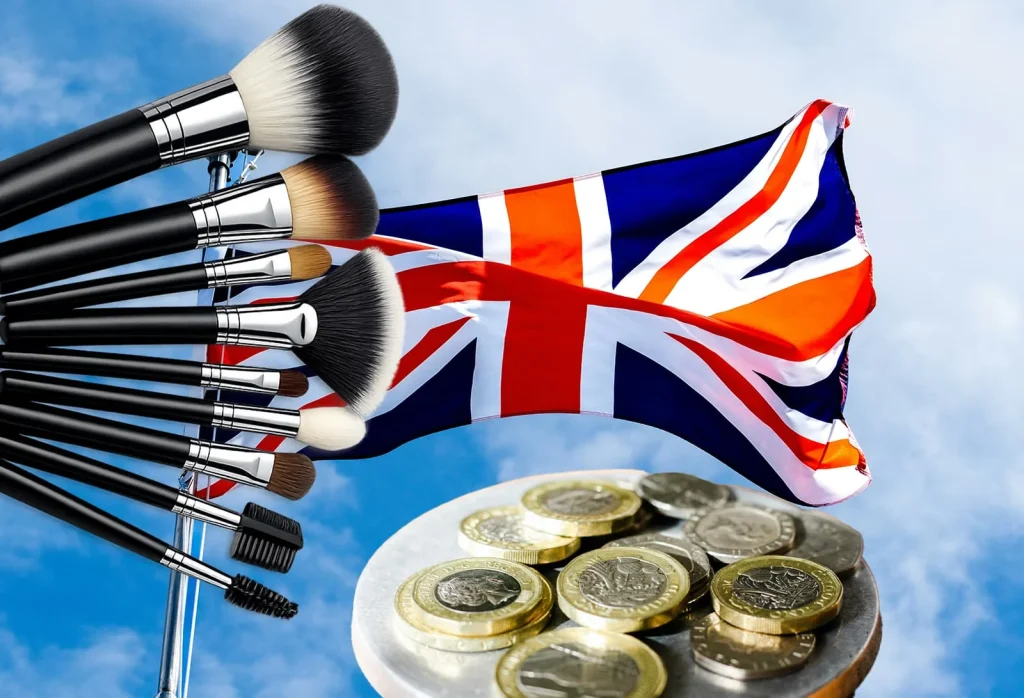
The UK beauty and personal care industry is proving far more resilient than many expected. Even as consumers tightened their purse strings and macroeconomic uncertainty lingered, the sector continued to deliver a substantial impact across employment, GDP growth, and public finances. This resilience comes amid steady investment across the British retail landscape, from Sephora UK’s aggressive store expansion to experiential concepts like Sephoria Europe. Meanwhile, K-beauty specialist PureSeoul has continued to expand its physical footprint to meet the region's soaring demand for Korean skincare and cosmetics.
Why It Matters
For global beauty brands, suppliers, and exporters, the UK remains a highly lucrative but increasingly complex market. While domestic consumer demand remains fundamentally stable, post-Brexit regulatory friction and shifting trade dynamics with the United States are forcing international players to adopt more agile supply chain and retail strategies.
According to the latest Value of Beauty report published by the British Beauty Council and Oxford Economics, the industry contributed £28.3 billion ($37.7 billion) to UK GDP in 2025, supported 595,000 jobs, and generated £8.8 billion ($11.7 billion) in tax revenue.
"The beauty industry is fundamentally part of almost everyone's everyday life," Millie Kendall OBE, CEO of the British Beauty Council, told BeautyMatter. "Consumers might trade down or look for promotions during times of economic hardship, but they still spend money on our category. The figures coming in for retail for the first few months of 2026 are hopeful, but we have a long way to go before the end of the year."
The report, first launched in 2019 and updated annually since 2023, measures the economic footprint of the UK personal care industry and provides key forecasts for 2026.
- The UK beauty and personal care industry contributed £28.3 billion ($37.7 billion) to UK GDP in 2025.
- The industry’s total GDP contribution fell slightly by 0.4% compared with 2024.
- The sector made a direct contribution to GDP of £14.4 billion in 2025.
- Direct GDP contribution declined 0.2% in cash terms compared with 2024.
- The industry directly represented 0.5% of the overall UK economy.
- Beauty services, including hairdressing and salons, contributed £5.7 billion ($7.6 billion) to direct GDP.
- Supply chain activity supported an additional £6.1 billion ($8.1 billion) in UK GDP.
- Employee wage spending supported a further £7.8 billion ($10.4 billion) in GDP.
- The industry’s direct GDP contribution outpaced that of creative, arts, and entertainment activities, which contributed £12.3 billion ($16.4 billion).
The report noted that 2025 was a more challenging year for the sector following its initial post-pandemic rebound, as elevated cost-of-living pressures caused beauty and personal care spending to flatten compared with 2024.
Employment in Beauty
Employment also saw a minor dip, with direct jobs falling 2.1% to 422,000 in 2025. Despite the slowdown, beauty remained one of Britain’s largest employers, supporting 595,000 jobs across the wider economy and employing more people directly than the UK’s publishing and broadcasting sectors.
"I was surprised that the job losses we saw were predominantly in retail. I had expected more in services, but services seem to have gained some employment," said Kendall. "We need to ensure retail stays experiential and caters to the consumer's need for personal interaction and relationships. Building on our ability to make the nation feel good is essential to our future."
This focus on experiential retail is particularly vital as digital platforms continue to reshape consumer behavior, a shift highlighted by how TikTok Shop is nearing $1 billion in quarterly beauty sales without a single physical storefront.
Kendall added that the long-term health of Britain's high streets remains one of the industry's biggest concerns. "I think the biggest risk in the UK is a dwindling high street that is currently anchored by beauty retail and services."
- The personal care industry supported 595,000 jobs across all impact channels in 2025.
- Total employment supported by the sector fell 2.8% compared with 2024.
- The industry directly employed 422,000 workers in 2025.
- Direct employment decreased by 2.1% compared with 2024.
- Beauty services directly employed 243,000 workers.
- The personal care industry directly employed more workers than publishing and broadcasting activities, which employed 388,000 people.
- By comparison, building construction employed 442,000 people, utilities employed 386,000, and agriculture, forestry, and fisheries employed 362,000.
Public Financial Contributions
- The personal care industry generated £8.8 billion ($11.7 billion) in total UK tax revenue in 2025.
- The industry directly contributed £4.6 billion ($6.1 billion) to UK tax receipts.
- This direct tax contribution was equivalent to the salaries of 110,000 nurse practitioners.
- Supply chain activity supported £1.6 billion ($2.1 billion) in tax revenue.
- Wage spending supported a further £2.7 billion ($3.6 billion) in tax revenue.
- The personal care industry is forecast to contribute £29.4 billion ($39.2 billion) to UK GDP in 2026.
- This forecast represents a projected 3.9% growth compared with 2025.
- Direct GDP contribution is expected to rise to £15 billion ($20 billion) in 2026.
- Supply chain activity is forecast to contribute £6.3 billion ($8.4 billion) in 2026.
- Wage spending impacts are forecast to contribute £8.1 billion ($10.8 billion) in 2026.
- The industry is expected to support 609,000 jobs in 2026, representing a 2.4% employment rise.
- The industry’s total tax contribution is expected to reach £9.4 billion ($12.5 billion) in 2026, with direct tax contributions reaching £5 billion ($6.6 billion).
Oxford Economics expects the sector to return to growth in 2026, although the outlook remains exposed to inflationary pressures and wider economic uncertainty. Trade remains an important part of the industry’s economic footprint, although weaker global demand, post-Brexit trading barriers, and US tariff pressures have limited export growth.
"It's already looking like there is some growth, but let's be clear, 2025 was a particularly difficult year in the UK," Kendall said. "We had consecutive budgets that targeted business owners and affected small business owners disproportionately. It also affected our ability to employ and retain staff, a matter that was already on tenterhooks."
- The UK exported £4.2 billion ($5.6 billion) of beauty and personal care products in 2025.
- Beauty and personal care products represented 1.25% of total UK goods exports.
- Exports grew 0.3% in cash terms from 2024 to 2025, but declined 1.2% in real terms after adjusting for inflation.
- Annual export volumes have not yet returned to their 2019 pre-pandemic peak.
- The European Single Market accounted for 70% of UK beauty product exports in 2025, which is four percentage points higher than in 2019.
- Ten of the industry’s top 15 export partners were in the EU27.
- Ireland was the UK beauty industry’s largest export market, with exports of £652 million ($869 million).
- Belgium was the second-largest export market at £448 million ($597 million), followed by the United States at £368 million ($490 million).
Oxford Economics noted that the sector’s reliance on Europe as an export market has actually increased since Brexit, contrasting with the wider UK economy. Since the introduction of the UK’s Trade and Cooperation Agreement in 2021, UK personal care exports to the European Single Market have contracted at an annual compound growth rate of -4.2%. Exports to non–Single Market countries have also declined, falling at an annual rate of 3.2% over the same period.
In contrast, import demand for international trends remains strong. For instance, specialized retailers are expanding to capture the local market as K-beauty sales have surged 53% globally due to social commerce and digital engagement.
US Trade Challenges
The US market also became more challenging in 2025. The report indicated that US tariffs and changes to low-value shipment rules likely dampened export flows, particularly for smaller beauty brands facing increased compliance costs.
- UK beauty exports to the US fell from £389 million ($518 million) in 2024 to £368 million ($490 million) in 2025, representing a 5.4% year-on-year decrease.
- US export volumes reached £101 million ($134 million) in Q1 2025, fell to £91 million ($121 million) in Q2, recovered slightly to £94 million ($125 million) in Q3, and dropped to £82 million ($109 million) in Q4.
- Export volumes to the US were 19% lower in Q4 than in Q1 2025.
- In comparison, world export volumes excluding the US remained relatively stable: £974 million ($1.31 billion) in Q1, £970 million ($1.30 billion) in Q2, £979 million ($1.31 billion) in Q3, and £958 million ($1.28 billion) in Q4.
Taken together, the findings highlight a sector that has moved beyond its post-pandemic rebound into a more mature phase of stabilization, where macroeconomic conditions, trade dynamics, and structural shifts in consumer behavior increasingly shape growth. Flatlining demand, declining employment, and constrained export performance point to a more cautious operating environment, particularly for smaller businesses navigating rising costs and regulatory complexity.
At the same time, the industry’s scale and resilience remain clear. Its contribution to GDP, employment, and tax revenues continues to outpace those of several adjacent sectors, reinforcing its role as a foundational part of the UK economy. The projected return to growth in 2026 suggests that, while short-term pressures persist, the sector retains strong underlying fundamentals.
Looking ahead, the report underscores the importance of policy support, trade facilitation, and investment in skills and innovation to sustain momentum. As the industry adapts to evolving global markets and domestic economic conditions, its ability to balance resilience with growth will determine how effectively it can build on its economic contribution in the years ahead.
"There will always be work to do, but in the past seven years, we have made major improvements to the perception of the beauty industry in the halls of Westminster," Kendall said. "We've had some major policy wins this year, including hair equity, permanent changes to education, Standard Industrial Classification (SIC) codes—which we impacted globally—and our UV safety report recommendations."
As the industry adapts to shifting consumer behavior, global trade pressures, and domestic economic challenges, the report suggests beauty's future will depend not only on continued consumer resilience, but also on maintaining government support, strengthening the high street, and investing in the talent pipeline that underpins one of Britain's largest consumer industries.

Conversation
0 Comments