China's Beauty OEM Market Reshuffles as Brands Move Production In-House
As Chinese cosmetics brands build proprietary factories, top contract manufacturers are thriving by shifting to high-value R&D and turnkey services.

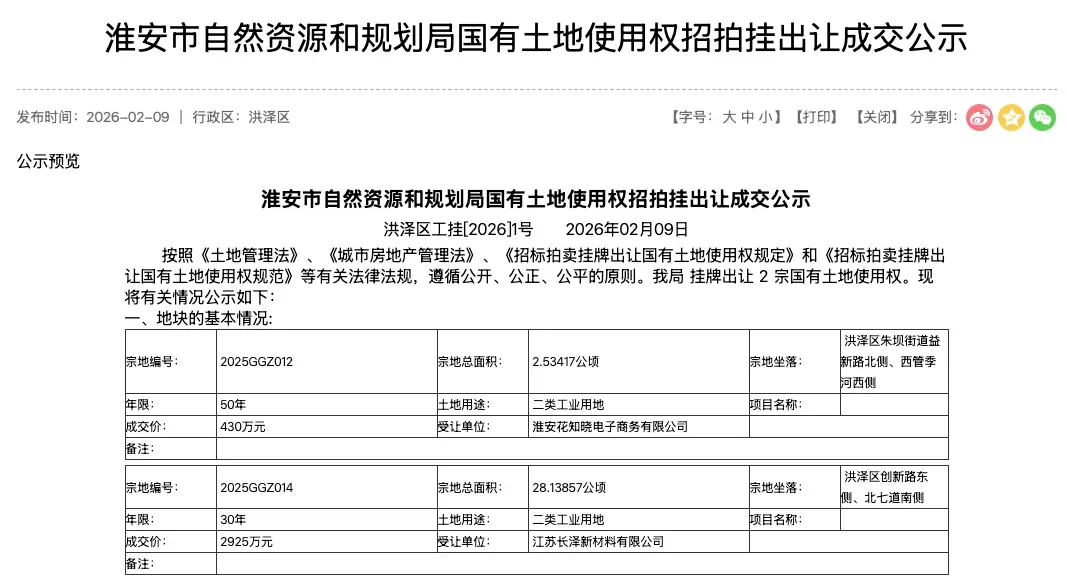
In February 2026, the Natural Resources and Planning Bureau of Huai'an, Jiangsu Province, announced a state-owned land grant transaction. Chinese color cosmetics brand Flower Knows acquired approximately 38 mu (2.5 hectares) of industrial land in the city's Hongze District for 4.3 million yuan ($600,000) to build a packaging facility with a planned annual capacity of 150 million units. The purchase marks the brand's first self-owned production base, transitioning away from a model that previously relied 100% on third-party contract manufacturers.
At the same time, Guangzhou Suorou Biological Technology Co., Ltd. (Suorou), a contract manufacturer that formerly produced for prominent local brands like Marubi and Mask Family, saw its assets listed on asset auction platforms starting at 1 yuan ($0.14) with no buyers bidding.
The contrast between rising brand-owned factories and shuttering contract manufacturers might suggest that China's beauty original equipment manufacturer (OEM) business is in decline. However, market research presents a different picture. According to QYResearch's Global Cosmetic Contract Manufacturing Market Research Report 2026, the global cosmetics contract manufacturing market reached approximately $31.71 billion (228.3 billion yuan) in 2025 and is projected to expand to $41.98 billion (302.3 billion yuan) by 2032, representing a compound annual growth rate (CAGR) of 4.2%.
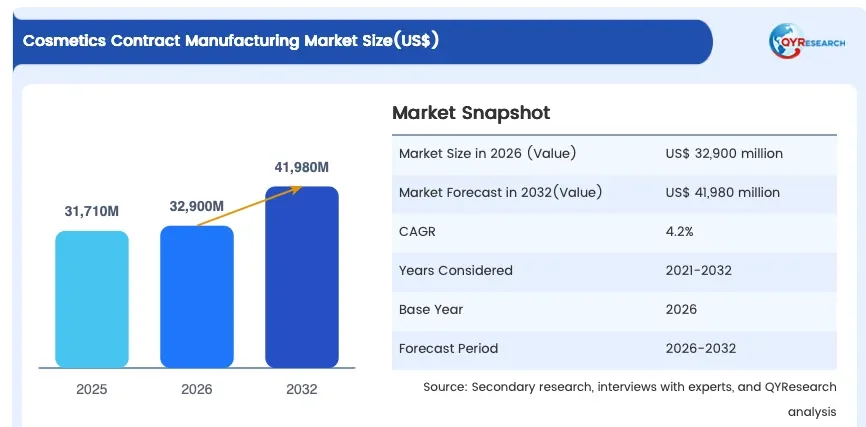
The simultaneous expansion of in-house brand production and overall contract manufacturing market value points to a structural transformation: third-party manufacturers are not being replaced, but rather redefined.
The Paradox: In-House Production Rises Alongside Contract Manufacturing
Flower Knows' manufacturing investment comes after rapid financial growth. According to corporate filings related to Proya Cosmetics' acquisition of the brand, Flower Knows recorded over 50% year-over-year growth in both revenue and net profit annually from 2023 to 2025. In 2025, Flower Knows generated 1.726 billion yuan ($241 million) in revenue and 280 million yuan ($39 million) in net profit, yielding a net margin of 16.2%. In the first quarter of 2026 alone, revenue reached 675 million yuan ($94 million) and net profit hit 155 million yuan ($21.6 million)—equivalent to 55% of its entire 2025 profit.
As scale increases, brands seek greater control over their supply chain.
Flower Knows previously partnered with several major color cosmetics original design manufacturers (ODMs) and OEMs, including Shanghai Zentime, Cosmax, Wuxi Kolmar, Shanghai Pusong, and Ningbo Aishi. An investment entity affiliated with Shanghai Zentime acquired a strategic stake in Flower Knows in late 2024, increasing its holding to 32% before exiting in August 2025. Around the same time, Chinese beauty giant Proya spent 779 million yuan ($108.7 million) across two transactions to acquire a 51% controlling stake in Flower Knows. This capital backing accelerated supply chain consolidation, making in-house production a logical next step.
Flower Knows is not an isolated case. Shanghai Jahwa has systematically brought several product lines back to its self-owned facility in Qingpu, Shanghai. Makeup brand Maogeping expects its new Hangzhou manufacturing hub to become operational in 2026, while even unbranded or white-label e-commerce sellers are building proprietary production lines.
While this shift might appear to diminish the need for external factories, in-house facilities and contract manufacturers serve distinct operational functions.
Brand-owned factories prioritize stability, securing quality control and cost efficiency for core hero products. However, maintaining in-house capacity requires substantial capital investment—often tens of millions of yuan per production line—along with dedicated teams for equipment maintenance, quality assurance, and regulatory compliance. Consequently, self-owned manufacturing makes economic sense primarily for large-scale brands with concentrated, high-volume SKUs.
In contrast, contract manufacturers provide operational flexibility. Brands continue to rely on third-party facilities to handle seasonal items, test market launches, and produce small-batch, channel-specific customized runs.
Furthermore, as brands reclaim standardized core capacity, contract manufacturers are forced to evolve. Instead of competing for mass-volume commodity orders, OEMs are taking on high-value-added orders that demand advanced research and development (R&D), fast turnaround times, and flexible manufacturing capabilities.
This structural shift explains the downfall of scale-only operations like Suorou. At its peak, Suorou operated a 30,000-square-meter facility with 19 production lines in Guangzhou, producing for well-known domestic brands such as Marubi, Mask Family, and Zhimeicun. However, its business model relied primarily on physical scale and low pricing. Lacking proprietary formulation moats or technical differentiation, Suorou struggled as brand clients internalized production.
Between June and July 2026, Suorou's assets underwent four liquidation auctions on Alibaba's asset auction platform—failing to attract buyers in three consecutive rounds before being relisted on July 17.
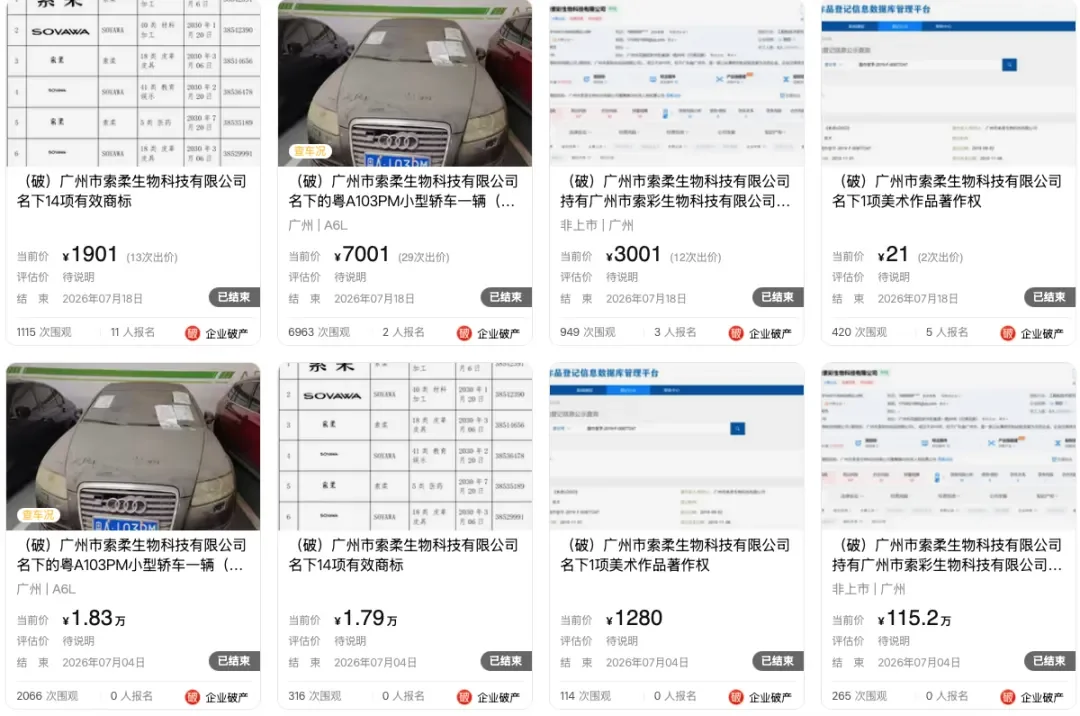
Suorou's liquidation highlights the dual nature of the market transformation: while in-house manufacturing eliminates low-end factories that merely operate equipment, high-tier OEMs equipped with technical expertise, strong R&D, and regulatory compliance infrastructure are gaining market share.
The Shift: Re-Evaluating OEM Value Beyond Mass Production
While under-equipped factories face accelerated exits, top-tier cosmetics contract manufacturers are reporting strong revenue growth.
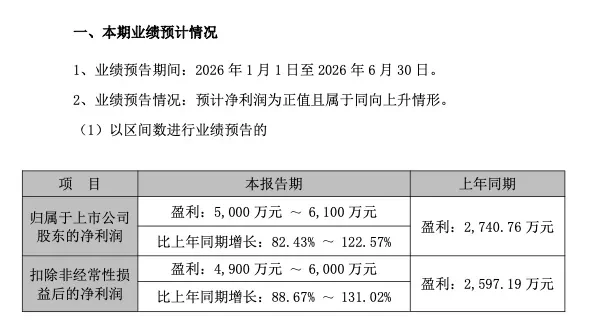
According to financial reports from parent company Qingsong Corp, Nox Bellcow—China's largest domestic cosmetics ODM by volume—recorded 2.211 billion yuan ($308.6 million) in revenue and 202 million yuan ($28.2 million) in net profit in 2025, representing a 134.23% year-over-year profit increase as gross margin recovered to 20.31%. Earnings guidance for the first half of 2026 estimates net profit between 50 million and 61 million yuan ($7 million to $8.5 million), up 82.43% to 122.57% year-over-year.
Similarly, global ODM leader Cosmax reported 2025 revenue of 632.7 billion South Korean won ($458 million / approximately 3.037 billion yuan) from its Chinese manufacturing operations.
This divergence between leading OEMs and struggling mid-to-small suppliers highlights three structural changes across the contract manufacturing sector:
- Evolving Client Base: From Mass Brands to Emerging Niche Players Historically, OEMs relied on major domestic brands and multinational beauty conglomerates. Today, client demand is diversifying. In Q1 2026 performance updates, Cosmax reported providing formulation, production, and packaging solutions for approximately 4,000 beauty clients across South Korea, China, Europe, the U.S., and Southeast Asia.
Many of these clients are indie brands that lack capital for proprietary factories or internal R&D teams, but require agile, small-batch manufacturing. Instead of high-volume runs of hundreds of thousands of units, these brands seek orders of 3,000 to 5,000 units alongside end-to-end support covering formulation design and regulatory filings. Cross-border e-commerce sellers are also leveraging top-tier OEMs for regulatory compliance and global supply chain fulfillment to expand into international markets.
-
Shift in Profit Models: From Contract Filling to Full-Service Solutions Basic contract filling offers limited client retention and subjects OEMs to continuous price competition. In response, leading contract manufacturers are expanding beyond basic production to offer turnkey services, including ingredient sourcing, formula development, regulatory filing assistance, clinical efficacy testing, and mass production. Under this model, brand clients supply product positioning and brand marketing, while the manufacturer handles product realization.
-
Transformation of Talent: From Factory Floor to R&D Labs The core competitive advantage for contract manufacturers has shifted from labor volume to lab capabilities. Cosmax allocates 6.5% of its annual sales revenue to R&D, employing over 300 dedicated research personnel. Nox Bellcow operates a 5,000-square-meter international-standard R&D center with over 180 research staff and 135 patents. Many leading OEMs now employ more R&D personnel than their brand-side clients, transitioning from contract executors to product developers.
The Accelerators: Regulatory Enforcement and Flexible Manufacturing
Beyond market forces, regulatory enforcement is driving supplier consolidation. China's Good Manufacturing Practice (GMP) guidelines for cosmetics—specifically the Key Inspection Points and Determination Principles for Cosmetic Production Quality Management (commonly known as the "105 Rules," implemented in December 2022)—have raised operating standards across the supply chain.
The regulations impose 81 inspection criteria on manufacturers, including three mandatory requirements: complete raw material traceability, full batch production records, and retained finished product samples. Non-compliance with any of these key points results in mandatory production suspension and rectification. Crucially, the guidelines establish brand owners as primary responsible parties for product quality, establishing 24 specific audit clauses and requiring brands to appoint dedicated quality safety managers and conduct quarterly factory inspections.
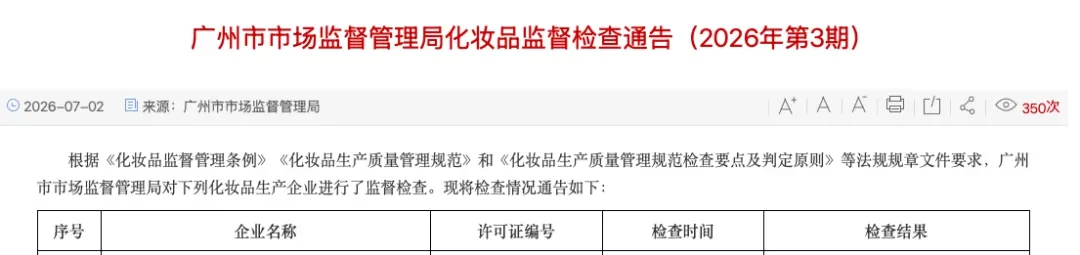
The impact of strict enforcement is visible across the manufacturing hub of Guangzhou. In July 2026, unannounced spot inspections by the Guangzhou Administration for Market Regulation (AMR) across 12 cosmetic manufacturers revealed that only three operated without compliance defects—a pass rate of 25%. According to the China Fragrance Beauty and Cosmetics Industry Association, 1,318 cosmetic manufacturers closed or canceled their registrations in 2024, followed by another 953 in the first half of 2025—a shakeout mirroring broader financial distress across legacy beauty producers, such as Shanghai Meilan's recent insolvency proceedings.
While regulatory pressure exits non-compliant players, leading OEMs are expanding their global capabilities. In February 2026, Cosmax acquired a 51% controlling stake in Italian ODM firm Keminova, establishing its first European production hub and completing a global R&D and manufacturing footprint spanning South Korea, China, the U.S., Southeast Asia, and Europe. Concurrently, global beauty major L'Oréal has deepened its partnership with Cosmax.
Multinational beauty groups continue to utilize external manufacturers alongside their own facilities because modern ODMs offer specialized cross-brand, cross-category formula innovation and operational flexibility that internal supply chains cannot always match.
As Chinese beauty brands move production in-house, high-tier contract manufacturers are maintaining growth by repositioning as technical partners and innovation hubs, redefining the contract manufacturing ecosystem across the global beauty industry.

Conversation
0 Comments