Sephora Launches in Israel Without Its Signature Third-Party Brands
Sephora is entering Israel with an exclusive Sephora Collection lineup, navigating complex distribution agreements and geopolitical sensitivities.

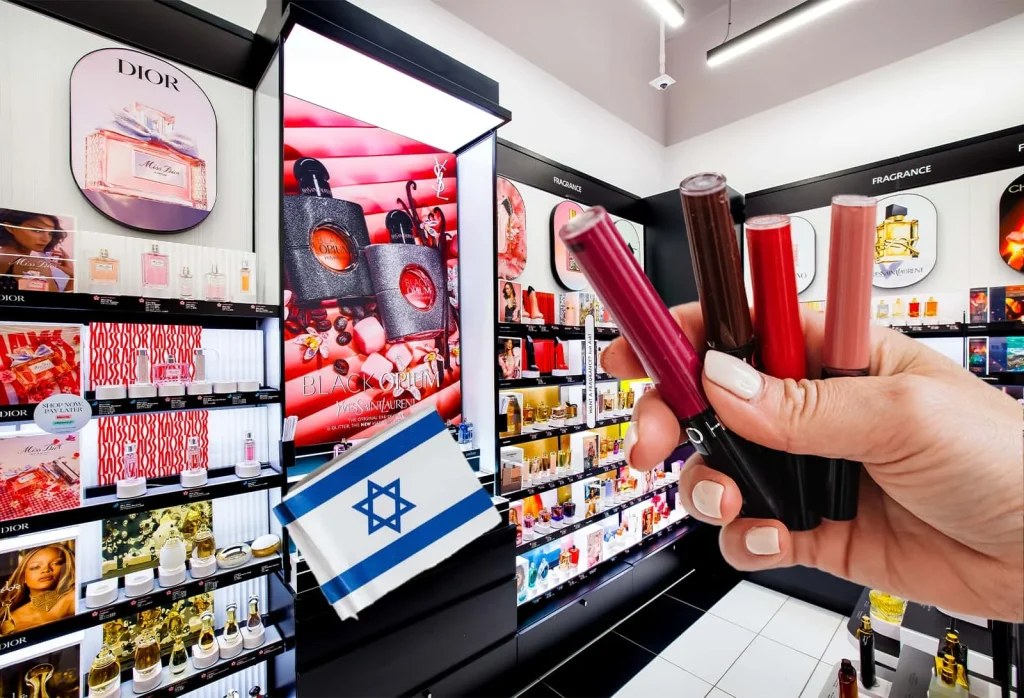
Sephora is preparing its first market entry into Israel, but the retailer’s arrival will look markedly different from the multi-brand beauty experience that has fueled its global expansion across markets including the UK, Mexico, and India in recent years.
The LVMH-owned beauty retailer will launch in Israel starting August 20, with Sephora Collection products available in dedicated pop-up boutiques within Azrieli malls as well as in Glam42 retail locations. Initial openings are planned for Tel Aviv, Ramat Gan, and Jerusalem, with additional stores to follow. Despite media speculation that Sephora is preparing standalone retail locations outside the Glam42 partnership, a Sephora spokesperson confirmed to BeautyMatter via email that “Sephora has no plans to open stores in Israel.”
For the initial rollout, Sephora’s assortment will be strictly limited to Sephora Collection products—the retailer’s private-label line spanning makeup, skincare, haircare, and beauty tools. Third-party brands that have become central to Sephora’s international store experience will not be available during this pilot stage. “The Sephora Collection brand has signed a one-off resale agreement with the retailer Glam42,” a spokesperson stated, noting that a limited selection of Sephora Collection products will soon be sold in select Glam42 stores.
This limited launch departs from the retailer’s core competitive advantage: its ability to aggregate many of the beauty industry’s most coveted prestige and indie brands under a single roof.
The strategy highlights broader questions for global retail expansion: How does a beauty giant navigate entry into a politically sensitive market when the external brands that normally drive its value proposition maintain their own distribution contracts, commercial priorities, and reputational risks?
Israel’s cosmetics market is expected to reach $408.5 million in 2026 and rise to $511.6 million by 2031, growing at a compound annual rate of 4.6%, according to market research firm Mordor Intelligence. The research attributes market growth and premiumization to high international travel exposure, strong social media engagement, and rising consumer demand for global prestige products.
Local beauty retailer Glam42 already carries luxury and prestige beauty names in Israel, including Dior, Armani, Prada, Gucci, Lancôme, Estée Lauder, and Kilian Paris, alongside niche fragrance houses. Partnering with Sephora provides Glam42 with the halo of one of the world's most recognizable retail identities, while offering Sephora an established local infrastructure and immediate access to Israeli consumers.
However, the initial exclusion of external brand partners creates a clear disconnect between Sephora’s local presence and the immersive marketplace experience consumers expect globally. Standard Sephora store floors serve as curated beauty destinations where established legacy houses sit alongside direct-to-consumer and celebrity-backed brands.
Without that multi-brand portfolio, Sephora Israel operates more as a standalone Sephora Collection concept than as the full-fledged beauty retail hub seen in major global markets like Paris, London, Dubai, or New York.
Where Are Sephora’s Biggest Brands?
The absence of third-party brands is particularly striking given how deeply Sephora’s international identity relies on cult-favorite names such as Huda Beauty, Rare Beauty, Charlotte Tilbury, and Fenty Beauty. However, their absence is not strictly a political decision. Complex distribution rights, import regulations, local compliance requirements, and brand-specific commercial strategies frequently dictate how and when a line enters a new market.
Selena Gomez’s Rare Beauty illustrates these operational complexities. While the brand is expanding its footprint in Israel through local pharmacy chain Be Pharm, those items are sourced via parallel imports rather than an official distribution contract. According to Israeli news outlet Ynet, Be Pharm acquired millions of shekels in Rare Beauty inventory ahead of launch to prevent stock shortages amid high local demand.
As a result, Rare Beauty can be physically present on store shelves in Israel without having an authorized retail partnership with Sephora Israel or official direct distribution in the country.
Similarly, Rihanna’s Fenty Beauty operates extensively across Middle Eastern Sephora locations—including the UAE, Bahrain, Qatar, and Kuwait—but its official distribution listing does not include Israel.
Charlotte Tilbury’s published retail roster also highlights partnerships with Sephora in major markets like the US, Canada, France, Germany, Italy, Poland, Singapore, Spain, Mexico, and the UK, yet contains no authorized retailer partnership in Israel.
These dynamics show that a global retailer entering a new market does not guarantee that its brand partners will automatically follow. Similar complexities around international distribution channels are taking place across other key retail corridors, such as when Dubai fragrance brands Ajmal and Kayali prepare for China market entry through general trade regulations.
Beauty Meets Geopolitics
Navigating cross-border retail has grown increasingly delicate following the October 7, 2023, Hamas attacks on Israel and the ongoing war in Gaza. Widespread consumer activism and boycott campaigns have placed corporate footprints, investments, and supply chains under heightened public scrutiny.
While food and beverage multinationals faced early pressures, beauty and fashion brands are increasingly monitored on social media. For beauty companies that rely heavily on brand values, community engagement, and social media loyalty, maintaining commercial ties in controversial regions carries significant reputational stakes.
Huda Kattan, founder of Huda Beauty, highlights how founder identity and brand reputation intersect. Kattan has publicly advocated for Palestine and frequently commented on the conflict. In 2025, TikTok removed a video in which Kattan promoted antisemitic conspiracy theories regarding historical events and the September 11 attacks, leading to widespread public backlash and calls for Sephora to drop the brand, though Sephora continues to stock Huda Beauty in other markets.
Operating across diverse global markets requires Sephora to balance localized retail strategies with complex founder dynamics and heightened consumer sensitivities.
The Growing Cost of Global Beauty
Sephora’s Israeli launch arrives amid an expansive global growth push. Operating more than 3,000 stores worldwide, the retailer relies on physical storefronts as primary discovery hubs, blending prestige labels, exclusive launches, personal services, and Sephora Collection products into an experiential store format.
Its entry into Israel tests the flexibility of that strategy. Debuting exclusively with Sephora Collection allows Sephora and Glam42 to test local demand, gather purchasing data, and build brand presence with minimal upfront exposure for third-party partners.
If the pilot succeeds, Sephora may gradually introduce third-party brand partners and transition toward its traditional multi-brand format. Which brands choose to join that rollout will serve as a key indicator of how global beauty companies weigh growth against political and brand risks in volatile international markets.
Conversation
0 Comments