
2026 iPDF Concludes with Surge in Global Buyers Targeting Chinese Beauty Suppliers
The 2026 iPDF exhibition highlighted a major shift in Chinese beauty exports, as suppliers move from low-cost manufacturing to highly localized formulations, compliance-first strategies, and advanced R&D.

The global expansion of Chinese beauty is entering a sophisticated new phase. No longer relying on simple traffic arbitrage or low-cost dumping, manufacturers and brands are building multi-dimensional competitive barriers through systemic capabilities, localized consumer insights, and technological innovation.
As regulatory landscapes in Southeast Asia shift rapidly, market entry barriers in the Americas rise, and TikTok Shop reshapes the consumer purchase journey, the old playbook of relying on cheap, unbranded exports is no longer viable.
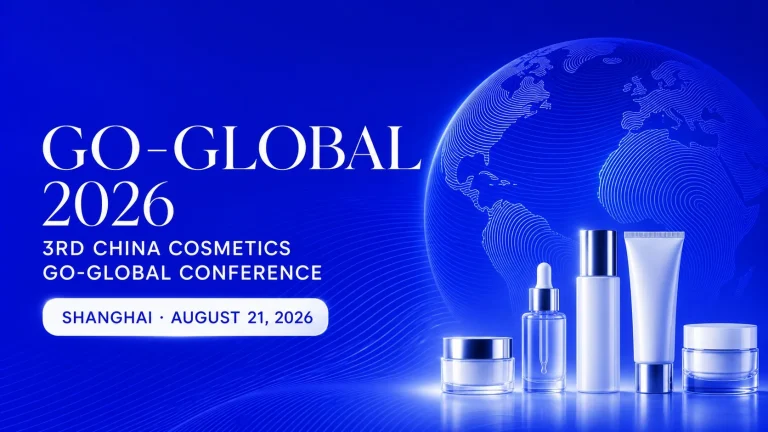
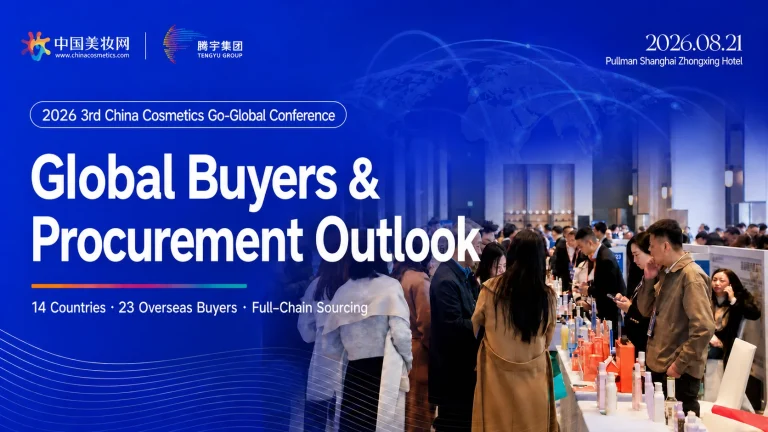
At the recently concluded 2026 iPDF (International Future Packaging Exhibition) and the concurrent 3rd Beauty Cross-Border Export Conference, the synergy between the exhibition floor and the forums was palpable. Featuring six specialized tracks, nearly 40 global supply chain experts, and dozens of cross-border exhibitors, the event mapped out the future trajectory of the global beauty supply chain.
Why It Matters
For international beauty brands, retailers, and sourcing executives, the evolution of Chinese manufacturing from passive contract manufacturing to proactive, localized innovation offers a new class of highly customized, compliance-ready partners. Understanding these shifting supply chain capabilities is crucial for maintaining a competitive edge in product development and speed-to-market.

Exhibitor Insights: A Surge in International Buyers
Walking the exhibition floor, China Cosmetics spoke with executives from over a dozen cross-border exhibitors. The consensus was clear: international buyer attendance has surged significantly this year.
"Compared to previous years, buyers this year are far more international, have clearer purchasing intent, and engage in much more direct, efficient negotiations," noted one exhibitor. This shift reflects a deeper transformation: Chinese beauty suppliers are moving from passive order-taking to proactive, market-specific adaptation.

Formulations Tailored to Regional Skin Types
Aobao, a leading manufacturer of capsule-based skincare, drew significant attention with its plant-based soft capsules, dual-chamber capsule oils, and cream-coated sheet masks. "We don't just copy-paste our domestic products for overseas markets; we reformulate specifically for each target region," explained Aobao's export director.
Similarly, Tengyu Group has developed a supramolecular coffee-infused skincare line targeting coffee-loving markets like Indonesia and Vietnam, focusing on anti-wrinkle, firming, and antioxidant benefits. For Western markets, Tengyu showcased mid-to-high-end color cosmetics featuring bold, high-shimmer formulations that align with current US and European trends. The strategy is no longer one-size-fits-all, but rather country-specific.

Localizing Production to Secure Regional Markets
Establishing local manufacturing is becoming a key trust-builder. Qiaomeiren has established production bases in Guangzhou, Shantou, and Indonesia, offering comprehensive OEM/ODM services across makeup, haircare, and skincare. According to a company representative, Qiaomeiren will leverage its Indonesian facility to serve the broader Southeast Asian market while simultaneously expanding its footprint in Russia and South America.
Meanwhile, Wanxi operates manufacturing bases in both Foshan and Singapore, complemented by an in-house packaging factory. This setup allows the company to offer global skincare brands a seamless, one-stop service from packaging design to formulation and production.

Scientific Breakthroughs Drive Tangible Results
Bavi showcased several advanced formulations at iPDF, including customized PDRN (polydeoxyribonucleotide) cellular repair solutions derived from salmon, plant, and probiotic sources. Bavi also highlighted its upgraded microfluidic technology, which creates double-layered, uniform active beads that melt upon contact with the skin to maximize absorption. These innovations drew strong interest from buyers representing South Korea, Pakistan, the US, and Europe.
According to a spokesperson from Quanxin, their bubble-forming wash-off masks have achieved consistent monthly reorders of 30,000 boxes from a single client in Cambodia, alongside stable demand from Thailand, Europe, and the US. Quanxin has also mastered the mass production of plant-based soft capsules, giving it a distinct competitive edge.

Liyanzhuang, which operates four production bases, reported robust demand from South American markets for its high-performance freeze-dried products, including freeze-dried powders, spheres, and masks. Additionally, Qingye reported that its toothpaste formulations have gained strong traction in the US market, attracting further interest from Pakistani buyers at the show.
Strategic Blueprints: Reshaping the Global Playbook
While the exhibition floor served as the showcase, the concurrent 3rd Beauty Cross-Border Export Conference functioned as the strategic war room. Over two days, industry leaders dissected global expansion across four critical pillars: compliance, localization, channels, and raw materials.
Compliance: The Ultimate Barrier to Entry
Data shows that Chinese cosmetics exports reached $7.82 billion in 2025, with the United States remaining the largest export market, followed closely by Southeast Asian nations such as Indonesia, Malaysia, the Philippines, and Thailand.
During the compliance forum, experts from Intertek provided a comprehensive breakdown of cosmetics regulations in major markets, including the US, Southeast Asia, South Korea, and Eurasia. Discussions spanned GMP risk management, international brand factory audits, and ESG compliance. The takeaway was clear: compliance is no longer just an operational cost; it is the essential passport to entering mature markets.

Deep Localization: Understanding the Local Consumer
The South Korea session highlighted the specific demands of K-Beauty buyers. In packaging, there is high demand for applicator-integrated containers, diverse cap designs, innovative dispensing mechanisms, and refillable, eco-friendly structures. On the supply chain side, Korean buyers prioritize OEM/ODM partners that offer low MOQs, custom mold development, rapid prototyping, and short lead times. Furthermore, packaging solutions utilizing ISCC-certified raw materials and high-quality PCR plastics are highly favored to meet strict environmental standards.
In Indonesia, packaging aesthetics lean toward soft, bright colors like pastel pink, light blue, cream yellow, and mint green, reflecting a gentle K-Beauty aesthetic. Incorporating local botanical elements—such as Bali- or Java-inspired themes, coconut, turmeric, and traditional herbs—helps build local trust. Designs should focus on freshness, natural positioning, ingredient transparency, and social media shareability rather than high-end luxury.
In the United States, consumer demand is highly fragmented across generations. While Gen Z gravitates toward clean, value-driven brands on social media, legacy brands in traditional retail are constantly forced to reinvent themselves. This dynamic is evident as industry observers watch whether Ulta Beauty can spark a turnaround for Bath & Body Works through new wholesale partnerships. US regulations also strictly differentiate between cosmetics and over-the-counter (OTC) drugs; products making therapeutic claims, such as sunscreens or anti-dandruff treatments, require dual compliance.

In Brazil, consumers place immense value on eco-friendly packaging, cruelty-free certifications, and corporate ESG initiatives. Local giant Natura, for instance, aims to use 30.1% recycled plastic across its portfolio by 2025. Brazilian consumers are highly price-sensitive—90% compare prices before purchasing, and 47% consider flexible payment options a decisive factor. There is also a booming demand for personalized skincare; local conglomerate Grupo Boticário has already introduced DNA-based customized skincare services.
Channels: Unlocking Social Commerce and Affiliate Networks
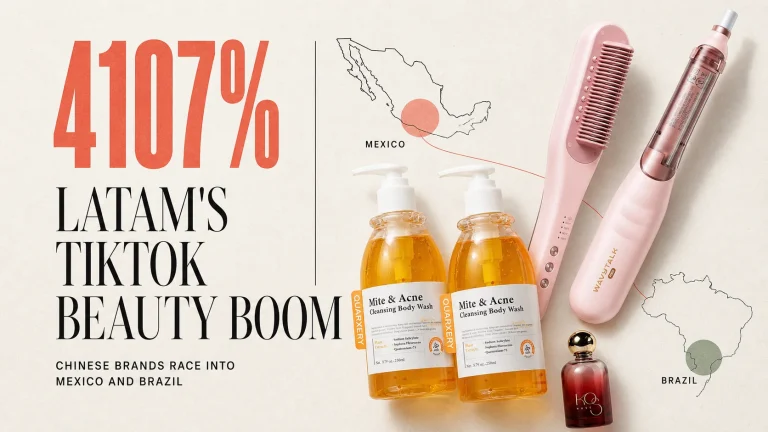
TikTok Shop has emerged as a critical channel for brands expanding globally, with influencer marketing serving as the primary engine for content-driven traffic. This strategy reflects broader social commerce shifts, where localized content drives massive engagement, much like how a hairstylist built a million-order TikTok Shop empire by leveraging community-focused livestreams.
Data shows that in the US, influencer-generated content drives 80% of TikTok Shop GMV, with traditional product listings accounting for just 20%. In Southeast Asia, influencer content drives 68% of sales, compared to 32% from standard product shelves. Building a robust creator affiliate network has officially become the core engine of cross-border e-commerce growth.

The TikTok Shop forum focused on practical strategies for building efficient creator networks and navigating the platform's evolving algorithm. Speakers also shared a case study of a Southeast Asian beauty brand that scaled from zero to over 80 million RMB ($11 million USD) in annual sales, providing a replicable roadmap for emerging brands.
Upstream Innovation: Patent-Backed Ingredients
Upstream scientific breakthrough is the ultimate foundation for global competitiveness. The raw materials forum spotlighted how Chinese ingredient suppliers are advancing their R&D to offer global value. Ah Gui, Chairman of China Cosmetics, emphasized that ingredient suppliers must patiently commit to international expansion rather than remaining content with domestic contract manufacturing or relying solely on imported raw materials.

For example, Jiayu Biotechnology showcased its proprietary black truffle vesicles sourced from the pristine ecosystem of the Gaoligong Mountains. Utilizing advanced delivery systems, the active ingredient is clinically proven to penetrate deep into the papillary dermis within 24 hours, verified via in vivo two-photon microscopic imaging.
Suppliers armed with proprietary patents and unique botanical resources are providing Chinese beauty with "chip-level" core competitiveness. Upstream upgrades do not just offer cost advantages; they allow suppliers to redefine product categories on the global stage.

Defining a New Global Standard
The three-day event may have concluded, but the strategic shifts and partnerships forged will have a lasting impact.
From the safety net of regulatory compliance to deep regional localization, and from TikTok's social commerce playbook to cutting-edge active ingredients, iPDF outlined a clear evolutionary path. Chinese beauty is no longer chasing temporary market loopholes; it is building long-term, multi-dimensional barriers through systemic capability and technological innovation.
As one exhibitor aptly summarized: "In the past, we chased the market. Today, we have the capability to dance with it." As Chinese supply chains, R&D, and brands forge deeper connections with global consumers, a new narrative for global beauty is being written.
Conversation
0 Comments