
L'Oréal Accelerates AI Investments in China with New Startup Deals
L'Oréal is accelerating its tech investments in China, backing AI software and robotics startups to turn the market into a global testing ground for innovation.
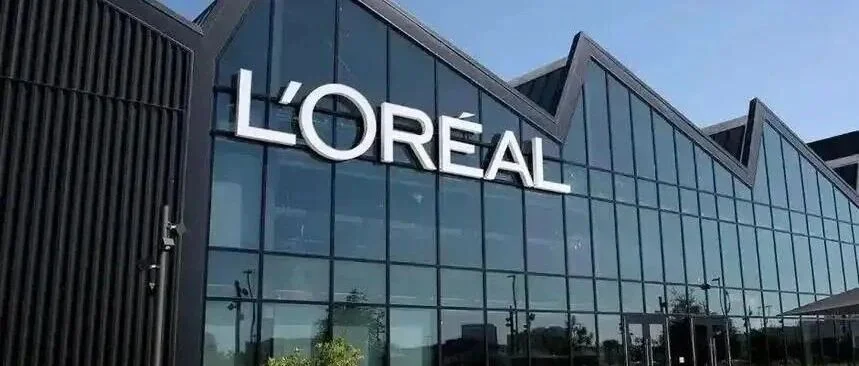
L'Oréal is rapidly expanding its technological footprint in China through a series of targeted venture capital investments. Most recently, the beauty giant's affiliated investment vehicle, Cathay Consumer Co-creation Fund, backed Shenzhen-based artificial intelligence software developer Lufei Intelligent Innovation Technology.
This transaction follows another major move by L'Oréal earlier this month. Another affiliated vehicle, the Tiantu Meili Linghang Fund, completed an exclusive, multi-million-dollar Series A++ funding round for Shenzhen Deyi Medical Technology, a developer of AI-powered healthcare and embodied robotics.
From AI software to physical robotics, L'Oréal's consecutive moves in the tech sector highlight a clear, fast-paced strategy. While these investments target cutting-edge technology outside traditional cosmetics, they represent a broader effort by the century-old beauty giant to build a robust technological moat.
Why It Matters: For the global beauty industry, L'Oréal's aggressive venture activity in China reveals a blueprint where the Chinese market serves as a high-speed testing ground. Technologies incubated here—ranging from AI-driven consumer tools to advanced robotics—are designed to eventually scale globally, transforming everything from retail experiences to supply chain operations.
Lufei Intelligent: The AI Newcomer Catching L'Oréal's Eye
According to public business registration records, the Cathay Consumer Co-creation Fund recently acquired a 7.89% stake in Lufei Intelligent, becoming its fifth-largest shareholder.
Established in 2021, the Cathay Consumer Co-creation Fund is a specialized investment vehicle co-founded by Cathay Capital alongside luxury group Kering, L'Oréal Group, and spirits giant Pernod Ricard. The fund's primary mandate is to incubate and invest in early-stage Chinese startups from seed stage to Series A.
Currently, the fund has 11 limited partners. Its largest shareholder, holding a 28.2% stake, is Guangzhou L'Oréal Buyco Network Technology, L'Oréal's dedicated e-commerce operations hub in China, which is fully owned by L'Oréal China.
Lufei Intelligent, founded in December 2024, initially focused on AI applications, basic software development, and internet security services. However, the startup's core product is a blend of hardware and software: an "Electric Booster" kit that can be mounted on standard bicycles to convert them into e-bikes. Targeting urban commuters and recreational riders in North American and European markets, the product offers a lightweight, highly compatible solution.
Led by a young team of entrepreneurs, many of whom have backgrounds at tech giants like Huawei and BYD, Lufei Intelligent has academic roots in institutions such as Hong Kong University and the Harbin Institute of Technology. Prior to L'Oréal's investment, the startup completed two angel rounds backed by Pinehills Capital, Chuxin Capital, and the Shenzhen InnoX Academy—an incubator founded by DJI co-founder and robotics pioneer Professor Li Zexiang.
L'Oréal's entry into Lufei Intelligent's capitalization table aligns with its broader interest in leveraging advanced AI software capabilities to optimize digital operations and consumer touchpoints.
L'Oréal China Goes All-In on AI
A closer look at L'Oréal's investment trajectory in China reveals a steady shift toward deep tech, with AI now taking center stage. This push comes as L’Oréal’s global sales continue to climb on strong demand across its diverse portfolio, allowing the company to reinvest heavily in future-facing technologies.
At a recent strategic summit, Zhao Feng, Chief Information Officer of L'Oréal North Asia & China, outlined the company's tech evolution over the last six years. The strategy progressed through three distinct phases: digital transformation, data acceleration (focused on large-scale data governance), and finally, AI empowerment.
According to Zhao, data is the "fuel" for AI. Having accumulated massive data assets during the first two phases, L'Oréal is now positioned to deploy intelligent platforms and applications smoothly. She noted that China is currently at the forefront of AI application, with new consumer scenarios emerging almost monthly, making the market an ideal global testing ground for the group.
This rapid adoption is driven by consumer behavior. Vincent Boinay, President of L'Oréal North Asia and CEO of L'Oréal China, previously revealed that over 70% of Chinese consumers use AI tools to gather information or seek recommendations before purchasing beauty products, heavily influencing their buying decisions. This digital-first environment is why Chinese beauty brands are increasingly turning to AI to accelerate product innovation, forcing global players to keep pace.
L'Oréal's investment strategy reflects this reality. Its tech investments target direct AI applications, while its ecosystem investments focus on expanding the boundaries of "AI+" technologies. Meanwhile, its operational investments are directed toward building smart fulfillment centers and enhancing e-commerce capabilities.
L'Oréal's investment pace has accelerated significantly. Its recent backing of Deyi Medical highlights this trend. Deyi Medical specializes in combining traditional Chinese medicine (TCM) physical therapies with AI, collaborative robotic arms, and 3D vision. Its product lineup includes AI-powered massage and moxibustion robots, as well as diagnostic devices equipped with proprietary AI systems and multi-sensor arrays. These products are deployed across hospitals, wellness centers, and beauty salon chains.
Additionally, L'Oréal's Cathay-backed fund invested in Future Light Core, an outdoor projection technology company founded by the former COO of the men's personal care brand Liran. The startup focuses on high-performance optical engines that integrate AI with situational outdoor experiences.
To support this strategic pivot, L'Oréal China recently appointed Huang Bingrong as its first-ever Chief Growth Officer. Huang, who also serves as General Manager of L'Oréal Buyco, is tasked with leading the company's AI transformation. She noted that placing AI transformation under the Chief Growth Officer portfolio means focusing not just on quantitative sales growth, but on building long-term organizational capability.
Ultimately, L'Oréal's Chinese AI initiatives are designed for global export. Successful pilots developed by the China team are packaged and shared with the global headquarters in Paris. Two major innovations have already made this journey: an AI-powered creative content tool developed in China that is now being tested globally, and the AirLight Pro infrared hair dryer, co-developed with Chinese tech startup Zuvi, which has transitioned from Chinese manufacturing facilities to retail shelves worldwide.
Conversation
0 Comments