
Which Beauty Mergers Actually Work After the Lauder-Puig Collapse?
As the Lauder-Puig collapse exposes the risks of complex megamergers, beauty experts outline which consolidation strategies actually drive value.
Which Beauty Mergers Actually Make Sense After the Lauder-Puig Collapse?
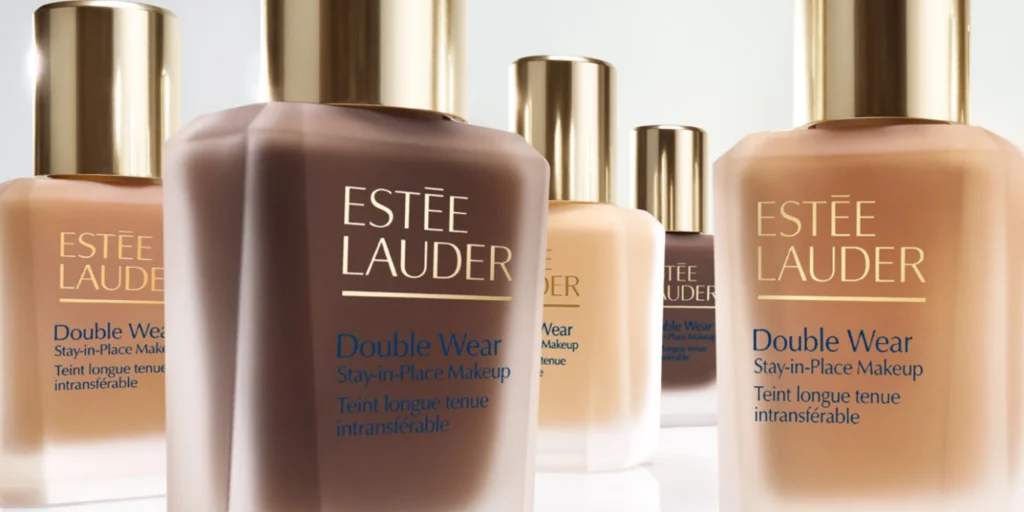
The proposed marriage between Estée Lauder and Puig collapsed in May before it was ever finalized. Since the deal fell through, Lauder’s shares have climbed roughly 4%, while Puig’s shares have slipped more than 4%.
The collapse underscored a blunt reality: a merger that looked perfect on paper—giving Lauder enviable fragrance assets and Puig massive scale—quickly unraveled under the weight of integration complexities. Beyond the finger-pointing over Charlotte Tilbury’s contract negotiations and valuation disputes, the transaction ultimately proved too messy for investors. Instead of portfolio clarity and corporate discipline, Wall Street saw a clash of family-controlled dynasties and the prospect of prolonged post-merger integration pain.
This $40 billion collapse stands in stark contrast to L’Oréal’s recent transaction with Kering Beauté. L’Oréal opted for a highly structured asset purchase and licensing agreement that preserved strategic focus for both parties. While it is too early to tell if L’Oréal will fully maximize the value of these newly acquired brands and licenses, the French beauty giant has continued to deliver robust operating performance since the deal was announced in October.
Meanwhile, Kenvue’s tie-up with Kimberly-Clark is reshaping the personal care landscape under very different dynamics. The $48.7 billion deal hands Kimberly-Clark—the paper-goods giant behind Kleenex and Huggies—a massive foothold in consumer health and personal care via Kenvue’s powerhouse portfolio, which includes Aveeno, Listerine, and Neutrogena, which is actively rebuilding for the Gen Z skincare era. Although shareholders greenlit the transaction in January, investor sentiment remains split. Kenvue shares have enjoyed a takeover premium, while Kimberly-Clark has faced pressure over the heavy debt load required to finance the deal, integration risks, and ongoing Tylenol-related litigation.
Against the backdrop of the failed Lauder-Puig union, we wanted to explore which types of beauty mergers are actually viable when strategic logic alone is no longer enough to close a deal. We asked seven prominent investors, consultants, and industry experts: Are there specific beauty or wellness companies that would be stronger together? What makes a merger viable in today’s macroeconomic climate?
Tina Bou-Saba — Founder, CXT Investments

The proposed Estée Lauder-Puig merger was particularly concerning to public market investors for several reasons. First, corporate mergers are notoriously difficult to execute under the best of circumstances—and even more so when they involve two family-controlled dynasties. In my view, and that of many investors, this was a recipe for friction, regardless of any theoretical strategic benefits that require absolute alignment to realize.
Second, Estée Lauder has been working overtime to sell Wall Street on its ongoing profit recovery plan, led by a fresh executive team. That plan did not involve a massive merger with a direct competitor. The sudden pivot raised serious credibility questions for management, especially after they had spent months convincing the market of their standalone growth and margin-expansion strategy.
The sudden shift made leadership look undisciplined and distracted. Furthermore, Estée Lauder still faces deep structural challenges: its exposure to the China market, heavy reliance on struggling U.S. department stores, a historically slow transition to e-commerce, and a clear need to prune its existing brand portfolio. Merging with Puig would not have solved any of these issues; if anything, it would have added integration headaches. The company needs to get its own house in order first.
By contrast, L’Oréal’s acquisition of Kering Beauté raised no such governance red flags and aligned perfectly with its well-established, market-approved strategy. While L’Oréal paid a hefty $4.6 billion for Kering’s beauty division, that figure is relatively minor compared to its massive $240 billion-plus market cap. This is a far cry from Estée Lauder and Puig, which are much closer in scale.
The Lauder-Puig deal would have been a complex merger of equals, whereas the L’Oréal-Kering transaction was a straightforward acquisition—sizable, yes, but entirely within L’Oréal’s core playbook. M&A is central to L’Oréal’s business model, and the market trusts management to execute it, even at a multibillion-dollar scale.
While the Lauder-Puig deal had its own unique challenges, the market generally rewards scale and diversification in the consumer sector. However, investors have zero appetite for complexity, distraction, and margin dilution.
To that end, Estée Lauder should continue to pursue acquisitions, but focus on those that offer genuine diversification across geographies, channels, and categories. I could see them eventually expanding into the "masstige" beauty and wellness space. This would provide broader diversification and unlock volume-scale opportunities that are hard to achieve in prestige beauty alone, especially at a time when some beauty investors are passing on prestige skincare entirely. A brand like e.l.f. Beauty, for example, would make a highly compelling target.
Beyond these massive public corporations, there are plenty of mid-sized beauty and wellness brands that would be far stronger together. Given today’s tough operating environment—where rising costs across the board make margin leverage and organic growth incredibly difficult—the market is ripe for a major wave of consolidation.
Brands with over $100 million in sales and healthy profit margins can form holding companies to acquire smaller, high-growth brands—a strategy currently being executed by Mammoth Brands. Once these companies scale past $500 million in sales with strong profitability, going public becomes an option, though not a necessity for success. Much depends on their capital structure and broader growth strategy.
Zooming out, growth through acquisition remains a proven playbook in the consumer sector. Wall Street understands this model and can easily evaluate a management team’s track record of integrating new brands. On the other hand, true mergers of equals often make investors nervous, and historical data is mixed on whether they actually create long-term shareholder value. For industry giants like Estée Lauder, the focus should remain on acquisitions that align with core growth priorities, enhance portfolio diversification, and are immediately margin-accretive.
Wendy Salisko — Co-Founder, WADE

Salisko points out that scale is no longer the ultimate moat. "The companies winning today are those closest to their consumers, with the operational discipline to act on those insights. When evaluating which players would actually be stronger together, I don't look at portfolio gaps. It’s about who shares a consumer thesis, who has compatible economics, and who can unite without diluting the very qualities that made them valuable in the first place."
With that lens, Salisko is closely watching Unilever's wellness play. "They just acquired Grüns. They already own Nutrafol, SmartyPants, and Olly, and they are reportedly weighing a bid for Thorne at up to $4 billion. If they secure it, they will have clinical credibility, supplement scale, and the infrastructure to connect skin health, hair health, and ingestible wellness under a single consumer profile."
This aligns with shifting consumer habits. "The consumer is already shopping this way, buying retinol and adaptogens with the same wellness mindset. The company that successfully builds a credible bridge between topical skincare and ingestible wellness will own a category that doesn't fully exist yet. That is the core thesis."
It also taps into the macroeconomic shift driven by GLP-1 weight-loss medications, which much of the M&A chatter overlooks. "These consumers are dealing with rapid weight loss and its visible side effects, and they are reallocating their spending from groceries and alcohol into beauty, wellness, and fitness."
"This is no longer a niche trend; it’s a structural demand shift spanning skincare, supplements, haircare, and aesthetics simultaneously," Salisko adds. "A portfolio combining Thorne, Nutrafol, and Grüns addresses the GLP-1 consumer across multiple touchpoints. No one else has that combination under one roof. For founders building at the intersection of skin health, ingestible wellness, and clinical credibility, this is a massive window of opportunity."
Conversely, Salisko views Coty as the most exposed mid-tier player in prestige beauty, with the clock ticking. "Meanwhile, although there were rumors of divestment, Estée Lauder called off its brand sell-off and pivoted to restructuring Too Faced, Smashbox, and Dr. Jart+," Salisko notes. "It’s clear these brands don't need a larger corporate parent. They need sharper focus, cleaned-up distribution, and a compelling reason to exist that consumers actually believe."
While Western giants focus on consolidating and divesting, an entirely different competitive force is carving out its own path. "K-Beauty is no longer just a trend sitting inside someone else's retail assortment; it is building its own infrastructure. Olive Young opened its first U.S. store last month with 400 brands, alongside a Sephora partnership spanning North America and Asia."
"The right play here isn't for a conglomerate to acquire a K-Beauty brand and slot it into a legacy system," Salisko notes. "It’s a partnership model where the Korean brand retains its innovation engine, while the Western partner provides distribution scale and margin architecture."
Ultimately, what makes a merger viable today is straightforward. "Can both sides clearly identify the capability the other brings that they cannot build themselves, and can they integrate it without breaking what already works? If either side is using a deal to avoid doing their own foundational work, the market will see right through it. We just watched that play out in real time."
Lindy Firstenberg — Director, Beauty, Health and Wellness, AlixPartners

To foster a healthier beauty ecosystem, Firstenberg believes the market needs smaller players to scale. "We need scaled players to unite and form nouveaux strategics, and we need mid-sized players to start challenging the industry giants. But above all, these players need diversification. Look at L'Oréal, Unilever, Procter & Gamble, Kimberly-Clark, and Henkel—they are all highly diversified. On the flip side, we see an undiversified Coty selling off its mass business, and Shiseido similarly struggling to right the ship.
We don’t need to create more "whale" strategics through massive, unwieldy M&A deals. Instead, the industry needs more viable, mid-sized, and modern strategics equipped with robust operations, category diversification, and international expansion capabilities. Only then will we build a resilient market that generates real value for both companies and consumers.
This concept is even more critical in the VMS (vitamins, minerals, and supplements) sector of beauty, health, and wellness. The top 10 VMS conglomerates hold a combined market share of less than 25%. The level of fragmentation is staggering.
When paired with immense consumer tailwinds, this fragmentation presents a massive opportunity. Private label is flatlining or losing share, while brand equity drives growth. E-commerce is up 12% year-over-year, and practitioner-channel sales have grown by 7%. Additionally, a powerful direct-to-consumer (DTC) shift in this category is steadily stripping power away from traditional retail.
Ultimately, this highlights the need for smaller, agile platforms. The first step is identifying the "danger zones" of scaling a modern strategic into a viable mid-sized player. The market is full of cautionary tales—like Waldencast and Orveon—showing why certain roll-up strategies faltered. Now, many are watching to see how e.l.f. Beauty navigates these same growth hurdles. Cracking this formula will unlock significantly more collective value for the market.
Rich Gersten — Co-Founder and Managing Partner, True Beauty Ventures

That is why the L'Oréal and Kering Beauté transaction was viewed so differently. Rather than combining two massive organizations, the deal placed beauty assets with an owner that has world-class expertise in building and scaling global beauty brands, while allowing Kering to sharpen its focus on luxury fashion. Both companies emerged with clearer strategic priorities.
The proposed Estée Lauder and Puig combination was a different story. While the industrial logic was compelling, investors quickly focused on the integration risks. Bringing together two large, family-influenced organizations with distinct cultures, governance structures, and strategic priorities introduced a level of complexity that overshadowed the strategic benefits.
Looking ahead, I believe the most successful beauty transactions will simplify businesses rather than complicate them. The strongest deals will place brands with owners who possess a genuine competitive advantage in operating them—whether through category expertise, distribution power, or brand-building prowess.
These transactions create value because they sharpen strategic focus, not simply because they build a larger company. Investors are increasingly rewarding deals where both businesses emerge stronger than they were before. That is a much more compelling value-creation story than scale for scale's sake.
Vincenzo Carrara — Founding and Managing Partner, Carrara Advisory

The failed Estée Lauder and Puig discussions highlight this exact challenge. While the strategic rationale was understandable, the complexity of integration, cultural differences, return expectations, governance, and execution risks ultimately outweighed the benefits. In contrast, more structured transactions that preserve strategic clarity for both parties may prove much easier to execute.
What I find particularly interesting is that the most compelling future combinations may not be between two traditional beauty companies at all. Consumers are increasingly blurring the boundaries between beauty, wellness, longevity, and health. They aren't shopping by category; they are looking for outcomes.
This shift creates unique opportunities for partnerships between beauty brands, wellness platforms, longevity services, hospitality concepts, and even healthcare-adjacent businesses. A longevity clinic, a wellness retreat, and a beauty brand may ultimately share more strategic overlap than two traditional beauty companies competing for the exact same consumer.
The same dynamic is playing out upstream. I expect to see increasing consolidation among CDMOs, laboratories, and manufacturing partners. Brands are looking for partners that can support beauty, supplements, medical wellness, and adjacent categories through a single integrated platform, rather than a fragmented network of suppliers.
The mergers most likely to succeed will therefore be those that solve complexity rather than create it. Companies that help consumers navigate increasingly interconnected beauty, wellness, and health journeys through a coherent ecosystem will ultimately create far more value than those simply assembling larger brand portfolios.
ALEXIS AMANN — Founder, Playbook of Beauty

Financial markets demand focus and operational discipline. Consequently, mega-mergers between giant beauty conglomerates are becoming increasingly rare due to financial constraints, governance hurdles, overlapping brand portfolios, clashing corporate cultures, and high execution risks. Instead, mergers driven by complementary capabilities—those that fill a genuine gap in technical expertise or market access—are far more likely to succeed than simple portfolio roll-ups that merely stack brands together.
For instance, Coty’s mass color cosmetics portfolio might hold little appeal for a beauty group focused on premiumization, but it could offer immense strategic value to a major retailer looking to bring product development and manufacturing in-house.
Another viable play is the acquisition of smaller Korean beauty companies by Western players. K-Beauty brands have mastered formulation and innovation capabilities that many Western majors still struggle to replicate. Pairing a Western giant's global distribution network with a robust Korean R&D pipeline could unlock significant value.
Valerie Evans — Principal, Five Seasons Ventures

Several categories—particularly in wellness—address urgent consumer needs but struggle to scale to the size typically required for a lucrative M&A exit. Women's health is a prime example. Despite strong underlying demand, rising investment, and rapid innovation, founders in this space face systemic hurdles beyond their control.
Strict marketing restrictions, including shadow bans and bans on using anatomically accurate terminology, combined with the historical difficulty of scaling through traditional retail (though some retailers are beginning to bridge this gap), make efficient growth far harder than in adjacent categories. These friction points make a compelling case for consolidation, particularly as a way to reduce dilutive early-stage funding rounds.
By merging complementary businesses, brands can unlock marketing efficiencies, pool team resources, build stronger retail partnerships, and achieve the scale required to become attractive acquisition targets much faster than they would on their own.
More broadly, I am watching the potential convergence of consumer brands and consumer health. The Kimberly-Clark and Kenvue transaction will be a critical bellwether. A decade ago, many pharmaceutical giants divested their over-the-counter (OTC) divisions because they operated under different margin profiles, R&D requirements, and commercial models.
Today, as consumer health products become increasingly science-backed, those boundaries are blurring once again. It remains to be seen whether consumer health will consolidate within specialized players, or if conglomerates like Unilever will aggressively expand into OTC and clinically proven wellness categories.


Conversation
0 Comments