
China Cosmetics Retail Marks 12 Months of Growth as Brands Prioritize Profit
China's cosmetics retail grew for a 12th straight month in June, as beauty brands pivot from high-cost livestreaming back to profitable shelf e-commerce.
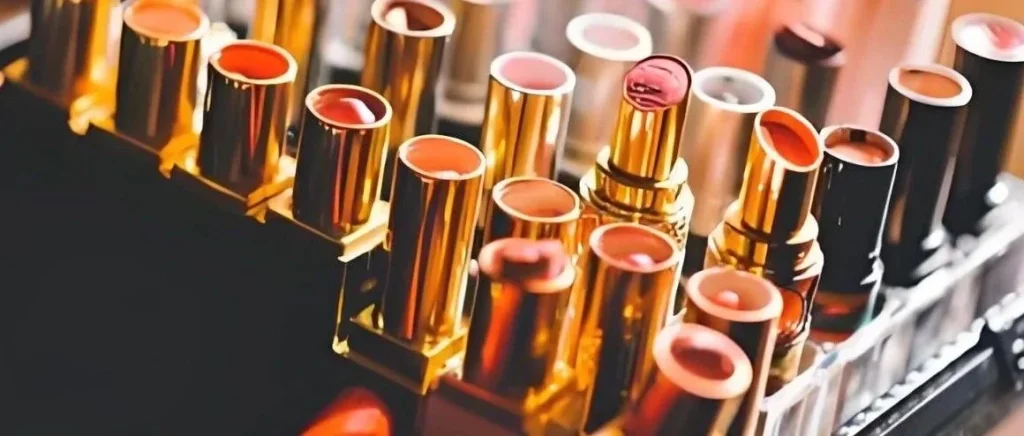
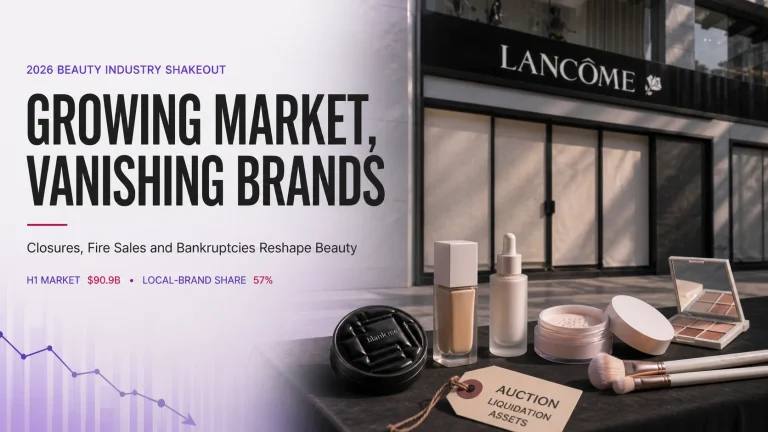
On July 15, China's National Bureau of Statistics released its latest retail sales data, revealing that cosmetics retail sales in June surged 12.6% year-over-year. This performance significantly outpaced the broader retail sector's modest 1% growth. Notably, this marks the 12th consecutive month of positive growth for the cosmetics sector since July of last year.

Additionally, cosmetics retail sales for major retail enterprises (those with annual revenues above designated thresholds) reached a historic high of 244.5 billion yuan (approximately $33.7 billion USD) in the first half of the year. The 6.3% year-over-year growth rate represents the second-highest first-half growth in the past five years, trailing only the post-pandemic rebound in the first half of 2023. More importantly, the underlying growth engine of China's beauty industry is undergoing a fundamental shift.

From "Traffic is King" to Profit-Centricity
During the golden era of e-commerce expansion, beauty brands operated under a "traffic is king" playbook, where success was measured almost entirely by Gross Merchandise Volume (GMV). Today, however, skyrocketing online customer acquisition costs have made this high-burn model unsustainable, often leading to a scenario where brands "sell more but lose more."
Of the 16 publicly traded Chinese beauty companies, nine saw their net profit margins decline in 2025, experiencing revenue growth without a corresponding rise in profits. Some even slipped into the red. For instance, personal care company Lafang China reported a net loss of 31.15 million yuan ($4.3 million USD) in 2025, compared to a net profit of 41.37 million yuan in 2024. The primary culprit was aggressive spending on online channels; although online revenue grew 4.7%, the heavy marketing spend severely eroded the company's bottom line.
While public companies with stronger brand equity and diversified channels can weather the storm, "white-label" (unbranded or generic) players that rely solely on traffic-buying tactics are facing an existential crisis. According to third-party data, not a single white-label brand made the top 20 beauty sales ranking on Douyin (TikTok's Chinese sister app) in 2025, compared to two in 2024. Under the weight of soaring traffic costs, many once-viral generic brands have either faded away or pivoted toward traditional brand-building.
While established players are pulling back from pure traffic plays, new celebrity-backed ventures continue to test the waters. For example, actress Zhao Lusi recently launched her niche beauty brand ROSE AMIGO across major Chinese social platforms, including Douyin and Xiaohongshu (a popular lifestyle and shopping platform), aiming to leverage her massive personal fan base directly.
Faced with these rising costs, major beauty corporations are actively abandoning the traffic-first mindset. In its 2025 semi-annual report, hyaluronic acid giant Bloomage Biotech explicitly stated that it is moving away from its previous reliance on paid traffic and heavy promotional discounts, shifting instead to science-backed brand communication. The strategy is paying off: in the first half of this year, the company achieved a stellar 67.6% surge in net profit.
This profit-first mentality was highly visible during the recent 618 mid-year shopping festival, where brands realized that sustainable profitability is the only healthy path forward. An industry report, "2026 618 Festival Expert Minutes," revealed that over 70% of surveyed beauty brands ranked net profit margin—rather than GMV—as their primary KPI for the festival. Metrics like repeat purchase rates, premium pricing power on new products, and channel ROI have officially replaced raw sales volume as the core standards for evaluating channel value.
Against this backdrop of disciplined spending, the 12.6% retail growth in June is particularly impressive, reflecting genuine consumer demand rather than artificial, discount-driven inflation.
Re-embracing Shelf E-Commerce
In tandem with this profit drive, beauty brands are increasingly returning to traditional "shelf e-commerce" platforms like Alibaba's Tmall and JD.com.
According to third-party data, Tmall Beauty's GMV reached 73.68 billion yuan ($10.1 billion USD) in the first half of 2026, up 5% year-over-year. While modest, this represents Tmall Beauty's return to positive growth after four consecutive years of stagnation or decline (the platform saw declines of around 10% in the first halves of both 2024 and 2025).
This shift back to traditional platforms and master distribution models is also reshaping the fortunes of major e-commerce players. For instance, Lily&Beauty recently bounced back to profitability by pivoting to act as a master distributor for overseas brands alongside its traditional retail operations.
The primary driver behind this strategic pivot back to shelf e-commerce is profitability. A recent prospectus from the parent company of skincare brand Vetheria highlights the stark contrast: in the first half of 2025, the company spent 18.82 million yuan on livestream commerce marketing to generate 30.46 million yuan in sales—a staggering marketing expense ratio of 61.8%. In contrast, its Tmall operations required just 2.13 million yuan in marketing spend to generate 7.47 million yuan in sales, resulting in an expense ratio of only 28.5% and a far superior ROI.

The difficulty of turning a profit on livestreaming stems from the fading of the channel's early traffic dividends. In the first half of this year, Douyin Beauty recorded a GMV of 150.34 billion yuan, surpassing the combined GMV of Tmall and Taobao to become China's largest beauty retail channel. However, Douyin's growth rate slowed to 14.5%, down nearly 10 percentage points from the 24.1% recorded in the same period last year, continuing a multi-year deceleration.
As livestream platforms transition out of their hyper-growth phases, traffic costs have naturally climbed. Merchants report that the cost per mille (CPM) for Douyin livestream rooms reached 80 yuan in 2025—a 300% increase from 2022—while conversion rates plummeted from 5% to just 1.2%.
At the same time, top-tier livestream influencers are demanding higher commissions. Zhou Yan, founder of beauty brand Oplay, noted at an industry forum: "In 2024, a 40% commission rate for influencer livestreams was standard. By 2025, that baseline jumped to nearly 60%."
Compounding the issue is the notoriously high return rate associated with impulse buying in livestreams. Industry data shows that return rates for livestream purchases start at a baseline of 50% (and can exceed 90% in apparel). In contrast, traditional shelf e-commerce maintains a much healthier return rate of 12% to 22%, with beauty products sitting at the lower end of that spectrum. High return rates not only inflate logistics and inventory losses but also drag down the actual conversion rate, severely damaging profitability.
Furthermore, shelf e-commerce offers significantly higher customer loyalty. The "2026 618 Festival Expert Minutes" report indicated that Tmall member repeat purchase rates hover between 38% and 45%, and can exceed 50% in high-engagement categories like beauty and wellness.
As China's e-commerce landscape enters a mature, zero-sum phase, beauty brands are prioritizing stability, control, and sustainable margins over raw volume. As one industry insider summarized: "Compared to live commerce, shelf e-commerce is where you actually build a brand."
Conversation
0 Comments