
Henkel Completes $1.4 Billion Acquisition of Olaplex
Henkel has finalized its $1.4 billion acquisition of Olaplex, taking the haircare pioneer private as the German giant builds a professional salon empire.
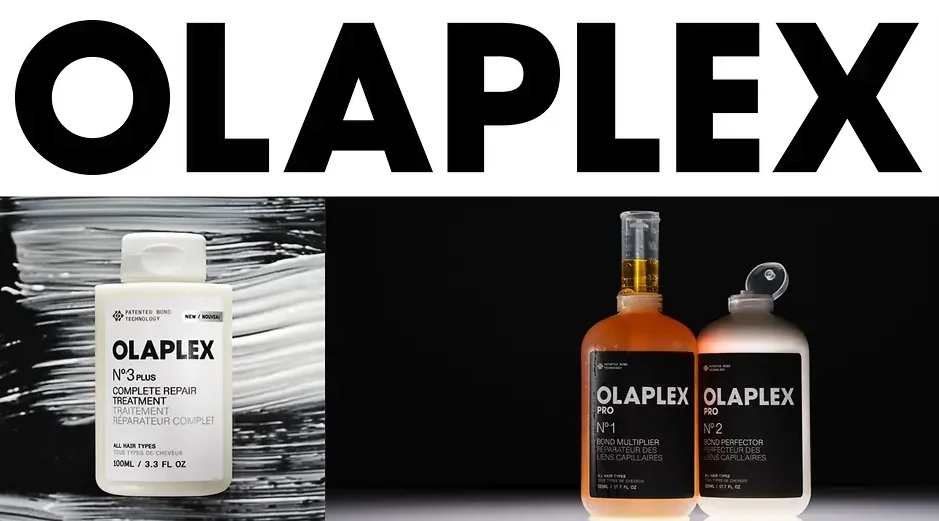
German consumer goods giant Henkel has officially completed its acquisition of premium American haircare brand Olaplex. Under the terms of the deal, Henkel acquired all outstanding shares of Olaplex for $2.06 per share in cash, representing a total transaction value of approximately $1.4 billion.

With the transaction finalized, Olaplex has been delisted from the Nasdaq, ending its nearly five-year run as a public company since its high-profile initial public offering (IPO) in September 2021.
This acquisition marks Henkel’s fourth major haircare transaction in the past three years. By integrating Olaplex, Henkel fills a long-standing gap in its premium professional haircare portfolio, elevating the German conglomerate to the number-two position globally in the professional haircare market.
Why it matters: For the global beauty industry, Olaplex's transition from a high-flying Wall Street darling to a consolidated brand under Henkel highlights the intense pressure on independent, single-category brands to scale. It also underscores Henkel's aggressive strategy to challenge dominant players in the professional salon channel.
From Garage Startup to Market Peak: The Rise and Fall of Olaplex
The $1.4 billion valuation reflects Olaplex’s enduring brand equity in the prestige haircare sector, despite its recent financial struggles.
Founded in 2014 in a Santa Barbara, California garage by Dean and Darcy Christal, alongside chemists Dr. Eric Pressly and Dr. Craig Hawker, Olaplex sought to disrupt the haircare market through scientific innovation. They developed a patented technology that works at the molecular level to identify and reconnect disulfide bonds broken during chemical bleaching and coloring. This "Complete Bond Technology" shifted haircare from superficial surface coating to internal structural repair.
In 2016, Olaplex launched its first product, Bond Multiplier No. 1, as a salon-exclusive treatment. The response from the professional community was immediate and overwhelming. Thanks to its instant, visible restorative effects, hairstylists dubbed the formula "liquid gold." Olaplex built a highly loyal professional community, relying on organic stylist recommendations rather than traditional advertising to fuel its early growth.

This rapid, grassroots success quickly caught the attention of private equity. In November 2019, Advent International acquired a majority stake in Olaplex at a valuation of approximately $1 billion.
Two years later, in September 2021, Olaplex went public on the Nasdaq. Priced at $21 per share, the stock surged to $24.50 on its first day of trading, pushing its market capitalization past $15.8 billion. It was one of the largest beauty IPOs of the year, with Wall Street hailing Olaplex as the "next Estée Lauder."
However, the post-IPO peak was short-lived. In late 2022, the brand faced a wave of social media complaints from consumers claiming the products caused hair loss and scalp irritation. Although subsequent scientific studies found no direct causal link, the public relations fallout severely damaged the brand's reputation. At the same time, agile competitors like K18 entered the market, leveraging similar biotechnology narratives and aggressive digital marketing to chip away at Olaplex's market share.
As a public company, Olaplex also faced immense pressure from Wall Street to maintain double-digit growth. To satisfy investors, the brand aggressively expanded its retail distribution and ramped up marketing expenses, which severely squeezed profit margins.
By fiscal year 2025, Olaplex’s net sales stagnated at $423 million, representing a mere 0.1% year-over-year increase, while the company posted a net loss of $9.3 million. By March 2026, before acquisition rumors began to circulate, the stock price had plummeted to $1.33 per share—a staggering 93% drop from its IPO price—wiping out billions in market value. A former market darling, Olaplex's struggle to balance public market expectations with sustainable growth is a cautionary tale for the industry. This tension is particularly relevant today as other specialized firms, such as medical-grade developer Bioregen, pursue an IPO despite the high costs and financial risks of building a consumer-facing brand.
Henkel’s Global Haircare Ambitions: Building an Empire Through M&A
For Henkel, the acquisition of Olaplex is a calculated strategic move rather than an impulse buy.
The nearly 150-year-old German conglomerate owns household names like Schwarzkopf and Syoss, but it has historically lacked a dominant, globally recognized flagship brand in the high-margin prestige professional haircare segment. This gap stood in stark contrast to Henkel’s corporate strategy of focusing on core categories and shifting toward high-growth, high-margin sectors.

To address this, Henkel embarked on a systematic acquisition spree in 2022. That year, the company acquired Shiseido’s professional hair business in the Asia-Pacific region. In 2024, it acquired Vidal Sassoon’s haircare business in Greater China to solidify its footprint in Asia.
The pace accelerated in 2026. In early March, Henkel completed its acquisition of North American mass-market haircare and styling brand Not Your Mother’s. Later that same month, it announced its intent to acquire Olaplex, culminating in the completed transaction in July.
As a leading player in the North American prestige haircare market, Olaplex fills the most critical gap in Henkel’s portfolio. Wolfgang König, Executive Vice President of Henkel Consumer Brands, noted that the acquisition elevates Henkel to the number-two position in the global professional haircare market.
Furthermore, Olaplex and Henkel offer strong channel and geographic synergies. Olaplex generates about half of its revenue in North America, with deep roots in professional salons, direct-to-consumer (DTC) channels, and prestige beauty retail. Henkel’s strength lies in mass-market distribution and retail networks across Europe and Asia. Together, they can achieve end-to-end coverage from professional salons to mass retail worldwide.
From a valuation perspective, Henkel acquired Olaplex at an attractive entry point. The $1.4 billion purchase price represents approximately 3.3 times Olaplex’s 2025 sales of $423 million—a far cry from the astronomical valuation multiples of its 2021 IPO. While the $2.06 per share cash offer represented a 55% premium over the stock price at the time of the announcement, Henkel’s willingness to pay shows it is focused on long-term strategic value rather than immediate financial returns.
The Integration Challenge: Can Henkel Avoid the Post-Acquisition Curse?
However, closing the deal is only the beginning. The real test lies in post-merger integration.
The global beauty industry is littered with cautionary tales of major conglomerates acquiring independent, high-growth brands only to struggle with integration and cultural misalignment. While some strategic buyers successfully absorb smaller players—as seen when Belle Brands acquired clean skincare and makeup brand Versed to scale its physical footprint—larger-scale cross-border mergers often face steep integration hurdles.
For instance, in 2023, Chinese beauty group Botanee acquired cosmetics brands Za and Pure & Mild, but the three-year cumulative net profit target completion rate reached only 43.58%. In 2015, Unilever acquired British clean skincare brand REN as the cornerstone of its prestige beauty division, only to announce its closure a decade later following leadership instability and brand confusion.
Similarly, Coty’s massive $15 billion acquisition of 43 beauty brands from Procter & Gamble in 2015 fell short of expectations, leading to declining sales and excess inventory. In China, L'Oréal’s 2014 acquisition of sheet mask brand Magic Holdings for $840 million was followed by years of stagnation, with management later admitting to slow innovation. Coty also struggled with its $352 million acquisition of Chinese skincare brand TJoy in 2011, which saw sales cut in half within a year due to cultural clashes with the newly appointed management team. Even L'Oréal’s rapid-fire acquisitions of Mininurse and Yue-Sai in 2004 to capture the mass market led to brand dilution and marginalization.
Even Procter & Gamble, one of the world's largest consumer goods companies with a vast portfolio spanning beauty and personal care, has faced significant integration hurdles. Former P&G CEO A.G. Lafley once admitted in an interview that more than half of the company's acquisitions ultimately failed to meet their strategic goals.
For Henkel and Olaplex, the integration challenge is unique. Olaplex is not just a product line; it is a brand deeply intertwined with the professional stylist community. Since its inception, hairstylists have been the brand's primary advocates. This salon-driven model is fundamentally different from Henkel’s traditional mass-market retail approach, which relies on supply chain efficiency and high-volume distribution in supermarkets and e-commerce platforms.
The success of the integration will depend on how carefully Henkel manages Olaplex’s global distributor relationships and pricing integrity while leveraging its own massive distribution network. Whether Olaplex remains an independent professional brand or is repositioned as a complementary line will determine if this deal is a strategic triumph or an expensive distraction.
On a positive note, Amanda Baldwin, who took over as Olaplex CEO in early 2024 and has been credited with stabilizing the brand's product pipeline and social media strategy, has confirmed she will remain in her role. This leadership continuity should provide stability during the transition.
As Olaplex officially delisted from the Nasdaq, its five-year chapter as a public company came to a close. For the brand that started in a California garage, it is the end of an era. For Henkel, however, the real work of turning a $1.4 billion investment into a global powerhouse has just begun.

Conversation
0 Comments