Millennial Parents Drive a Premium Boom in Kids’ Personal Care
As Millennial parents demand clean ingredients, the kids' personal care market is shifting from basic baby soaps to premium, clinical-grade brands.

This shift has fueled a new wave of brands and products designed to deliver the ingredient transparency, efficacy, and contemporary branding that Millennial and Gen Z parents expect for themselves. Consequently, the category is moving far beyond traditional baby shampoos and bubble baths into premium skincare, haircare, oral care, and more—areas where companies compete on formulation, positioning, and trust rather than price.
“Parents have become far more discerning about the products they allow their children to use,” says Rich Gersten, co-founder and managing partner at True Beauty Ventures. “Ingredient quality, safety, and age-appropriateness matter more than ever, creating a massive opportunity for brands that can appeal to both audiences [parents and children].”
While the category is not new, its evolution is unprecedented. The global kids’ personal care market was valued at an estimated $38.6 billion in 2025 and is projected to grow at a compound annual growth rate (CAGR) of 6.4% through 2034, outpacing the broader personal care market, according to market research firm Dataintelo. What has changed dramatically is how the category is evolving, especially as data is becoming the ultimate competitive advantage for brands trying to capture these shifting consumer preferences.
According to market research firms Mintel and Euromonitor International, this shift is driven by parents seeking gentle, fragrance-free, dermatologist-tested, and natural products. Years of litigation and intense media coverage surrounding product safety—most notably the high-profile lawsuits against Johnson & Johnson over its talc-based products—have permanently heightened consumer scrutiny around ingredients.
Premiumization in kids' personal care mirrors a broader trend in the adult market, where consumers prioritize safety and efficacy over cost. As Fast Company noted in a profile on the upscale water bottle brand Loonen, consumer safety has effectively become a status symbol. This premium appeal was underscored last year when the high-end diaper brand Coterie was acquired by Mammoth Brands in a deal reportedly valued at over $1 billion.

The New Kids’ Aisle
Skincare remains the largest segment of the kids’ personal care market, accounting for roughly a third of all sales. Haircare follows as the second-largest category, representing 23% of global revenue in 2025. Driven by digitally native parents, approximately one-third of all kids' personal care transactions now take place online.
As parents search for brands they can trust, two distinct profiles of founders are emerging to lead the category: medical professionals and parents themselves. For instance, Seen, co-founded by dermatologist and Chief Medical Officer Dr. Iris Rubin, launched its Baby 2-in-1 Shampoo & Body Wash last year in direct response to consumer demand.
Dr. Rubin estimates that up to 20% of babies and children develop atopic dermatitis. To address this, Seen’s shampoo and body wash was formulated without fragrances, sulfates, or other common irritants. The brand also consciously avoids cocamidopropyl betaine, a common cleansing agent in baby products that has been linked to allergic contact dermatitis.
Oral care brand Boka relies on an advisory board of dentists, scientists, and industry veterans with over 120 years of combined experience to guide its product development. The brand's kids' line features six products, including toothpaste in five kid-friendly flavors—such as orange cream, watermelon mint, and bubblegum—and a fruit-shaped sonic toothbrush equipped with specialized brush heads for toddlers and older children.
Tubby Todd Bath Co. is a prime example of a parent-founded, clean-label brand on a steep growth trajectory. Founded by husband-and-wife team Andrea and Brian Faulkner Williams in 2013, the company was acquired by NexPhase Capital in 2024. Last year, it surpassed $70 million in revenue, fueled by 35% year-over-year growth and a staggering 200% surge in Amazon sales. The brand projects it will clear $100 million in revenue by 2026, driven in part by its expansion into approximately 1,100 Target stores nationwide.
Similarly, newcomer Dojo Care offers cotton-candy-colored foaming soaps designed to turn bath time into sensory play for children aged 3 to 12, while brands like Dr. Squatch have entered kids' personal care with natural bar soaps designed for the same age bracket. Another fresh entrant, Fipl, was founded by Victoria Thain Gioia (co-founder of prenatal supplement brand Perelel) and her husband, Greg, after they struggled to find products tailored specifically to the 4-to-12 age bracket. Fipl addresses this developmental gap with three distinct stages—the Curious Beginner, the Guided Adventurer, and the Emerging Individual—featuring formulas customized for each phase.
“We have four kids, and every night we faced the same problem: nothing on the shelf was actually made for them,” says Thain Gioia. “Baby products weren't effective enough, and adult products were far too harsh.”

The Parent-Child Balancing Act
While Fipl is focusing initially on a direct-to-consumer (DTC) model, scaling a kids' brand ultimately requires a presence in big-box retail or national drugstores, according to Matthew Goldbloom, a retail growth strategist and founder of Common Shelf. “Despite the viral ‘Sephora kids’ trend, Gen Alpha is still buying the vast majority of their skincare at Walmart,” Goldbloom notes.
California Naturals, which launched in 2023 with adult hair and body care, recently introduced a dedicated kids' line featuring shampoo, conditioner, all-over wash, and detangler. The collection is available at Target, Sprouts, Amazon, and Ulta Beauty's e-commerce platform. Similarly, Pipette—the baby care brand launched by Amyris in 2019 and later acquired by Windsong Global-backed Belle Brands—expanded into the kids' segment in 2022 with a specialized haircare line featuring shampoo, conditioner, and detangler.
Teresa Lo, president of Belle Brands, points to Pipette’s primary retail partner, Target, as a major catalyst for the category's expansion. With Millennial mothers making up Target’s core demographic, Lo notes, “They have been doubling down on expanding a differentiated baby and kid assortment over the last few years.”
Achieving omnichannel distribution has become the gold standard in kids’ personal care. Securing shelf space in big-box retailers and drugstores establishes immediate brand legitimacy and drives mass awareness. Meanwhile, Amazon and direct-to-consumer (DTC) channels meet parents where they are—allowing them to easily add items to their carts during naptime or after the bedtime rush.

Detangling the Business of Kids’ Haircare
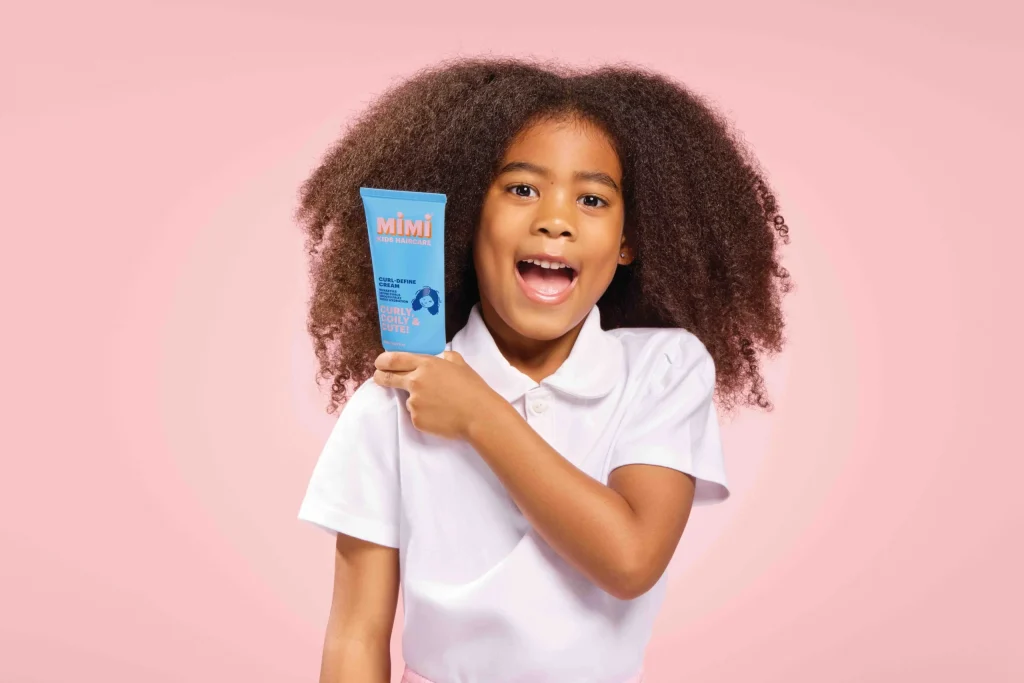
Emma Mackenzie, founder of MiMi Haircare for Kids, explains: “When it comes to marketing, we’ve learned one fundamental truth: Parents buy from parents. They don’t buy from brands.”
For T Is for Tame, social media videos showcasing a "transformation" generate the highest engagement. Collaborating with creators on giveaways has also proven to be a highly effective lever for boosting brand awareness.
“Whether that’s detangling, styling, or just showing a calm, happy kid at the end of a hair routine,” says Becky Bavli, founder and CEO of T Is for Tame. “When paired with a creator or brand partner whose audience mirrors ours, the quality of new followers tends to be high, and the conversion to actual customers is meaningful.”
Brands like T Is for Tame and MiMi Haircare for Kids are anchoring their business models on specialized expertise in children’s haircare. “With more than 20 years in the Australian and U.K. beauty industries, I knew children’s hair and scalp needs were fundamentally different,” Mackenzie says. “Kids don’t produce sebum the way adults do. Their hair is often drier, and their active lifestyles expose them to elements like chlorine, UV rays, and outdoor play.”
Shifting demographics and increasingly diverse family structures are also serving as strong tailwinds. Generation Alpha is the most racially and ethnically diverse generation in U.S. history, fueling demand for products tailored to a broader spectrum of hair types and textures.
“We’ve seen strong resonance within the U.S. Hispanic community, as well as among the growing number of blended families managing a wide range of hair types and textures under one roof,” Bavli notes. “These households are often juggling multiple hair routines simultaneously. They need versatile, effective products that simplify their morning routines.”
This targeted strategy is paying off. T Is for Tame has achieved 70% year-over-year growth, boasting an average conversion rate of approximately 30%. This momentum is largely driven by its Taming Gel and Taming Wands, which have built a loyal following among parents seeking safe, vegan styling options for children with textured hair.
Yet, much like the children they serve, kids’ personal care brands eventually face their own growing pains. As they scale, they must compete against a deeper bench of well-funded legacy players, all while navigating a young consumer base increasingly drawn to products and routines marketed to older demographics. Even highly successful brands can struggle to maintain momentum as their initial cohort of customers ages out of the category and new brands emerge to capture the next wave of parents.
For these newer entrants, the challenge lies in converting initial viral buzz into repeat purchases. “Plenty of kids' brands go viral once and never sell a second unit,” says investment expert Goldbloom. “You have to look for the reorder rate, not just a one-time spike.”
Over the long term, brands must remain agile enough to appeal to younger generations of parents who bring entirely different purchasing behaviors and priorities to the table. “I would be careful not to overstate lifetime value,” cautions Gersten. “The strongest brands will certainly retain a portion of their early consumers, but they will also need to continually earn relevance with each new generation of parents.”
“Seeing T Is for Tame on the shelf at H-E-B next to legacy brands provides a trust signal that online-only brands simply cannot replicate,” says Bavli. “Our DTC site serves our most loyal customers and gives us a direct relationship that traditional retail doesn’t, while Amazon is where discovery often happens. It’s where a parent who just heard about us types in ‘kids hair gel’ and finds our products.”
Distribution, however, is only one piece of the puzzle. Brands must strike a delicate balance between appealing to parents—who hold the purchasing power—and children, who wield growing influence. Gen Alpha is engaging with the beauty space at unprecedentedly young ages, actively choosing the products used on their bodies, faces, and hair. According to research from Ulta Beauty, Gen Alpha children (those born in 2010 and later) are starting to experiment with beauty products as early as age eight.
Founders acknowledge that winning over the child is critical for securing long-term loyalty. “The child holds the veto power,” says Gioia. “If they don’t like the product, it won’t get used again, and it certainly won’t be repurchased.”
Gersten adds, “Kids’ personal care has become a much more compelling category as consumers begin engaging with beauty and personal care at increasingly younger ages. Platforms like TikTok and YouTube have accelerated this awareness, exposing children to products, routines, and brands years before they traditionally would have entered the market.”
However, Gen Alpha’s early immersion in the beauty world has also sparked intense debate around marketing ethics. In November, Rini—a kids' skincare brand co-founded by actress Shay Mitchell—faced significant backlash after launching sheet masks targeted at children as young as three, reigniting conversations about whether beauty culture is being pushed onto children far too early.
Tightening global regulations on children’s social media access further underscore the sensitivities of marketing to minors. The United Kingdom, for instance, recently proposed a ban on social media for children under 16, with other European nations expected to follow suit, joining existing restrictions in countries like Malaysia, Indonesia, and Australia.
Against this backdrop, founders in the kids’ personal care category emphasize that their primary target remains the parent, even as children exert more influence over purchasing decisions. Indeed, concerns over ingredient safety, product efficacy, and predatory marketing are what frequently inspire these entrepreneurs to launch their brands in the first place.
"At Pipette, we do not market directly to Gen Alpha," says Lo. "Our focus is on communicating with parents, who are a mix of Millennials and Gen Z."
These younger parents shop fundamentally differently than the Gen X cohort before them, notes Bavli. "They research before they buy, they trust peer recommendations and creator content over traditional advertising, and they hold brands to a higher standard," she says. "Simple 'free-of' claims aren’t enough anymore. They want to know exactly what is in a product and why—and they will check."
Because peer recommendations carry so much weight with Gen Z and Millennial parents, user-generated content (UGC) and testimonial formats on Meta and TikTok have emerged as highly effective marketing tools.
"We find our most effective channels are good, old-fashioned word-of-mouth, recommendations from pediatricians and dermatologists, and search across platforms like Google, Meta, TikTok, and even ChatGPT," Lo adds.

Conversation
0 Comments