Peptide Supplier Viki Biotech IPO Attracts Beauty Giants Proya and Giant Biogene
Chinese peptide supplier Viki Biotech went public on the Beijing Stock Exchange, securing strategic investments from beauty giants Proya and Giant Biogene.

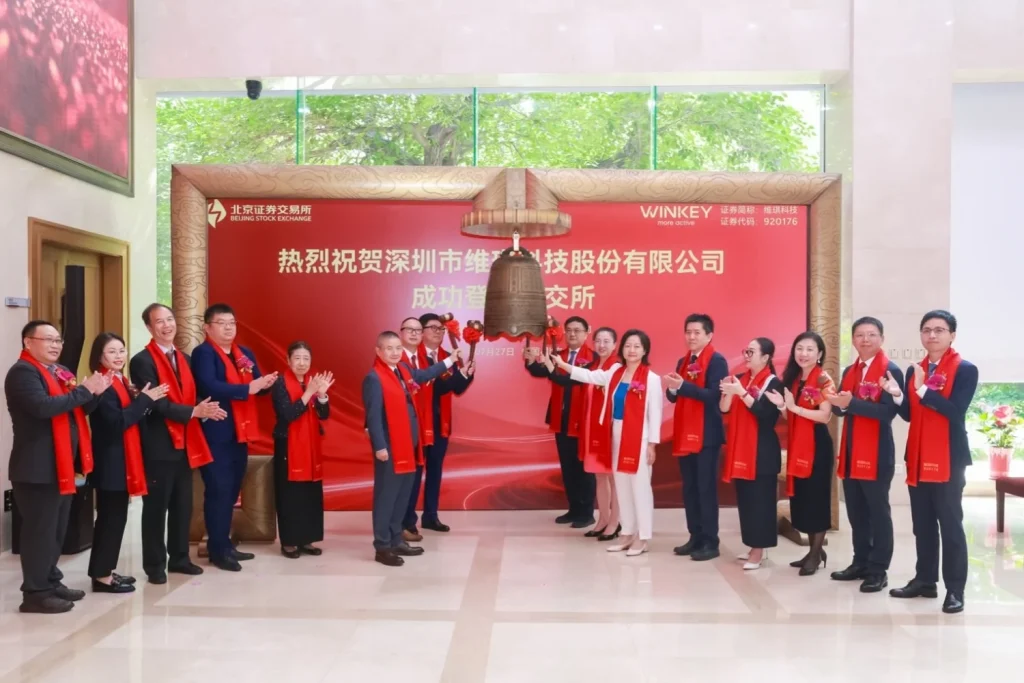
On July 27, Shenzhen Viki Biotech Co., Ltd. (Viki Biotech) officially went public on the Beijing Stock Exchange. On the very same day, Chinese beauty giants Proya and Giant Biogene each invested 2 million RMB ($276,000 USD) as strategic investors. This joint bet by two of China's leading beauty brands on a single upstream raw material supplier highlights a growing industry trend.
Viki Biotech opened at 45.01 RMB, a 103% surge from its IPO price of 22.16 RMB. The stock peaked at 205 RMB in the afternoon before closing at 155.01 RMB—a staggering 599.5% gain on its first day, with a daily turnover of 427 million RMB and a 98.78% turnover rate, bringing its market value to 9.12 billion RMB. However, the excitement cooled rapidly the following morning, with the stock hitting the 30% daily limit down on a drastically reduced turnover of just 9.41 million RMB.
While the first-day surge was fueled by short-term speculative trading, the market's deeper interest in Viki Biotech is undeniable. This transaction marks Giant Biogene’s first-ever strategic investment in an external raw material supplier, and the IPO's online subscription was oversubscribed by an astounding 5,116 times.
Why It Matters
For global beauty brands and suppliers, Viki Biotech's IPO underscores the rapid maturation and premiumization of China's domestic cosmetic ingredient supply chain. While Western beauty investments often focus on consumer-facing brands—such as influencer-backed equity deals—Chinese beauty giants are increasingly investing upstream to secure proprietary active ingredients and build technical barriers against global competitors.
From PhD to Peptide Pioneer
The story of Viki Biotech begins with its founder, Dr. Ding Wenfeng. After graduating from Tongji Medical University, Ding earned his PhD in peptide pharmaceutical chemistry from Peking University in 2005. Following years of R&D work in the pharmaceutical sector, he and his wife, Lai Yanmin, founded the predecessor of Viki Biotech in Shenzhen in 2011. Their core thesis was simple yet disruptive: apply pharmaceutical-grade R&D methodologies to the cosmetic raw materials industry.
At the time, very few Chinese suppliers took this path; most competitors focused on formulation applications or contract manufacturing (OEM/ODM) rather than primary ingredient synthesis.
This early-mover advantage paid off. Today, Viki Biotech is China's leading supplier of cosmetic peptide raw materials, capturing a 6.6% market share in 2024. Between 2023 and 2025, the company's revenue grew from 165 million RMB to 275 million RMB, representing a compound annual growth rate (CAGR) of 29.19%. Net profit attributable to the parent company surged from 42.28 million RMB to 90.85 million RMB, a CAGR of 46.57%. In 2025, its net profit margin hovered around 33%, placing it at the top tier of profitability in the beauty supply chain.
This financial performance is backed by heavy R&D spending. From 2023 to 2025, Viki Biotech's R&D expenses were 22.53 million RMB, 29.55 million RMB, and 29.15 million RMB, respectively—consistently exceeding 10% of its annual revenue. Its R&D team of 87 professionals includes 5 PhDs and 19 master's degree holders, with over 87% of the team holding a bachelor's degree or higher.
The crown jewel of its R&D pipeline is Erasin0003. Following the implementation of China's stricter cosmetic regulations, Erasin0003 became one of the first new chemical structures to successfully complete its three-year safety monitoring period and be officially added to the Inventory of Existing Cosmetic Ingredients in China (IECIC). It is also the first innovative peptide with independent intellectual property rights to be registered with China's National Medical Products Administration (NMPA).
As of its prospectus date, Viki Biotech has registered 22 new cosmetic ingredients with the NMPA, including 9 innovative new ingredients—ranking first among its domestic peers. The company holds 65 authorized invention patents, has filed 16 PCT patent applications, and holds 4 overseas patents. Over the past five years, Viki Biotech has launched more structurally innovative peptides than any other cosmetic raw material company globally.
Its ingredients are widely used by major brands. Marubi’s popular "Little Red Pen" eye cream features Erasin0003, Oligopeptide-215, and conopeptide; Olay’s wrinkle-reducing cream utilizes Caffeoyl Hexapeptide-9; Fuerjia’s anti-wrinkle eye mask incorporates conopeptide; and Unilever’s AHC line has adopted Erasin0003.
In 2023, Viki Biotech began supplying Caffeoyl Hexapeptide-9 to Procter & Gamble (P&G), making it the first Chinese raw material supplier to sell an innovative, self-developed ingredient to a global beauty conglomerate.
International contract manufacturers like Shiseido, Cosmax, Intercos, and Kolmar Korea have integrated Viki Biotech into their supplier networks. Domestic Chinese giants such as Proya, Marubi, Fuerjia, HBN (owned by Guangzhou Feimei), and Osmun also work directly with the company.
In 2025, Guangzhou Feimei was Viki Biotech's largest customer, contributing 42.73 million RMB (15.52% of revenue), followed by Marubi at 20.52 million RMB (7.45%). Prior to its IPO, the company raised over 200 million RMB in a Series A round in 2022, led by CICC Capital with participation from Cowin Capital.
High Margins and Growth Pressures
In 2025, Viki Biotech's cosmetic raw materials division generated 166 million RMB, accounting for 60.37% of its core business revenue. The gross margin for its patented new peptides reached an astonishing 91.28%, while its cataloged peptides maintained a 79.77% gross margin. The overall raw material business has consistently kept gross margins above 70%.
This explains why Proya and Giant Biogene chose to invest. Securing stable upstream supply and proprietary technology gives brands significant leverage in a highly competitive market. In the strategic placement phase, Proya (via its subsidiary Proya Hainan) and Giant Biogene each acquired 90,252 shares for 2 million RMB.
Meanwhile, Viki Biotech's ODM business brought in 94 million RMB (34.18% of revenue) in 2025, while its own-brand OBM business contributed just 4.84 million RMB (1.76%). The company is actively shifting its focus toward the raw material segment.
However, growth is slowing. After a 50.2% year-on-year revenue surge in 2024, growth slowed to 11.2% in 2025. This deceleration was primarily driven by a reduction in ODM orders from major clients like Marubi and Dishi Aipu, highlighting the company's vulnerability to client concentration.
The company has also warned of risks, including the unpredictable commercialization timeline of new ingredients, rising depreciation costs from new manufacturing facilities, and intensifying market competition.
Production capacity is another bottleneck. From 2023 to 2025, the capacity utilization rate for Viki Biotech's peptide powder production was 68.39%, 86.18%, and 104.04%, respectively, indicating that its facilities are currently operating over capacity. The company plans to use its net IPO proceeds of approximately 165 million RMB to fund the Zhuhai Viki Health Industry Park and a new R&D center. Any funding shortfall will be covered by its own cash reserves. The expansion will focus on high-value raw materials and the introduction of smart manufacturing systems.
Compared to its peers, Viki Biotech's 2025 revenue is close to that of Jaka Biotech, while Green Biology leads in scale, with revenue surpassing 1 billion RMB. However, Viki Biotech boasts the highest profitability, with a 33% net margin, compared to Jaka Biotech's 25.23% and Green Biology's 16.65%.
The simultaneous stock market moves of these three raw material players signal an accelerating shift toward domestic ingredient substitution in China. The Chinese cosmetic peptide market grew from 1.12 billion RMB in 2019 to 2.17 billion RMB in 2024 (a 14.1% CAGR) and is projected to reach 4.67 billion RMB by 2029.
According to Viki Biotech's forecasts, its revenue for the first half of 2026 is expected to reach approximately 146 million RMB (+10.39% YoY), with net profit reaching 47 million RMB (+16.92% YoY). If this momentum holds, annual revenue could surpass 300 million RMB for the first time.
Ultimately, sustaining this growth will depend on how quickly Viki Biotech can commercialize its new ingredients and stabilize orders from its major clients. With its capacity expanding and capital secured, the company's next big challenge is ensuring that demand keeps pace with its ambition.


Conversation
0 Comments