L’Oréal Beats Second-Quarter Expectations as Global Beauty Demand Accelerates
L’Oréal posted 6.3% adjusted like-for-like revenue growth in Q2, beating expectations behind booming haircare, e-commerce, and expanding luxury licenses.

L’Oréal’s global business and the broader beauty market continue to pick up speed.
The company’s second-quarter revenues broadly beat market expectations, registering 6.3 percent adjusted like-for-like growth to 11.62 billion euros, outpacing analyst consensus of 5.6 percent as L’Oréal sales climbed on strong haircare demand.
Investors responded positively to the results, with L’Oréal stock closing up 2.7 percent at 394 euros on the day following the announcement.
“Our second quarter kept the strong rhythm of the first, and we delivered the promised acceleration versus 2025,” said Nicolas Hieronimus, L’Oréal chief executive officer, during a call with financial analysts and journalists.
He highlighted that since early 2025, adjusted like-for-like growth has gained speed sequentially each half-year, stepping up from 3.2 percent to 4.9 percent, and reaching 6.5 percent in the first half of 2026.
The broader global beauty market has similarly accelerated over the past 18 months, posting approximately 4.5 percent growth in the first six months of the year.
“The grimmer the economic and geopolitical headlines, the more consumers crave an affordable feel-good treat — or as I like to call it, the ‘dopamine effect’ of beauty,” Hieronimus said.
For the first half, total sales at the beauty giant — whose portfolio includes Lancôme, Kiehl’s, and Garnier — reached 23.78 billion euros, up 6.5 percent on an adjusted like-for-like basis.
Net profit, excluding non-recurring items, rose to 4 billion euros, with diluted earnings per share reaching 7.40 euros, up 4.8 percent compared to the first half of 2025.
L’Oréal’s three developed geographic regions delivered solid adjusted like-for-like performance. “At 6.1 percent, Europe remains very robust,” said Christophe Babule, L’Oréal chief financial officer. “At 6.7 percent, North America maintained its strong rhythm, thanks in particular to Professional Products and Dermatological Beauty.”
In North Asia, sales grew 4.6 percent, or 6.1 percent excluding travel retail. “The key contributor was the acceleration in China, driven by the continued recovery in Luxe,” Babule said. “Emerging markets was the most dynamic region, growing at close to 10 percent. [The South Asia Pacific, Middle East, North Africa, and sub-Saharan Africa region] advanced at an impressive 13.8 percent in a more challenging context.”
Hieronimus pointed to standout performances in emerging markets, noting Vietnam surged over 50 percent, while India accelerated 17 percent, significantly beating local market trends.
Latin America grew 5.2 percent, marking the only region below 2025 levels, though management noted early signs of market stabilization.
“In that context, we increased our outperformance and expanded our market share,” Hieronimus added.
Every division reported positive adjusted growth for the first half:
- Professional Products: Up 11.6 percent, boosted by the ongoing boom in premium hair care, outperforming the professional salon market more than twofold.
- Consumer Products: Grew 4.3 percent, led by strong performance at L’Oréal Paris hair care.
- L’Oréal Luxe: Gained 5.1 percent, supported by recovery in China and sustained demand for luxury fragrances.
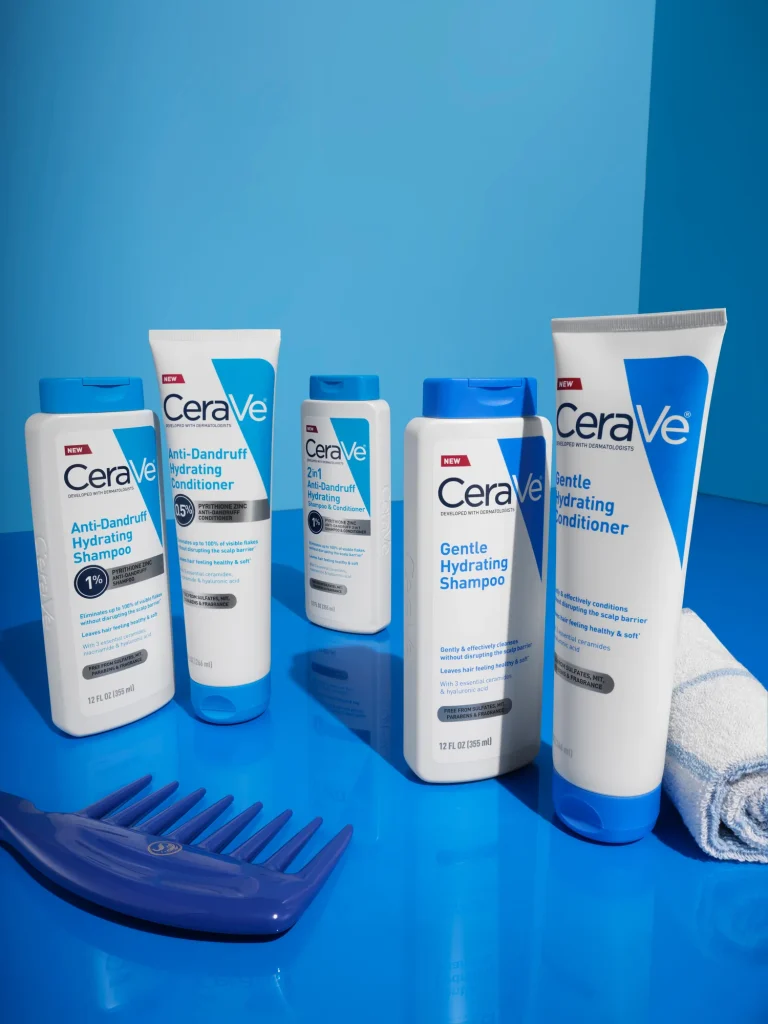
- L’Oréal Dermatological Beauty: Rose 10.6 percent, marking a third consecutive quarter of double-digit growth, driven by CeraVe across both skin care and hair care.
Across categories, hair care emerged as the fastest-growing segment with a 15.6 percent jump, delivering double-digit gains across all four operational divisions.
“Fragrances maintained their double-digit pace at 10.3 percent, with strong contributions from Prada, Valentino, and Aesop,” Babule said. “Skin care accelerated strongly to 5.8 percent, as Dermatological Beauty maintained its double-digit rhythm and Luxe gradually improved.”
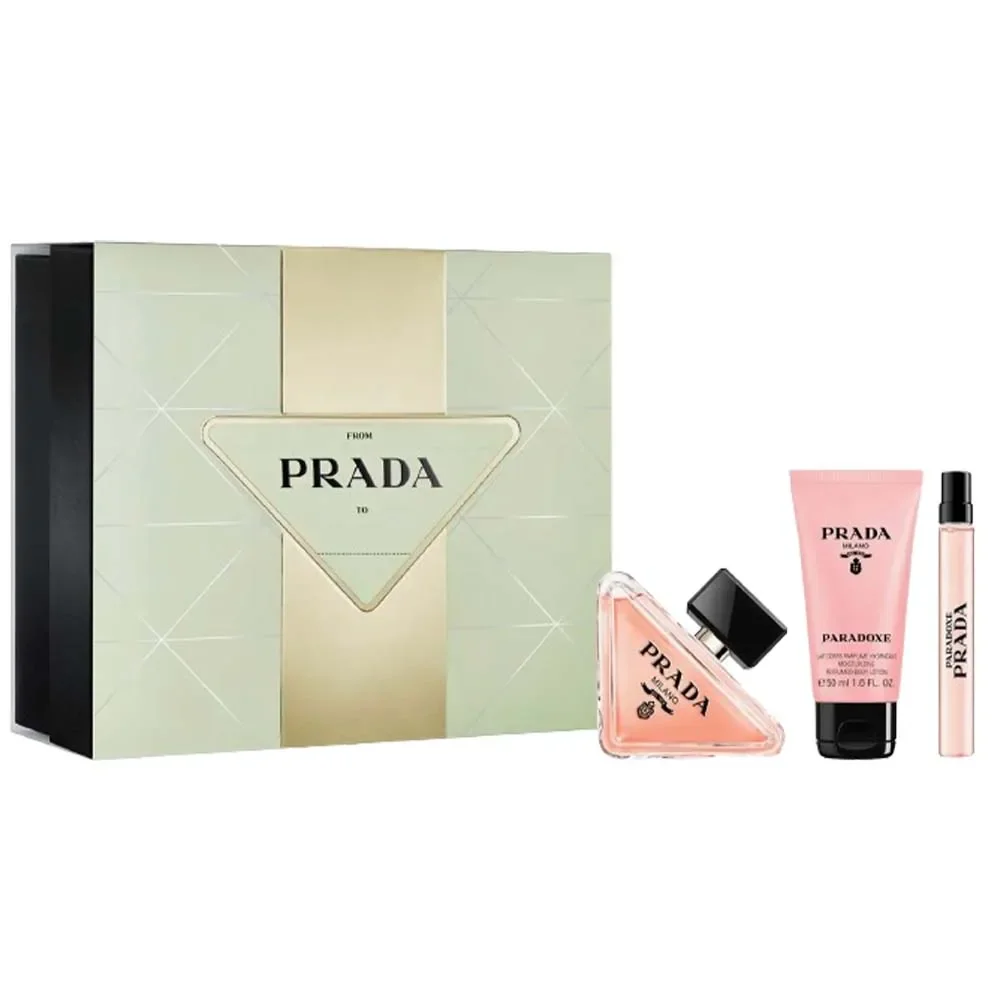
Skin care generated one-third of L’Oréal’s total growth in the first half of the year.
Hair color rose 3.5 percent, led by mass market products, while professional color gradually built momentum. Makeup grew 2.5 percent, temporarily impacted by order fulfillment and service level constraints across the Americas.
“Since our beauty stimulus plan kicked into gear at the start of last year, the change in sales contribution from new products has been accelerating each semester, from 100 basis points to 200 basis points in ’25 to 250 basis points in the first half of 2026,” Hieronimus explained.
E-commerce remains the fastest-growing retail channel across the industry, a segment where L’Oréal holds market leadership. Group e-commerce revenues surged 18 percent — nearly double the market average — to reach 7.4 billion euros. This pushed e-commerce penetration up by more than 200 basis points group-wide and over 400 basis points across emerging markets compared to last year.
Brick-and-mortar sales increased 2.5 percent, supported by expanded retail partnerships.
Hieronimus emphasized that consumer engagement sits at the core of L’Oréal’s business model: “In an increasingly fragmented landscape, we master every facet of consumer engagement, from our Lorealistar community that brings together thousands of influencers worldwide to AI-based innovations that pioneer the way people experience beauty. We are continuously growing our share of beauty influence, which stands approximately at 29 percent.”
He highlighted how the company is driving category expansion across multiple price points: “We continue to double down on hair care as the category becomes more sophisticated. Thanks to our broad-based innovation strategy, our brands are winning in each division — whether Elseve in mass, Kérastase in professional, and Dercos and CeraVe in derma, all are growing well into double digits.”
Looking ahead to the second half of 2026, management reaffirmed its full-year outlook.
“In the full year, we expect the global beauty market to grow somewhere between 4.5 percent and 5 percent, and we expect to keep outperforming this market,” Hieronimus said, noting that July sales got off to a strong start.
Several catalysts are expected to drive second-half sales. The company plans to roll out specialized skincare lines globally, including bringing Dr.G — South Korea's top-selling skincare brand — to China and the U.S. Meanwhile, UK clinical skincare brand Medik8 will begin international expansion beyond its initial two markets.
Recent M&A deals will also contribute fully. High-end fragrance house Creed will be consolidated for the entire second half as it posts double-digit gains, alongside Indian beauty platform Innovist.
“North Asia will continue to support growth,” Hieronimus said. “The recovery in China continues, driven by Luxe, which clearly plays to our strengths. In addition, we expect a return to normal in travel retail Asia over the course of the second half, especially in the fourth quarter.”
Hieronimus noted that beauty demand relies on two distinct growth pillars: pleasure and health.
“Dopamine is beauty as indulgence: a scent you love, a texture you enjoy. Health is beauty as wellness — a quest for longevity and skin rejuvenation. L’Oréal is well-positioned to fire on both engines,” he said, adding that body care achieved double-digit growth across all divisions during the first half.
Hieronimus said L’Oréal’s portfolio keeps becoming ever stronger, pointing to major luxury integration moves as L’Oréal maintains momentum with its Gucci beauty expansion. The Gucci fragrance and beauty license starts within the group on July 1, 2027, and the transition to that begins this September.
“Gucci is one of the most iconic brands in luxury, and we have an unrivaled track record of turning beauty licenses into success stories,” Hieronimus said. “Prada and Valentino went from less than 100 million to over 700 million euros in sales in just four to six years. YSL is a 3-billion-euro brand in beauty, on a par with fashion, so the potential is huge.”
Artificial intelligence is also accelerating R&D output across the group. Over the past four years, L’Oréal’s research teams have analyzed an exponentially higher number of active molecules using AI, allowing faster product development cycles.
“AI also means augmented imagination,” Hieronimus said, noting that L’Oréal now produces over 500,000 pieces of digital content monthly to drive social commerce. “We were an early adopter of AI, and as with every tech disruption, we quickly accelerated its adoption across the entire organization. Our innovation engine is running at full steam.”
Conversation
0 Comments