
Premier Anti-Aging Dissolves Chinese Subsidiary After Three Years of Losses
Japanese beauty group Premier Anti-Aging is dissolving its Chinese subsidiary Beianmei Shanghai after three consecutive years of financial losses.
Five years after entering the Chinese market, a Japanese cosmetics company has decided to dissolve and liquidate its local subsidiary.
Five years ago, sitrana, a Japanese skincare brand targeting sensitive skin, boasted over 200 physical retail locations in Japan. It had just launched flagship stores on Tmall, Alibaba's B2C e-commerce platform, and Douyin, TikTok's Chinese sister app. At the time, Kiyoshi Matsuura, founder of sitrana and president and CEO of parent company Premier Anti-Aging Co., Ltd., shared ambitious plans to open brick-and-mortar stores across China.
Today, that expansion plan has ground to a halt. On July 14, 2026, the board of directors of Premier Anti-Aging formally resolved to dissolve and liquidate its wholly-owned consolidated subsidiary, Beianmei (Shanghai) Cosmetics Co., Ltd. Currently, sitrana's Tmall flagship store has already been taken down.
According to the parent company's official announcement, the decision was driven by "the deterioration of the market environment in China and continuous operating losses." Despite implementing various recovery measures, the business failed to turn around, prompting this structural reorganization of its Chinese operations.

The liquidation process will conclude once all necessary local legal procedures are completed, though an exact completion date has not yet been set. Financially, Premier Anti-Aging is currently assessing the total losses and tax implications associated with the move.
Three Years of Losses Prompt Strategic Retreat
Premier Anti-Aging stated that it intends to concentrate its management resources on brands and business segments with higher growth potential. Consequently, the company is transitioning its sales model in China from a localized subsidiary operation to a cross-border e-commerce model, relying on overseas flagship stores to serve Chinese consumers.
Established in February 2021 with a registered capital of 30.3 million RMB ($4.2 million USD), Beianmei (Shanghai) Cosmetics Co., Ltd. was a wholly-owned subsidiary of Premier Anti-Aging. Despite its corporate backing, the subsidiary operated on a micro-scale, with corporate registration database Qichacha showing an active staff of just three employees.

In terms of operations, Beianmei Shanghai acted as the local distributor, managing product supply and receiving financial loans from its Japanese parent company.
The decision to dissolve the subsidiary was not a sudden move, but rather the culmination of consecutive years of financial underperformance in the highly competitive Chinese market.
Beianmei Shanghai has been unprofitable for three consecutive years. The subsidiary recorded net losses of 50 million yen ($320,000 USD), 122 million yen ($780,000 USD), and 50 million yen ($320,000 USD) over the last three fiscal years, with annual revenue only crossing the 100 million yen mark in 2025.

Compounding these operational losses, the subsidiary faced severe insolvency. Its net assets fell deeper into negative territory year after year, recording deficits of 583 million yen, 756 million yen, and 830 million yen from 2023 to 2025. This widening financial gap ultimately forced the parent company to pull the plug on its local operations.
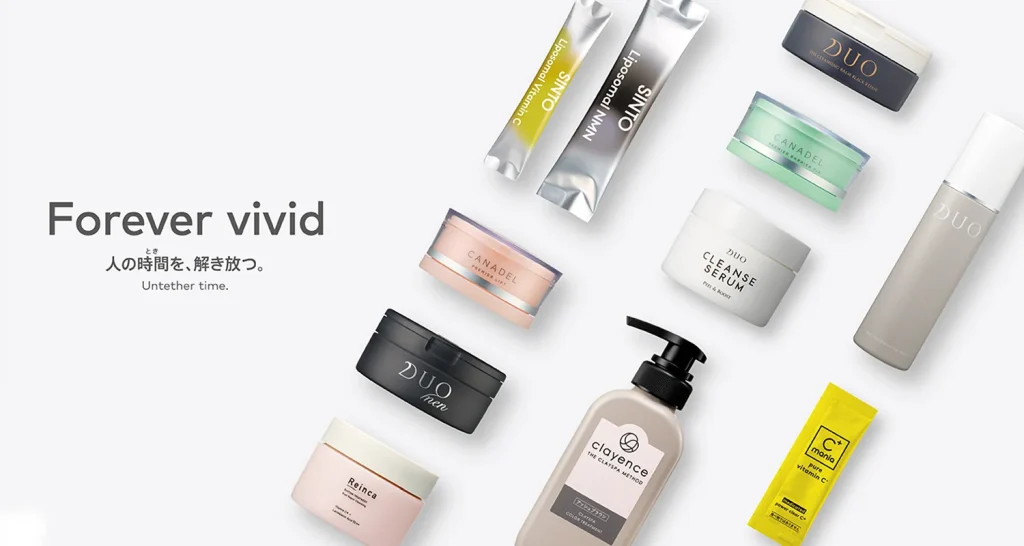
Founded in 2009, Premier Anti-Aging launched its cosmetics business in February 2010 with its flagship cleansing balm brand, DUO. A decade later, the company expanded its portfolio by launching CANADEL, a minimalist skincare brand, followed by the sensitive skincare brand sitrana.
Today, Premier Anti-Aging manages a portfolio of nine brands. While primarily focused on specialized skincare, the group has also diversified into niche segments such as men's grooming and hair care.

In October 2022, promotional materials on DUO's official WeChat account indicated that DUO and sitrana were actively sold in China, with plans to introduce CANADEL and hair care brand clayence. This multi-brand strategy reflected the group's ambition to capture a significant share of the Chinese beauty market.
At its peak, DUO was a massive success in Japan. The brand advertised that one of its cleansing balms was sold every two to three seconds, with cumulative sales exceeding 30 million units. According to the company, DUO's cleansing balm ranked first in its category on @cosme, Japan's largest cosmetics review and shopping site, holding the top spot for ten consecutive years. By February 2024, cumulative sales of the DUO cleansing balm series had surpassed 50 million units.

However, this domestic success did not translate to the Chinese market. Currently, DUO's Tmall Global flagship store has just over 31,900 followers. The store features only 11 product listings, with the top-performing item showing monthly sales of just over 1,000 units. Newer product launches, including a newly packaged cleansing balm promoting the "50 million units sold" milestone, show virtually zero sales.

Similarly, sitrana, which focuses on centella asiatica (Cica) formulations for sensitive skin, was heavily promoted in late 2021 as part of Tmall's "Treasure New Brand" campaign. Founder Kiyoshi Matsuura actively promoted the brand's star product, the sitrana Cica Rejuvenating Cream. At the time, the brand established a physical presence in Shanghai, retailing through LOFT, the Japanese lifestyle retail chain, in major shopping centers like MixC, Metro City, and Joy City.

Although Beianmei Shanghai officially celebrated the grand opening of sitrana's Tmall flagship store in May 2021, the brand has since vanished from the platform, leaving no trace of its official digital storefront.
A Broader Shakeup for Japanese Beauty in China
The dissolution of Beianmei Shanghai after just five years highlights the mounting challenges Japanese beauty brands face in China. Premier Anti-Aging is far from alone in restructuring its local operations.
According to cosmetics industry data, the Chinese market has seen at least five major liquidations, dissolutions, or deregistrations of Japanese beauty subsidiaries over the past two years. This trend has impacted major industry players, including Shiseido Group, Pola Orbis, and the I-ne Group.

These corporate moves generally stem from two factors: severe local operational difficulties, or proactive strategic adjustments to optimize global resources.
Between 2025 and 2026, several prominent entities—including Shiseido Guangdong Cosmetics Co., Ltd., Orbis Commercial (Beijing) Co., Ltd., and I-ne (Shanghai) Cosmetics Co., Ltd.—officially transitioned from active status to deregistered. Meanwhile, Beianmei (Shanghai) Cosmetics Co., Ltd. and MTG (Shanghai) Trading Co., Ltd. remain active but are currently undergoing liquidation or restructuring.
The financial performance of Japanese beauty giants underscores this market-wide downturn. Shiseido Group reported a net sales decline of over 2% in 2025, alongside a massive operating loss of 28.79 billion yen ($184 million USD), marking five consecutive years of softening performance. Similarly, Pola Orbis reported flat growth, with net sales dipping 0.6%.
As local competitors and celebrity-backed ventures like ROSE AMIGO by actress Zhao Lusi capture consumer attention, foreign brands face an uphill battle. The exit of another Japanese subsidiary raises a critical question: is this an isolated case of corporate damage control, or a sign of a collective retreat as Japanese brands struggle to adapt?
What is certain is that the landscape for Japanese cosmetics in China is undergoing a rapid transformation. Faced with persistent losses and intensifying competition, more Japanese brands are re-evaluating their direct-to-consumer and retail strategies, shifting toward leaner, cross-border models to navigate a highly volatile consumer market.


Conversation
0 Comments