Cosmoprof North America Highlights Next-Gen SPF, Fragrance, and K-Beauty Trends
Cosmoprof North America highlights a beauty market driven by high-performance SPF, expanding fragrance categories, and the continued rise of K-beauty.

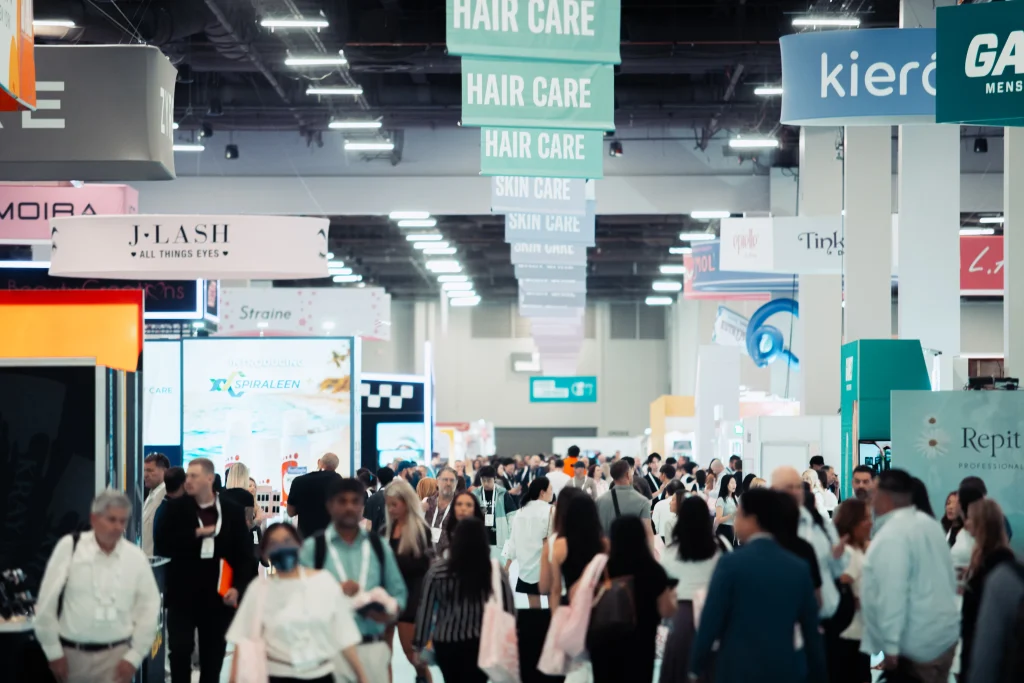
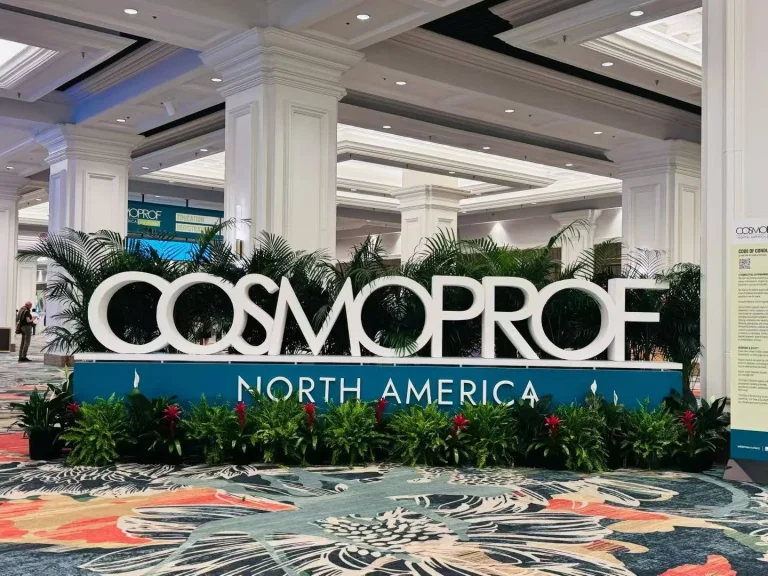
Cosmoprof North America returned to Las Vegas July 13 to 15, bringing together retailers, brands, manufacturers, and suppliers to gauge the next wave of beauty innovation and consumer demand.
Across the show floor, several key themes surfaced, from next-generation sunscreen technology and clinically backed, problem-solving products to Fragrance’s expansion beyond traditional perfume and the continued evolution of K-beauty. Together, these trends reflected a beauty market increasingly defined by performance, specialization, and products that deliver measurable results.
Why It Matters: For global beauty brands, suppliers, and retailers, the event underscored a shifting landscape where clinical efficacy, specialized formulations, and manufacturing agility are essential to capturing increasingly deliberate consumer spend amid macroeconomic headwinds.
Among the biggest topics of conversation this year was the FDA’s recent approval of bemotrizinol, the first new sunscreen active ingredient approved for the U.S. market in more than 20 years. At U.S.-based Bell International Laboratories, the approval shaped much of the company’s sun care showcase, with concepts ranging from an alcohol spray and mineral formulas to a clear stick and its lightweight Sunshield Essence prototype.
Teresa Fleming, director of innovation and research at Bell, said the approval creates an opportunity to develop lighter, more elegant sunscreen formulations that better match evolving consumer expectations.
“People want lightweight skin care products that don’t feel heavy,” said Fleming.
She said those expectations have been shaped in part by the growing influence of K-beauty, as consumers seek the lightweight textures associated with Korean formulations. This demand aligns with broader market shifts, as K-beauty sales surge globally driven by social commerce and rapid formulation innovation.
“I think there’s a lot of consumer interest in how we can get to formulas that feel more like K-beauty formulas,” Fleming said.
Korean brands continued to command a significant presence while tailoring products to the U.S. market through simplified routines and clearer consumer messaging.
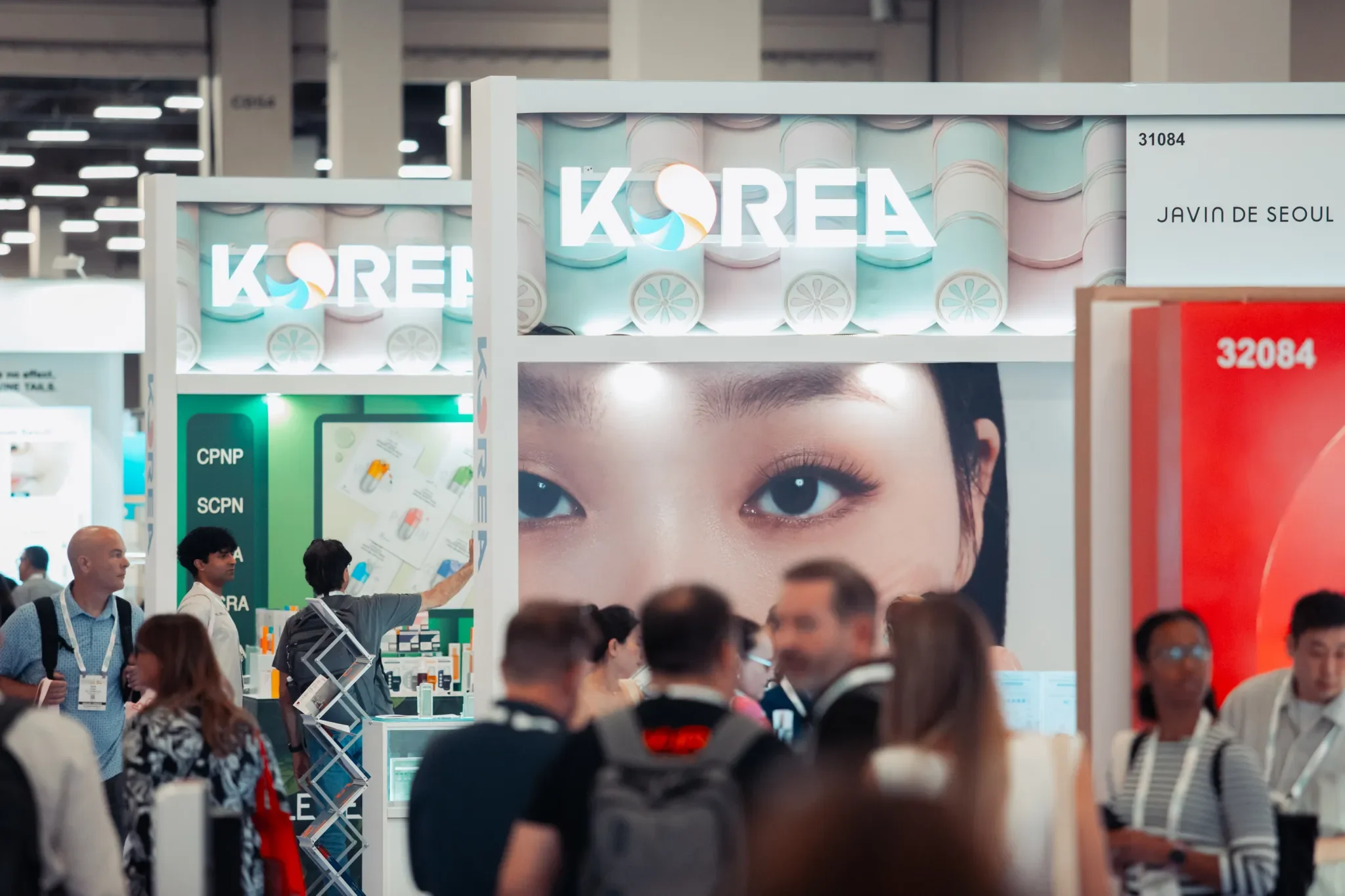
“I think something that’s really stood out to me is just how many Korean beauty brands are here,” said Elizabeth Schweitzer Miller, vice president and divisional merchandise manager of cosmetics at Bloomingdale’s. “I do think the brands are trying to find a way to simplify and break through to the American consumer.”
Beyond K-beauty, Miller said beauty technology was one of the categories she was watching most closely, particularly devices designed to enhance skin care routines.
“We know wellness is one of the hottest trending topics,” Miller said. “We know it’s a place where customers do not want to cut their spend, so we’re really focused on products, particularly in technology, that can help our customers continue the efficacy of their beauty regimens.”
Miller said those spending patterns reflect a consumer who continues to prioritize beauty: “Our customers are certainly resilient, and they’re definitely still spending on beauty. They’re really investing in skin care, especially luxury and high end, where they can really see results.”
She said fragrance continues to attract shoppers looking for products that “make them feel better,” with customers increasingly exploring niche scents.
Fragrance remains the fastest-growing category in U.S. beauty, with sales up 15.2 percent year over year, according to Jacqueline Flam Stokes, managing director of beauty and health at global market research firm NielsenIQ.
“The fragrance boom continues as shoppers assemble ‘scent wardrobes’ and look for ways to personalize their scent through layering and mixing,” Stokes said.
During Cosmoprof, fragrance continued to extend beyond traditional perfume into body mists, scented body care, hair fragrances and alcohol-free options. This category expansion is also paving the way for creators to launch their own lines, such as when fragrance influencer Funmi Monet launched Influxious at Sephora to capture the demand for accessible luxury scents.
At Portugal-based Colep Consumer Products, body fragrance emerged as one of the company’s biggest innovation priorities. Luisella Bovera, senior vice president of Beautyvibe, Colep’s platform offering ready-made and customized beauty solutions, said demand is increasingly centered on body products.
“There is this really huge trend coming from fragrance,” Bovera said.
Beyond fragrance, Colep used Cosmoprof to showcase more targeted, problem-solving concepts, including products for scars, post-procedure recovery, acne and hair growth.
“We are talking about cosmetics, but we are in the area between standard cosmetics and dermocosmetics,” Bovera said.
The company calls the category “supercharged,” referring to formulas made with higher levels of active ingredients and backed by outside testing.
Bovera said geopolitical uncertainty is making innovation more complex, requiring manufacturers to be more flexible while helping brands bring products to market quickly.
For brands, the race to innovate is increasingly about proving results, not just launching something new.
“Consumers have shown that beauty is an important category they are willing to keep investing in,” Stokes said. “What has changed is they are questioning the price, efficacy and ingredients of their products. Brands need to be able to justify every aspect of their product to keep the shoppers’ trust and get them to come back.”
According to NielsenIQ, U.S. beauty sales rose 10.1 percent in the first half of 2026, nearly double the 5.5 percent growth across the total store. Of that 10.1 percent growth, roughly four percentage points came from price increases while approximately six points reflected consumers buying more products. Beauty sales also accelerated in the first quarter, rising 14.6 percent compared with 9.2 percent in the fourth quarter of 2025.
“The momentum is accelerating as shoppers continue to prioritize beauty, even as they may be cutting back in other areas of their routines,” Stokes said.
That comes despite a more challenging macroeconomic backdrop. NielsenIQ said consumers are contending with weakening consumer confidence, rising gas prices, declining savings rates and persistent inflation. Rather than pulling back from beauty altogether, however, shoppers are becoming more deliberate about where they spend.
Stokes said the market is increasingly reflecting a “K-shaped” economy, with households earning more than $100,000 accounting for much of the industry’s growth while lower- and middle-income consumers moderate purchases.
At the same time, value is taking on a broader definition than price alone. Mass beauty is growing 14.4 percent, outpacing prestige’s 7.9 percent, though consumers across income levels continue to purchase premium products when they believe the value is compelling.
E-commerce also continues to reshape the industry. Online beauty sales rose 20.6 percent compared with 3 percent in stores, with Amazon remaining the largest beauty retailer and TikTok Shop rapidly emerging as the third largest beauty e-commerce platform in the U.S. This digital dominance highlights how brand equity, not discounts, won Amazon Prime Day as shoppers prioritize trusted names over quick deals.
K-beauty’s momentum shows little sign of slowing. NielsenIQ estimates the category has surpassed $2.8 billion in U.S. sales, with skin care accounting for 81 percent of the business as consumers increasingly swap prestige products for Korean alternatives offering comparable performance at more accessible prices.
As shoppers become more discerning, retailers are becoming more selective about what earns shelf space.
Becky Hall, vice president of merchandising at Sally Beauty, said today’s customer arrives having already done her research.
“She walks in already educated,” Hall said. “She knows what she’s looking for, and she expects us to meet her at that level.”
She went on, “The bar has definitely gotten higher. Efficacy and professional quality are non-negotiable for us.”
Sally Beauty is also expanding beyond its traditional strengths in hair color and nails, making a bigger push into skin care with the exclusive launch of Q+A, a science-backed skin, body and hair care brand arriving in select stores July 31. It is also using Colorfest, its consumer-facing hair and nail color initiative, to introduce shoppers to a wider range of categories through a five-stop college campus tour beginning in August.
“What has shifted is how thoughtful we’re being about curation,” Hall said. “In this environment, we’re not trying to carry everything. We want to carry the right things. Trend-right products that feel relevant to where beauty is going, not just where it’s been.”
Looking across the Cosmoprof show floor, Hall said she was focused on identifying products and partners with staying power.
“When I walk a show like Cosmoprof, I’m really looking for what’s next — the products and brands that are going to matter to our customer six, 12 months down the road,” Hall said. “Of course, efficacy and salon-quality are the price of entry for us. That never changes.”

Conversation
0 Comments