Qingsong Shares Rebrands to Nox Bellcow, Completing 7-Year Beauty Pivot
Fujian Qingsong is renaming itself after its subsidiary, Nox Bellcow, completing a seven-year transition from industrial chemicals to cosmetics manufacturing.

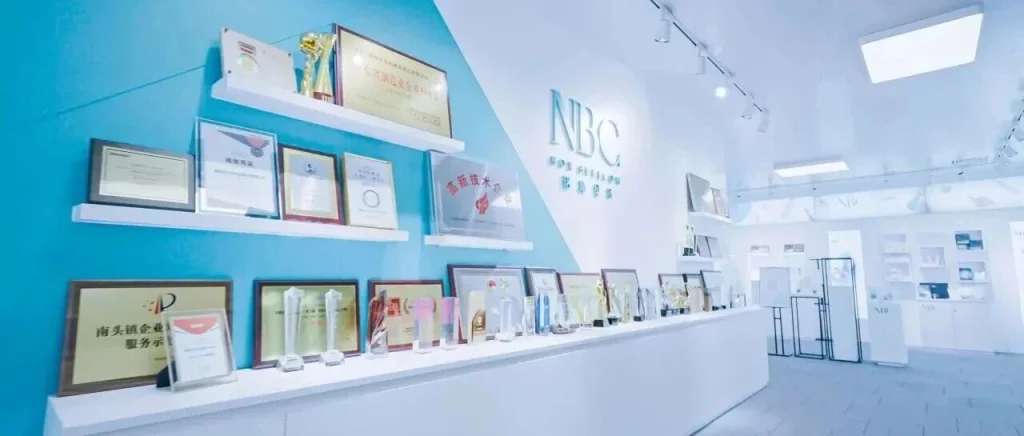
Fujian Qingsong Co., Ltd. (Qingsong Shares) recently announced plans to change its official name to Fujian Nox Bellcow Holdings Co., Ltd. Its stock ticker will also change from "Qingsong Shares" to "Nox Bellcow," while its stock code (300132) remains unchanged.

This announcement marks the official completion of a seven-year strategic transition for the listed company, which spent over two decades in the forest chemical industry. It also means that Nox Bellcow, China’s largest cosmetics original design manufacturer (ODM), is stepping directly into the spotlight of the capital markets to compete globally as an independent beauty manufacturing powerhouse.
Why It Matters For global beauty brands, Nox Bellcow is a manufacturing giant behind many household names. This corporate restructuring and rebranding signal a broader shift in China's beauty supply chain—moving away from low-cost, industrial-scale assembly toward high-tech, R&D-driven formulation and independent capital market valuation.
From Camphor King to Cosmetics ODM Leader
To understand the weight of this name change, one must look back to the company's origins.
Founded in 2001, Qingsong Shares was originally a resource-dependent chemical enterprise specializing in the deep processing of turpentine products, such as synthetic camphor and borneol. It was once a global leader in this niche chemical sector. In 2010, the company went public on the Shenzhen Stock Exchange's ChiNext board. For nearly a decade, the name "Qingsong" was synonymous with fine chemicals, with no connection to the beauty industry.
The turning point came in 2019. At the time, China's cosmetics industry was experiencing rapid growth, and the cosmetics contract manufacturing sector was booming. Meanwhile, the traditional forest chemical industry faced overcapacity, price volatility, and clear growth ceilings.
Seeking a second growth engine, Qingsong Shares acquired a 90% stake in Nox Bellcow for 2.43 billion RMB in 2019, followed by the remaining 10% for 430 million RMB in 2020. The total acquisition cost of 2.86 billion RMB (approximately $395 million USD) gave Qingsong Shares full ownership of the cosmetics ODM giant, marking its official entry into the beauty manufacturing space.
This acquisition was a landmark event in the Chinese beauty industry and kicked off a massive strategic pivot.
Following the acquisition, Qingsong Shares systematically integrated its business. It channeled resources, talent, and management systems toward cosmetics manufacturing while gradually divesting its original chemical operations. By 2023, the company completed the sale of its turpentine processing subsidiaries, fully exiting the chemical sector and leaving Nox Bellcow as its sole operating entity.
Corporate governance evolved in tandem. In July 2021, Nox Bellcow founder Fan Zhanhua was appointed President of Qingsong Shares. By 2026, Fan officially assumed the role of Chairman and President. Recent board nominations show that Fan and Lin Shida have been nominated as non-independent directors, completing the transition of leadership.
Financial results highlight the completeness of this transformation. Since 2023, Nox Bellcow has consistently contributed over 99% of the parent company's total revenue. In 2025, the group's total revenue reached 2.219 billion RMB (approx. $306 million USD), up 14.41% year-on-year, while net profit attributable to shareholders surged 180.21% to 153 million RMB. Nox Bellcow alone generated 2.211 billion RMB, accounting for 99.64% of total revenue, with a net profit of 202 million RMB—a 134.23% year-on-year increase.
The company's mid-year performance forecast for 2026 shows continued growth, with estimated revenue of 1.107 billion RMB (up 18.16% year-on-year) and net profit between 50 million and 61 million RMB (up 82.43% to 122.57%). According to the announcement, this growth was driven by a steady recovery in domestic beauty consumption and increased order volumes from brand clients, even as regulators step up enforcement against livestream e-commerce tax evasion and quality issues to stabilize the broader retail market.

Clearly, the name "Qingsong Shares" had become a misnomer. The company's assets, revenue, profits, and core team had completely transitioned to beauty, while the stock ticker remained a relic of its chemical past. As the company noted, the rebranding aims to "eliminate the discrepancy between the company name and its actual business, ensuring the name accurately reflects its current industrial layout and business essence."
The Strategic Value of Rebranding
This name change is more than a cosmetic update; it is the final validation of a seven-year strategic transformation. It aligns market perception with the company's actual business structure, clearing away branding obstacles for its next phase of growth across three key dimensions.
First, in the capital markets, the rebranding will correct valuation models. Previously, the chemical-associated name led to a market disconnect, and investors failed to value the company as a beauty manufacturer. Changing the ticker to "Nox Bellcow" directly communicates its core business, shifting its valuation logic from traditional chemicals to "beauty consumption + advanced manufacturing." This is expected to boost its visibility in the consumer goods sector and lower cognitive barriers for investors.

Second, on an operational level, the rebrand unifies the listed platform with the operating entity. Previously, the split identity between Qingsong Shares and Nox Bellcow created friction in client relations, industry communication, and talent recruitment. A unified brand simplifies these interactions, leveraging the listed company's credibility to secure high-end orders and international clients.
Third, the inclusion of "Holdings" in the new name provides structural flexibility for long-term expansion. Leading global ODMs often expand along the value chain—moving upstream into raw material R&D and supply chain integration, and downstream into brand incubation, testing services, and regulatory compliance. The holding company structure leaves ample room for future industrial investments and multi-sector layouts.
From an industry cycle perspective, this move helps the company capitalize on market consolidation. China's cosmetics ODM sector is undergoing a regulatory upgrade. As compliance costs rise, smaller, non-compliant manufacturers are being phased out, and market share is concentrating among top-tier players with scale, R&D depth, and compliance advantages. Unifying its brand identity at this juncture solidifies Nox Bellcow's leadership position during this industry shakeout.
Beyond the Name: Nox Bellcow’s New Industrial Narrative
Looking at the broader landscape, this corporate rebranding mirrors the evolution of China's cosmetics manufacturing sector from low-cost assembly to high-value creation. Once dismissed as mere contract packers, leading manufacturers like Nox Bellcow are rewriting the narrative through technological innovation.
As one of the world's top four cosmetics ODM companies and China's largest, Nox Bellcow's sheet mask production capacity and shipment volume lead the global market. The company boasts a daily capacity of 6.5 million sheet masks and an annual output exceeding 2 billion units. Its client portfolio includes global giants like P&G, Shiseido, and Unilever, alongside leading Chinese beauty brands such as Proya, CHANDO, and Shanghai Jahwa. While some Chinese brands focus heavily on domestic expansion, others are exploring how to build a global beauty brand to capture international market share.

R&D serves as Nox Bellcow's core competitive moat, built around three research platforms: biotechnology, formulation technology, and AI technology. In 2025, the company launched its "NBC Plant Cell Intelligent Manufacturing Platform," which integrates two core technologies: GreenCall™ plant callus cell targeted cultivation and PhytoExo® PLUS+ plant callus cell exosome delivery. Backed by a library of over 15,000 formulations and a professional team, the platform offers full-service solutions to brands. In 2026, the platform will introduce PhytoPDRN extraction technology to further support sustainable beauty.
According to financial reports, Nox Bellcow's R&D expenses reached 76.47 million RMB in 2025, an 18.65% increase year-on-year. The company employs a professional R&D team of over 180 people and holds 147 patents, driving continuous breakthroughs in formulations, raw materials, and applications.
Nox Bellcow has evolved beyond a traditional contract manufacturer. Its new narrative is to serve as an external R&D brain and innovation engine for beauty brands, rather than just a production backup.
Saying goodbye to "Qingsong" and fully embracing "Nox Bellcow" is more than a ticker change; it is a strategic declaration. It marks the successful conclusion of an old business chapter and highlights the immense potential for value re-evaluation in China's beauty supply chain.
Conversation
0 Comments